Pomeranian · 33 Places · Best June, July, August, September
Pomeranian
The Pomeranian Voivodeship (Pomorskie) is Poland's Baltic coast region, centred on the Tricity of Gdańsk, Sopot and Gdynia. It combines Gdańsk's rebuilt Hanseatic Main Town, the Teutonic fortress of Malbork, the sandy Hel Peninsula, the moving dunes of Słowiński National Park and the lake-studded villages of Kashubia and Kociewie.
The Pomeranian Voivodeship is Poland's window on the Baltic Sea. Gdańsk anchors the region with a Main Town rebuilt after 1945, the medieval Crane, St. Mary's Church, the European Solidarity Centre and the Museum of the Second World War. Sopot, ten minutes away by commuter train, adds a seaside promenade and the longest wooden pier in Europe, while Gdynia contributes modernist architecture, museum ships and the Emigration Museum. Beyond the Tricity lie the UNESCO-listed Malbork Castle, the Hel Peninsula with its seals and kitesurfing, the Słowiński National Park dunes near Łeba, Kashubian lake villages and the Gothic brick castles of the lower Vistula. Gdańsk Lech Wałęsa Airport and the SKM commuter railway make the Tricity easy to reach, and most sights outside the cities are day trips by train, bus or seasonal boat. Prices are well below Western Europe: a mid-range day costs about 510 PLN ($134).
The 33 destinations our editors recommend — from iconic landmarks to under-the-radar finds.
Long Market and Neptune Fountain
Gdańsk's ceremonial main street and square, lined with gabled merchant houses and the Artus Court, with the bronze Neptune Fountain of 1633 at its centre. The street was rebuilt after 1945 and runs from the Golden Gate to the Green Gate at the Motława river.
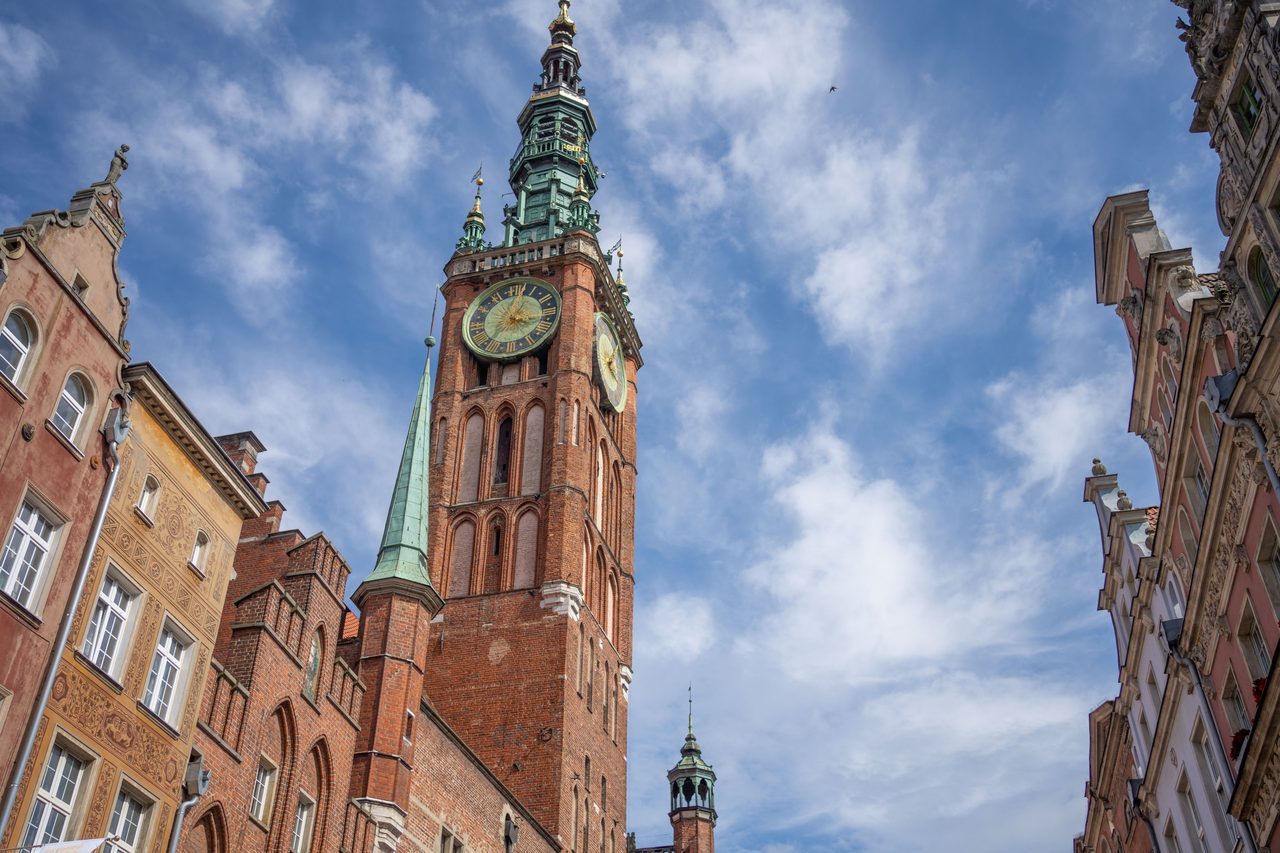
Main Town Hall (Museum of Gdańsk)
Gothic-Renaissance town hall whose tower rises roughly 80 m above the Royal Route. It houses the main branch of the Museum of Gdańsk, with historic council chambers such as the Red Room, and offers a viewing platform over the Main Town.
St. Mary's Church (Basilica of the Assumption)
Brick Gothic church built between 1343 and 1502 and widely described as the largest brick church in the world, with space for about 25,000 worshippers. A 78 m tower with roughly 400 steps gives the best view over Gdańsk's rooftops.
Gdańsk Crane (Żuraw)
Medieval harbour crane on the Motława waterfront, built in the 15th century and the largest port crane in Europe in its day. It is a symbol of Gdańsk and is run by the National Maritime Museum, which shows displays on the port and shipbuilding inside.
Mariacka Street
Cobbled lane behind St. Mary's Church, rebuilt after 1945 with raised stone terraces, gargoyle drainpipes and a concentration of amber jewellery workshops and shops. One of the most photographed streets in Poland.
Golden Gate (Złota Brama)
Ornate west entrance to the Royal Route, built in 1612-1614 to a design by Abraham van den Blocke, with statues of allegorical figures on its Long Market side. It stands beside the Court of St. George and the Torture House.
Recommended itineraries
Pick a length, follow the route. Each itinerary balances headline sights with breathing room.
5-Day Pomeranian Explorer
Day 1Arrive in Pomeranian, explore city center
Day 2Visit top attractions and museums
Day 3Day trip to nearby highlights
Day 4Local markets and hidden gems
Day 5Final sightseeing, departure
7-Day Classic Pomeranian
Days 1-2Pomeranian city highlights
Days 3-4Regional exploration
Days 5-6Cultural immersion and local experiences
Day 7Return and departure
14-Day Ultimate Pomeranian
Days 1-3Pomeranian comprehensive city tour
Days 4-6Northern region exploration
Days 7-9Eastern highlights
Days 10-12Southern attractions
Days 13-14Return to Pomeranian, departure
Where to stay in Pomeranian
Three tiers, every traveller covered — from cost-conscious to flagship hotels.
Budget $50 (190 PLN)
Hostels, budget hotels, and guesthouses offer affordable stays without sacrificing experience.
Mid-range $130 (495 PLN)
Boutique hotels and well-located accommodations provide comfort and convenience at reasonable prices.
Luxury $320 (1,215 PLN)
World-class resorts and premium hotels deliver unforgettable experiences.
Hilton Gdansk
Old Town, Motława waterfront (Ołowianka) · $$$$
Five-star waterfront hotel on the Fish Market embankment of the Motława, a short walk from the Crane and Długi Targ.
Pomeranian Voivodeship (Pomorskie) is built around the Tricity (Trojmiasto) of Gdansk, Sopot and Gdynia, which share one coastal rail spine and a metropolitan ticket system. Gdansk Lech Walesa Airport (GDN) is the region's only major commercial airport. Inside the Tricity, ZTM Gdansk trams and buses, ZKM Gdynia buses and trolleybuses, and the SKM (Szybka Kolej Miejska) and PKM (Pomorska Kolej Metropolitalna) suburban railways connect the beaches, the Old Town and the airport. PKP Intercity links Gdansk with Warsaw (Pendolino, about 2.5 hours), Polregio runs regional trains to Malbork, Lebork, Leba and along the Hel Peninsula, and seasonal Zegluga Gdanska boats cross the Bay of Gdansk to Hel. Most day trips are possible without a car, though Kashubian villages, the Slowinski National Park and the Hel Peninsula in high summer are easier with careful planning.
SKM and PKM suburban rail
SKM runs along the coast through Gdansk, Sopot and Gdynia and on to Wejherowo, and is the quickest way between the Tricity's beaches and city centres. PKM serves Gdansk Wrzeszcz, the airport and the Kashubian hinterland. Paper single tickets for the punch machines were discontinued from 1 January 2026; paper tickets already bought remain valid until 12 December 2026. Tickets are sold through apps, Fala validators, ticket machines, ticket offices and by the conductor.
Cost: Fares are distance-based; confirm the current fare table at the SKM operator or in a ticket app (see research gaps)
Tram and bus (ZTM Gdansk)
ZTM Gdansk runs trams and buses throughout Gdansk, including bus 210 and night line N3 to the airport. Tickets are sold at stop machines (cash or card), in apps (GoPay, jakdojade, moBiLET, mPay, SkyCash, zbiletem.pl) and through the Fala system on board.
MZKZG metropolitan tickets cover the municipal networks of ZTM Gdansk, ZKM Gdynia and MZK Wejherowo and suit travellers moving between the Tricity cities several times a day.
Cost: 24-hour ticket 24 PLN (about $6.30); 72-hour ticket 48 PLN (about $12.60), as listed by the Zukowo commune for 1 April 2026
Trolleybus and bus (ZKM Gdynia)
Gdynia operates the only trolleybus network in the Tricity alongside buses; lines connect Gdynia Glowna station, the Orlowo district and the port.
Cost: Municipal single tickets are priced by the operator; the metropolitan 24-hour ticket (24 PLN / $6.30) covers Gdynia, Gdansk and Wejherowo
Intercity train (PKP Intercity)
EIC, EIP (Pendolino) and TLK trains connect Gdansk Glowny and Gdynia Glowna with Warsaw, Krakow, Poznan, Wroclaw and Szczecin. The Gdansk Glowny to Warszawa Centralna Pendolino takes roughly 2h25 to 2h36.
Cost: Second class from about 188 PLN (about $49) as shown on aggregator timetables; advance fares vary
Regional train (Polregio)
Polregio serves Malbork, Tczew, Lebork, Slupsk, Koscierzyna and the Hel Peninsula (Gdynia Glowna to Hel in about 1h30). Summer-only extensions run to Leba from Lebork; service is thinner in autumn and winter, so the current timetable should be checked on the day.
Cost: Gdynia to Hel about 17-24 PLN (about $4.50-6.30); other fares depend on distance
Water tram and seasonal boat (Zegluga Gdanska)
Seasonal passenger boats link Gdansk (Green Gate quay), Sopot pier and Gdynia with Hel across the Bay of Gdansk, and Gdansk water trams run on the Motlawa and Dead Vistula in the summer season. Ferries from Hel to Gdynia port were reported running only a few days per week outside peak summer.
Cost: Gdynia to Hel about 45 PLN (about $12) per an aggregator estimate; Gdansk and Sopot to Hel fares not confirmed for 2026
Intercity bus
FlixBus and regional carriers operate from Gdansk Glowny bus station beside the main railway station. Bus 870 serves Sztutowo (Stutthof) and Krynica Morska from the Gdansk bus station; FlixBus links Leba with Lebork.
Cost: Gdansk to Sztutowo about 14.50 PLN (about $3.80), per a travel guide
Taxi and ride-hailing
Bolt, Uber, FreeNow and iTaxi operate across the Tricity. App prices are shown upfront and are generally lower than street taxi fares; ask for the fare before departure with a street taxi.
Cost: About 40-70 PLN (about $10.50-18.40) from the airport by app; 60-80 PLN (about $16-21) by rank taxi
Car rental
Rental desks operate at Gdansk Lech Walesa Airport and in the city. A car is most useful for Kashubia, the Slowinski National Park and the Gdansk-Gniew-Pelplin area. The single road to Hel (DW215) is heavily congested on summer weekends.
Cost: Daily rates vary by season and category; compare on rental sites before arrival
Budget breakdown
Daily spend by tier in PLN, broken out by category.
Category
Budget
Mid-range
Luxury
Accommodation
$25 (95 PLN)
$75 (285 PLN)
$190 (720 PLN)
Food (per day)
$15 (57 PLN)
$30 (114 PLN)
$80 (305 PLN)
Transportation
$5 (19 PLN)
$10 (38 PLN)
$25 (95 PLN)
Activities
$5 (19 PLN)
$15 (58 PLN)
$25 (95 PLN)
Daily total
$50 (190 PLN)
$130 (495 PLN)
$320 (1,215 PLN)
Best time to visit Pomeranian
Weather through the year in Pomeranian
Best timeShoulderWorth avoiding
Average daytime temperature in °C. Figures are for Pomeranian.
Essential travel tips
Use the SKM commuter train between Gdańsk, Sopot and Gdynia instead of a car
Book the Museum of the Second World War, the European Solidarity Centre and Malbork online in July and August
Try a milk bar (bar mleczny) for a full meal at 25-35 PLN ($7-9) and look for Baltic fish, Kashubian dishes and Goldwasser liqueur
Carry some złoty: village museums, Kashubian farm stalls and small shops on the Hel Peninsula sometimes refuse cards
Hidden gems
Off-the-beaten-path corners most travellers miss.
Safety information
INFO
Use app-based taxis (Bolt, Uber, FreeNow) or a licensed taxi from a marked rank; unmarked cabs at Gdańsk Lech Wałęsa Airport and the main railway stations are known to overcharge visitors
INFO
Watch belongings in crowded places: Długi Targ and Długa Street in Gdańsk, Gdańsk Główny station, the Sopot pier and Monte Cassino street, and packed SKM trains in summer
INFO
Never leave phones or bags on beach blankets or cafe tables while swimming or walking away
INFO
Check the flag at every Baltic beach: a red flag means swimming is prohibited, and the water is cold and has rip currents near piers and breakwaters
INFO
In July and August check the official bathing-water service (Serwis Kąpieliskowy of the Sanitary Inspectorate) before swimming, because cyanobacteria blooms can close bathing sites and a bloom means a ban on entering the water
INFO
Do not pick up amber-like lumps on the beach after storms without checking: white phosphorus from old munitions looks like amber and burns on drying; report it to the police on 997 or 112
INFO
Do not touch any metal object washed up on the beach or found in forests; unexploded Second World War ordnance is still found along the Baltic coast and in the Gulf of Gdańsk
INFO
Buy and validate a ticket before riding trams, buses and the SKM; inspectors issue on-the-spot fines for travel without a valid ticket
INFO
Be careful crossing tram lines in Gdańsk and Gdynia; trams are quiet and cyclists share many promenades
INFO
Check yourself for ticks after walking in the Tricity Landscape Park, Słowiński National Park, the Kashubian woods and the Hel Peninsula pine forests from April to October
INFO
In winter wear shoes with grip: cobbles and promenades at the Motława river and the Sopot pier can be icy, and sea gales can make pier walks unpleasant
INFO
Keep copies of your passport and travel insurance in a separate place from the originals
INFO
Check the bar price list before ordering in nightlife streets such as Sopot's Monte Cassino street; avoid venues where a promoter escorts you in from the street
INFO
Pharmacies (apteka) are widely available in the Tricity, and each city has duty pharmacies open at night
INFO
Tap water is safe to drink in Gdańsk, Gdynia and Sopot
Frequently asked questions
Is the Pomeranian Voivodeship safe to visit in 2026?
Yes. Gdańsk, Sopot and Gdynia have low rates of violent crime. The main risk is pickpocketing in crowded tourist areas, and the main hazard on the coast is cold or rough water. Swim only at guarded beaches, use Bolt, Uber or FreeNow rather than street taxis, and call 112 in an emergency.
How many days should I spend in Gdańsk and Pomerania?
Three days cover Gdańsk's Main Town, the Museum of the Second World War and the European Solidarity Centre, plus Sopot's pier. Add one day for Malbork Castle and one or two more for Gdynia, the Hel Peninsula or Łeba.
How much does a trip to Pomerania cost per day?
A budget traveler can manage on about 200 PLN ($53) per day with hostels and milk bars. Mid-range travelers should plan about 510 PLN ($134), and luxury travelers about 1,680 PLN ($442), at an exchange rate of 3.8 PLN per US dollar.
What is the best time to visit the Pomeranian coast?
June to September is best for beaches, boats to Hel and the Słowiński dunes; May and September are good for sightseeing with fewer crowds. July and August are busiest, and the Baltic only warms to about 17-20°C.
Explore Pomeranian by city
The cities below have their own guides — hotels, attractions and where to eat, in depth.