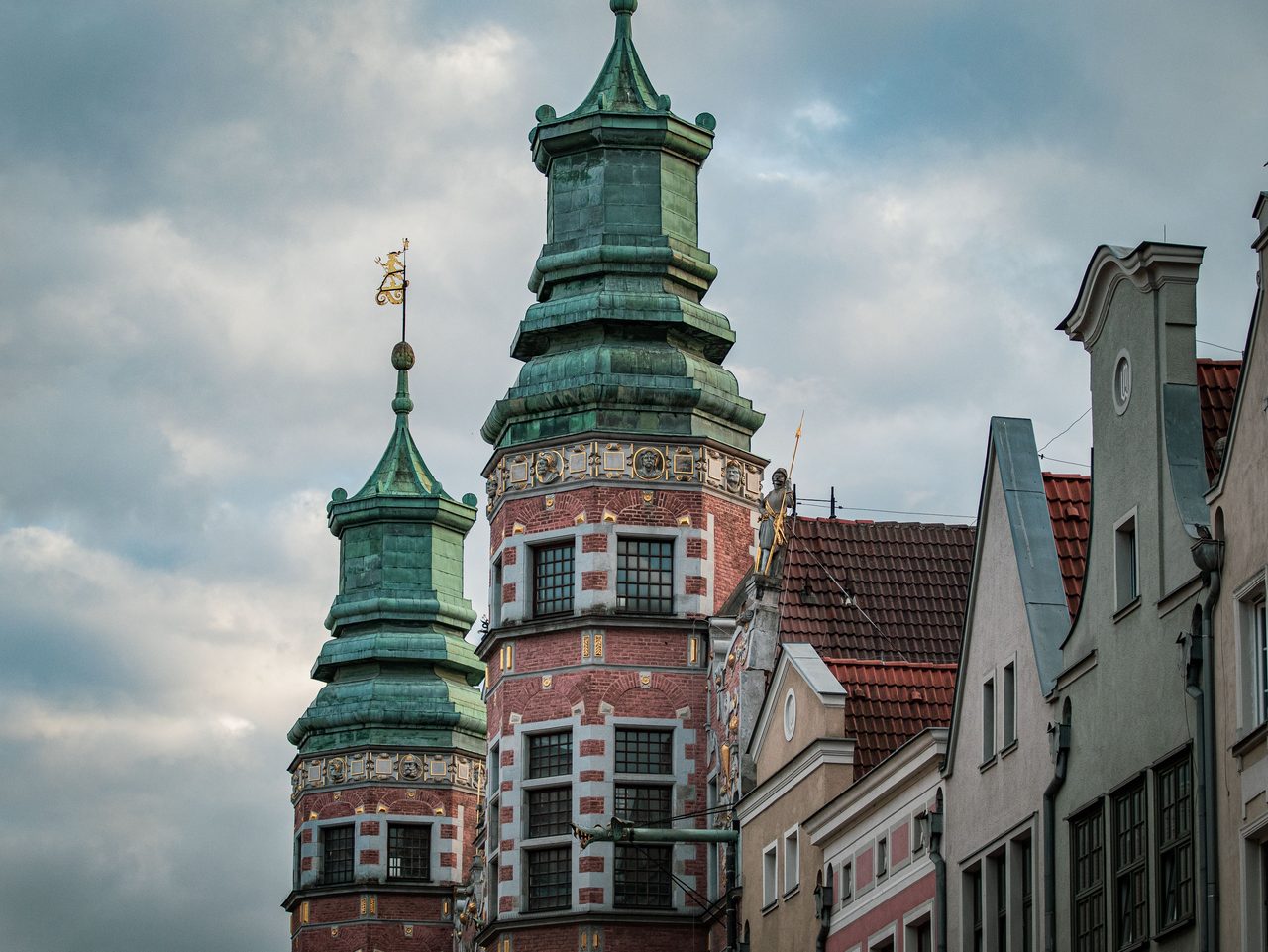
Gdansk is Poland's Baltic gateway, a Hanseatic port city on the Motlawa river with a rebuilt Main Town of tall merchant houses, the Gdansk Crane and St. Mary's Basilica. The city of roughly 470,000 inhabitants anchors the Tricity with Sopot and Gdynia and is the birthplace of Solidarity.
Gdansk grew rich as a Hanseatic port and spent centuries as Poland's main window on the sea, then became the Free City of Danzig before World War II began at Westerplatte in 1939. Most of the historic centre was destroyed in 1945 and was rebuilt in the 1950s and 1960s, so the Royal Way from the Golden Gate to the Green Gate, Artus Court and the Neptune Fountain look much as they did in the 17th century. The Motlawa waterfront with the medieval Crane is the liveliest area at night. North of the centre, the former Lenin Shipyard holds the European Solidarity Centre, while the Museum of the Second World War stands near the Old Town. Oliwa Cathedral and Park, the Baltic beaches at Brzezno and the neighbouring resort of Sopot make easy additions, and the Malbork Castle is a popular day trip.
Capital
Gdansk is the capital of Pomeranian Voivodeship (Poland's national capital is Warsaw)
Largest city
Gdansk
Population
approximately 470,000 (city); about 1.1 million in the Tricity area
Languages
Polish (official); English widely spoken in tourist areas
Currency
Polish zloty (PLN)
Time zone
CET/CEST (Europe/Warsaw; UTC+1 in winter, UTC+2 in summer)
The 23 destinations our editors recommend — from iconic landmarks to under-the-radar finds.
Long Market (Dlugi Targ) and Neptune Fountain
The Long Market is the wide pedestrian square at the centre of the Royal Way, lined with the Main Town Hall, Artus Court and the Green Gate. The bronze Neptune Fountain in front of Artus Court dates from the early 17th century and is the symbol of the city.
Main Town Hall (Museum of Gdansk)
The Gothic and Renaissance Main Town Hall houses the Museum of Gdansk's historic interiors, including the Red Room, the Great Council Chamber and the Mayor's rooms. The tower observation deck is closed for renovation in 2026.
Artus Court
Artus Court is the former merchants' meeting hall on the Long Market, known for its Great Hall with a tall Renaissance tiled stove and a ship model hanging from the ceiling. The Museum of Gdansk runs it as a branch with period interiors.
Golden Gate and Dluga Street
The Golden Gate (1614) is the ornate western entrance to Dluga Street and the start of the Royal Way. Its allegorical statues and gilded inscriptions face the street, which runs east towards the Long Market.
Green Gate (Zielona Brama)
The Green Gate closes the eastern end of the Royal Way and opens onto the Motlawa river waterfront. Built in the 16th century in Dutch Mannerist style, it now houses a branch gallery of the National Museum in Gdansk.
Uphagen House
Uphagen House is a preserved 18th-century patrician townhouse furnished as the home of the Gdansk merchant Johann Uphagen. It shows how wealthy citizens lived, with a Rococo hall, a Dutch kitchen and period collections.
Recommended itineraries
Pick a length, follow the route. Each itinerary balances headline sights with breathing room.
5-Day Gdansk Explorer
Day 1Arrive in Gdansk, explore city center
Day 2Visit top attractions and museums
Day 3Day trip to nearby highlights
Day 4Local markets and hidden gems
Day 5Final sightseeing, departure
7-Day Classic Gdansk
Days 1-2Gdansk city highlights
Days 3-4Regional exploration
Days 5-6Cultural immersion and local experiences
Day 7Return and departure
14-Day Ultimate Gdansk
Days 1-3Gdansk comprehensive city tour
Days 4-6Northern region exploration
Days 7-9Eastern highlights
Days 10-12Southern attractions
Days 13-14Return to Gdansk, departure
Where to stay in Gdansk
Three tiers, every traveller covered — from cost-conscious to flagship hotels.
Budget 165-350 PLN / USD 43-92
Hostels, budget hotels, and guesthouses offer affordable stays without sacrificing experience.
Mid-range 550-1130 PLN / USD 145-297
Boutique hotels and well-located accommodations provide comfort and convenience at reasonable prices.
Luxury 1530-3600 PLN / USD 403-947
World-class resorts and premium hotels deliver unforgettable experiences.
Hilton Gdańsk
Main Town: Motława riverfront in the Main Town, beside the Medieval Port Crane · 700–1,600 PLN (~$184–421 USD) per night
Five-star riverside hotel at Targ Rybny 1 with an indoor pool, sauna and spa treatments, a short walk from Długi Targ. Phone +48 58 778 71 00; website hiltongdansk.pl.
Szafarnia waterfront: Szafarnia street on the Motława, across the water from the Main Town · 700–1,600 PLN (~$184–421 USD) per night
Five-star hotel at Szafarnia 9 on the Motława embankment, a few minutes on foot from the Crane and Długi Targ via the nearby footbridges. Phone +48 58 300 17 17; website www.hotelgdansk.com.pl.
Szafarnia waterfront: Motława waterfront on Szafarnia, in a restored 1728 baroque palace · 900–1,800 PLN (~$237–474 USD) per night
Small five-star hotel in an 18th-century baroque palace at Szafarnia 2, with about ten rooms and views over the Motława and the Old Town skyline. Phone +48 58 300 95 60; website www.podewils.pl.
Gdańsk is compact: the Main Town, Old Town, Granary Island and the Motława embankment are walkable, and trams, buses and SKM trains cover Wrzeszcz, Oliwa, Sopot and Gdynia. A car is unnecessary in the centre, where the paid parking zone is expensive and many streets are pedestrian-only.
Budget breakdown
Daily spend by tier in PLN, broken out by category.
Average daytime temperature in °C. Figures are for Pomeranian.
June and September (long daylight, pleasant 18-23°C / 64-73°F days; beaches usable in June and early September) and the Christmas market season for a winter visit
The shoulder months of May and September combine mild weather with lower hotel prices and open attractions. The Baltic is cold: swimming is comfortable only from late June to August. 1-3 May is a long weekend with busy trains. All Saints Day (1 November) is a public holiday when many shops close and cemeteries are lit with candles. Hotel prices in Gdańsk, Sopot and on Hel can double on peak summer weekends.
Essential travel tips
Prices in this guide use 1 USD = 3.8 PLN; check the current rate before travel
Museum of Gdansk branches are free on Mondays and closed on Tuesdays; the Museum of the Second World War is free on Tuesdays; the Crane is free on Wednesdays
Cards and contactless payments are widely accepted, but keep some cash in zloty for small cafes and church donations
Tipping of about 10% is customary in restaurants when service is not included
Download the jakdojade.pl app for tram, bus and SKM routes and the Bolt app for rides
Tourist information: visitgdansk.com
Hidden gems
Off-the-beaten-path corners most travellers miss.
Safety information
INFO
Dial 112 for any emergency; operators speak English
INFO
Keep wallets and phones in zipped front pockets on trams, SKM trains and in the Main Town in summer
INFO
Use licensed taxis or Bolt, Uber or FreeNow, and take airport taxis only from the official rank
INFO
Swim only at guarded beaches, follow the lifeguard flags and do not touch anything suspicious washed up on the sand
INFO
Check menu prices before ordering in tourist restaurants and bars, and watch drinks in nightlife venues
INFO
Buy amber only from established shops that provide a certificate
INFO
Check the air and water-quality notices in summer and use tick repellent in forests
INFO
Carry a passport or ID card; Polish police may ask for identification, and some border checks are in place on road routes from Germany and Lithuania
Frequently asked questions
Is Gdansk safe to visit in 2026?
Gdańsk is safe for visitors day and night in the Main Town, Old Town, Wrzeszcz, Oliwa and Sopot. The main risks are pickpocketing on crowded trams, SKM trains and at Gdańsk Główny station, overcharging by unlicensed taxis, drink spiking or inflated bills at some nightlife venues (particularly the Mo
What is the best time to visit Gdansk?
The best time to visit Gdansk is June and September. Gdańsk has a temperate oceanic-to-humid continental climate moderated by the Baltic Sea, with mild summers, cold but not extreme winters and rain in every month; July and August are the wettest months
Do I need a visa to visit Gdansk?
Entry requirements follow Poland/EU Schengen rules. EU/EEA citizens need only a valid passport or national ID. Citizens of the US, UK, Canada, Australia and many other countries can stay up to 90 days in any 180-day period without a visa; the passport should be valid for at least 3 months beyond departure. ETIAS travel authorisation is due to apply to visa-exempt visitors; check the official EU ETIAS site before travel. Requirements vary by nationality, so check with your nearest embassy or the official immigration website before traveling.
What currency is used in Gdansk?
The currency in Gdansk is the Polish zloty (PLN) (PLN). ATMs are widely available in cities and tourist areas. Credit cards are accepted at most hotels and restaurants, but carry cash for markets and smaller establishments.
What language is spoken in Gdansk?
The main language(s) spoken in Gdansk: Polish (official); English widely spoken in tourist areas. In tourist areas, English is generally understood. Learning a few basic phrases in the local language is appreciated by locals.
What are the top attractions in Gdansk?
The top attractions in Gdansk include Long Market (Dlugi Targ) and Neptune Fountain, Main Town Hall (Museum of Gdansk), Artus Court, Golden Gate and Dluga Street, and Green Gate (Zielona Brama). Each offers a unique experience, from historic landmarks to natural wonders.