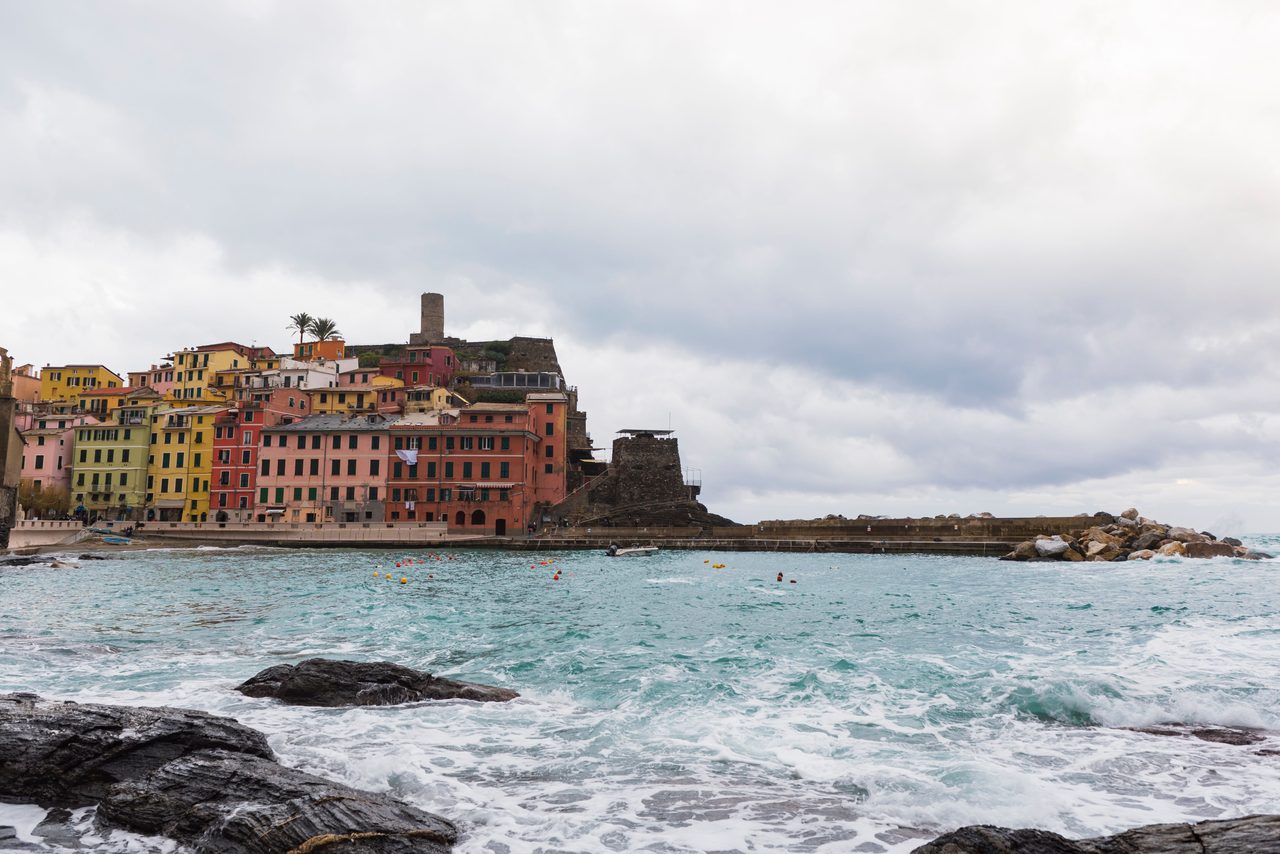
Liguria is a narrow, crescent-shaped region in northwest Italy, hugging the Mediterranean between the Alps, the Apennines, and the sea. Known as the Italian Riviera, it is famous for the five cliffside villages of the Cinque Terre, the glamorous harbour of Portofino, and the maritime city of Genoa. Liguria is also the birthplace of pesto, focaccia, and a culinary tradition built around the sea and the steep, terraced coast.
Liguria stretches roughly 350 km along the Ligurian Sea, from the French border in the west to Tuscany in the east, divided into the Riviera di Ponente and the Riviera di Levante on either side of Genoa. The region packs an extraordinary variety into a slim coastal strip: the UNESCO-listed Cinque Terre and Portovenere, the celebrated resorts of Portofino, Santa Margherita Ligure, and Sanremo, and Genoa's vast historic centre with its Strada Nuova palaces. Inland, terraced vineyards, olive groves, and hiking trails climb steeply from the sea. Whether you come for coastal walks, seafood and pesto, sailing, or belle-époque grandeur, Liguria delivers the Mediterranean at its most concentrated and scenic.
The 28 destinations our editors recommend — from iconic landmarks to under-the-radar finds.
Acquario di Genova (Genoa Aquarium)
The largest aquarium in Italy and one of the biggest in Europe, designed in part by Renzo Piano and opened for the 1992 Columbus Expo in Genoa's Old Port. It houses around 70 tanks and more than 12,000 animals across some 600 species, including sharks, dolphins, penguins and a Madagascar rainforest biosphere. The aquarium is open 365 days a year and uses dynamic, date-based pricing.
Palazzi dei Rolli and Via Garibaldi (Strada Nuova Museums)
Via Garibaldi, the 16th-century 'Strada Nuova', and its Palazzi dei Rolli were inscribed as a UNESCO World Heritage Site in 2006 for their concentration of aristocratic Renaissance and Baroque palaces. Three of them form the Musei di Strada Nuova: Palazzo Rosso and Palazzo Bianco hold major collections with works by Van Dyck, Rubens, Caravaggio and Veronese, while Palazzo Tursi serves as Genoa's city hall and displays Paganini's violin, the 'Cannone'. A single combined ticket admits visitors to all three palaces.
Cattedrale di San Lorenzo (Genoa Cathedral)
Genoa's striped black-and-white marble Romanesque-Gothic cathedral was consecrated in 1118 and dedicated to Saint Lawrence. Its Museo del Tesoro (Treasury) holds the Sacro Catino, a green glass dish long believed to be the Holy Grail, along with relics associated with Saint John the Baptist. An unexploded British naval shell from World War II still rests inside the nave as a reminder of the 1941 bombardment.
Palazzo Ducale Genova
The former residence of the Doges of the Republic of Genoa dates to the late 13th century and gained its Baroque facade in the 18th century. Today it is Genoa's principal cultural and exhibition center, hosting major international art shows throughout the year. The Torre Grimaldina, the building's former prison tower, can be climbed for views over the historic center, while the grand courtyards and atrium are free to walk through.
Galata Museo del Mare
The largest maritime museum in the Mediterranean is set in a former 17th-century arsenal in Genoa's Darsena district. Its highlights include a full-scale reconstructed Genoese galley, an extensive section on Italian emigration, and panoramic views from the rooftop Mirador. Moored outside is the WWII-era submarine Nazario Sauro (S 518), which visitors can board as a floating exhibit.
Boccadasse
Boccadasse is a historic former mariners' village within Genoa's elegant Albaro neighborhood, with origins possibly dating to the 11th century. Its tiny pebble cove is framed by pastel-colored fishermen's houses stacked against the cliff, making it one of the city's most photographed corners. The village sits at the eastern end of the seafront Corso Italia and is famous for its gelato shops.
Recommended itineraries
Pick a length, follow the route. Each itinerary balances headline sights with breathing room.
5-Day Liguria Explorer
Day 1Arrive in Liguria, explore city center
Day 2Visit top attractions and museums
Day 3Day trip to nearby highlights
Day 4Local markets and hidden gems
Day 5Final sightseeing, departure
7-Day Classic Liguria
Days 1-2Liguria city highlights
Days 3-4Regional exploration
Days 5-6Cultural immersion and local experiences
Day 7Return and departure
14-Day Ultimate Liguria
Days 1-3Liguria comprehensive city tour
Days 4-6Northern region exploration
Days 7-9Eastern highlights
Days 10-12Southern attractions
Days 13-14Return to Liguria, departure
Where to stay in Liguria
Three tiers, every traveller covered — from cost-conscious to flagship hotels.
Budget €65
Hostels, budget hotels, and guesthouses offer affordable stays without sacrificing experience.
Mid-range €160
Boutique hotels and well-located accommodations provide comfort and convenience at reasonable prices.
Luxury €450+
World-class resorts and premium hotels deliver unforgettable experiences.
Belmond Hotel Splendido
Portofino hillside · $$$$
Perched on a wooded hillside above Portofino harbour, the Belmond Hotel Splendido occupies a former Benedictine monastery converted into a hotel in 1901. The property is renowned for its terraced gardens, heated saltwater infinity pool, and panoramic views over the Tigullio Gulf. Long a retreat for film stars and royalty, it remains one of the Italian Riviera's most celebrated luxury addresses.
Set directly on Portofino's celebrated piazzetta and facing the harbour, Belmond Splendido Mare is the seafront sister property to the Hotel Splendido on the hill above. The intimate hotel offers fourteen individually designed rooms and suites, many with harbour views, alongside the DaV Mare restaurant. Guests have access to the facilities of the larger Splendido, including its pool and spa.
Eight Hotel Portofino is a small luxury boutique property a few minutes' walk from Portofino's central piazzetta and harbour. The hotel blends contemporary design with the relaxed elegance of the Riviera, offering a quiet retreat away from the busiest part of the village. Its restaurant and terrace provide a calm setting for dining within the famous resort town.
A Belle Époque landmark on the seafront promenade of Santa Margherita Ligure, the Grand Hotel Miramare opened in 1903 and remains a member of The Leading Hotels of the World. The hotel features a heated seawater pool, a private beach platform across the road, and subtropical gardens. Its location places guests within easy reach of Portofino, Rapallo, and the wider Tigullio coast.
Cafés, neighbourhood gems, and tasting menus worth the table reservation.
Trattoria Rosmarino
Ligurian - modern Genoese · $$
A stylish trattoria in the heart of Genoa's old town near Palazzo Ducale, set in an industrial-chic room with green banquettes. The kitchen reworks Genoese classics such as trofie al pesto, pansoti with walnut sauce, and stuffed vegetables using locally sourced ingredients. It is a reliable, atmospheric choice for a sit-down introduction to Ligurian cooking in the centro storico.
Il Marin
Contemporary Ligurian seafood · $$$$
A refined seafood restaurant on the top floor of the Eataly building in the Porto Antico, with sweeping views over Genoa's old harbour. The kitchen produces creative, technically precise fish dishes built around the day's catch and regional produce, paired with a deep list of Ligurian whites. It is one of the most ambitious tables in the city, ideal for a special-occasion dinner with a sea view.
Sa Pesta
Genoese - farinata and torte specialist · $
A historic Genoese institution in the centro storico, in business for over a century and famous for its farinata baked in a vast wood-fired oven at the entrance. The short menu also features torta pasqualina, vegetable tortes, stuffed vegetables, and cima alla genovese served at simple shared tables. It is one of the best places in the city to taste old-recipe Genoese cucina povera at very fair prices.
Antica Osteria di Vico Palla
Genoese / Ligurian · $$
A characterful old tavern tucked into a narrow alley behind the Porto Antico in the Sottoripa district of Genoa. The kitchen serves generously portioned, well-seasoned Ligurian classics, with the mixed fritto misto of seafood a particular favourite among locals. Wood-beamed and convivial, it is a dependable spot for traditional Genoese cooking away from the tourist traps.
Trattoria Ugo
Genoese family cooking · $$
A beloved family-run trattoria in central Genoa renowned among locals for one of the city's finest plates of trenette al pesto, served in the traditional way with potatoes and green beans. The menu sticks to honest Genoese home cooking with daily specials and homemade pasta. Small and popular, it rewards those who book ahead.
Trattoria Osvaldo, Boccadasse
Ligurian seafood · $$
A rustic seafood trattoria in the picturesque former fishing village of Boccadasse on Genoa's eastern shore. The kitchen specialises in the day's catch, fritto misto, and Genoese pasta dishes served in a cosy room a few steps from the pebble beach. The setting among pastel houses and fishing boats makes it a memorable lunch or sunset dinner stop.
Liguria is long and narrow, and its main coastal railway line is the single best way to travel - it links Genoa with the Cinque Terre, La Spezia, and the western Riviera quickly and cheaply. The Cinque Terre villages are best reached by train or ferry, not car. Genoa has a compact public transport network of buses, a short metro, funiculars, and public lifts. A rental car is only really useful for the inland hills and quiet western Riviera, not for the Cinque Terre or congested coastal towns.
Budget breakdown
Daily spend by tier in EUR, broken out by category.
Category
Budget
Mid-range
Luxury
Accommodation
€30
€90
€280
Food (per day)
€18
€40
€110
Transportation
€10
€15
€35
Activities
€7
€15
€25
Daily total
€65
€160
€450+
Best time to visit Liguria
Weather through the year in Liguria
Best timeShoulderWorth avoiding
Average daytime temperature in °C. Figures are for Liguria.
Essential travel tips
Buy a Cinque Terre Card for combined train and trail access between the villages
Many resort villages have limited traffic zones (ZTL); arrive by train or ferry where possible
Restaurants typically open for dinner from 7:30PM
Try trofie al pesto and farinata, two Ligurian specialities, at a local trattoria
Hidden gems
Off-the-beaten-path corners most travellers miss.
Castello Brown terrace above Portofino harbor
Corniglia's Santa Maria belvedere at sunset
Palazzo Rosso rooftop terrace over Genoa's caruggi
Boccadasse cove at dawn
before the day-trippers arrive
Punta Chiappa promontory below San Rocco above Camogli
Nervi's Passeggiata Anita Garibaldi clifftop walk
Skip the overpriced cafes on Portofino's piazzetta
walk up to the Chiesa di San Giorgio for the same view for free
Manarola harbor before the tour boats arrive
Monterosso's Fegina beach facing the open sea
Nessun Dorma terrace above Manarola
Portovenere's Chiesa di San Pietro on its rocky point
Vernazza harbor from the Doria castle tower
Safety information
INFO
Liguria is a very safe region; the main risk is petty theft and pickpocketing in Genoa's caruggi (narrow medieval alleys) and around Piazza De Ferrari, Via San Lorenzo, and the Stazione Principe area, especially after dark
INFO
On the Cinque Terre coastal trails buy the Cinque Terre Trekking Card or Cinque Terre Card Treno (covers the Sentiero Azzurro and regional trains, roughly €7.50 for one day on foot or about €19.50 including unlimited trains); the famous Monterosso-Vernazza-Corniglia paths require a valid ticket and good shoes
INFO
Always validate (stamp) regional train tickets in the green machines on the platform before boarding; failure to validate can mean a fine of €50 or more, and inspectors are common on the busy Genoa-La Spezia Cinque Terre line
INFO
Trenitalia and local transport strikes (sciopero) happen periodically; check the carrier website for guaranteed service bands and confirm timetables before travelling between the Cinque Terre villages
INFO
The rocky coves and cliffs around Portofino, Camogli, and the Cinque Terre have strong currents and sudden deep water; swim only in marked areas, watch for rough seas during libeccio south-westerly winds, and never dive into unknown water
INFO
Summer crowds peak from June to August in the Cinque Terre, Portofino, and Sanremo; pickpockets work crowded train carriages and the narrow village lanes, so keep bags zipped and worn across the body
INFO
Sun and heat are intense on the exposed coastal paths; carry water, wear a hat and high-factor sunscreen, and avoid midday hiking in July and August, when the trails can be closed for heat
INFO
Mosquitoes (including the tiger mosquito) are common near the coast and rivers in summer; bring repellent and consider window screens, as accommodation in older buildings may lack them
Frequently asked questions
Do I need a visa to visit Liguria?
Entry requirements follow Italy/Schengen rules. EU citizens need only a national ID card; non-EU visitors from many countries may stay visa-free for up to 90 days; others require a Schengen visa. Requirements vary by nationality, so check with your nearest embassy or the official immigration website before traveling.
What is the best way to visit the Cinque Terre?
The easiest way to explore the Cinque Terre is by regional train, which connects all five villages and La Spezia in minutes. A Cinque Terre Card covers both the trains and access to the national park hiking trails. In summer, ferries also link the villages and offer scenic coastal views, though they do not stop at Corniglia.
What food is Liguria famous for?
Liguria is the birthplace of pesto alla genovese, traditionally served with trofie or trenette pasta. Other specialities include focaccia, farinata (a chickpea flatbread), pansoti with walnut sauce, and fresh seafood. The region also produces white wines such as Vermentino and the prized Sciacchetrà dessert wine of the Cinque Terre.
What are the top attractions in Liguria?
The top attractions in Liguria include the Cinque Terre, Portofino, Genoa's old town and Strada Nuova palaces, Portovenere and the Gulf of Poets, and the Acquario di Genova. Each offers a distinct experience, from cliffside villages and luxury harbours to medieval city streets.
Explore Liguria by city
The cities below have their own guides — hotels, attractions and where to eat, in depth.