Afyonkarahisar · 22 Places · Best April-May and September-October
Afyonkarahisar
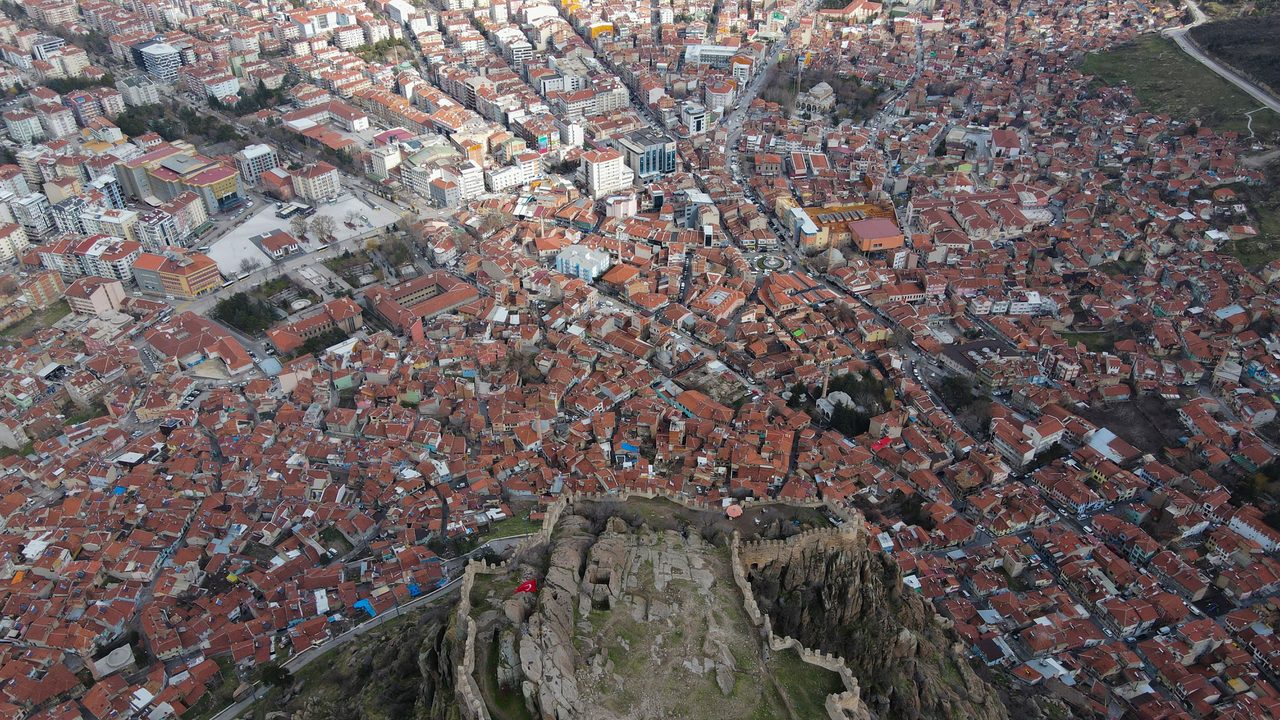
Afyonkarahisar is a province and city in western-central Turkey, on the inner Aegean plateau at around 1,020 m elevation. Known as Turkey's thermal-spa capital, it is famous for the mineral-rich hot springs of Gazlıgöl, Ömer-Gecek, and Sandıklı, a dramatic castle rising on a volcanic rock above the city, and a celebrated food culture of kaymak clotted cream, Turkish delight, and Afyon sucuk sausage. The region also guards the rock-cut monuments of the Phrygian Valley and key heritage of Turkey's 1922 War of Independence.
Afyonkarahisar sits at a historic crossroads on the western-central Anatolian plateau, ringed by lakes, marble quarries, and regulated poppy fields that gave the city its name. Its defining draw is geothermal water: the spa zones of Gazlıgöl, Ömer-Gecek, Sandıklı Hüdai, and Heybeli feed a cluster of large wellness resorts that draw visitors year-round for thermal pools and treatments. Above the city, the volcanic crag of Afyon Kalesi has been fortified since Hittite times, while the old town shelters the 13th-century Seljuk Ulu Camii with its forty wooden columns and one of Turkey's three principal Mevlevi lodges. Beyond the city lie the cave dwellings and rock tombs of the Phrygian Valley, the 1922 Dumlupınar and Kocatepe battlefields, and a UNESCO-recognised gastronomy scene built on kaymak, sucuk, and poppy-seed pastries.
The 22 destinations our editors recommend — from iconic landmarks to under-the-radar finds.
Afyon Kalesi (Afyonkarahisar Castle)
A fortress crowning a sheer volcanic rock that rises more than 200 metres above the city, with origins reaching back to the Hittite era around the 14th century BC and later Phrygian, Byzantine, Seljuk and Ottoman phases. A long stairway of around 700 steps climbs to the ruined ramparts, which give sweeping views over Afyonkarahisar and the surrounding plain.
Ulu Camii (Afyonkarahisar Grand Mosque)
A Seljuk-era wooden hypostyle mosque built in 1272, its flat beam roof over nine naves carried by 40 wooden columns with carved muqarnas capitals. Topped by a glazed-brick minaret, it was inscribed on the UNESCO World Heritage List in 2023 as part of the medieval wooden mosques of Anatolia.
Mevlevihane Museum (Sultan Divani Mevlevihane)
One of the earliest Mevlevi lodges in Anatolia, founded in the 13th century and historically ranked among the most important after Konya. Rebuilt after fire and restored as a museum, it preserves the semahane where the whirling dervishes performed, with displays of Mevlevi instruments, robes and manuscripts.
Afyonkarahisar Archaeology Museum
The provincial archaeology museum holds finds from Phrygian, Hellenistic, Roman and Byzantine sites across the region, including statuary, mosaics, sarcophagi and an important collection carved from local marble. The displays trace the long settlement of the Afyonkarahisar plain from prehistory onward.
Victory Museum (Zafer Müzesi)
Housed in a late-Ottoman building that served as Commander-in-Chief Mustafa Kemal's headquarters before the Great Offensive of August 1922, the museum preserves Atatürk's room and rooms dedicated to commanders such as Fevzi Çakmak and İsmet İnönü. Documents, photographs and maps recount the decisive battles of the Turkish War of Independence.
Utku (Zafer) Anıtı - Great Victory Monument
A bronze monument by Austrian sculptor Heinrich Krippel, made between 1934 and 1936 and unveiled in March 1936 to commemorate the Great Offensive and the liberation of the city. The group of two soldier figures rises on a trachyte base of local Afyon stone; Atatürk called it the monument that best expresses the Great Victory.
Recommended itineraries
Pick a length, follow the route. Each itinerary balances headline sights with breathing room.
5-Day Afyonkarahisar Explorer
Day 1Arrive in Afyonkarahisar, explore city center
Day 2Visit top attractions and museums
Day 3Day trip to nearby highlights
Day 4Local markets and hidden gems
Day 5Final sightseeing, departure
7-Day Classic Afyonkarahisar
Days 1-2Afyonkarahisar city highlights
Days 3-4Regional exploration
Days 5-6Cultural immersion and local experiences
Day 7Return and departure
14-Day Ultimate Afyonkarahisar
Days 1-3Afyonkarahisar comprehensive city tour
Days 4-6Northern region exploration
Days 7-9Eastern highlights
Days 10-12Southern attractions
Days 13-14Return to Afyonkarahisar, departure
Where to stay in Afyonkarahisar
Three tiers, every traveller covered — from cost-conscious to flagship hotels.
Budget ₺1,850 (~$40)
Hostels, budget hotels, and guesthouses offer affordable stays without sacrificing experience.
Mid-range ₺4,600 (~$99)
Boutique hotels and well-located accommodations provide comfort and convenience at reasonable prices.
Luxury ₺11,500+ (~$248)
World-class resorts and premium hotels deliver unforgettable experiences.
NG Afyon Wellness & Convention
Sadikbey thermal belt, Afyon-Izmir highway · $$$$
NG Afyon Wellness & Convention is the flagship 5-star thermal resort of Afyonkarahisar, a 428-room property set in the Sadikbey thermal belt northwest of the city. The resort is built around a roughly 9,500-square-metre thermal spa with thirteen indoor and outdoor pools, a water park, and extensive convention facilities. It is consistently ranked among the city's top thermal hotels.
Korel Thermal Resort Clinic & SPA is a 5-star alcohol-free thermal resort and medical spa on the Afyon-Kutahya road northwest of the city. The property combines eleven pools and several wellness centres with a physical therapy clinic offering rehabilitation and hydrotherapy. It spreads across a large landscaped site geared toward family wellness and medical thermal treatment.
Ikbal Thermal Hotel & SPA is a large 5-star family thermal hotel in the Dortyol area on the Kutahya road, with around 286 rooms. The hotel's MineraSpa centre features thirteen indoor and three outdoor thermal pools, a hamam, and an extensive aquapark popular with families. It has repeatedly appeared on the Conde Nast Traveler Readers' Choice destination spa lists.
Orucoglu Thermal Resort is a 5-star alcohol-free family wellness resort on the Kutahya road in the Omer-Gecek thermal field, promoted as one of Turkey's earliest 5-star thermal hotels. Its roughly 306 rooms surround indoor and outdoor thermal pools, ladies-only pools, and three segregated spa centres fed by water emerging at around 76 degrees Celsius. The resort holds repeated Tripadvisor Travellers' Choice awards.
Cafés, neighbourhood gems, and tasting menus worth the table reservation.
Ikbal Lokantasi
Traditional Afyon Anatolian · $$
A historic Afyonkarahisar institution founded in 1922 and renamed Ikbal after Ataturk dined here in 1934. The kitchen serves classic Anatolian copper-pot cooking and the city's signature kaymakli ekmek kadayifi, alongside eggplant kebab, lamb tandir and stuffed vegetables. It is the benchmark address for old-recipe Afyon cuisine in the Uzun Carsi old town.
Hidayet Abi'nin Yeri
Afyon kaymak and ekmek kadayifi · $
The dessert house most associated with making Afyon's ekmek kadayifi famous, run by the Korkmaz family since 1960. It sells village buffalo kaymak, the city's registered kaymakli ekmek kadayifi prepared to a special syrup ratio, and Afyon lokum. A central-city pilgrimage for anyone wanting the genuine Afyon cream-and-dessert experience.
Salim Usta
Traditional Afyon family cooking · $$
A long-running family lokanta tracing its roots to 1934, known for hearty regional plates passed down across generations. The kitchen turns out Afyon keskek with cubed lamb, kuzu tandir, eggplant musakka with chickpeas and zulbiye kebab. It is a dependable spot for authentic, home-style Afyon cooking.
Asci Bacaksiz
Traditional Afyon lamb cooking · $$
A humble, old-fashioned eatery with roots said to reach back to the 1860s, founded by Yagcioglu Mustafa. Generations have come for its slow-cooked lamb kebab and traditional Anatolian plates served in a no-frills setting. It is a characterful choice for old-school Afyon cooking.
Musakka Restaurant
Traditional Afyon home cooking · $$
A family-run kitchen in central Afyonkarahisar honouring grandmother-and-mother recipes, with dishes cooked in copper pots over an open wood fire. The result is genuine, slow-cooked Anatolian home cooking, from vegetable musakka to meat stews. It is a warm, authentic spot for traditional flavours.
Safahat Lokantasi
Afyon lokanta classics · $
A beloved everyday lokanta that locals returning to Afyonkarahisar make a point of visiting. The broad menu covers doner, kofte, copper-pot stews and vegetable plates at fair prices. It is a reliable, unpretentious choice for a full local meal.
Afyonkarahisar sits at a major crossroads of central-western Anatolia, where railways and highways from Ankara, Izmir, and Konya converge. The city is reached most easily by intercity bus to the Otogar or by TCDD train, while the small regional Zafer Airport at Altıntaş offers limited domestic flights. Within the city, municipal buses, minibuses, and dolmuş link the centre with the thermal suburbs; a rental car is the most flexible option for reaching the Phrygian Valley sites, thermal resorts, and day trips along the D-300, D-650, and O-7 highways.
Budget breakdown
Daily spend by tier in TRY, broken out by category.
Category
Budget
Mid-range
Luxury
Accommodation
₺850 (~$18)
₺2,500 (~$54)
₺7,000 (~$151)
Food (per day)
₺550 (~$12)
₺1,200 (~$26)
₺2,800 (~$60)
Transportation
₺250 (~$5)
₺450 (~$10)
₺900 (~$19)
Activities
₺200 (~$4)
₺450 (~$10)
₺800 (~$17)
Daily total
₺1,850 (~$40)
₺4,600 (~$99)
₺11,500+ (~$248)
Best time to visit Afyonkarahisar
Weather through the year in Turkey
Best timeShoulderWorth avoiding
Average daytime temperature in °C. Figures are for Turkey.
April-May and September-October for sightseeing; autumn through early spring for the thermal experience
The thermal-tourism calendar runs counter to coastal Turkiye: demand for hot mineral pools is highest in the cooler months, while summer suits resort aquaparks and outdoor sightseeing.
Essential travel tips
Pair a city stay with a night at one of the large thermal resorts for the full spa experience
Bring a swimsuit and flip-flops for the public and hotel thermal pools
Buy kaymak, sucuk, and poppy-seed pastries fresh from shops near the old town as edible souvenirs
A car makes it far easier to combine the Phrygian Valley, lakes, and Dumlupınar battlefield in one trip
Hidden gems
Off-the-beaten-path corners most travellers miss.
Afyon Kalesi ramparts at sunset
over the whole plain
Hidirlik Tepesi tea gardens
looking back at the castle rock
The upper lanes of the Ottoman houses district
framing the crag
Gazligol's old village hammam
away from the resort crowds
Emre Golu lake in the Phrygian Valley at dawn
Akdag Nature Park's forest trails south of Sandikli
Sit at a traditional kaymakci for kaymak, honey, and tea
the true Afyon ritual
Ayazini rock-cut Byzantine churches
a Cappadocia-like landscape almost free of crowds
Lake Eber's reed-fringed shore near Bolvadin
for birdlife and mist
Emre Golu in the Phrygian Valley
Omer-Gecek thermal pool terraces
Safety information
INFO
Afyonkarahisar is a calm, low-crime provincial city; the main everyday risk is ordinary petty theft, so keep an eye on bags and phones in the central bazaar, the weekly market, and crowded bus stations
INFO
Winter brings heavy snow and ice from December to February; pavements and roads become slippery, the castle climb is hazardous when icy, and drivers should fit winter tyres and slow down on the highland approaches
INFO
Thermal pools and hammams are hot; limit soaking sessions, drink plenty of water, and rise slowly to avoid dizziness, especially for older visitors, children, pregnant travellers, and anyone with heart or blood-pressure conditions
INFO
The single nationwide emergency number in Turkiye is 112 for police, ambulance, fire, and jandarma; it works from any phone, including without a local SIM
INFO
Afyon Kalesi (the castle) is reached by a long, steep stairway of around 700 steps with exposed sections; wear proper shoes, carry water, and take care in wind, rain, or ice
INFO
Summers are hot and dry (highs around 30°C in July and August) at over 1,000 m elevation, where the sun is strong; use sunscreen and a hat and stay hydrated when sightseeing or climbing the castle
INFO
Tap water is chlorinated and generally considered safe, but many residents and visitors prefer inexpensive bottled water, particularly for the first few days
INFO
Standard road-safety caution applies on intercity routes; traffic can be fast and overtaking aggressive, so use seatbelts and licensed taxis or reputable intercity buses
Frequently asked questions
Do I need a visa to visit Afyonkarahisar?
Entry follows Turkey's national rules. Citizens of the United States, the United Kingdom, the EU, and many other countries can enter visa-free for tourism for up to 90 days within a 180-day period, while other nationalities must obtain an e-Visa online at evisa.gov.tr before travel. A passport valid for at least six months beyond your entry date is required, so check the current rules for your nationality before booking.
Why is Afyonkarahisar called Turkey's thermal capital?
Afyonkarahisar sits over abundant geothermal springs, and its thermal zones at Gazlıgöl, Ömer-Gecek, Sandıklı Hüdai, and Heybeli feed a cluster of major wellness resorts. Hotels such as NG Afyon Wellness & Convention, İkbal Thermal, and Korel Thermal draw visitors year-round for mineral-rich pools, hammams, and spa treatments, which is why the city is marketed as Turkey's thermal capital.
What food is Afyonkarahisar famous for?
Afyonkarahisar is a UNESCO City of Gastronomy best known for kaymak, a rich clotted cream often eaten with honey, and Afyon sucuk, a spiced beef sausage. Other specialities include Turkish delight (lokum), ekmek kadayıfı dessert served with kaymak, and poppy-seed (haşhaş) pastries that reflect the region's regulated poppy cultivation.
What are the top attractions in Afyonkarahisar?
The top attractions in Afyonkarahisar include Afyon Castle on its volcanic crag, the rock-cut Phrygian Valley, the Seljuk-era Ulu Camii with its forty wooden columns, the Mevlevi lodge and museum, and the Kocatepe and Dumlupınar battlefields of the 1922 Great Offensive, alongside the city's renowned thermal spas.