Apulia · 24 Places · Best May–June and September–October
Apulia
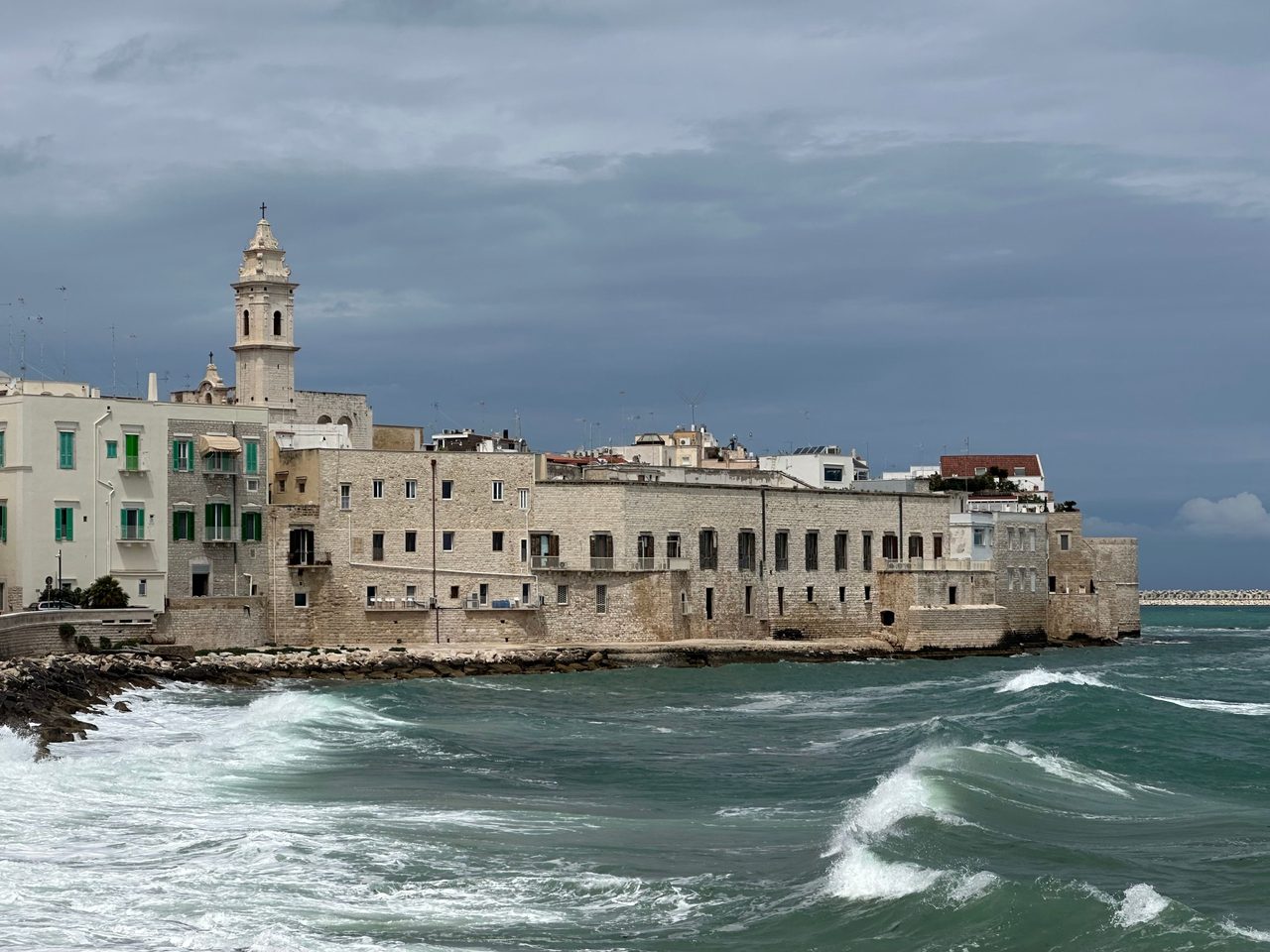
Apulia (Puglia) is the sun-drenched heel of Italy's boot, stretching along the Adriatic and Ionian coasts with over 800 km of coastline, centuries-old whitewashed towns, and a food culture that rivals anywhere in the country. Home to two UNESCO World Heritage Sites — the iconic trulli of Alberobello and the enigmatic Castel del Monte — Apulia blends Norman castles, Baroque Lecce stonework, and ancient masserie (fortified farmhouses) into an unforgettable landscape.
Apulia occupies the southeastern tip of the Italian peninsula, forming the stiletto heel of the country's boot shape. The region encompasses the Gargano promontory national park in the north, the fertile Murge plateau in the centre, the Valle d'Itria with its fairy-tale trulli villages, and the flat Salento peninsula in the south where the Adriatic and Ionian seas meet. Ancient Greek, Roman, Byzantine, Norman, and Baroque influences layer the architecture and cuisine. The regional food culture — centred on orecchiette pasta, burrata, focaccia barese, and local olive oil — is one of Italy's most celebrated. Two international airports (Bari and Brindisi) provide easy access for most travellers.
The 24 destinations our editors recommend — from iconic landmarks to under-the-radar finds.
Trulli of Alberobello
Alberobello's Rione Monti and Aia Piccola districts hold over a thousand trulli, whitewashed limestone huts with conical stacked-stone roofs built without mortar, a construction method tied to local building history and tax avoidance under Naples rule. Rione Monti is now largely shops and souvenir stalls, while Aia Piccola across the way is quieter and still mostly residential. The Trullo Sovrano is the only two-story trullo in town and gives a sense of the interior layout you can't get from the street.
Lecce Baroque Old Town
Lecce's historic centre is built almost entirely from local pietra leccese, a soft golden limestone that lets carvers cut deep, elaborate ornamentation, which is why the city's 17th-century churches and palazzi are so densely decorated compared to Baroque architecture elsewhere in Italy. The Basilica di Santa Croce and the buildings around Piazza del Duomo are the standard reference points for this style. Because the stone is soft, the facades have also weathered into a warm, textured surface that changes color with the light.
Castel del Monte
Built by Holy Roman Emperor Frederick II in the 13th century, this castle is unusual for having no moat, drawbridge, or other real defensive features, which has led historians to debate whether it was a hunting lodge, an administrative seat, or a deliberate architectural statement. Its plan is a strict octagon with eight octagonal towers, echoing Frederick's known interest in geometry and astronomy. It sits alone on a hilltop with no town built up around it, so the building itself, rather than a surrounding old quarter, is the whole visit.
Polignano a Mare
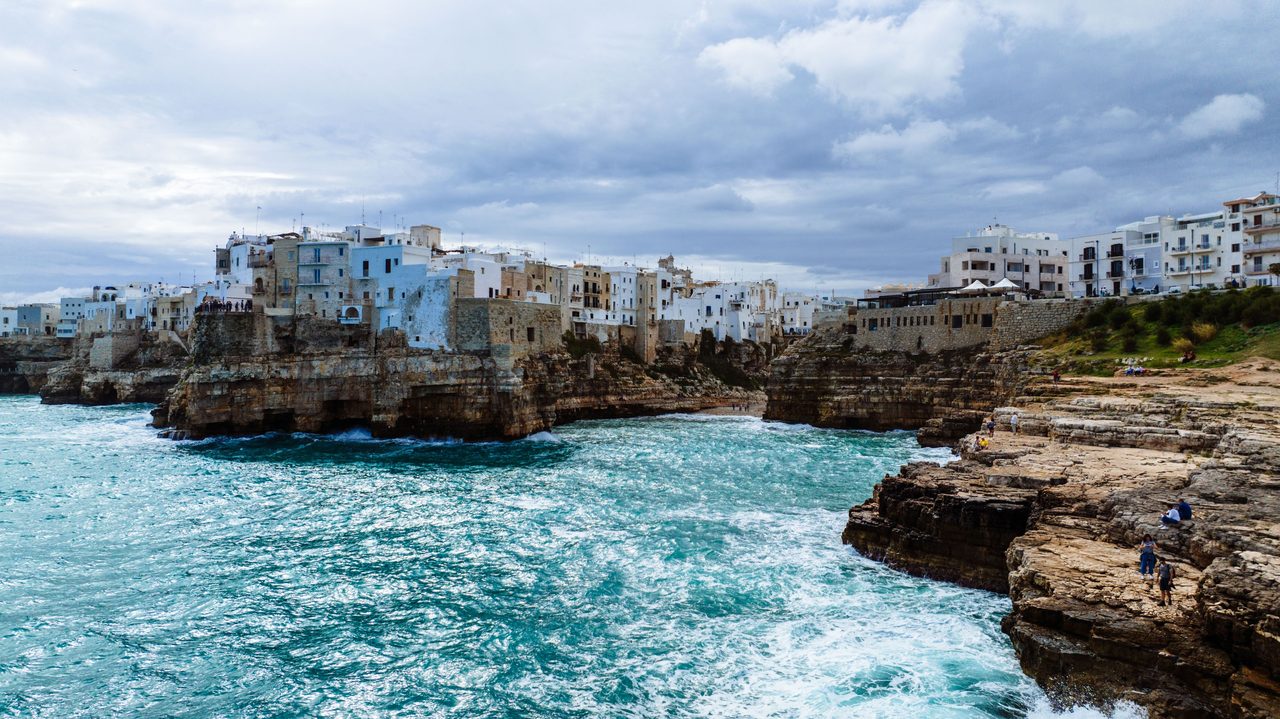
Polignano a Mare is built on a limestone cliff riddled with sea caves, and the old town's white lanes end abruptly at drops down to the Adriatic, most famously at the Lama Monachile cove where a narrow beach sits beneath a Roman-era bridge. Singer Domenico Modugno, who wrote 'Volare,' was born here and there's a statue of him overlooking the sea. The old town itself is small and walkable in an hour or two, with balconies and viewpoints cut directly into the cliff edge.
Grotte di Castellana
This is Italy's longest network of show caves, roughly 3km of connected chambers formed by water erosion in the limestone plateau, descending to depths of around 60-70 meters below the surface. The first chamber, the Grave, is a huge collapsed sinkhole open to daylight that gives a sense of scale before you head underground into the fully enclosed passages. The final stretch, the Grotta Bianca, is lined with white alabaster-like formations that are the visual high point of the full tour.
Ostuni Old Town
Known as the Città Bianca for its whitewashed buildings, Ostuni sits on a hilltop a few kilometers inland from the Adriatic coast and is built as a tight maze of stepped, narrow lanes climbing toward the cathedral at the top. The whitewash was traditionally reapplied regularly, originally believed to help control disease, and it still gives the town its uniform bright appearance against the surrounding olive groves. From the upper town there are open views out over olive terraces toward the sea.
Recommended itineraries
Pick a length, follow the route. Each itinerary balances headline sights with breathing room.
5-Day Apulia Explorer
Day 1Arrive in Apulia, explore city center
Day 2Visit top attractions and museums
Day 3Day trip to nearby highlights
Day 4Local markets and hidden gems
Day 5Final sightseeing, departure
7-Day Classic Apulia
Days 1-2Apulia city highlights
Days 3-4Regional exploration
Days 5-6Cultural immersion and local experiences
Day 7Return and departure
14-Day Ultimate Apulia
Days 1-3Apulia comprehensive city tour
Days 4-6Northern region exploration
Days 7-9Eastern highlights
Days 10-12Southern attractions
Days 13-14Return to Apulia, departure
Where to stay in Apulia
Three tiers, every traveller covered — from cost-conscious to flagship hotels.
Budget $65
Hostels, budget hotels, and guesthouses offer affordable stays without sacrificing experience.
Mid-range $160
Boutique hotels and well-located accommodations provide comfort and convenience at reasonable prices.
Luxury $500
World-class resorts and premium hotels deliver unforgettable experiences.
Borgo Egnazia
Savelletri di Fasano · $$$$
Apulia's most celebrated luxury resort — a purpose-built Apulian village of trulli, cottages, and villas around a championship golf course
Cafés, neighbourhood gems, and tasting menus worth the table reservation.
Il Poeta Contadino
Modern Apulian · $$$
A fine-dining restaurant in Alberobello set inside a restored trullo-adjacent townhouse, with vaulted stone ceilings and an old wine cellar used for private dining. The kitchen takes traditional Apulian ingredients — local lamb, orecchiette, seasonal vegetables — and plates them with a refined, contemporary hand rather than serving them rustic.
Alle Due Corti
Traditional Apulian · $$
A long-running trattoria tucked in one of Lecce's old town courtyards, serving the working-class Salentine dishes the city is actually built on rather than a tourist-facing menu. The cooking is plain and direct — legumes, hand-torn pasta, offal and horse meat — the kind of food Lecce households ate before it became a food-tourism destination.
Osteria delle Travi Il Buco
Apulian / Seafood · $$
A tiny, no-frills seafood osteria wedged into Bari's old town, close enough to the harbor that the raw fish on the counter was likely landed that morning. Seating is cramped and informal, closer to eating in someone's kitchen than a restaurant dining room, and the menu leans on what came in that day rather than a fixed list.
Apulia is served by two international airports and a regional train network. A car is strongly recommended for exploring beyond the main cities — the Valle d'Itria, Gargano peninsula, and Salento beaches are poorly served by public transport. Train travel between Bari, Brindisi, and Lecce is fast and affordable.
Budget breakdown
Daily spend by tier in EUR, broken out by category.
Category
Budget
Mid-range
Luxury
Accommodation
$30
$90
$350
Food (per day)
$18
$45
$100
Transportation
$10
$15
$30
Activities
$7
$10
$20
Daily total
$65
$160
$500
Best time to visit Apulia
Weather through the year in Italy
Best timeShoulderWorth avoiding
Average daytime temperature in °C. Figures are for Italy.
May–June offers warm weather (22–27°C), open beaches and restaurants, fewer crowds, and lower prices. September–October is excellent for food tourism — olive harvest, wine festivals, and truffle season. July–August is peak season with crowded beaches and extreme heat.
Essential travel tips
Rent a car to reach trulli villages and rural masserias — public transport links are limited
Book masseria stays at least 2–3 months ahead for summer
Visit Alberobello early morning (before 9 AM) to see the trulli without crowds
Try focaccia barese fresh from a bakery — it bears no resemblance to supermarket versions
Book Grotte di Castellana tickets online at grottedicastellana.it — long queues in summer
The Trenitalia Puglia Pass offers unlimited regional train travel for a fixed daily price
Hidden gems
Off-the-beaten-path corners most travellers miss.
Specchia
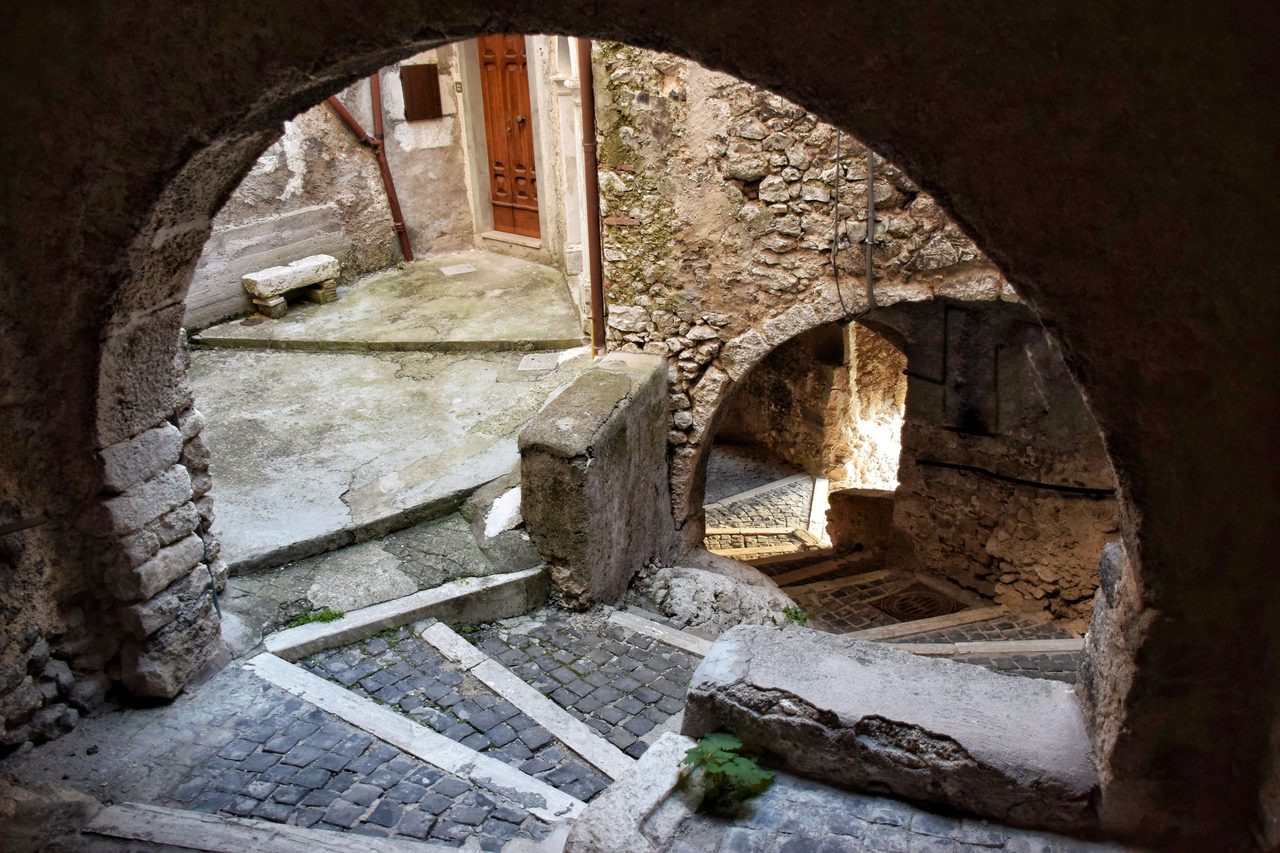
A perfectly preserved medieval hilltop village in the Salento with almost no tourists despite great restaurants and a handsome old town
Salento, Lecce Province
Gravina in Puglia
A dramatic cave city with a gorge bridge, ancient rock churches, and spectacular sunset views — often overshadowed by Matera nearby
Bari Province
Torre Guaceto Marine Reserve
A pristine protected coastal reserve near Brindisi with crystal-clear water, wild dunes, and almost no development
Brindisi Province
Oria
An ancient Messapian city with a magnificent Norman castle and medieval Jewish quarter rarely visited by tourists
Brindisi Province
Safety information
INFO
Keep a photocopy of your passport and entry stamp separate from the original — if stolen, having copies at the nearest Italian questura (police station) speeds up reporting and obtaining an emergency travel document from your consulate. Store a scan in cloud storage before departing.
INFO
Unguarded free beaches ('spiaggia libera') in Apulia have no lifeguard service — check the warning flag system before swimming: green flag means safe, yellow means swim with caution, red means dangerous conditions. Rocky beaches across Apulia harbour sea urchins (ricci) in the shallows — wear water shoes when entering from rocks.
INFO
Drive cautiously on rural roads at night — wild boar, deer, and livestock cross unlit roads without warning, especially in Gargano National Park and the Murge plateau. Narrow Valle d'Itria country lanes have sharp blind bends; sound the horn before corners. The A14 motorway is the safest and fastest route between major cities.
INFO
July and August temperatures in inland Apulia regularly reach 38–40°C. Carry at least 2 litres of water per person per day when outdoors, wear a hat, and avoid direct sun between 12:00 and 16:00. EU/EEA citizens with a valid EHIC card receive free emergency medical treatment at Italian public hospitals. Non-EU travellers must carry comprehensive travel insurance.
INFO
Pickpocketing is the most reported crime against visitors in Apulia — it occurs mainly on Bari city buses (especially route No. 20), at the Via Venezia fish market, and at beach resort car parks (Pescoluse, Torre dell'Orso) in summer. Use a concealed money belt or front-pocket wallet; never leave bags unattended on café chairs or beach towels. Never leave anything visible in a parked car.
Frequently asked questions
Is Apulia safe to visit in 2026?
Apulia is one of Italy's safest regions for tourists. Petty theft can occur in Bari's busy market areas and at beach resorts in summer — secure valuables and do not leave items unattended on the beach. Emergency services: 112 (general European emergency), 113 (State Police), 118 (ambulance), 115 (fire).
What is the best time to visit Apulia?
The best time to visit Apulia is May–June and September–October. The region has a Mediterranean climate with hot dry summers and mild winters. June and September are ideal for combining beach visits with sightseeing. July–August are peak season — very hot (28–38°C), crowded, and expensive.
Do I need a visa to visit Apulia?
Entry requirements follow Italy and Schengen Area rules. EU/EEA citizens need only a national ID. US, UK, Australian, and Canadian citizens may visit up to 90 days without a visa. Other nationalities should verify Schengen visa requirements with their nearest Italian embassy before travel.
What currency is used in Apulia?
Apulia uses the Euro (EUR). ATMs are widely available in cities and larger towns. Credit cards are accepted at hotels and most restaurants, but smaller masserie, markets, and rural establishments may be cash-only. Carry some cash when exploring rural areas.
Do I need a car in Apulia?
A car is strongly recommended for exploring Apulia fully. Major cities (Bari, Lecce, Brindisi) are connected by train, but the Valle d'Itria trulli villages, Gargano National Park, and Salento beaches are very difficult to reach by public transport. Car rental is available at Bari (BRI) and Brindisi (BDS) airports.
What are the top attractions in Apulia?
The top attractions in Apulia include the Trulli of Alberobello (UNESCO), Lecce Baroque Old Town, Castel del Monte (UNESCO), Polignano a Mare cliffs, Grotte di Castellana caves, Ostuni White City, Otranto Cathedral, and Bari Vecchia. Each offers a distinctive experience from unique architecture to natural wonders.