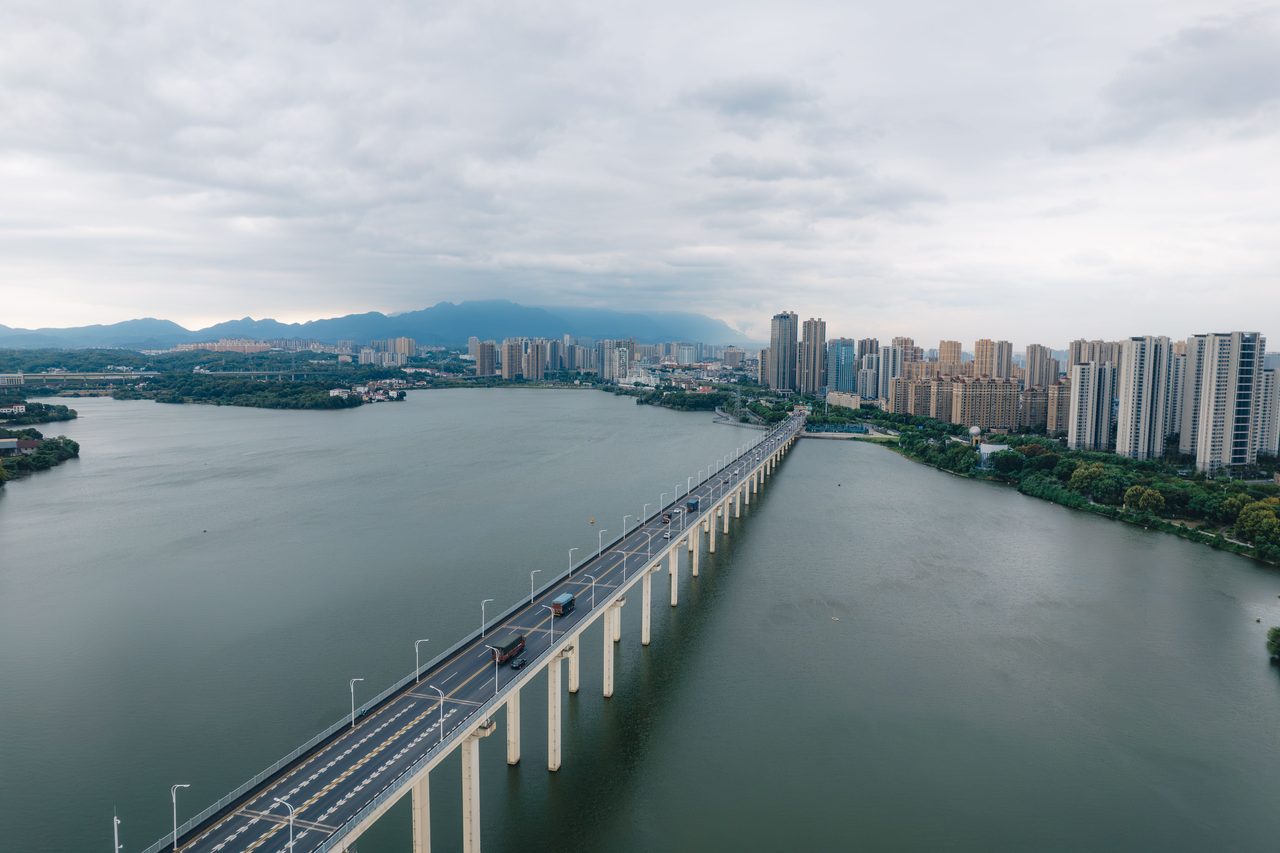
Anhui is an inland province in eastern China, best known for the granite peaks of Huangshan (Yellow Mountain), the UNESCO-listed Huizhou villages of Hongcun and Xidi, and the Buddhist mountain of Jiuhua Shan. Its capital and largest city is Hefei. Anhui is the home of Hui cuisine, Xuan paper and Hui ink, and some of China's most famous teas. It has no sea coast, but the Yangtze River, Chaohu Lake and Taiping Lake give it plenty of waterfront.
Anhui sits inland in eastern China, bordered by Jiangsu to the east, Zhejiang to the southeast, Jiangxi and Hubei to the south and southwest, and Henan and Shandong to the north. The Yangtze River cuts across its middle and the Huai River across the north, dividing the province into three distinct cultural zones. The south holds Huizhou culture, with Huangshan, the whitewashed villages of Hongcun and Xidi, Tunxi Old Street and the tea hills of Qimen and Taiping. Central Anhui centres on Hefei, a fast-growing science and technology capital with Chaohu Lake nearby, and on the Yangtze cities of Wuhu, Ma'anshan and Anqing. Jiuhua Shan, one of China's four sacred Buddhist mountains, and Tianzhu Shan lie in the southwest. The north is flat farmland with Bozhou's herbal medicine trade. High-speed rail and several regional airports make the province easy to cross.
The 20 destinations our editors recommend — from iconic landmarks to under-the-radar finds.
Huangshan (Yellow Mountain) (黄山)
UNESCO World Heritage mountain (1990) famed for granite peaks, twisted Huangshan pines, hot springs and the sea of clouds; classic routes climb the Eastern or Western Steps or ride cable cars from Yungu, Taiping or Yuping stations.
Hongcun Ancient Village (宏村)
UNESCO-listed Huizhou village (2000) laid out in the shape of an ox, with a water system running through the lanes to the Moon Pond and South Lake; Ming and Qing merchant houses such as Chengzhi Hall.
Xidi Ancient Village (西递)
Companion UNESCO village of Hongcun known for its Ming and Qing residences, carved lintels, stone archway and narrow lanes with water channels.
Jiuhua Mountain (九华山)
One of China's four sacred Buddhist mountains, dedicated to the bodhisattva Ksitigarbha, with dozens of active temples including Huacheng Temple and Baisui Palace.
Tianzhu Mountain (天柱山)
UNESCO Global Geopark and 5A scenic area with granite peaks, caves and ancient pines.
Tunxi Old Street (屯溪老街)
Pedestrian street of Ming and Qing style shops in Tunxi selling the Four Treasures of the Study, tea, Hui ink and She inkstones, with local Hui snack stalls.
Recommended itineraries
Pick a length, follow the route. Each itinerary balances headline sights with breathing room.
5-Day Anhui Explorer
Day 1Arrive in Anhui, explore city center
Day 2Visit top attractions and museums
Day 3Day trip to nearby highlights
Day 4Local markets and hidden gems
Day 5Final sightseeing, departure
7-Day Classic Anhui
Days 1-2Anhui city highlights
Days 3-4Regional exploration
Days 5-6Cultural immersion and local experiences
Day 7Return and departure
14-Day Ultimate Anhui
Days 1-3Anhui comprehensive city tour
Days 4-6Northern region exploration
Days 7-9Eastern highlights
Days 10-12Southern attractions
Days 13-14Return to Anhui, departure
Where to stay in Anhui
Three tiers, every traveller covered — from cost-conscious to flagship hotels.
Budget CNY 300 (~$45)
Hostels, budget hotels, and guesthouses offer affordable stays without sacrificing experience.
Mid-range CNY 800 (~$119)
Boutique hotels and well-located accommodations provide comfort and convenience at reasonable prices.
Luxury CNY 2,300+ (~$343+)
World-class resorts and premium hotels deliver unforgettable experiences.
InterContinental Hefei
Zhengwu District beside Swan Lake, Hefei · CNY 800-1500/night (~$119-224)
A 405-room international luxury hotel next to Swan Lake and the Hefei Theater in the Zhengwu government and business district.
Cafés, neighbourhood gems, and tasting menus worth the table reservation.
Laojie Diyi Lou (老街第一楼)
Huizhou (Hui) cuisine · $$
Traditional Hui-style building near the Memorial Archway on Tunxi Old Street, serving large portions of local Huizhou dishes from early morning to late at night. It is a common first stop for visitors sampling stinky mandarin fish and mao tofu.
Meishi Renjia (美食人家)
Huizhou (Hui) cuisine · $$
Two-storey Hui-style building on the old street with an open kitchen where visitors can watch the cooks prepare Huizhou dishes and snacks.
Laoma Restaurant (老马饭店)
Huizhou (Hui) cuisine · $$
Restaurant near the memorial archway known for braised stinky mandarin fish, prized for its single central bone and tender flesh.
Linjiang Yilou (临江一楼)
Anhui (Hui) cuisine · $$
Restaurant on Liyang Old Street in Tunxi serving authentic Anhui dishes, near the Xin'an River promenade.
Dasha Huicai Garden (大厦徽菜苑)
Huizhou (Hui) cuisine · $$
Restaurant near Tunxi Old Street cited for classic Huizhou stinky mandarin fish and mao tofu.
Piyun Hui Fu Cai (披云徽府菜)
Huizhou (Hui) cuisine · $$$
Restaurant offering genuine Hui dishes; recommended dishes include Taibai fish head soup, five-spice donkey meat and Zhuangyuan tofu casserole.
Anhui sits between Shanghai, Nanjing, Wuhan and Hangzhou and is one of the easiest provinces to reach by high-speed rail. Hefei is the capital and largest city, with a rail hub at Hefei South and Xinqiao International Airport (HFE). The tourist south is reached through Huangshan North station and Huangshan Tunxi Airport (TXN), with Jiuhua Shan (Chizhou) and Tianzhu Shan (Anqing) as separate rail-plus-bus branches. Fares use a fixed rate of 1 USD = 6.70 CNY and are approximate; timetables change, so check 12306 or Trip.com on the day of travel.
Budget breakdown
Daily spend by tier in CNY, broken out by category.
Category
Budget
Mid-range
Luxury
Accommodation
CNY 130 (~$19)
CNY 400 (~$60)
CNY 1,500 (~$224)
Food (per day)
CNY 90 (~$13)
CNY 200 (~$30)
CNY 500 (~$75)
Transportation
CNY 50 (~$7)
CNY 100 (~$15)
CNY 200 (~$30)
Activities
CNY 30 (~$4)
CNY 100 (~$15)
CNY 100 (~$15)
Daily total
CNY 300 (~$45)
CNY 800 (~$119)
CNY 2,300+ (~$343+)
Best time to visit Anhui
Weather through the year in Anhui
Best timeShoulderWorth avoiding
Average daytime temperature in °C. Figures are for Anhui.
Spring brings azaleas on the mountains and rapeseed flowers around the Huizhou villages; autumn has clear skies and colour. Huangshan's sea of clouds is most reliable from late autumn to winter, and snow makes winter scenic but cold.
Book Huangshan summit hotels weeks ahead in peak periods, and expect daily visitor caps on the mountain.
Essential travel tips
Set up Alipay or WeChat Pay before arrival; most vendors do not take cash
Buy high-speed rail tickets in advance via 12306 or Trip.com during holidays
Base in Tunxi (Huangshan city) for Hongcun, Xidi and Huangshan, with buses from the Tunxi bus station
Reserve Huangshan entry tickets online in advance; daily visitor limits apply and holiday dates sell out
Arrive at Hongcun and Xidi early in the morning to avoid tour groups and photograph the mist
Hidden gems
Off-the-beaten-path corners most travellers miss.
Tunxi Old Street riverside lanes near the Xin'an River
After tour groups leave, locals stroll and eat here.
Hefei Chenghuang Temple side lanes
Old-Hefei snacks with local queues.
Sanhe Ancient Town riverside dawn walk
Before day-trippers arrive it is quiet.
Hongcun back lanes by South Lake
Quiet after 5PM when day-trippers depart.
Jiuhua Street morning market
Pilgrims and tea sellers trade here.
Wuhu old-city lanes near the river
Quiet lanes beside the Yangtze away from the shopping street.
Beihai sunrise platform (Huangshan)
Arrive 45 minutes early and carry a headlamp.
Huangshan Beihai area
Lion Peak at dusk (Huangshan)
Less crowded than dawn spots.
Huangshan Lion Peak
Safety information
INFO
Anhui is a very safe province; violent crime against visitors is rare and the usual issues are petty theft in crowds and a few overcharging tricks around scenic areas
INFO
Huangshan mountain weather changes fast; slippery stone steps, fog and ice (Dec-Mar) cause most injuries. Wear shoes with grip, carry a rain layer, and follow closures posted at the scenic-area gates
INFO
Cable cars and trails on Huangshan can close in storms, and queues of 2-3 hours are common in Golden Week. Book tickets in advance through the official Huangshan Scenic Area channel
INFO
Tea-tasting and souvenir touts near Tunxi Old Street, Hongcun and Xidi sometimes quote inflated prices; confirm weight, quality and price before tasting or buying
INFO
Carry the passport at all times; hotels register foreign guests with police, and ID is required for museum entry and rail tickets
INFO
Emergency numbers are 110 police, 120 ambulance, 119 fire, 122 traffic accident; English-speaking operators are not guaranteed, so use a translation app or have a hotel place the call
INFO
Summer (Jun-Aug) brings heat and heavy Meiyu rain; typhoon remnants occasionally reach southern Anhui from July to September, causing landslides and closures on mountain roads
INFO
Foreign websites and apps (Google, WhatsApp, Instagram) are blocked without a VPN; arrange an eSIM or VPN before arrival and download offline maps
Frequently asked questions
Do I need a visa to visit Anhui?
It depends on nationality. Citizens of many countries can enter mainland China visa-free for up to 30 days under China's extended unilateral policy, and several more can use 240-hour visa-free transit via eligible ports. Everyone else needs a Chinese visa in advance. Policies change, so check current rules with the nearest Chinese embassy or consulate before booking.
What is the best way to get around Anhui?
High-speed rail is the fastest way between Hefei, Huangshan, Wuhu and other cities. Huangshan North station serves the Huizhou villages from Hangzhou and Shanghai. In cities use metro and Didi; in the mountains use cable cars and scenic-area buses.
What food is Anhui famous for?
Anhui's Hui cuisine is known for savoury, earthy dishes: stinky mandarin fish, Mao tofu, bamboo shoot dishes, Li Hongzhang hodgepodge and Bagongshan tofu. The province also grows Taiping Houkui, Keemun black tea and Huangshan Maofeng.
What are the top attractions in Anhui?
The top attractions are Huangshan, the UNESCO villages of Hongcun and Xidi, the Buddhist mountain of Jiuhua Shan, Tunxi Old Street, and Tianzhu Shan. Hefei offers museums and Chaohu Lake.
Explore Anhui by city
The cities below have their own guides — hotels, attractions and where to eat, in depth.