
Ohori Park
Expansive park built around a large lake with a 2.5 km lakeside circuit, Japanese Garden, and views of Fukuoka Castle Ruins.
World · 12 Places · Best March–May
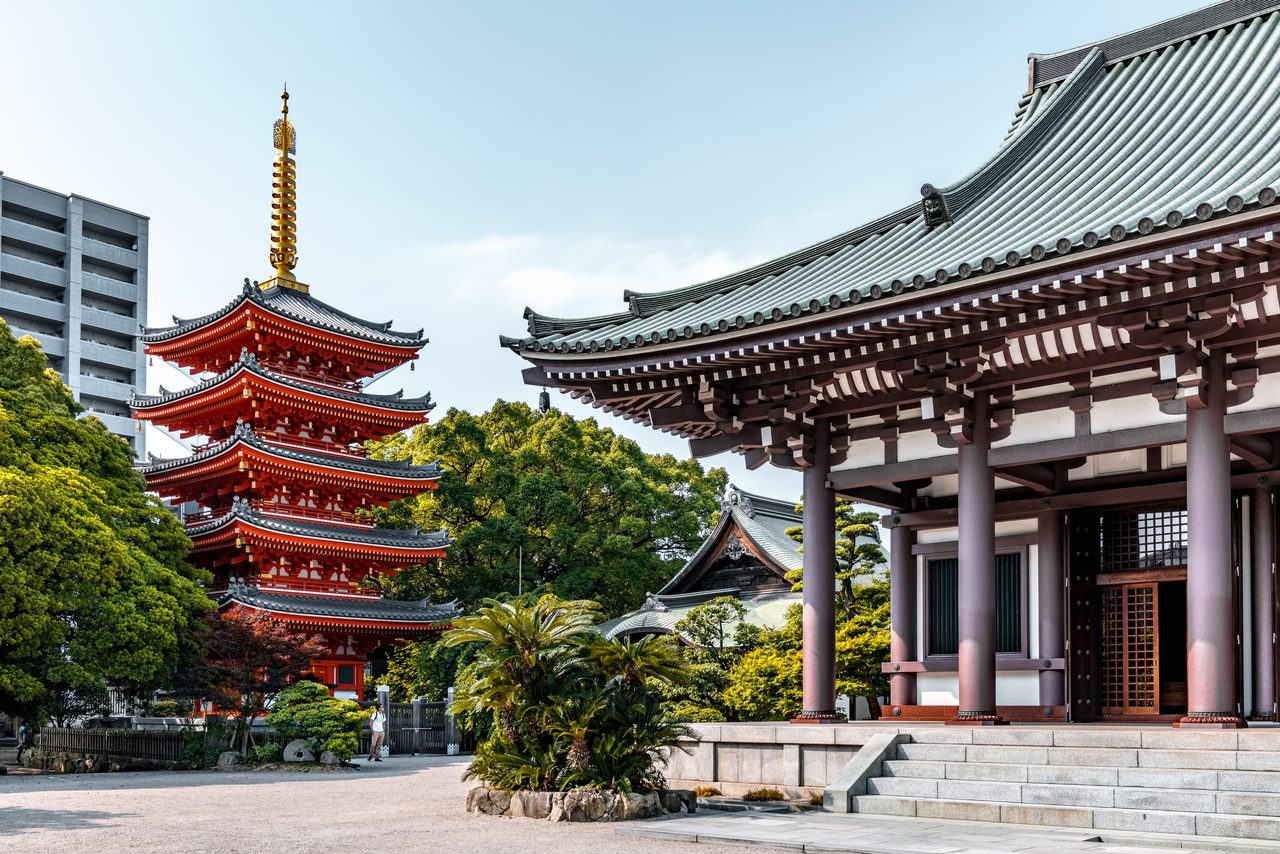
Fukuoka is Kyushu's largest city and one of Japan's fastest-growing metropolises, celebrated for its vibrant street-food culture, ancient Hakata history, compact and walkable neighborhoods, and easy access to the rest of western Japan. Sitting on Hakata Bay, the city blends modern urban energy with deep tradition — from the lantern-lit yatai stalls along the Naka River to the vermilion gates of Dazaifu Tenmangu.
Perched on the northwestern tip of Kyushu island, Fukuoka (officially sharing its name with Hakata Ward, its historic merchant quarter) is the gateway city of western Japan. Founded as a trading port centuries ago, today it hosts 1.6 million residents who enjoy one of Japan's lowest costs of living alongside a thriving food scene, sandy urban beaches, and frequent bullet-train connections to Osaka and Tokyo. The city divides neatly into Tenjin (modern shopping and nightlife), Hakata (the shinkansen hub and business district), Nakasu (nightlife island and yatai alley), and a string of coastal neighborhoods. Visitors discover Hakata ramen at 3 a.m., browse Canal City's indoor waterways, hike the ridgeline of Sefurisan, and day-trip to the ancient capital of Dazaifu in under 30 minutes.
Jump straight to the experience you're planning.
The 12 destinations our editors recommend — from iconic landmarks to under-the-radar finds.
Expansive park built around a large lake with a 2.5 km lakeside circuit, Japanese Garden, and views of Fukuoka Castle Ruins.
Japan's most important shrine dedicated to the god of learning; famous 800-metre Omotesando street with umegae mochi stalls.
Iconic shopping complex with an indoor canal, hourly fountain shows, Ramen Stadium, and department stores.

Fukuoka's guardian shrine dating to 757 CE; home of the Hakata Gion Yamakasa festival float on permanent display.

Japan's tallest seaside tower at 234 m; 360° views of Hakata Bay and the city; dusk visit recommended.

17th-century Kuroda clan castle ruins in a park famous for 1,000 cherry trees in spring.
Pick a length, follow the route. Each itinerary balances headline sights with breathing room.
Three tiers, every traveller covered — from cost-conscious to flagship hotels.
Hostels, budget hotels, and guesthouses offer affordable stays without sacrificing experience.
Boutique hotels and well-located accommodations provide comfort and convenience at reasonable prices.
World-class resorts and premium hotels deliver unforgettable experiences.
Cafés, neighbourhood gems, and tasting menus worth the table reservation.
A no-frills tonkotsu counter shop on the edge of Tenjin that has built its reputation purely on the bowl in front of you. The broth is a dense, milky pork-bone stock ladled over thin, straight noodles, finished with chashu, wood-ear mushroom strips, and a mound of red pickled ginger diners add themselves. Seating is a tight counter plus a few tables, functional rather than decorative, built for turnover rather than lingering.
The Fukuoka original of the solo-booth ramen chain now known worldwide, built around individual wooden dividers that block out neighboring diners so the only thing in front of you is the bowl. You order from a vending machine at the entrance, then fill in a paper form specifying broth richness, garlic, noodle firmness, and other details before a hand slides your ramen through a small curtain. The tonkotsu broth is thinner and more refined than Shin-Shin's, chasing a cleaner pork flavor.
The original Ippudo shop, opened in the Daimyo neighborhood in 1985 before the brand expanded into the international chain it is today. The interior favors dark wood and low lighting over the stark, clinical counters common at older Hakata ramen stalls, reflecting founder Shigemi Kawahara's push to make ramen feel more like a night out. The tonkotsu broth here set the template later copied by every overseas branch.
Book a food tour in Fukuoka We may earn a commission from bookings made through this link.
Fukuoka has excellent public transport. The Fukuoka City Subway (3 lines) connects the airport, Hakata Station, Tenjin, and Meinohama in minutes. JR trains and the Nishitetsu private railway extend across the prefecture. Taxis are metered and reliable. The city is also very walkable between Hakata and Tenjin.
Daily spend by tier in JPY, broken out by category.
| Category | Budget | Mid-range | Luxury |
|---|---|---|---|
| Accommodation | ¥2,500–4,500 (~$17–30 USD) | ¥8,000–15,000 (~$53–100 USD) | ¥30,000–60,000 (~$200–400 USD) |
| Food (per day) | ¥1,500–2,500 (~$10–17 USD) | ¥3,500–6,000 (~$23–40 USD) | ¥8,000–20,000 (~$53–133 USD) |
| Transportation | ¥500–800 (~$3–5 USD) | ¥1,000–2,000 (~$7–13 USD) | ¥3,000–8,000 (~$20–53 USD) |
| Activities | ¥500–1,200 (~$3–8 USD) | ¥2,500–4,000 (~$17–27 USD) | ¥5,000–15,000 (~$33–100 USD) |
| Daily total | ¥6,000–9,000 (~$40–60 USD) | ¥15,000–25,000 (~$100–167 USD) | ¥45,000–90,000+ (~$300–600 USD) |
Best time Shoulder Worth avoiding
Average daytime temperature in °C. Figures are for Japan.
March–May (spring) and October–November (autumn)
Spring brings cherry blossoms to Ohori Park and Maizuru Park. Autumn offers mild temperatures and autumn foliage. Summer is hot and humid (average 32°C/90°F in August) but lively with festivals like Hakata Gion Yamakasa.
Fukuoka is one of Japan's safest cities — violent crime against tourists is extremely rare. Stay alert in crowded festival areas (Yamakasa in July, Dontaku in May) where pickpocketing risk slightly increases.
Carry cash at all times — yatai stalls, most ramen shops, and Yanagibashi Market are cash-only. Use JP Bank (Japan Post) or 7-Eleven ATMs for reliable international card withdrawals.
Tap water in Fukuoka is safe to drink. Fukuoka University Hospital (7-45-1 Nanakuma, Jonan-ku; +81-92-801-1011) has an international patient division with English-speaking staff.
Typhoon season runs June–October; check JMA weather alerts (jma.go.jp) daily during summer visits. Trains may be suspended during typhoon warnings — remain in accommodation indoors if a typhoon alert is issued.
Swimming at Itoshima beaches is safe within designated flagged zones July–August when lifeguards are on duty. Do not swim outside flagged zones as rip currents can occur near headlands.
The Japan Visitor Hotline (0570-783-556) provides 24-hour multilingual assistance in English, Chinese, Korean, and Spanish — use it for non-emergency advice, lost documents, or medical help guidance.
Fukuoka is consistently ranked among Asia's safest cities. The crime rate is extremely low; tourist-related crime such as scams and theft is minimal compared to other major Japanese cities. Solo travel and night walking in Nakasu, Tenjin, and Hakata are safe for all travelers.
The best time to visit Fukuoka is March–May. Fukuoka has a humid subtropical climate (Köppen Cfa) with four distinct seasons. Winters are mild (average 8°C / 46°F in January), springs are warm and ideal for visits (15–20°C / 59–68°F in April wit
The currency in Fukuoka is the Japanese Yen (JPY). ATMs are widely available in cities and tourist areas. Credit cards are accepted at most hotels and restaurants, but carry cash for markets and smaller establishments.
The main language(s) spoken in Fukuoka: Japanese. In tourist areas, English is generally understood. Learning a few basic phrases in the local language is appreciated by locals.
The top attractions in Fukuoka include Ohori Park, Dazaifu Tenmangu Shrine, Canal City Hakata, Kushida Shrine, and Fukuoka Tower. Each offers a unique experience, from historic landmarks to natural wonders.