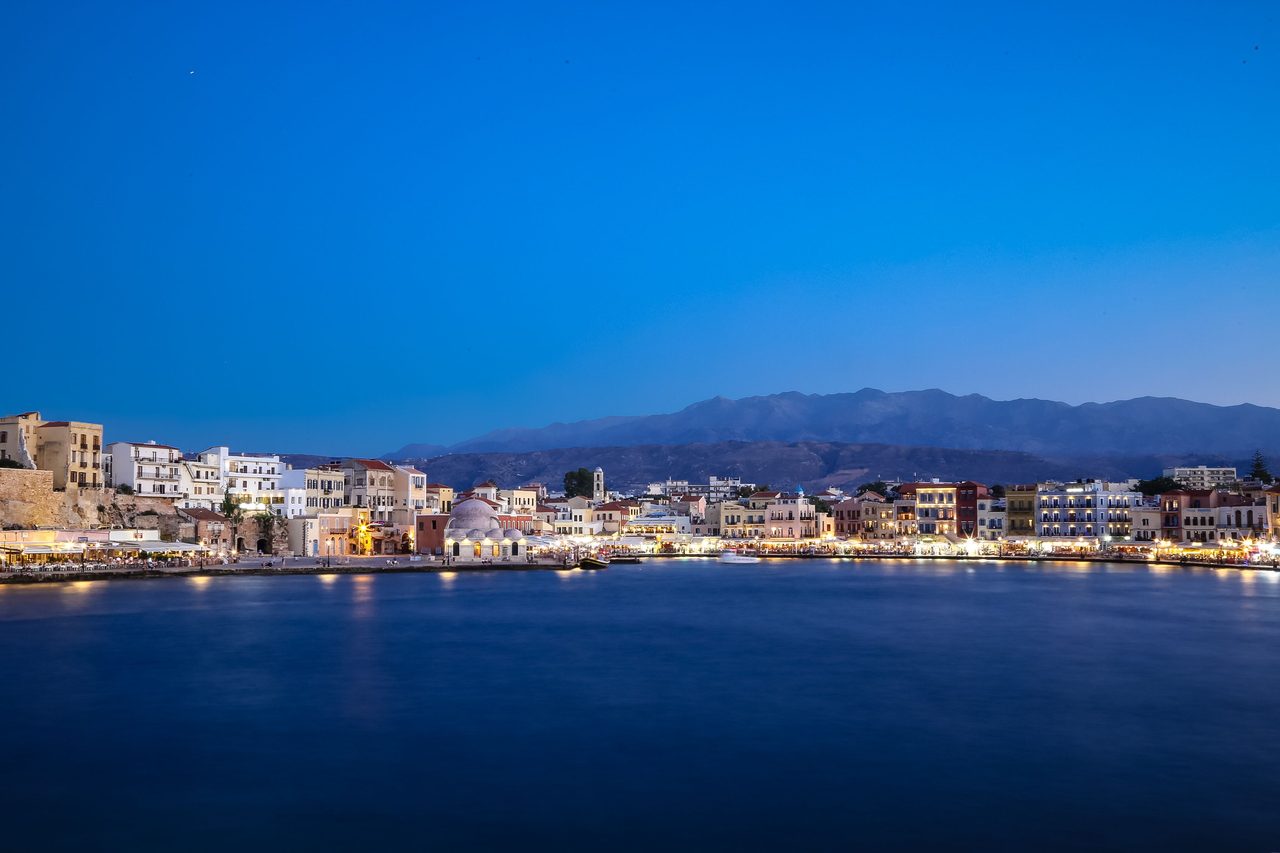
Crete is the largest island in Greece and the fifth largest in the Mediterranean Sea, an island of extraordinary diversity where ancient civilizations, rugged mountains, fertile plains, and some of Europe's finest beaches converge. Home to the Minoan civilization, Europe's oldest advanced culture, Crete offers millennia of history alongside world-class natural beauty.
Crete stretches 260 kilometres from east to west and sits at the southern edge of the Aegean Sea. Its northern coast faces the Aegean and is home to the major cities and airports, while the southern coast overlooks the Libyan Sea and remains wilder and less developed. The island's interior is dominated by three major mountain ranges — the White Mountains (Lefka Ori) in the west, Mount Ida (Psiloritis) in the centre, and the Dikti Mountains in the east — which give Crete a dramatic, varied landscape. The island produced the philosopher Epimenides, the writer Nikos Kazantzakis, and the painter El Greco. Crete's cuisine is considered among the finest Mediterranean diets, centred on locally produced olive oil, fresh vegetables, wild herbs, and quality meat and seafood. The island maintains a fierce cultural pride and distinct identity within Greece.
The 10 destinations our editors recommend — from iconic landmarks to under-the-radar finds.
Palace of Knossos
Knossos was the ceremonial and political center of Minoan civilization, occupied from around 2000 BCE before being abandoned after 1350 BCE. The ruins excavated and partly reconstructed by Arthur Evans in the early 20th century show a sprawling multi-story complex of storerooms, workshops, and residential quarters built around a central court. Visitors walk through corridors past pithoi storage jars, the reconstructed 'Throne Room,' and reproduction frescoes (the originals are in Heraklion).
Heraklion Archaeological Museum
This museum holds the largest collection of Minoan artifacts in the world, drawn from Knossos, Phaistos, and other sites across Crete. Its galleries move chronologically through Minoan history via pottery, seal stones, gold jewelry, and the original frescoes removed from Knossos for preservation. It's the place to see the objects that give context to the ruins scattered around the island, including the Phaistos Disc and the Snake Goddess figurines.
Samaria Gorge
Samaria is one of the longest gorges in Europe, running roughly 16 km through the White Mountains down to the Libyan Sea at Agia Roumeli. The hike passes through the Iron Gates, a narrow passage where the walls close to just a few meters apart, and ends at a village reachable only by boat or on foot. It's a full-day undertaking rather than a quick stop, typically done as a one-way descent from the Xyloskalo entrance.
Balos Lagoon
Balos is a shallow, turquoise lagoon on the Gramvousa Peninsula at Crete's northwestern tip, separated from the open sea by a sandbar and backed by a small islet with a Venetian fortress. Access is either a rough dirt-road drive followed by a steep descent on foot, or a boat trip from Kissamos that also stops at Imeri Gramvousa island. The lagoon's shallow water and sand-pink shell fragments are the draw, more than any built attraction.
Elafonisi Beach
Elafonisi is a lagoon-like beach at Crete's southwestern corner where a shallow, warm channel separates the mainland shore from a small islet, with sand that carries a pink tint from crushed shell fragments. The water stays shallow for a long way out, making it more swimmable for families than most beaches on the island's south coast. It sits within a protected Natura 2000 area, which limits development around it.
Spinalonga Island
Spinalonga is a small fortified island near Elounda, built as a Venetian sea fortress in the late 16th century and later used by the Ottomans, then serving as a leper colony for Crete and mainland Greece from 1903 until 1957. The abandoned settlement's houses, church, and hospital buildings are preserved as ruins visitors walk through via a marked path from the boat landing. Its history as a leper colony rather than a typical fortress is what sets it apart from Crete's other Venetian-era sites.
Recommended itineraries
Pick a length, follow the route. Each itinerary balances headline sights with breathing room.
5-Day Crete Explorer
Day 1Arrive in Crete, explore city center
Day 2Visit top attractions and museums
Day 3Day trip to nearby highlights
Day 4Local markets and hidden gems
Day 5Final sightseeing, departure
7-Day Classic Crete
Days 1-2Crete city highlights
Days 3-4Regional exploration
Days 5-6Cultural immersion and local experiences
Day 7Return and departure
14-Day Ultimate Crete
Days 1-3Crete comprehensive city tour
Days 4-6Northern region exploration
Days 7-9Eastern highlights
Days 10-12Southern attractions
Days 13-14Return to Crete, departure
Where to stay in Crete
Three tiers, every traveller covered — from cost-conscious to flagship hotels.
Budget $50-100
Hostels, budget hotels, and guesthouses offer affordable stays without sacrificing experience.
Mid-range $100-200
Boutique hotels and well-located accommodations provide comfort and convenience at reasonable prices.
Luxury $300+
World-class resorts and premium hotels deliver unforgettable experiences.
Elounda Beach Hotel & Villas
Lasithi 72053 · Contact for pricing
One of the most celebrated luxury resorts in the Mediterranean, Elounda Beach has hosted royalty, celebrities, and heads of state since it opened in 1971. Set on a private bay with views of Spinalonga Island, the resort offers bungalows and villas with private pools directly on the Aegean. World-class dining, a thalassotherapy spa, a private beach, watersports, and impeccable service define the experience.
Perched on a hillside above the Gulf of Elounda with panoramic views of Spinalonga, Blue Palace is an ultra-luxury resort with architecturally stunning infinity pools cascading toward the sea. Private villa suites and bungalows all have outdoor hot tubs or pools. The signature Thalassa Spa uses Cretan herb and olive oil treatments.
A Minoan-inspired luxury resort on the northern coast east of Heraklion, Amirandes is built around a vast lagoon-style pool and a private sandy beach. The resort's design references Minoan architecture and frescoes throughout. Suites are palatial, with some featuring their own pool on private terraces. Exceptional dining from acclaimed chef Lefteris Lazarou.
Tucked into a private cove between Heraklion and Agios Nikolaos, Daios Cove cascades down a terraced hillside to its own sheltered beach. Architectural brilliance meets natural rock in this resort, where suites and villas are carved into the cliff and feature private plunge pools with sea views. The ESPA spa and sea-to-table dining complete the picture.
Cafés, neighbourhood gems, and tasting menus worth the table reservation.
Peskesi
Cretan / Modern Greek · €€€
Widely considered the best restaurant in Heraklion for authentic Cretan cuisine with a modern, elevated approach. Set in a beautifully restored old Heraklion mansion, Peskesi sources ingredients entirely from Cretan farms, olive groves, and vineyards. The menu revives forgotten Cretan recipes using traditional techniques — slow-cooked lamb with wild greens, dakos elevated with rare cheeses, snails in olive oil and herbs. The wine list is exclusively Cretan.
Avli Restaurant
Cretan / Mediterranean · €€€
Set in a lush courtyard garden in the heart of Rethymno's old town, Avli is one of the most awarded restaurants in Crete. The garden setting with fairy lights, bougainvillea, and stone walls creates a magical atmosphere. Chef-patron Maria Kokkini uses traditional Cretan recipes with sophisticated presentation. The cheese selection and dessert menu are exceptional. Attached to the Avli Lounge boutique hotel.
Erganos
Traditional Cretan · €€
A much-loved traditional Cretan taverna in central Heraklion serving the authentic working-class Cretan food that locals actually eat. The menu is handwritten daily and changes with the season — expect slow-cooked meats, fresh vegetables cooked in olive oil, legume dishes, and whatever the farmer brought that morning. A true mageirio (home-cooking restaurant). No pretension whatsoever.
Thalassino Ageri
Seafood / Greek · €€€
The finest seafood restaurant in western Crete, set in an old stone warehouse on the water's edge east of Chania's harbour. Chef Nikos Skaltsas is known for presenting the freshest catch with exceptional skill. Live fish and shellfish tanks, octopus drying in the sun outside, and impeccable fresh shellfish platters define the experience. The sea urchin salad is legendary.
Portes Restaurant
Modern Greek / Mediterranean · €€€
The flagship restaurant of the GDM Megaron hotel, with panoramic views of Heraklion harbour and Koules fortress. Chef Stelios Trilikis creates dishes that honour Cretan ingredients through a refined modern lens. Exceptional wine list featuring rare Cretan producers from the Peza, Dafnes, and Sitia denominations.
Tamam
Cretan / Eastern Mediterranean / Vegetarian · €€
A beloved institution in Chania's old town, Tamam occupies a restored Ottoman hammam (bath house) with original domed ceilings. The menu is one of the most varied in Chania, blending Cretan, Turkish, and Middle Eastern influences reflecting the island's layered history. Excellent vegetarian options. The stuffed vine leaves, spiced lamb, and eggplant dishes are outstanding.
Crete is a large island (260km east-west) and a car is strongly recommended for anyone wishing to explore beyond the main cities. Public transport covers the major north-coast cities well but reaching many beaches, gorges, and villages requires a rental car or organised tour.
Budget breakdown
Daily spend by tier in USD, broken out by category.
Category
Budget
Mid-range
Luxury
Accommodation
$15-40
$50-120
$150+
Food (per day)
$10-25
$30-60
$80+
Transportation
$5-15
$20-50
$75+
Activities
$5-15
$20-50
$75+
Daily total
$50-100
$100-200
$300+
Best time to visit Crete
Weather through the year in Greece
Best timeShoulderWorth avoiding
Average daytime temperature in °C. Figures are for Greece.
Essential travel tips
Research visa requirements before your trip
Learn a few basic phrases in the local language
Carry cash as cards may not be accepted everywhere
Respect local customs and dress codes
Purchase travel insurance before departure
Hidden gems
Off-the-beaten-path corners most travellers miss.
Loutro — the Car-Free Village
A tiny fishing village on the south Cretan coast accessible only by ferry or on foot. No roads, no cars, a handful of tavernas and guesthouses. The most peaceful place in Crete.
Kritsa Village and Kera Frescoes
Kritsa is Crete's weaving capital — visit working looms and buy direct from weavers. Nearby, the Byzantine church of Panagia Kera has remarkable 14th-century frescoes.
Anogeia — The Proud Mountain Village
The most fiercely Cretan village on the island — twice destroyed (by Ottomans in 1821 and by Nazis in 1944) and rebuilt with pride each time. Known for lyra music, traditional weaving, and extraordinary mountain lamb tavernas.
Chryssi Island — Europe's Southernmost Cedar Forest
An uninhabited nature reserve of ancient cedar forest and pristine beaches on the southernmost island in Europe. Flamingos in spring. No facilities on the island — bring everything. The best desert island experience in Crete.
Safety information
INFO
Apply SPF 50 sunscreen every 90 minutes. Avoid unshaded beaches between 12:00 and 16:00 in July–August when the UV index reaches 9–11.
INFO
Check flags: green = safe, yellow = caution, red = no swimming. The Libyan Sea south coast can produce sudden swells. Never swim alone in isolated coves.
INFO
Wear water shoes when entering the sea over rocks. If spines embed, use olive oil and a needle to remove; seek medical attention if the wound becomes inflamed.
INFO
Wear sturdy closed shoes — mandatory at Samaria. Carry 2L water per person. Start early to avoid midday heat. Gorges close in dangerous conditions.
INFO
Narrow winding mountain roads with sheer drops and few guardrails. Use your horn on blind bends. The Balos road requires 4WD or careful slow driving.
INFO
Rural areas and the south coast may have no petrol station for 30–50km. Fill up when passing through towns. Rural stations may close on Sundays.
INFO
Do not leave valuables visible in rental cars. Use hotel safes. Car break-ins at busy beach car parks such as Balos and Elafonisi have been reported.
INFO
Check menus before sitting at harbour-front restaurants. Read car hire contracts in full before signing. Only use licensed boat operators at Spinalonga.
INFO
Shuffle feet in sandy shallows to deter weaver fish. Wear boots hiking off-trail in rocky mountain areas where a mild viper lives. Kri-kri wild goats are harmless.
INFO
EU EHIC/GHIC cards cover public hospital treatment. Private clinics are faster. Pharmacies (green cross sign) advise on minor ailments. Always carry comprehensive travel insurance.
INFO
Use only licensed operators for canyoning, diving, and climbing. Check weather forecasts before gorge activities. PADI-certified instructors only for scuba diving.
EU/EEA citizens need only a valid ID. Non-EU visitors from many countries (USA, Canada, Australia, UK) can stay up to 90 days without a visa under the Schengen Agreement. Other nationalities should check Greek embassy requirements. Requirements vary by nationality, so check with your nearest embassy or the official immigration website before traveling.
What currency is used in Crete?
The currency in Crete is the Euro (EUR). ATMs are widely available in cities and tourist areas. Credit cards are accepted at most hotels and restaurants, but carry cash for markets and smaller establishments.
What language is spoken in Crete?
The main language(s) spoken in Crete: Greek. In tourist areas, English is generally understood. Learning a few basic phrases in the local language is appreciated by locals.