
Open Travel Guide
  1. Home
  2. Destinations
  3. France
  4. French Guiana
  5. Attractions
  6. Plage Les Hattes Sea Turtle Reserve

Attractions · French Guiana, French Guiana

Plage Les Hattes Sea Turtle Reserve

  • CategoryWildlife / Beach
  • DurationHalf or full day (evening/night for turtles)
  • AdmissionFree
  • Rating★ 4.9
  • PriceFree
  • Transport300 km west of Cayenne on the N1; continue through Saint-Laurent-du-Maroni. Car required. Roads are paved throughout.

Plage Les Hattes at Awala-Yalimapo in northwestern French Guiana is one of the world's most important leatherback sea turtle nesting beaches, hosting thousands of females each season. The beach stretches roughly 4 km along the Atlantic coast, backed by sea grape scrub and the Maroni River estuary. At night from April through August, female leatherbacks — among the largest reptiles on Earth, weighing up to 900 kg — haul themselves ashore to excavate nests above the tide line.

Plage Les Hattes Sea Turtle Reserve

Plage Les Hattes at Awala-Yalimapo in northwestern French Guiana is one of the world's most important leatherback sea turtle nesting beaches, hosting thousands of females each season. The beach stretches roughly 4 km along the Atlantic coast, backed by sea grape scrub and the Maroni River estuary. At night from April through August, female leatherbacks — among the largest reptiles on Earth, weighing up to 900 kg — haul themselves ashore to excavate nests above the tide line. Visitors who arrive after dark during peak season (May–July) will typically see dozens of turtles in varying stages: emerging from the surf, digging chambers with powerful rear flippers, and laying clutches of 80–120 eggs. From July through September, hatchlings erupt from nests at dawn and scramble toward the ocean. The reserve is managed by the Réserve Naturelle de l'Amana, which also protects the adjacent wetlands and mangroves inhabited by manatees and caimans. The beach itself is flat and open, with few facilities; a wooden observation platform at the reserve entrance allows overviews of the nesting stretch. Photography with flash is strictly prohibited near nesting turtles. Reserve guides, mandatory in restricted zones, assign groups to active nests so that no female is disturbed by multiple parties simultaneously. The round trip from Cayenne takes around six hours by road, making this an immersive overnight excursion rather than a casual day trip.

Good to know

Hours
Reserve open year-round; turtle watching season April–August (nesting), July–September (hatchlings)
Best time
April–August evenings for leatherback nesting; July–September for hatchlings at dawn

Location

Awala-Yalimapo, 97319 French Guiana

5.7651, -53.9315 View on map

Highlights

  • Watch leatherback sea turtles — among the world's largest reptiles — nesting on one of the Atlantic's most critical nesting beaches
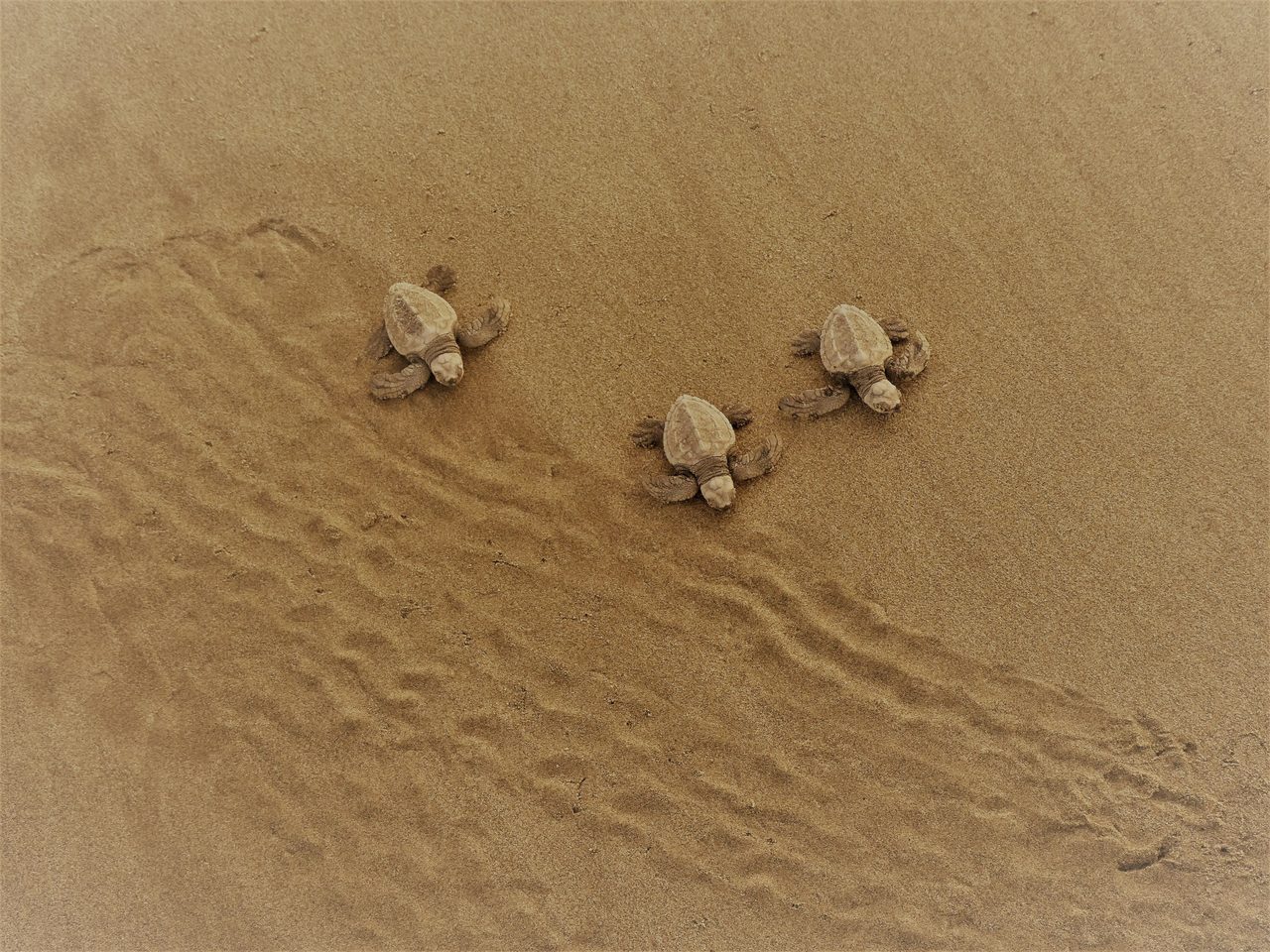
  • Observe hatchlings erupting from nest chambers and crossing the sand at dawn during July–September
  • Spot manatees and black caimans in the Amana wetlands adjacent to the beach
  • Experience one of the most remote and undeveloped beaches in French Guiana
  • View the Maroni River estuary where fresh and salt water meet in a rich estuarine ecosystem

Tips for visiting

  • Visit from May to July for peak leatherback nesting; very few turtles are present outside the April–August window
  • Book a licensed guide through the Réserve Naturelle de l'Amana; independent night access to nesting areas is prohibited
  • Red-filtered torches only — white-light torches and camera flashes disorient nesting and hatching turtles
  • Bring insect repellent, long sleeves, and closed shoes; the beach has no shelter and sandflies are active at dusk
  • Stay overnight in Awala-Yalimapo village to avoid a very long drive in the dark back to Cayenne
  • Arrive before dark to register with the reserve and receive orientation before turtle watching begins

When to visit

The prime season runs from late April through early August when leatherback females nest nightly; July and August also see hatchlings emerging at dawn. The reserve is quieter and turtle sightings are rare outside this window.

Accessibility

The beach access path from the reserve car park is compacted sand and is not wheelchair accessible; the terrain becomes soft sand at the shore. Visitors with limited mobility may observe from the elevated wooden platform near the reserve entrance but cannot reach active nesting areas.

Frequently asked questions

Is photography allowed on the beach?

Photography without flash is permitted on the beach itself, but cameras with flash are strictly banned near nesting or hatching turtles. Video is also allowed provided no white light sources are used.

How long does a turtle watching visit take?

Plan for 2–4 hours on the beach after dark. Guides lead groups in shifts to minimise disturbance; allow another hour for travel to the reserve entrance from Awala-Yalimapo village.

Are children permitted on night turtle watches?

Yes, but children must be supervised closely and must follow guide instructions regarding silence and light. Young children may find the late hours difficult.

Is the beach suitable for swimming?

The beach has strong currents and is not recommended for swimming. The focus is on wildlife observation rather than bathing.