
Yantai Hill Park
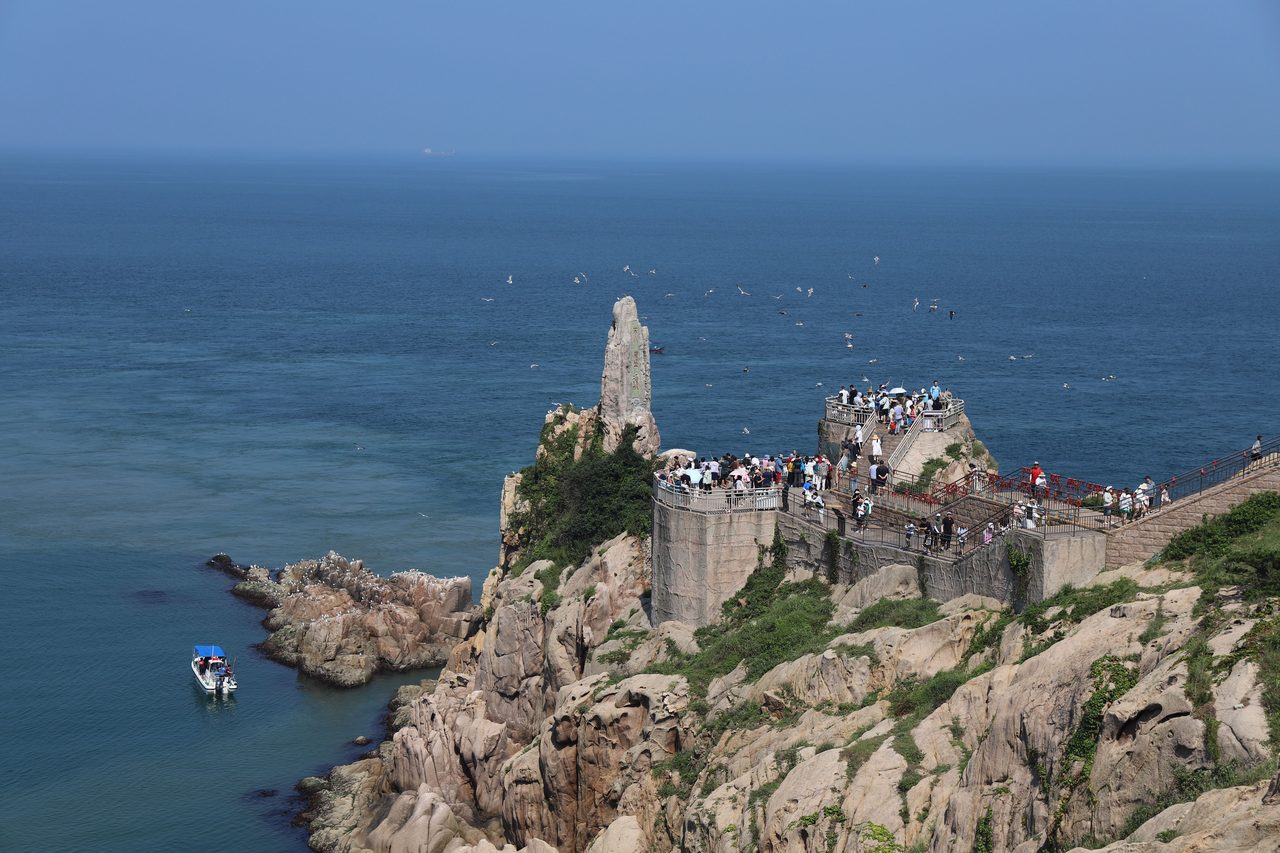
A 42-meter coastal hill preserving Yantai's 19th-century treaty-port past, with red-brick former foreign consulate buildings, Gothic arches and the city's historic lighthouse offering panoramic views over Zhifu Bay.
World · 8 Places · Best May-June and September-October
Yantai is a coastal prefecture-level city on the Shandong Peninsula where the Bohai Sea meets the Yellow Sea, known for the historic foreign-consulate district of Yantai Hill, the Fairy-Mountain city of Penglai and its Four Great Ancient Towers pavilion, China's oldest winery at Changyu, long sandy beaches, seafood, apples and pears, and ferry links across the Bohai Strait to Dalian and toward South Korea.
Yantai sits at the northeastern tip of the Shandong Peninsula, where the Bohai Sea to the north meets the Yellow Sea to the east, roughly 400 km east of the provincial capital Jinan and a short flight or ferry hop from South Korea and northeast China. The city takes its name (literally 'smoke terrace') from a Ming-dynasty beacon tower built in 1398 in what is now Muping District to warn of pirate raids. Opened as a treaty port in 1862, Yantai (then known in the West as Chefoo) hosted British, American, Japanese and other foreign consulates on Yantai Hill overlooking the harbor, and their stone and brick buildings still stand today as a low-key open-air museum. The city became the birthplace of China's modern wine industry when the Zhang Yu (Changyu) winery was founded here in 1892, and the surrounding hills and coastal plain now grow much of China's finest apples, pears and table grapes. West along the coast, Penglai is celebrated in Chinese mythology as the point from which the Eight Immortals crossed the sea, and its cliff-top Penglai Pavilion, built in 1061, is ranked among China's Four Great Ancient Towers. Yantai has no metro system; getting around relies on city buses, metered taxis and the Didi ride-hailing app, and the city is generally very safe for solo travelers, though English ability is lower than in Beijing, Shanghai or Hong Kong.
Jump straight to the experience you're planning.
The 8 destinations our editors recommend — from iconic landmarks to under-the-radar finds.
A 42-meter coastal hill preserving Yantai's 19th-century treaty-port past, with red-brick former foreign consulate buildings, Gothic arches and the city's historic lighthouse offering panoramic views over Zhifu Bay.
China's oldest winery, established in 1892 by Zhang Bishi; the visit covers a history hall and century-old underground cellars where oak barrels age dry red, ice wine and sparkling varieties, ending with a tasting.
A thousand-year-old pavilion complex on a coastal bluff, one of the Four Great Towers of China, tied to the Taoist legend of the Eight Immortals Crossing the Sea.
An archipelago of 32 islands off Penglai with clear water and fine sand, reached by ferry from Penglai Port; known locally as the 'Shangri-La of the Sea'.
Yantai's main downtown swimming beach on Zhifu Bay, close to the city center and popular with locals for an evening walk or a summer swim.
A wider, less crowded beach east of downtown with finer golden sand, popular for a full beach day away from the busiest central stretches.
Pick a length, follow the route. Each itinerary balances headline sights with breathing room.
Three tiers, every traveller covered — from cost-conscious to flagship hotels.
Hostels, budget hotels, and guesthouses offer affordable stays without sacrificing experience.
Boutique hotels and well-located accommodations provide comfort and convenience at reasonable prices.
World-class resorts and premium hotels deliver unforgettable experiences.
Cafés, neighbourhood gems, and tasting menus worth the table reservation.
Book a food tour in Yantai We may earn a commission from bookings made through this link.
Yantai has no metro or subway system, unlike nearby Qingdao; getting around the urban core relies on public buses, metered taxis and the Didi ride-hailing app. Yantai Penglai International Airport (IATA: YNT), about 43 km from the city center near Chaoshui town in Penglai District, handles domestic and a growing number of international flights; the older Yantai Laishan Airport closed to civil aviation in 2018 and should not be used for planning. Yantai South Railway Station is the main high-speed rail hub, with frequent services to Qingdao, Jinan and Beijing. Ferries connect Yantai's passenger port to Dalian across the Bohai Strait and, less frequently, toward Incheon in South Korea.
Daily spend by tier in CNY, broken out by category.
| Category | Budget | Mid-range | Luxury |
|---|---|---|---|
| Accommodation | ¥90-180 / $13-27 (hostel dorm or budget inn) | ¥380-650 / $57-97 (3-4 star hotel) | ¥1,200-3,000+ / $180-450+ (5-star beachfront hotel) |
| Food (per day) | ¥40-80 / $6-12 (noodle shops, dumpling stalls, local seafood stalls) | ¥120-220 / $18-33 (sit-down seafood restaurants, hotpot) | ¥300-800+ / $45-120+ (fine dining, private seafood banquets) |
| Transportation | ¥10-25 / $1.50-3.75 (city bus and occasional taxi) | ¥30-70 / $4.50-10.50 (bus plus occasional taxi/Didi) | ¥150-400 / $22.50-60 (private car, airport transfer) |
| Activities | ¥0-50 / $0-7.50 (free beaches, Yantai Hill Park, coastal boardwalk) | ¥80-200 / $12-30 (Penglai Pavilion entry, Changyu Wine Museum, Changdao ferry) | ¥250-600 / $37.50-90 (private wine tasting, guided Penglai tour, island charter) |
| Daily total | ¥140-335 / $21-50 | ¥610-1,140 / $91-171 | ¥1,900-4,800+ / $285-720+ |
Best time Shoulder Worth avoiding
Average daytime temperature in °C. Figures are for Shandong.
Late spring and early autumn offer the best combination of comfortable weather, clear skies and manageable crowds at Penglai and the beaches.
Yantai's position between the Bohai and Yellow Seas keeps summers cooler and less humid than inland Shandong, but coastal fog is common in late spring and early summer. Winters are cold (regularly below freezing) with a sharp wind off the Bohai Sea and occasional lake-effect-style snow squalls.
Save the hotel's name, address and a few key destinations in Chinese characters before going out each day, since English is limited outside hotels and major sights, more so than in larger Chinese cities
Only swim at supervised sections of Yantai Beach and other lifeguard-flagged spots; rip currents and jellyfish increase after summer storms, especially July-August
Look both ways and never assume the right of way at crosswalks; e-bikes and scooters commonly ride on sidewalks and against the flow of traffic
Use the official Didi ride-hailing app or hotel-booked taxis rather than unmarked cars soliciting fares outside Yantai South Railway Station or the airport
Set up Alipay or WeChat Pay linked to a foreign card before arrival, and carry some cash as backup, since foreign credit and debit cards are not accepted everywhere
Install a reliable VPN before arrival; hotel Wi-Fi in China does not bypass the national internet restrictions and most VPN provider websites are themselves blocked once in the country
Keep a photo or photocopy of the passport photo page and visa/entry stamp accessible on a phone, since Chinese police occasionally request ID checks in public areas
Confirm ferry schedules to Dalian or Changdao directly at the terminal or an official booking channel, since sailings can be cancelled or delayed by wind and fog on the Bohai Strait
Yantai is one of mainland China's calmer, more relaxed coastal cities for visitors. Street crime, muggings and violent assault against tourists are uncommon, and a visible police presence is maintained around Yantai South Railway Station, the passenger ferry terminal and major attractions such as Ya Emergency services: police at 110.
The best time to visit Yantai is May-June and September-October. Yantai has a temperate monsoon climate moderated by its position on the Bohai and Yellow Seas, with four distinct seasons and an annual average temperature around 13.4°C (56°F). Summers are warm, humi
Yantai is a mainland Chinese city, so it follows mainland China's standard visa rules rather than Hong Kong or Macau's separate entry systems. Most nationalities need a visa obtained in advance from a Chinese embassy or consulate. China has extended unilateral visa-free entry to passport holders of many countries (including most of the EU, UK, Australia, Canada, Japan, South Korea and several others) for stays of up to 30 days as of 2026, and a 240-hour (10-day) visa-free transit is available at some mainland gateway airports for travellers continuing to a third country or region, though Yantai Penglai International Airport's own transit-visa arrangements should be confirmed directly with the airport or a Chinese consulate before booking, since coverage varies by port of entry. US citizens generally still need a standard visa. A passport valid for at least 6 months beyond the travel dates is required, and policies change frequently, so travelers should check the nearest Chinese embassy or consulate website shortly before departure. Requirements vary by nationality, so check with your nearest embassy or the official immigration website before traveling.
The currency in Yantai is the Chinese yuan / renminbi (CNY, also called RMB, symbol ¥), a managed floating currency; this guide uses an approximate rate of $1 USD = ¥6.7 (0.15 USD per yuan) throughout (CNY). ATMs are widely available in cities and tourist areas. Credit cards are accepted at most hotels and restaurants, but carry cash for markets and smaller establishments.
The main language(s) spoken in Yantai: Mandarin Chinese, spoken locally in the Jiaoliao Mandarin dialect group shared with Qingdao and the rest of the Shandong Peninsula; English signage exists at the airport, major hotels and a handful of top attractions but is otherwise limited, so a translation app is essential. In tourist areas, English is generally understood. Learning a few basic phrases in the local language is appreciated by locals.
The top attractions in Yantai include Yantai Hill Park, Zhang Yu (Changyu) Wine Culture Museum, Penglai Pavilion, Changdao Islands, and First Beach (Diyi Haishuiyuchang). Each offers a unique experience, from historic landmarks to natural wonders.