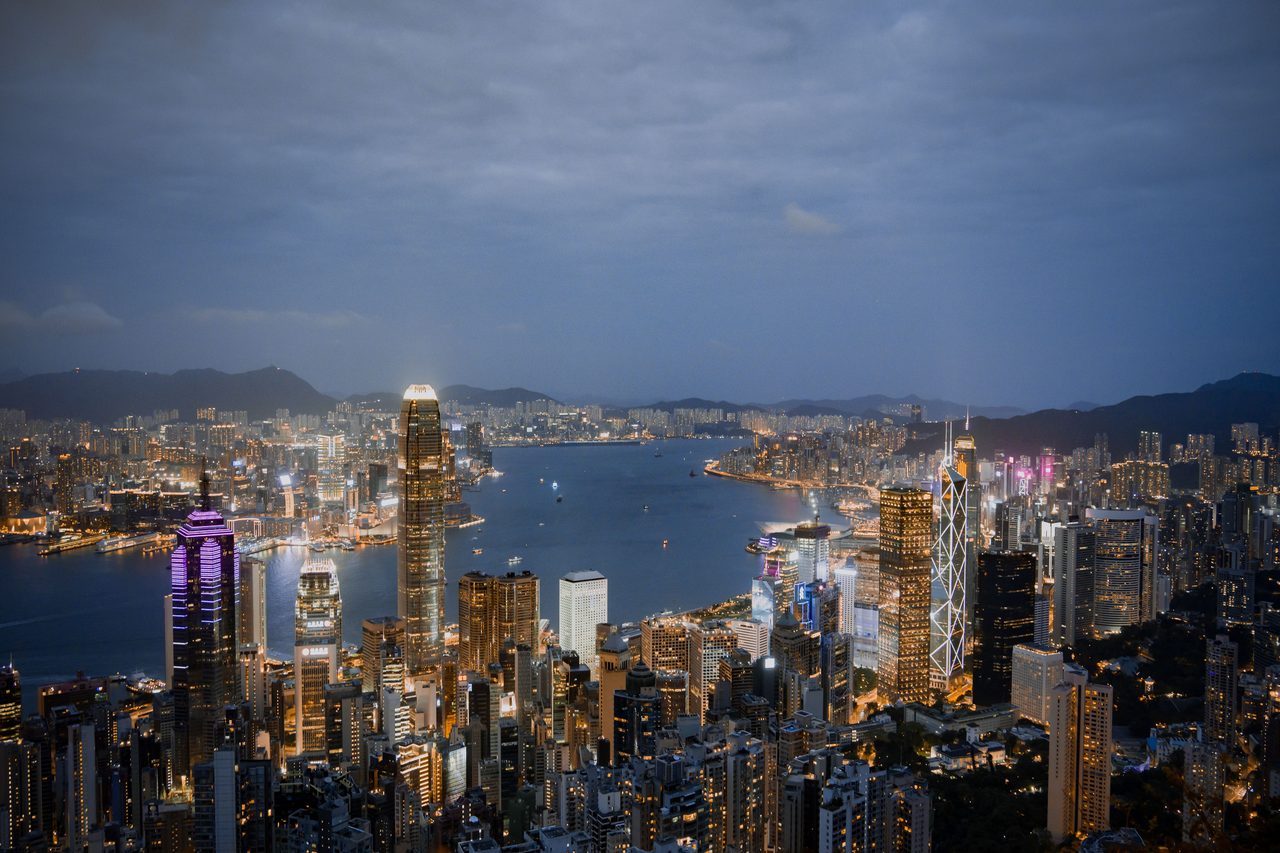
Hong Kong is a Special Administrative Region of China on the southern coast, made up of Hong Kong Island, the Kowloon peninsula, the New Territories and more than 200 outlying islands. It pairs one of the world's densest skylines with country parks, beaches and fishing villages, all linked by an efficient metro and ferry network.
Hong Kong sits on the Pearl River Delta, roughly 60 km east of Macau and adjoining Shenzhen. About 40% of its land is protected country park, so the city core of Central, Tsim Sha Tsui and Causeway Bay sits within reach of mountain trails, islands and beaches. Cantonese culture, British colonial legacy and modern Chinese identity blend in its food, festivals, temples and street life. Public transport is fast and cheap, English signage is universal, and it is one of the easiest large Asian cities for solo travellers.
Capital
Hong Kong (Central)
Largest city
Hong Kong (Central)
Population
~7.5 million
Languages
Cantonese, English, Mandarin, Traditional Chinese (written)
The 24 destinations our editors recommend — from iconic landmarks to under-the-radar finds.
Victoria Peak and Peak Tower
Hong Kong Island's highest point at 552 m and the classic skyline viewpoint. The Peak Tower and the neighbouring Peak Galleria hold the Sky Terrace 428 observation deck, shops and restaurants, while the Peak Circle Walk and Lugard Road give free, unobstructed views over Victoria Harbour.
Star Ferry (Central to Tsim Sha Tsui)
The green-and-white Star Ferry has crossed Victoria Harbour since 1888 and remains one of the cheapest scenic rides in the world. The 10-minute crossing between Central Pier 7 and Tsim Sha Tsui gives a full-width harbour view for pocket change.
Tian Tan Buddha (Big Buddha) and Po Lin Monastery
A 34 m bronze Buddha seated on a hilltop on Lantau Island, completed in 1993 and reached by 268 steps. It sits beside the working Po Lin Monastery and the Wisdom Path, with mountain views on clear days.
Ngong Ping 360 Cable Car
A 5.7 km bi-cable gondola from Tung Chung to Ngong Ping Village on Lantau Island, crossing Tung Chung Bay and Lantau North Country Park in roughly 25 minutes each way. Crystal Cabins have glass floors. The cable car closes for annual maintenance for around ten days, so check the calendar before planning.
Man Mo Temple
A 19th-century Taoist temple dedicated to Man Tai (god of literature) and Mo Tai (god of war), famous for its huge hanging incense coils. Built around 1847 and a Grade I historic building, it sits on Hollywood Road amid antique shops.
Wong Tai Sin Temple
Hong Kong's most popular working Taoist temple, dedicated to the healing god Wong Tai Sin. The bright Chinese-style buildings, the Good Wish Garden and the fortune-teller arcade beside the MTR exit draw worshippers and visitors daily.
Recommended itineraries
Pick a length, follow the route. Each itinerary balances headline sights with breathing room.
5-Day Hong Kong Explorer
Day 1Arrive in Hong Kong, explore city center
Day 2Visit top attractions and museums
Day 3Day trip to nearby highlights
Day 4Local markets and hidden gems
Day 5Final sightseeing, departure
7-Day Classic Hong Kong
Days 1-2Hong Kong city highlights
Days 3-4Regional exploration
Days 5-6Cultural immersion and local experiences
Day 7Return and departure
14-Day Ultimate Hong Kong
Days 1-3Hong Kong comprehensive city tour
Days 4-6Northern region exploration
Days 7-9Eastern highlights
Days 10-12Southern attractions
Days 13-14Return to Hong Kong, departure
Where to stay in Hong Kong
Three tiers, every traveller covered — from cost-conscious to flagship hotels.
Budget HK$500 (~$64)
Hostels, budget hotels, and guesthouses offer affordable stays without sacrificing experience.
Mid-range HK$1,550 (~$199)
Boutique hotels and well-located accommodations provide comfort and convenience at reasonable prices.
Luxury HK$5,000 (~$641)
World-class resorts and premium hotels deliver unforgettable experiences.
Mandarin Oriental, Hong Kong
Central · $$$$
Landmark 1963 hotel in the heart of Central, connected by footbridge to the IFC and Landmark malls. Known for Michelin-starred dining, the Spa and the Mandarin Cake Shop.
The 'Grande Dame of the Far East' opened in 1928 on Salisbury Road, with a colonnaded lobby for afternoon tea, a rooftop helipad and a fleet of Rolls-Royce cars.
Cafés, neighbourhood gems, and tasting menus worth the table reservation.
Tim Ho Wan (Sham Shui Po)
Cantonese dim sum · $
Dim sum shop in Sham Shui Po carrying a Michelin Bib Gourmand listing, known for baked barbecue pork buns and no-frills dim sum at low prices. Queues are common at peak hours and a numbered ticket is taken on arrival.
Kam's Roast Goose
Cantonese roast goose · $$
One-Michelin-star roast goose specialist in Wan Chai, run by a member of the Yung Kee family. Goose is served over rice or as a platter with plum sauce and crackling skin. Seating is small and turnover quick.
Yung Kee
Cantonese roast goose and classics · $$$
Central institution famed for its roast goose since 1942, spread over several floors with formal service. Suits groups and travellers wanting a classic Cantonese sit-down meal.
Lung King Heen
Cantonese fine dining · $$$$
Three-Michelin-star Cantonese dining room in the Four Seasons Hotel Hong Kong with views over Victoria Harbour, the first Chinese restaurant to earn three stars. Dim sum at lunch and refined dinner menus.
Mak's Noodle (Wellington Street)
Cantonese wonton noodles · $
Famous Central shop serving small bowls of springy noodles with shrimp wontons in a rich broth. Portions are small, so a second bowl or a side of beef brisket is common.
Kau Kee Restaurant
Cantonese beef brisket noodles · $
Long-running Central shop known for beef brisket noodles in clear or curry broth. Queues at lunch; usually closed on Sundays.
Hong Kong has one of the world's densest public transport networks. The MTR (Mass Transit Railway) is the backbone, reaching the airport, the border crossings and the West Kowloon high-speed rail terminus. Historic Ding Ding trams cross Hong Kong Island, Star Ferry boats cross Victoria Harbour, and buses, minibuses and outlying-island ferries fill the gaps. One Octopus card pays for nearly all of it. Cars are unnecessary for visitors.
Budget breakdown
Daily spend by tier in HKD, broken out by category.
Category
Budget
Mid-range
Luxury
Accommodation
HK$250 (~$32)
HK$900 (~$115)
HK$3,000 (~$385)
Food (per day)
HK$150 (~$19)
HK$350 (~$45)
HK$1,000 (~$128)
Transportation
HK$50 (~$6)
HK$100 (~$13)
HK$300 (~$38)
Activities
HK$50 (~$6)
HK$200 (~$26)
HK$700 (~$90)
Daily total
HK$500 (~$64)
HK$1,550 (~$199)
HK$5,000 (~$641)
Best time to visit Hong Kong
Weather through the year in Hong Kong
Best timeShoulderWorth avoiding
Average daytime temperature in °C. Figures are for Hong Kong.
Essential travel tips
Buy an Octopus card on arrival at the airport; it also works at 7-Eleven, Circle K and many restaurants
Book Peak Tram and Ngong Ping 360 online and go on weekday mornings to avoid queues
Dim sum is served from about 7AM to 3PM at most teahouses; many restaurants stay open late
Tipping is not expected; a 10% service charge is usually added to restaurant bills
Get a local SIM or eSIM at the airport, or use the free GovWiFi hotspots
Bring a light rain jacket year-round and expect strong air-conditioning indoors
Hidden gems
Off-the-beaten-path corners most travellers miss.
Tai Ping Shan Street and Sheung Wan lanes
Tucked-away streets of temples, street art and antique shops west of SoHo, where locals still burn paper offerings.
Lugard Road and Peak Circle Walk
A level 3 km shaded trail around the Peak with unobstructed skyline views and few crowds.
Cheung Chau island
A car-free island 30 minutes from Central by ferry (Central Pier 5), with seafood, beaches and a fishing-village atmosphere.
Sham Shui Po
Grassroots Kowloon district with dim sum institutions, fabric and bead markets and the Apliu Street flea market.
Lamma Island family trail
Ferry to Yung Shue Wan (Central Pier 4) then walk the 4 km trail to Sok Kwu Wan for seafood.
Nam Sang Wai wetlands
Rural walks and egret spotting in the north-west New Territories.
Ping Shan Heritage Trail
A 1 km trail through walled villages, temples and the Tang ancestral hall in Yuen Long.
Hong Kong Park aviary
A green refuge in Admiralty with a walk-through aviary and a museum of tea ware.
Blue House, Wan Chai
A restored tenement cluster on Stone Nullah Lane, with a small museum on old Hong Kong life.
Shek O village
A relaxed beach village on the south-east coast, reachable by bus 9 from Shau Kei Wan MTR.
Former Kowloon-Canton Railway Clock Tower
The 1915 clock tower is the last piece of the old Kowloon railway terminus, best seen at dusk.
Safety information
INFO
Hong Kong is one of the safest major cities in the world. Violent crime against tourists is rare; the main risks are pickpocketing in crowded areas, overcharging scams, and heat or typhoon weather.
INFO
Call 999 for police, fire and ambulance. Interpretation is available in English.
INFO
Carry a photo ID or passport copy. Hong Kong police may ask to see ID at any time.
INFO
Avoid political demonstrations and do not photograph police operations. The National Security Law and Article 23 legislation are strictly enforced.
INFO
Drink from taps only in buildings with modern plumbing; most visitors choose bottled water. Hotels usually supply filtered water.
INFO
Check typhoon and rainstorm signals every morning at hko.gov.hk or on the MyObservatory app.
Frequently asked questions
Do I need a visa to visit Hong Kong?
Most nationalities enter visa-free for a period set by nationality: 7 days for some, 14 days for many, 30 days for others, 90 days for citizens of the US, Canada, Australia, New Zealand, Japan and most EU states, and 180 days for UK citizens. The passport must generally be valid for the whole stay (some nationalities need 1 month beyond arrival). Holders of mainland China passports need separate permits. Rules change; confirm on the Hong Kong Immigration Department website (immd.gov.hk) or by phone at +852 2824 6111 before travel. Hong Kong has its own immigration control: a mainland China visa does not cover Hong Kong, and Hong Kong entry does not cover the mainland.
What is the best time to visit Hong Kong?
October to December is best, with dry, sunny weather of 20-28°C. Summer (June-September) is hot, humid and typhoon-prone.
What currency is used in Hong Kong and how much is a day's budget?
The Hong Kong dollar (HKD), pegged at about 1 USD = 7.8 HKD. Budget travellers can manage on about HK$500 (~$64) a day, mid-range about HK$1,550 (~$199), luxury from HK$5,000 (~$641).
Is Hong Kong safe for solo travellers?
Yes. Violent crime is very low and public transport is safe late at night. Watch for pickpockets in crowded areas, and call 999 in an emergency (112 also works from mobiles).
How do I get from Hong Kong airport to the city?
Take the Airport Express train from the airport to Hong Kong Station in Central in 24 minutes for HK$115 (~$15). Buses and taxis are cheaper or slower alternatives.
Do I need to speak Cantonese?
No. English is an official language and widely used on signs, in the MTR and in hotels and tourist areas. A few Cantonese phrases such as m goi (thanks or please) are appreciated.
Explore Hong Kong by city
The cities below have their own guides — hotels, attractions and where to eat, in depth.