
On this page
About Nanning
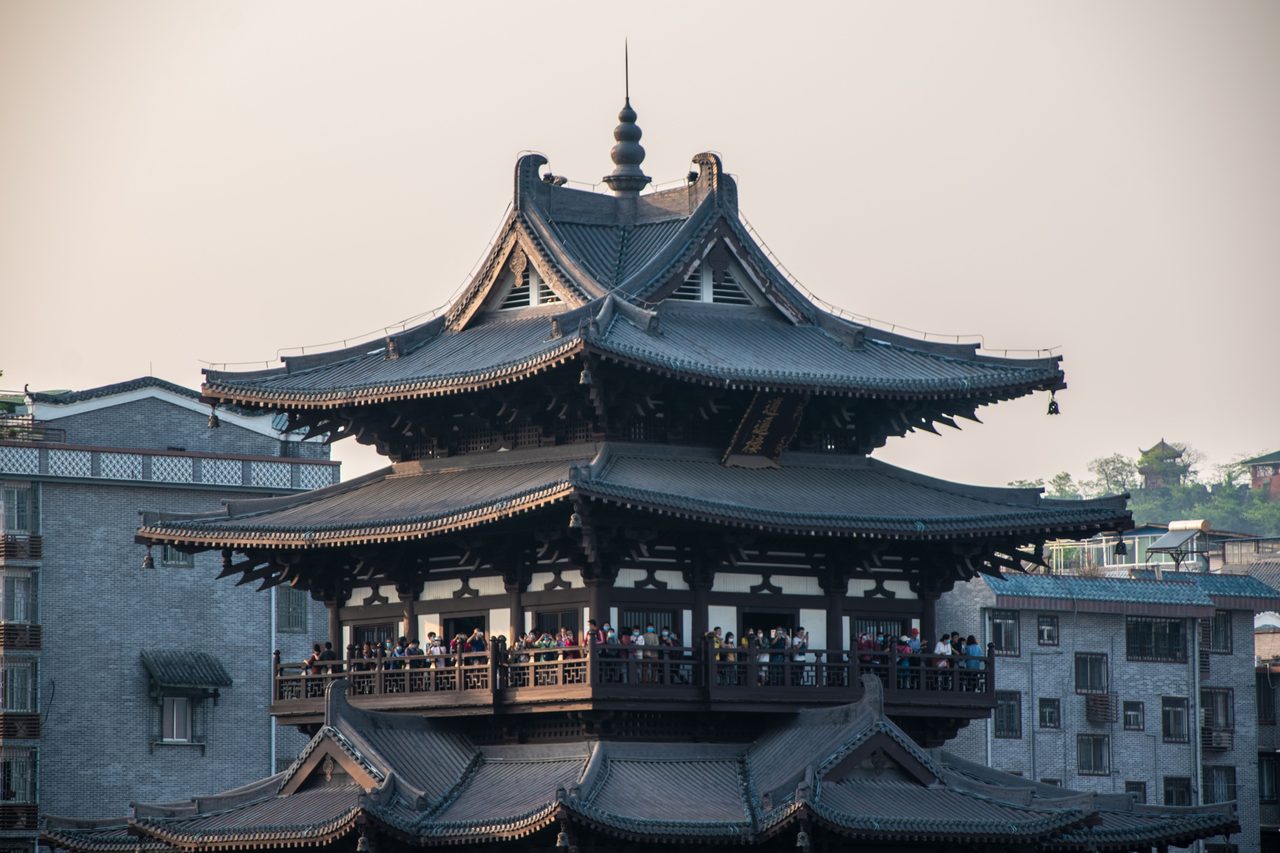
Nanning spreads across the Nanning Basin along both banks of the Yong River, wrapped in low karst hills and subtropical forest. The modern center runs along Minzu Avenue, a broad tree-lined boulevard linking Chaoyang Square in the old commercial core to the glass towers of the Wuxiang New Area, where the China-ASEAN Expo fills the Nanning International Convention and Exhibition Center each September. Qingxiu Mountain rises above the river on the southeast edge of the city, its Longxiang Pagoda giving the best panorama of the green canopy that earned Nanning its nickname, while Nanhu Park's lake and the Yong River promenades carry the evening walking and dancing crowds. The Guangxi Museum of Nationalities, built in the shape of a Zhuang bronze drum, anchors the city's role as the cultural capital of China's largest ethnic minority, and Zhongshan Road's 800-meter snack street serves the sour bamboo shoots, fermented black beans, and chili that define Nanning's signature laoyou fen rice noodles.
- Capital
- Nanning (capital of the Guangxi Zhuang Autonomous Region)
- Largest city
- Nanning (urban core centered on Qingxiu, Xingning, and Jiangnan districts)
- Population
- ~9.0 million (municipality); roughly 4.5 million in the urban core
- Languages
- Mandarin Chinese (official), Nanning Pinghua/Baihua (local Yue dialect), Zhuang
- Currency
- Chinese Yuan (Renminbi)
- Time zone
- China Standard Time (UTC+8)
Explore Nanning by topic
Jump straight to the experience you're planning.
Best places to visit in Nanning
The 18 destinations our editors recommend — from iconic landmarks to under-the-radar finds.
Guangxi Museum of Nationalities
Museum of the Guangxi Zhuang Autonomous Region
Nanhu Park (South Lake Park)
Nanning Confucius Temple
Three Streets and Two Alleys Historical and Cultural Block
Recommended itineraries
Pick a length, follow the route. Each itinerary balances headline sights with breathing room.
5-Day Nanning Explorer
- Day 1Arrive in Nanning, explore city center
- Day 2Visit top attractions and museums
- Day 3Day trip to nearby highlights
- Day 4Local markets and hidden gems
- Day 5Final sightseeing, departure
7-Day Classic Nanning
- Days 1-2Nanning city highlights
- Days 3-4Regional exploration
- Days 5-6Cultural immersion and local experiences
- Day 7Return and departure
14-Day Ultimate Nanning
- Days 1-3Nanning comprehensive city tour
- Days 4-6Northern region exploration
- Days 7-9Eastern highlights
- Days 10-12Southern attractions
- Days 13-14Return to Nanning, departure
Where to stay in Nanning
Three tiers, every traveller covered — from cost-conscious to flagship hotels.
Budget ¥200 ($30)
Hostels, budget hotels, and guesthouses offer affordable stays without sacrificing experience.
Mid-range ¥550 ($82)
Boutique hotels and well-located accommodations provide comfort and convenience at reasonable prices.
Luxury ¥1,600+ ($239+)
World-class resorts and premium hotels deliver unforgettable experiences.
Shangri-La Nanning
Shangri-La Nanning occupies the upper levels of a tower within the CR Centre complex on Minzu Avenue in Qingxiu District, linked directly to the MixC shopping mall. It is among the tallest hotels the group operates, and high-floor rooms look across the Qingxiu central business district toward Jinhu Square and the Yong River. Three restaurants, a lobby bar, an outdoor pool and extensive meeting space serve a mix of China-ASEAN Expo business travellers and leisure guests. Rates typically run from about ¥950 to ¥2,700 (approx $142-403) per night depending on season and expo dates.
Check rates on Booking.comWanda Vista Nanning
Wanda Vista Nanning is the flagship five-star property of the Qingxiu Wanda commercial complex on Dongge Road, a short ride north of Minzu Square. The hotel pairs a full-service spa, indoor pool and executive lounge with direct access to the mall's cinemas, restaurants and shopping. A themed family suite makes it one of the few luxury towers in the city aimed at travelling families as well as corporate guests. Nightly rates generally fall between about ¥490 and ¥970 (approx $73-145).
Check rates on Booking.comNanning Marriott Hotel
Nanning Marriott Hotel occupies a glass tower on Minzu Avenue in the eastern half of the Qingxiu central business district, roughly 120 metres from the Convention and Exhibition Center metro station and beside an upscale shopping mall. Several restaurants and a cafe sit alongside an indoor pool, spa and executive lounge, and the Nanning International Convention and Exhibition Center is within walking distance. Expect rates of about ¥510 to ¥1,200 (approx $76-179) per night, with the upper end reached during China-ASEAN Expo week.
Check rates on Booking.comNa Lotus Hotel, a Luxury Collection Hotel, Nanning
Na Lotus Hotel opened in 2019 on floors 63 to 80 of the Logan Century tower in Qingxiu District, making it the highest hotel in Nanning and the first Luxury Collection property in Guangxi. Its 290 rooms look out over the Fengling district, Qingxiu Mountain and the Yong River, and the hotel runs four restaurants, a spa, an indoor pool and a children's play area. Rooms typically price between about ¥850 and ¥1,700 (approx $127-254) per night.
Check rates on Booking.comWhere to eat in Nanning
Cafés, neighbourhood gems, and tasting menus worth the table reservation.
Shuji Laoyoufen (Qixing Road)
Fuji Laoyoufen (Zhongshan Road)
Kang Ge Laoyou
Pengji Laoyoufen Shengliaofen
Ganjiajie Lemon Duck (Yuanhu Branch)
Ganjiajie Lemon Duck (Dongge Road Branch)
Book a food tour in Nanning We may earn a commission from bookings made through this link.
Getting around Nanning
Nanning is compact by Chinese provincial-capital standards and easy to cover on a five-line metro network that opened in 2016 and now runs roughly 128 km with more than 90 stations. Minzu Avenue forms the city's main east-west spine, served by Metro Line 1 between the two main railway stations, while an extensive bus network, cheap metered taxis, and Didi ride-hailing fill the gaps. The airport is the one weak link — no metro line reaches Nanning Wuxu International Airport, so airport coaches or a taxi are the only realistic options. Nanning is also a major rail hub, with high-speed services across Guangxi and an international sleeper train to Hanoi.
Budget breakdown
Daily spend by tier in CNY, broken out by category.
| Category | Budget | Mid-range | Luxury |
|---|---|---|---|
| Accommodation | ¥90 ($13) | ¥300 ($45) | ¥1,000 ($149) |
| Food (per day) | ¥60 ($9) | ¥140 ($21) | ¥350 ($52) |
| Transportation | ¥20 ($3) | ¥50 ($7) | ¥130 ($19) |
| Activities | ¥30 ($4) | ¥60 ($9) | ¥120 ($18) |
| Daily total | ¥200 ($30) | ¥550 ($82) | ¥1,600+ ($239+) |
Best time to visit Nanning
Weather through the year in Guangxi
Best time Shoulder Worth avoiding
Average daytime temperature in °C. Figures are for Guangxi.
Late October to December, and mid-March to mid-April
Essential travel tips
- Start a day on Qingxiu Mountain early, since the climb to the Longxiang Pagoda is far more pleasant before the midday heat builds
- Eat laoyou fen for breakfast rather than dinner, which is when locals eat it and when the best shops have fresh stock
- Ride Metro Line 1 along Minzu Avenue to connect the two main railway stations, the convention district, and Nanhu Park without touching a taxi
- Carry a passport when visiting state museums such as the Guangxi Museum of Nationalities, since free admission requires ID registration
- Plan around the China-ASEAN Expo in mid-to-late September, when hotels near the Wuxiang New Area convention center book out and rates climb sharply
Safety information
Carry the original passport at all times rather than a photocopy, since Chinese police conduct random identity checks and photocopies are not accepted
Use metered licensed taxis or the Didi app instead of accepting rides from touts in the Wuxu Airport arrivals hall or outside the railway stations
Keep bags zipped and in front in crowded markets, night-food streets and metro interchanges, where pickpocketing is the most common complaint
Use insect repellent containing at least 20 percent DEET and sleep in screened or air-conditioned rooms during the warm, wet months, as Guangxi is one of the Chinese regions where dengue recurs
Save the hotel address in Chinese characters and install a translation app, since English is not widely spoken outside international hotels
Avoid demonstrations and political gatherings entirely; foreigners attending them risk arrest, detention or deportation
Watch the forecast between June and early November, when typhoon remnants can bring prolonged downpours and river flooding to the Yong River basin
Frequently asked questions
Do I need a visa to visit Nanning?
Most foreign visitors need a Chinese visa arranged in advance through a Chinese embassy or consulate. Nanning Wuxu International Airport is among the ports covered by China's 240-hour (10-day) visa-free transit policy for nationals of 57 countries travelling onward to a third country or region with a confirmed onward ticket, and China also operates a separate unilateral visa-free entry scheme for short tourist stays by passport holders from a periodically revised list of countries. Because the eligible nationalities and qualifying ports change several times a year, current requirements should be confirmed with the nearest Chinese embassy or consulate before travel.
How do I get from Nanning Wuxu Airport to downtown?
No metro line reaches the airport, which sits about 32 km southwest of the city in Wuxu Town. Four airport coach lines run into the city for a flat ¥20 ($2.99), with Line 1 reaching Nanning Railway Station in about 40 minutes and Line 2 reaching the Nanning International Hotel area in about 50 minutes. City bus 301 runs to Chaoyang Square for ¥3 ($0.45), and a metered taxi or Didi costs roughly ¥100-140 ($15-21) for a 40-55 minute ride.
What is Nanning famous for?
Nanning is famous as China's "Green City", a subtropical capital so densely planted with banyans and flowering trees that greenery defines its skyline, and as the capital of the Guangxi Zhuang Autonomous Region and cultural center of the Zhuang, China's largest ethnic minority. It is also the permanent host of the annual China-ASEAN Expo, which makes it China's main commercial gateway to Southeast Asia, and it is known nationally for laoyou fen, the sour-spicy "old friend" rice noodles invented here in the 1930s.
What are the top attractions in Nanning?
The top attractions in Nanning include the terraced gardens and Longxiang Pagoda viewpoint of Qingxiu Mountain, the bronze-drum-shaped Guangxi Museum of Nationalities, the ancient bronze drum collection at the Guangxi Museum, Nanhu Park's lakeside loop, the karst chambers of Yiling Cave in Wuming District, Nanning Zoo, and the evening food stalls of Zhongshan Road Snack Street.
Does Nanning have beaches?
No. Nanning is an inland river city on the Yong River, so its waterfront life centers on Nanhu Park's 9 km lakeside loop, the Yong River Binjiang promenades, and Wuxiang Lake Park rather than sand and swimming. The nearest genuine ocean beach is Silver Beach at Beihai on the Gulf of Tonkin, about 200 km south and roughly 1.5 hours away by high-speed rail.
When is the best time to visit Nanning?
October through December is the best window, with warm, sunny days, much lower humidity than summer, and the Nanning International Folk Song Arts Festival in autumn; March and April are a good second choice and coincide with the Zhuang Sanyuesan song festival. June to August brings extreme heat, humidity, and the heaviest monsoon rain, and the China-ASEAN Expo in mid-to-late September fills convention-district hotels.