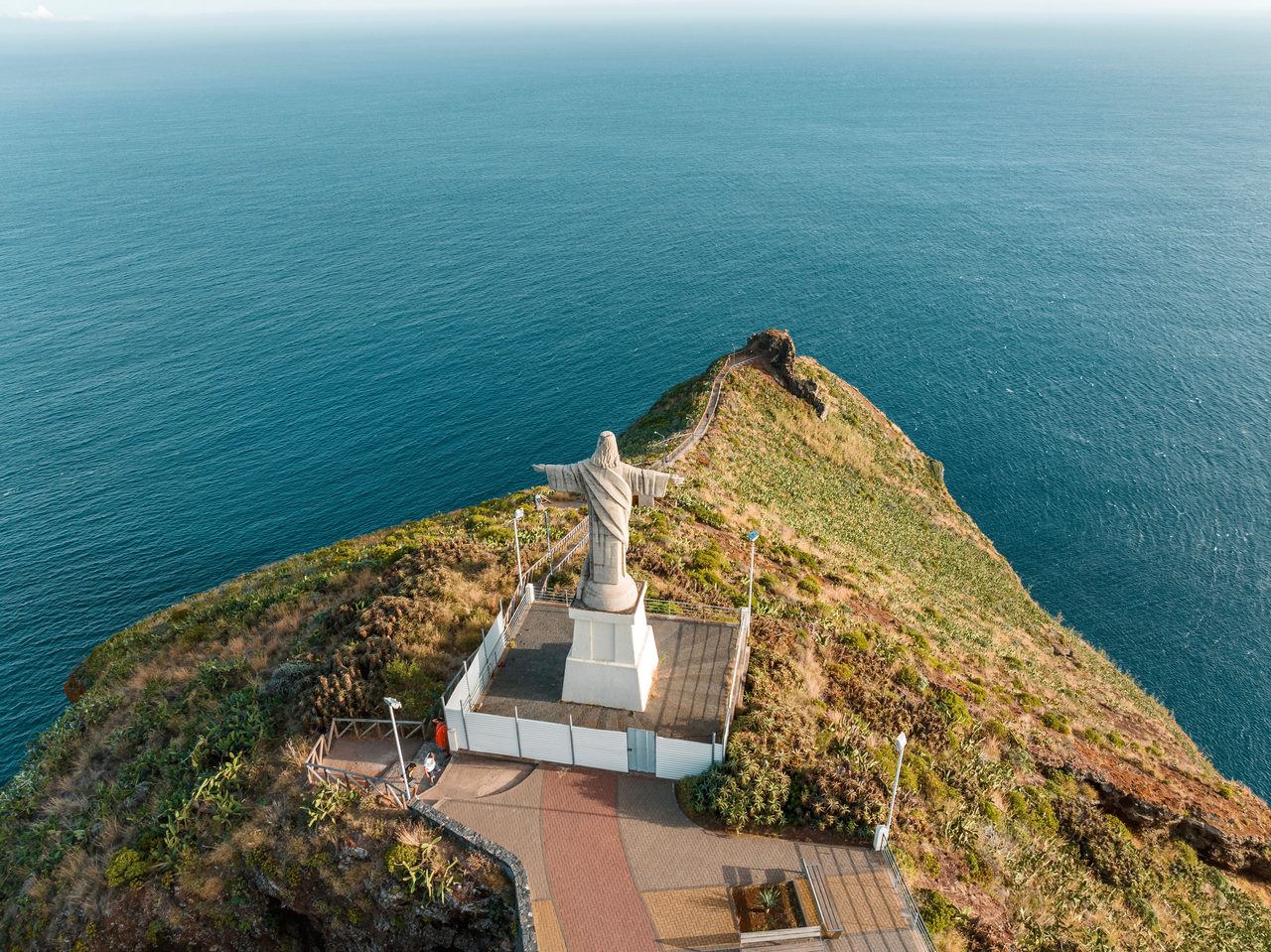
Madeira · 22 Places · Best April, May, June, September, October
Madeira
Madeira is Portugal's volcanic archipelago in the Atlantic Ocean, famous for its dramatic mountain peaks, laurel forests, centuries-old levada irrigation channels, and year-round mild climate. The main island rises steeply from the sea to Pico Ruivo at 1,862 metres, creating a landscape of terraced vineyards, sub-tropical gardens, and coastal cliffs that draw hikers, botanists, and cruise passengers alike.
Madeira sits roughly 1,000 kilometres southwest of mainland Portugal in the Atlantic Ocean, with Funchal as its capital and main port of entry. The island's steep volcanic terrain is laced with over 2,000 kilometres of levadas, historic irrigation channels that now double as some of Europe's most scenic hiking trails. The north coast is wetter and wilder, with dramatic sea cliffs at Porto Moniz and Seixal, while the south coast around Funchal and Câmara de Lobos enjoys a drier, sunnier microclimate favoured by wine growers since the 15th century. The nearby island of Porto Santo offers a contrasting sandy beach escape a short ferry or flight away.
The 22 destinations our editors recommend — from iconic landmarks to under-the-radar finds.
Cabo Girão Skywalk
Cabo Girão is one of the highest sea cliffs in Europe, rising almost 580 metres straight out of the Atlantic above the village of Fajã dos Padres. A glass-floored skywalk cantilevers out from the clifftop viewpoint, giving visitors a vertigo-inducing look straight down at the tiny terraced fields and turquoise water far below.
Pico do Arieiro
At 1,818 metres, Pico do Arieiro is Madeira's third-highest peak and the most accessible, with a paved road running right to the summit viewpoint. Sunrise here is legendary, with visitors watching the sun break over a sea of clouds that often fills the valleys below, and the peak is also the trailhead for the dramatic ridge hike to Pico Ruivo.
Pico Ruivo
Pico Ruivo is Madeira's highest point at 1,862 metres, reached only on foot via trails from Pico do Arieiro or the village of Achada do Teixeira. The summit sits above the cloud line on clear days, with panoramic views across the island's jagged central massif in every direction, and a small mountain refuge near the top offers shelter and refreshments.
Levada das 25 Fontes
One of Madeira's most beloved walks, this levada trail winds through laurel forest in the Rabaçal valley to a natural amphitheatre where twenty-five springs trickle down mossy cliffs into a still pool. The path passes waterfalls and dense UNESCO-listed laurisilva woodland for nearly the entire route.
Porto Moniz Natural Lava Pools
At the island's northwestern tip, volcanic rock has formed a series of natural swimming pools that fill with clear Atlantic seawater. Concrete walkways and a complex of changing rooms make the pools easy to enjoy, and the setting, with waves crashing against the black basalt just beyond the swimming area, is unique in Europe.
Ponta de São Lourenço
The easternmost tip of Madeira is a dramatically different landscape from the lush centre of the island: an arid, wind-scoured peninsula of red and ochre volcanic rock stretching out into the Atlantic. A well-marked trail follows the ridge past sheer drops and turquoise coves to the tip near Ilhéu da Ponta de São Lourenço.
Recommended itineraries
Pick a length, follow the route. Each itinerary balances headline sights with breathing room.
5-Day Madeira Explorer
Day 1Arrive in Madeira, explore city center
Day 2Visit top attractions and museums
Day 3Day trip to nearby highlights
Day 4Local markets and hidden gems
Day 5Final sightseeing, departure
7-Day Classic Madeira
Days 1-2Madeira city highlights
Days 3-4Regional exploration
Days 5-6Cultural immersion and local experiences
Day 7Return and departure
14-Day Ultimate Madeira
Days 1-3Madeira comprehensive city tour
Days 4-6Northern region exploration
Days 7-9Eastern highlights
Days 10-12Southern attractions
Days 13-14Return to Madeira, departure
Where to stay in Madeira
Three tiers, every traveller covered — from cost-conscious to flagship hotels.
Budget €65 (~$75)
Hostels, budget hotels, and guesthouses offer affordable stays without sacrificing experience.
Mid-range €140 (~$162)
Boutique hotels and well-located accommodations provide comfort and convenience at reasonable prices.
Luxury €450 (~$522)
World-class resorts and premium hotels deliver unforgettable experiences.
Belmond Reid's Palace
Estrada Monumental, Funchal · €450–€1200 / $486–$1296 per night
A pink-facaded clifftop grande dame overlooking Funchal Bay, open since 1891 and long the benchmark for Madeiran hospitality, with terraced subtropical gardens, a private sea-level bathing platform and afternoon tea on the Sea Terrace.
São Martinho, Funchal · €300–€900 / $324–$972 per night
A cliffside five-star hotel on the São Martinho headland with a private lift down to a sea-water lido, landscaped gardens and Il Gallo d'Oro, the two-Michelin-starred restaurant led by chef Benoît Sinthon.
São Martinho, Funchal · €260–€700 / $281–$756 per night
The all-suite sister property to The Cliff Bay, set slightly further along the São Martinho cliffs with larger apartment-style suites, full kitchenettes and shared access to The Cliff Bay's pools, spa and restaurants.
Choupana Hills, Funchal · €250–€700 / $270–$756 per night
A design-forward hillside retreat above Funchal set among laurel forest, combining Asian-influenced bungalow architecture with a large spa, an infinity pool and views down over the bay from roughly 400 metres elevation.
Cafés, neighbourhood gems, and tasting menus worth the table reservation.
William
Contemporary European / Atlantic · €€€€ (€110–€180 / $119–$194 per person, tasting menu)
The signature restaurant of Reid's Palace, named after hotel founder William Reid, holds a Michelin star for a tasting menu built around Atlantic seafood and Madeira wine pairings served in a formal dining room overlooking the ocean cliffs of Funchal.
Il Gallo d'Oro
French-Mediterranean · €€€€ (€130–€210 / $140–$227 per person, tasting menu)
Madeira's only two-Michelin-star restaurant, at The Cliff Bay hotel, has been led since 2004 by French chef Benoît Sinthon, whose tasting menus pair classical French technique with island produce and earned a Michelin Green Star for sustainability in 2022.
Ákua by Chef Júlio Pereira
Contemporary Portuguese Seafood · €€€ (€45–€75 / $49–$81 per person)
Set a few steps from the sea in Funchal's old town, Ákua is chef Júlio Pereira's Michelin-listed seafood restaurant, opened in 2019, built around a short menu of ocean-driven dishes served with bright, modern plating.
Kampo by Chef Júlio Pereira
Meat-Focused Portuguese · €€€ (€40–€80 / $43–$86 per person)
Kampo is chef Júlio Pereira's meat-driven restaurant in Funchal's historic centre, built around an open kitchen and a menu of matured beef cuts, including Rubia Galega chuletón, alongside piglet terrine and other charcuterie-style starters.
Housed in a converted 19th-century salt warehouse near Funchal's harbour, Armazém do Sal pairs exposed stone walls with a menu of grilled meats and seafood, and is known for a well-curated Portuguese wine list.
Taberna Ruel
Portuguese / Seafood · €€ (€18–€35 / $19–$38 per person)
Set on Rua de Santa Maria, one of Funchal's oldest streets in the old town, Taberna Ruel serves fresh fish and traditional Madeiran plates in a rustic dining room with a small outdoor terrace along the pedestrian lane.
Madeira is a mountainous volcanic island with no railway, so getting around means car rental, public buses, taxis or ride-hailing. Cristiano Ronaldo Madeira International Airport (FNC), famous for its short cliffside runway extended onto stilts over the ocean, sits about 18km east of Funchal and is the archipelago's only air gateway besides Porto Santo Airport. Roads wind through tunnels and switchbacks across the interior's steep terrain, so travel times between towns are longer than the straight-line distance suggests.
Rental Car
The most practical way to reach Madeira's interior villages, viewpoints and levada trailheads; agencies operate desks at FNC Airport and in Funchal. The VR1 expressway and its tunnel network connect the south coast quickly, but rural roads remain narrow and mountainous.
Cost: €25–€50/day (~$29–$58)
Horários do Funchal Bus
The municipal bus network covering Funchal city and its immediate suburbs; frequent on main routes, less so in outlying neighbourhoods.
Cost: €1.95–€2.50 per journey (~$2.25–$2.90)
Rodoeste / SAM Intercity Bus
Rodoeste serves the west of the island (Ribeira Brava, Ponta do Sol, Calheta, Porto Moniz) and SAM (Sociedade Automóveis da Madeira) serves the east and north (Machico, Santana, Porto Moniz via the north coast); both companies also run the Aerobus airport service.
Cost: €3–€10 per journey (~$3.50–$11.60)
Bolt / Uber
Ride-hailing apps operate in and around Funchal; coverage thins out quickly once outside the city and along the north coast.
Cost: €5–€20 (~$6–$23)
Taxi
Licensed taxis wait at ranks throughout Funchal and at the airport; also bookable for a fixed-price half-day or full-day island tour, useful for visitors who prefer not to drive the mountain roads themselves.
Cost: €10–€40 in town (~$12–$46); €90–€150/day for a private tour (~$105–$174/day)
Teleférico do Funchal (Cable Car)
A gondola cable car linking Funchal's Zona Velha (old town) to the hillside parish of Monte, offering sweeping views over the city and harbour; a common one-way pairing with the Monte toboggan ride back down.
Cost: €14.50 one-way (~$17); €20 return (~$23)
Carros de Cesto (Monte Toboggan)
A traditional wicker-basket toboggan steered by two carreiros (drivers) down the steep paved streets from Monte to Livramento, a Madeira tradition dating to the 19th century.
Cost: €30 (~$35) for two people, one-way
Budget breakdown
Daily spend by tier in EUR, broken out by category.
Category
Budget
Mid-range
Luxury
Accommodation
€25 (~$29)
€90 (~$104)
€300 (~$348)
Food (per day)
€20 (~$23)
€35 (~$41)
€90 (~$104)
Transportation
€8 (~$9)
€15 (~$17)
€40 (~$46)
Activities
€12 (~$14)
€25 (~$29)
€70 (~$81)
Daily total
€65 (~$75)
€140 (~$162)
€450 (~$522)
Best time to visit Madeira
Weather through the year in Madeira
Best timeShoulderWorth avoiding
Average daytime temperature in °C. Figures are for Madeira.
Essential travel tips
Rent a car to reach remote levada trailheads and the wilder north coast towns
Bring a headlamp for levada walks that pass through unlit rock tunnels
Pack layers; temperatures at Pico do Arieiro and Pico Ruivo can be 10°C cooler than Funchal
Book the Monte cable car and toboggan ride early in the day to avoid queues
The north coast (Porto Moniz, Seixal, Santana) is wetter and greener than the sunnier south coast
Hidden gems
Off-the-beaten-path corners most travellers miss.
Miradouro do Pináculo above Funchal
Miradouro da Ponta do Rosto
far end of the Ponta de São Lourenço trail
Eira do Serrado viewpoint
over Curral das Freiras
Adega da Quinta (Estreito de Câmara de Lobos)
hanging espetada tradition locals swear by
Genuíno (Câmara de Lobos)
harbor-front grilled fish with almost no tourist footfall
Seixal natural pool and waterfall
largely overlooked in favor of Porto Moniz
Skip the midday Monte toboggan queue
book the first departure slot instead
Skip the crowded Cabo Girão viewpoint car park at midday
arrive at opening for an empty skywalk
Pico do Arieiro sunrise
famous 'sea of clouds' effect
Ponta de São Lourenço ridge
Cabo Girão skywalk
Praça do Povo, Funchal
Câmara de Lobos harbor
Safety information
INFO
Stick to marked and maintained levada paths — many unofficial irrigation channels are not intended to be walked and lack safety rails
INFO
Carry a functional headlamp on any levada trail that passes through a tunnel; phone flashlights are often too weak on wet, uneven rock inside long tunnels
INFO
Check the weather forecast before entering narrow river gorges such as Caldeirão Verde — flash floods can occur quickly in the north during heavy interior rainfall
INFO
Avoid the Pico do Areeiro to Pico Ruivo trail in high wind, rain or fog; sections have narrow stairs on exposed mountain edges with only a rope for protection
INFO
Wear proper hiking shoes with grip — Madeira's volcanic rock and levada paths become extremely slippery when wet
INFO
Only attempt hikes that match a realistic skill level, and consider a local guide for the more exposed mountain routes
INFO
Be cautious of strong currents and sudden swells at natural sea pools like Porto Moniz — enter the water only when conditions look calm and lifeguards or staff are present
INFO
Madeira's mountain roads are narrow and winding with sharp drops; drive cautiously, use pull-offs to let oncoming traffic pass and avoid driving them at night if unfamiliar
INFO
Keep valuables out of sight in parked rental cars, particularly at remote viewpoint and trailhead car parks
INFO
Apply and reapply high-SPF sunscreen even on cloudy days — UV exposure is strong at altitude on mountain hikes
INFO
Fog and low cloud can descend quickly at higher elevations such as Pico do Arieiro even when the coast is sunny — pack a warm layer and be prepared to turn back
INFO
Use licensed taxis or established rideshare options rather than unlicensed drivers, especially from the airport
Frequently asked questions
Is Madeira safe to visit in 2026?
Madeira is one of the safest destinations in Europe with very low violent crime rates. The main hazards for visitors involve steep, wet levada trails and mountain roads rather than crime, so appropriate footwear and caution on hikes matter more than personal security concerns. Emergency services: police, ambulance, and fire are all reached at 112.
What is the best time to visit Madeira?
The best time to visit Madeira is April, May, June, September, and October, when the weather is mild and dry with fewer crowds than the July-August and December peak seasons. Madeira has a mild, spring-like climate year-round, with the south coast around Funchal notably drier and sunnier than the north coast.
Do I need a visa to visit Madeira?
Entry requirements follow Portugal/Schengen rules. EU/EEA citizens enter with a national ID card. Non-EU visitors from visa-exempt countries (USA, Canada, Australia, UK) may stay up to 90 days in any 180-day period. Others require a Schengen visa. Requirements vary by nationality, so checking with the nearest embassy or the official immigration website before traveling is recommended.
What currency is used in Madeira?
The currency in Madeira is the Euro (EUR), the same as mainland Portugal. ATMs are widely available in Funchal and larger towns. Credit cards are accepted at most hotels and restaurants, but carrying cash is useful for markets and smaller village establishments.
What language is spoken in Madeira?
The main language spoken in Madeira is Portuguese. In Funchal and tourist areas, English is generally understood. Learning a few basic Portuguese phrases is appreciated by locals in smaller towns.
What are the top attractions in Madeira?
The top attractions in Madeira include the Cabo Girão Skywalk, Pico do Arieiro, Monte Palace Tropical Garden, Porto Moniz natural pools, and Funchal Cathedral. Each offers a distinct experience, from cliffside viewpoints to volcanic pools and colonial-era architecture.
Explore Madeira by city
The cities below have their own guides — hotels, attractions and where to eat, in depth.