
On this page
About Tangier
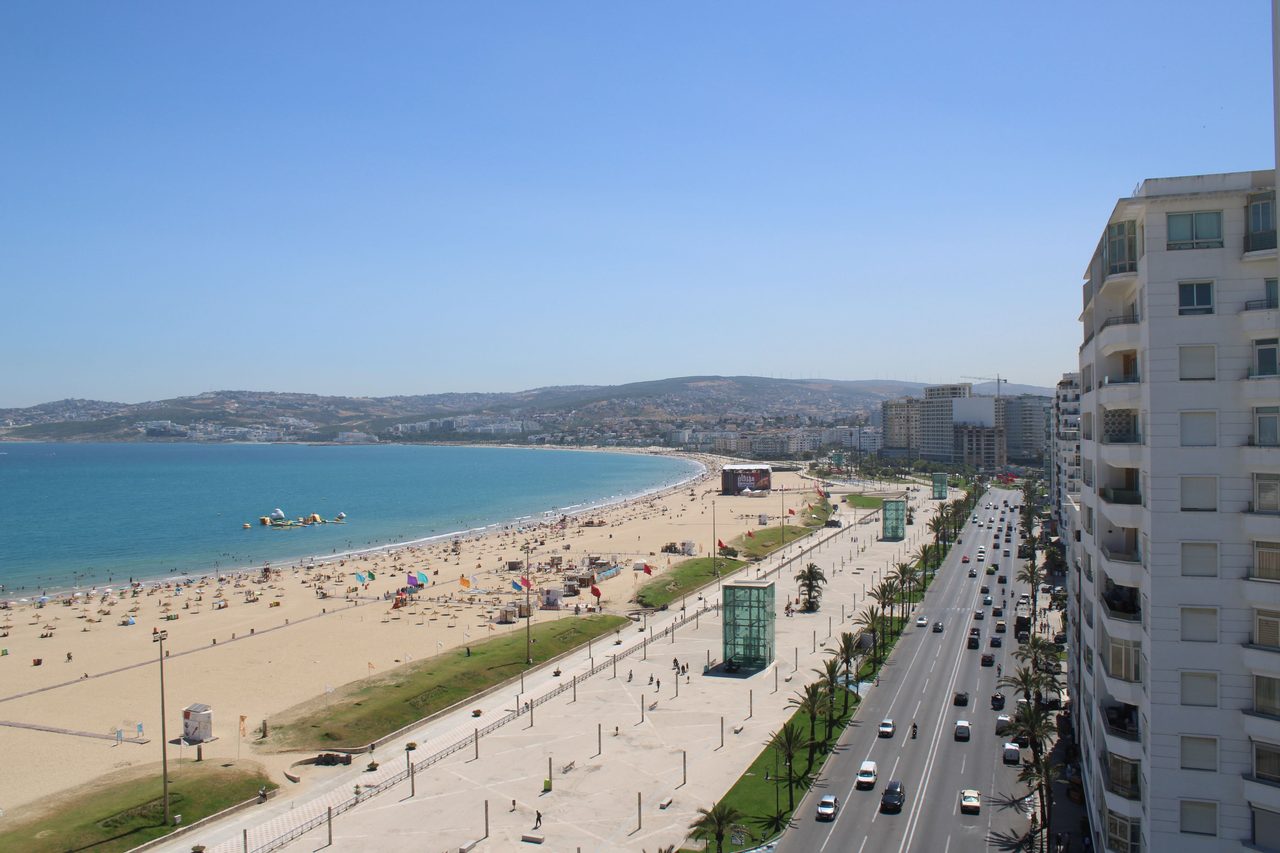
Tangier is the capital of the Tangier-Tetouan-Al Hoceima region and Morocco's northern gateway, a port city on the Strait of Gibraltar where the Atlantic meets the Mediterranean and Spain lies about 14 kilometres away. Its history runs from Phoenician Tingis through Portuguese and English rule to the International Zone of 1923-1956, which drew writers and artists such as Paul Bowles and William S. Burroughs. The old medina and the hilltop Kasbah sit above the harbour, the Grand Socco links them to the French- and Spanish-era new town, and the Corniche runs along the Bay of Tangier. West of the city, Cape Spartel, the Caves of Hercules and Achakar beach are a half-day trip. Tangier has Ibn Battouta Airport (TNG), the Al Boraq high-speed train to Rabat and Casablanca in about 2 hours 10 minutes, ferries to Spain, and the Tanger Med port 40 kilometres east. Most visitors spend one to three days here before heading to Chefchaouen, Asilah, Tetouan or Fes.
- Capital
- Rabat (national capital); Tangier is the capital of the Tangier-Tetouan-Al Hoceima region
- Largest city
- Tangier (largest city of the region)
- Population
- approximately 1.2 million in the Tangier-Assilah prefecture (2024 census figures)
- Languages
- Arabic and Tamazight (Berber) are official; Moroccan Arabic (Darija) is spoken day to day; Spanish is widely understood in the north because of the historic Spanish presence; French is common in business, signage and restaurants; English is increasingly common in hotels and among younger residents
- Currency
- Moroccan Dirham (MAD) - a closed currency; it cannot be obtained or exchanged back outside Morocco, so convert cash at the airport, a bank or an authorized bureau de change and keep exchange receipts
- Time zone
- Morocco has been on UTC+1 for most of the year with a temporary shift to UTC+0 during Ramadan; Moroccan decrees reported in 2026 move the country to permanent UTC+0 from 20 September 2026, so travelers should confirm the offset on a phone or an official source before travel
Explore Tangier by topic
Jump straight to the experience you're planning.
Best places to visit in Tangier
The 16 destinations our editors recommend — from iconic landmarks to under-the-radar finds.
Tangier Medina
Grand Socco (Place du 9 Avril 1947)
Petit Socco
Caves of Hercules
Cape Spartel Lighthouse
Recommended itineraries
Pick a length, follow the route. Each itinerary balances headline sights with breathing room.
5-Day Tangier Explorer
- Day 1Arrive in Tangier, explore city center
- Day 2Visit top attractions and museums
- Day 3Day trip to nearby highlights
- Day 4Local markets and hidden gems
- Day 5Final sightseeing, departure
7-Day Classic Tangier
- Days 1-2Tangier city highlights
- Days 3-4Regional exploration
- Days 5-6Cultural immersion and local experiences
- Day 7Return and departure
14-Day Ultimate Tangier
- Days 1-3Tangier comprehensive city tour
- Days 4-6Northern region exploration
- Days 7-9Eastern highlights
- Days 10-12Southern attractions
- Days 13-14Return to Tangier, departure
Where to stay in Tangier
Three tiers, every traveller covered — from cost-conscious to flagship hotels.
Budget MAD 245-640 (~$26-69)/day
Hostels, budget hotels, and guesthouses offer affordable stays without sacrificing experience.
Mid-range MAD 1060-2450 (~$114-263)/day
Boutique hotels and well-located accommodations provide comfort and convenience at reasonable prices.
Luxury MAD 4000-10300 (~$430-1108)/day
World-class resorts and premium hotels deliver unforgettable experiences.
El Minzah Hotel
Historic five-star hotel opened in 1930 on a hillside above the Grand Socco, with a garden pool, Andalusian-style courtyards and a spa, a few minutes walk from the medina gates.
Check rates on Booking.comRoyal Tulip City Center Tanger
Five-star hotel on Route de Malabata above the bay, with a pool, spa and meeting facilities, roughly 3 km east of the medina by taxi.
Check rates on Booking.comMövenpick Hotel & Casino Malabata Tanger
Five-star seafront hotel on the Malabata corniche with Strait of Gibraltar views, a pool, spa and on-site casino.
Check rates on Booking.comFairmont Tazi Palace Tangier
Five-star palace hotel built around the restored Tazi Palace and its gardens on the western edge of the city, with pools, a spa and hammam.
Check rates on Booking.comWhere to eat in Tangier
Cafés, neighbourhood gems, and tasting menus worth the table reservation.
Restaurant Saveur de Poisson
Restaurant Hamadi
El Morocco Club
Dar Harruch
Le Nabab
Anna e Paolo
Book a food tour in Tangier We may earn a commission from bookings made through this link.
Getting around Tangier
Ibn Battouta Airport (TNG) lies about 14 km south-west of the center. The city is served by Tanger Ville railway station (Al Boraq high-speed trains to Rabat and Casablanca), the CTM and other intercity buses, ferries to Spain from the port, metered petit taxis in the city and shared grands taxis for longer runs. Ride apps such as inDrive and Careem operate in the city.
Budget breakdown
Daily spend by tier in MAD, broken out by category.
| Category | Budget | Mid-range | Luxury |
|---|---|---|---|
| Accommodation | MAD 150-350 (~$16-38)/night | MAD 600-1400 (~$65-151)/night | MAD 2500-6000 (~$269-645)/night |
| Food (per day) | MAD 80-150 (~$8.6-16)/day | MAD 250-500 (~$27-54)/day | MAD 700-1500 (~$75-161)/day |
| Transportation | MAD 15-40 (~$1.61-4.3)/day | MAD 60-150 (~$6.45-16)/day | MAD 300-800 (~$32-86)/day |
| Activities | MAD 0-100 (~$0-11)/day | MAD 150-400 (~$16-43)/day | MAD 500-2000 (~$54-215)/day |
| Daily total | MAD 245-640 (~$26-69)/day | MAD 1060-2450 (~$114-263)/day | MAD 4000-10300 (~$430-1108)/day |
Best time to visit Tangier
Weather through the year in Morocco
Best time Shoulder Worth avoiding
Average daytime temperature in °C. Figures are for Morocco.
Spring and early autumn are best.
Swimming is most comfortable from July to September.
Essential travel tips
- Carry cash: small shops, taxis and cafes usually do not take cards, while hotels, malls and larger restaurants do; ATMs are on Boulevard Pasteur, Avenue Mohammed V and at Tanger Ville station
- Dress modestly with shoulders and knees covered in the medina and near religious sites; most mosques are closed to non-Muslims
- The Kasbah Museum is closed on Tuesdays, so plan the medina and Kasbah for another day
- The Al Boraq train is the fastest way to Rabat and Casablanca; book ahead on oncf-voyages.ma for saver fares
- Allow time for the half-day Cape Spartel, Caves of Hercules and Achakar trip, usually by taxi with waiting time
- Many restaurants close between lunch and dinner, and fish is best at lunchtime on the Corniche grills
Safety information
Decline unofficial guides politely and firmly; hire licensed guides through a hotel or the tourist office, and agree the fee beforehand
Use metered petit taxis or ride apps, and keep small notes for fares
Keep valuables in zipped inner pockets and keep phones away from the road side on the Corniche
Avoid empty lanes in the medina and the port area after dark
Swim only at lifeguarded beaches such as Plage Municipale and Malabata in summer
Keep photocopies or phone photos of the passport and travel insurance details
Do not leave bags visible in parked cars; use hotel parking
Frequently asked questions
Is Tangier safe to visit in 2026?
Tangier is a large port city where tourists mostly face touts, petty crime and scams rather than violent crime.
What is the best time to visit Tangier?
The best time to visit Tangier is April. Tangier has a Mediterranean climate shaped by the Atlantic and the Strait of Gibraltar, with warm dry summers and mild, wet, windy winters.
Do I need a visa to visit Tangier?
Citizens of the US, UK, Canada, Australia, the EU/Schengen area and many other countries may enter Morocco visa-free for up to 90 days; no advance application or fee is required, only a passport valid for at least 3 to 6 months beyond arrival (6 months is the safe rule). Travelers who need a visa can check eligibility on the Moroccan e-visa portal (acces-maroc.ma). Staying beyond 90 days requires a residence permit application before the visa-free period ends. Requirements vary by nationality, so check with your nearest embassy or the official immigration website before traveling.
What currency is used in Tangier?
The currency in Tangier is the Moroccan Dirham (MAD) - a closed currency; it cannot be obtained or exchanged back outside Morocco, so convert cash at the airport, a bank or an authorized bureau de change and keep exchange receipts (MAD). ATMs are widely available in cities and tourist areas. Credit cards are accepted at most hotels and restaurants, but carry cash for markets and smaller establishments.
What language is spoken in Tangier?
The main language(s) spoken in Tangier: Arabic and Tamazight (Berber) are official; Moroccan Arabic (Darija) is spoken day to day; Spanish is widely understood in the north because of the historic Spanish presence; French is common in business, signage and restaurants; English is increasingly common in hotels and among younger residents. In tourist areas, English is generally understood. Learning a few basic phrases in the local language is appreciated by locals.
What are the top attractions in Tangier?
The top attractions in Tangier include Kasbah and Dar el Makhzen (Kasbah Museum), Tangier Medina, Grand Socco (Place du 9 Avril 1947), Petit Socco, and Caves of Hercules. Each offers a unique experience, from historic landmarks to natural wonders.