Rabat (national capital); Marrakech is the capital of the Marrakech-Safi region
Currency
Moroccan Dirham (MAD) — a closed currency; it cannot be obtained or exchanged back outside Morocco, so convert cash at the airport, a bank or an authorized bureau de change
Language
Arabic and Tamazight (Berber) are official; Moroccan Arabic (Darija) is spoken day to day; French is widely used in business and tourism; English is increasingly common in hotels, riads and the medina
Time zone
Morocco runs on permanent UTC+1 (GMT+1) for most of the year, with a temporary shift back to UTC+0 (GMT) during Ramadan. Note that the government announced Morocco will move to permanent UTC+0 (GMT) year-round starting 20 September 2026, ending both the summer GMT+1 offset and the separate Ramadan adjustment — travelers should double-check the current offset close to their travel dates.
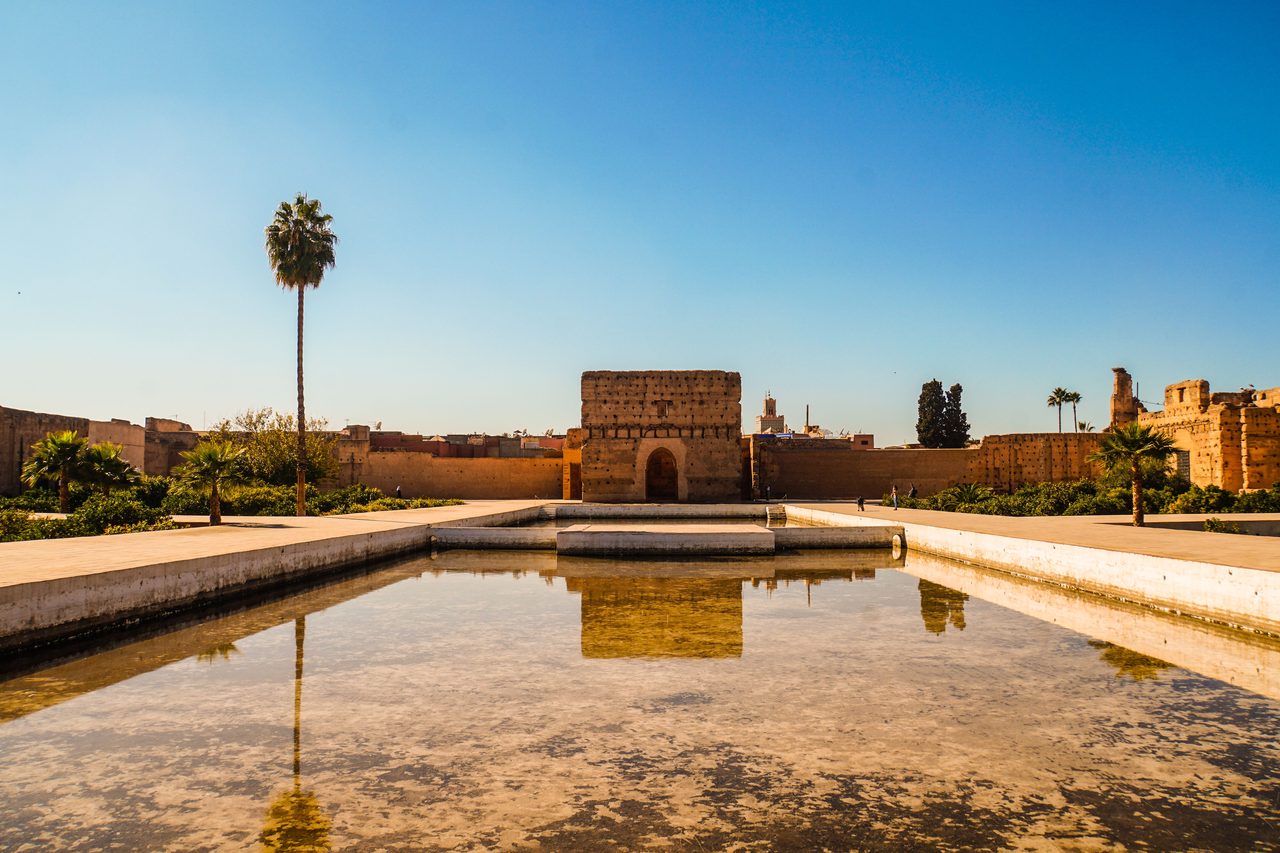
Marrakech is Morocco's most visited city and the cultural gateway between the Sahara, the Atlas Mountains and the Atlantic coast. Founded in 1070 as an imperial capital, its walled medina is a UNESCO World Heritage Site built from the same rose-tinted clay that gives the city its nickname, the Red City. Inside the ramparts, the Jemaa el-Fnaa square shifts from juice stalls and snake charmers by day to a vast open-air food market by night, while narrow souk alleys sell leather, lamps, spices and carpets. Beyond the medina walls, the Gueliz and Hivernage districts hold contemporary galleries, riad-style boutique hotels and gardens such as Majorelle, and Marrakech Menara Airport puts the desert, the High Atlas ski resort of Oukaimeden, and Essaouira on the coast all within a half-day's reach.
Capital
Rabat (national capital); Marrakech is the capital of the Marrakech-Safi region
Largest city
Marrakech
Population
approximately 953,000 in the city proper and 1,104,000 in the greater metro area (2026 estimate)
Languages
Arabic and Tamazight (Berber) are official; Moroccan Arabic (Darija) is spoken day to day; French is widely used in business and tourism; English is increasingly common in hotels, riads and the medina
Currency
Moroccan Dirham (MAD) — a closed currency; it cannot be obtained or exchanged back outside Morocco, so convert cash at the airport, a bank or an authorized bureau de change
Time zone
Morocco runs on permanent UTC+1 (GMT+1) for most of the year, with a temporary shift back to UTC+0 (GMT) during Ramadan. Note that the government announced Morocco will move to permanent UTC+0 (GMT) year-round starting 20 September 2026, ending both the summer GMT+1 offset and the separate Ramadan adjustment — travelers should double-check the current offset close to their travel dates.
The 22 destinations our editors recommend — from iconic landmarks to under-the-radar finds.
Jemaa el-Fnaa
This is the main square of Marrakech's medina, ringed by cafe terraces and backing onto the souks. By day it's mostly orange juice stalls and snake charmers working the tourist crowd; after sunset dozens of open-air food stalls set up serving grilled meat, snails, and harira, alongside storytellers, musicians, and henna artists.
Bahia Palace
Built in the late 19th century for a powerful grand vizier, this palace is a showcase of Moroccan craftsmanship - carved cedar ceilings, zellige tilework, and painted stucco spread across a sequence of courtyards and riads. It was designed to be the finest palace of its era, and the scale of decoration reflects that ambition.
Koutoubia Mosque
The 12th-century minaret of this mosque is the tallest structure in Marrakech's medina and the city's main visual landmark, visible from most of the surrounding streets and gardens. Its proportions and sandstone carving became the model for the Giralda in Seville and the Hassan Tower in Rabat, built by the same Almohad dynasty.
Koutoubia Gardens
This small public garden sits at the base of the Koutoubia minaret, planted with palms, orange trees, and rose bushes along gravel paths. It functions as a green buffer between the medina and the newer city, and is used by locals for an evening walk as much as by visitors photographing the minaret.
Majorelle Garden
A botanical garden created by French painter Jacques Majorelle in the 1920s-30s, later owned and restored by Yves Saint Laurent and Pierre Bergé. It's built around a striking cobalt-blue villa and pavilions, with paths through bamboo, cacti, and palms, plus pools with lotus and papyrus.
Yves Saint Laurent Museum Marrakech
Opened in 2017 next to the Majorelle Garden, this museum is dedicated to the couturier's work and his long relationship with Marrakech, which he visited for decades and credited as a major influence on his design. The permanent collection rotates garments, sketches, and accessories from his career.
Recommended itineraries
Pick a length, follow the route. Each itinerary balances headline sights with breathing room.
5-Day Marrakech Explorer
Day 1Arrive in Marrakech, explore city center
Day 2Visit top attractions and museums
Day 3Day trip to nearby highlights
Day 4Local markets and hidden gems
Day 5Final sightseeing, departure
7-Day Classic Marrakech
Days 1-2Marrakech city highlights
Days 3-4Regional exploration
Days 5-6Cultural immersion and local experiences
Day 7Return and departure
14-Day Ultimate Marrakech
Days 1-3Marrakech comprehensive city tour
Days 4-6Northern region exploration
Days 7-9Eastern highlights
Days 10-12Southern attractions
Days 13-14Return to Marrakech, departure
Where to stay in Marrakech
Three tiers, every traveller covered — from cost-conscious to flagship hotels.
Budget 210–510 MAD/day (approx $23–$55)
Hostels, budget hotels, and guesthouses offer affordable stays without sacrificing experience.
Mid-range 900–1,950 MAD/day (approx $96–$209)
Boutique hotels and well-located accommodations provide comfort and convenience at reasonable prices.
Luxury 3,700–11,000 MAD/day (approx $397–$1,179)
World-class resorts and premium hotels deliver unforgettable experiences.
La Mamounia
Hivernage, near the Medina walls, Marrakech · MAD 4,200–11,200/night (~$450–$1,200)
Cafés, neighbourhood gems, and tasting menus worth the table reservation.
Nomad
Modern Moroccan · 200–400 MAD/person ($21–$43)
A rooftop restaurant overlooking Rahba Lakdima (the spice square), serving Moroccan food reworked into small, shareable plates rather than the usual single tagine per person. The room is minimalist and modern by medina standards - white walls, wooden lattice screens, plants - a deliberate contrast to the ornate riads nearby.
A restaurant built around a planted courtyard - palms, banana trees, a fountain - tucked off the souks near Sidi Abdelaziz. The menu mixes Moroccan staples with lighter Mediterranean dishes, aimed at a slower lunch than the market stalls outside.
Cafe des Epices
Moroccan cafe fare · 60–150 MAD/person ($6.50–$16)
A simple rooftop cafe on Rahba Lakdima, the spice square, with a terrace that looks directly down onto the market stalls and porters below. The food is café-level rather than fine dining - eggs, salads, juices, tagines - aimed at people watching the square rather than a formal meal.
Dar Yacout
Traditional Moroccan · 700–1000 MAD/person ($75–$107)
A restored riad in Bab Doukkala converted into a fine-dining house, with several small dining rooms and a rooftop rather than one big room. Dinner is Moroccan cooking done at its most traditional and elaborate - the seven-vegetable couscous and the lamb tagine with prunes and almonds are the kind of dishes that take real preparation time.
La Maison Arabe Restaurant
Traditional Moroccan & French · 400–700 MAD/person ($43–$75)
The restaurant of one of Marrakech's oldest hotels, in a riad in Bab Doukkala, pairing traditional Moroccan dishes with French technique - the hotel also runs its own cooking school on site. Dining rooms are formal, with tiled floors, carved ceilings and a courtyard option in warmer months.
Al Fassia
Traditional Moroccan (Fassi) · 300–550 MAD/person ($32–$59)
A Gueliz restaurant, away from the medina, specializing in Fassi cuisine - the refined, slow-cooked style associated with Fes. The dining room is plain compared to the riads across town, which fits the kitchen's approach: the cooking, not the décor, is the draw.
Marrakech Menara Airport (RAK) sits about 6 km from the medina, close enough for a short taxi ride. Inside the city, the medina is walkable but car-free in its narrowest alleys; petit taxis and ride-hailing apps cover short trips, grand taxis and ONCF trains connect to other cities, and ALSA and CTM buses reach regional and national destinations.
Budget breakdown
Daily spend by tier in MAD, broken out by category.
Category
Budget
Mid-range
Luxury
Accommodation
80–200 MAD/night (approx $9–$21)
500–1,200 MAD/night (approx $54–$129)
2,500–8,000 MAD/night (approx $268–$857)
Food (per day)
60–120 MAD/day (approx $6–$13)
200–400 MAD/day (approx $21–$43)
600–1,500 MAD/day (approx $64–$161)
Transportation
20–40 MAD/day (approx $2–$4)
50–100 MAD/day (approx $5–$11)
200–500 MAD/day (approx $21–$54)
Activities
50–150 MAD/day (approx $5–$16)
150–350 MAD/day (approx $16–$38)
400–1,000 MAD/day (approx $43–$107)
Daily total
210–510 MAD/day (approx $23–$55)
900–1,950 MAD/day (approx $96–$209)
3,700–11,000 MAD/day (approx $397–$1,179)
Best time to visit Marrakech
Weather through the year in Morocco
Best timeShoulderWorth avoiding
Average daytime temperature in °C. Figures are for Morocco.
Aim for March–May or late September–November for comfortable daytime temperatures and manageable evenings; avoid the peak heat of July–August and pack layers for cool winter nights.
Ramadan dates shift each year on the lunar calendar; during Ramadan many restaurants and cafés outside tourist areas close during daylight hours and reopen after sunset, so travelers visiting in that period should plan meals around iftar timing.
Essential travel tips
Bargaining is expected in the souks; a starting counter-offer of 40–50% of the initial asking price is a reasonable opening move for most goods
Medina riads are hidden behind unmarked doors on narrow alleys; save the exact GPS pin and confirm the walking route in advance, since taxis cannot enter the smallest lanes
Bring cash — many small medina shops, cafés and taxis do not accept cards, and dirhams cannot be purchased before arrival, since MAD is a closed currency
Modest dress (shoulders and knees covered) is appreciated in the medina and required to enter most mosque courtyards or religious sites open to non-Muslims
Friday afternoons see many local shops close for prayer time until mid-afternoon
Tipping 10 MAD per bag (approx $1) for porters and 10–15% at sit-down restaurants is customary; small tips are also expected for informal help such as parking assistance
Rooftop terraces get cold quickly after sunset even in warmer months; carry a light layer for evening tea or dinner outdoors
Hidden gems
Off-the-beaten-path corners most travellers miss.
Le Jardin Secret
A restored 19th-century riad garden hidden behind an unmarked door deep in the medina, with two contrasting gardens — an exotic garden and a traditional Islamic garden — plus a quiet café and a tower with rooftop medina views.
Maison de la Photographie
A small private museum in a restored riad displaying a century of Moroccan photography, from early 20th-century glass-plate images of the Atlas Mountains to portraits of Marrakech street life. The rooftop terrace café overlooks the medina and Koutoubia minaret.
Dar El Bacha Museum
A former pasha's residence turned museum of confluences, exhibiting Moroccan and international art in a palace setting far quieter than Bahia Palace, with an ornate courtyard tea room open to visitors.
Cyber Park Arsat Moulay Abdeslam
A free public garden a short walk from Jemaa el-Fnaa, with shaded pathways, free wifi kiosks and benches — a low-key place for a break from souk crowds without paying an entry fee.
Safety information
INFO
Keep phones and bags secured and out of sight in crowded parts of Jemaa el-Fnaa and the souk alleys, where phone-snatching has been reported
INFO
Agree a petit taxi fare or confirm the meter is running before the car leaves; airport and late-night trips are frequent overcharge points
INFO
Decline unsolicited offers to 'guide' through the medina or point out a shop — these often end with pressure to buy or a demand for a tip
INFO
Women travelers, particularly solo, may attract persistent verbal attention in busy medina areas; walking with purpose and dressing modestly (shoulders and knees covered) reduces unwanted attention
Marrakech is one of Morocco's most visited and most tourism-secured cities. The Brigade Touristique maintains a visible presence around Jemaa el-Fnaa, the souks and major monuments, and hotel and riad security is generally attentive. The realistic risks for most visitors are non-violent: persistent
What is the best time to visit Marrakech?
The best time to visit Marrakech is March–May. Marrakech has a hot semi-arid climate (Köppen BSk) shaped by its position at the base of the Atlas Mountains, roughly 160km inland from the Atlantic. Summers (June–August) are long, hot and almost rai
Do I need a visa to visit Marrakech?
Citizens of the US, UK, Canada, Australia, the EU/Schengen area and many other countries may enter Morocco visa-free for stays of up to 90 days within a 180-day period; no advance application or fee is required, only a passport valid for at least 6 months beyond arrival (3 months minimum for UK passports, though 6 months is recommended). An arrival card is completed on the plane or at the border. Staying beyond 90 days requires a residence permit application before the visa-free period expires; overstaying can result in a fine on departure. Requirements vary by nationality, so check with your nearest embassy or the official immigration website before traveling.
What currency is used in Marrakech?
The currency in Marrakech is the Moroccan Dirham (MAD) — a closed currency; it cannot be obtained or exchanged back outside Morocco, so convert cash at the airport, a bank or an authorized bureau de change (MAD). ATMs are widely available in cities and tourist areas. Credit cards are accepted at most hotels and restaurants, but carry cash for markets and smaller establishments.
What language is spoken in Marrakech?
The main language(s) spoken in Marrakech: Arabic and Tamazight (Berber) are official; Moroccan Arabic (Darija) is spoken day to day; French is widely used in business and tourism; English is increasingly common in hotels, riads and the medina. In tourist areas, English is generally understood. Learning a few basic phrases in the local language is appreciated by locals.
What are the top attractions in Marrakech?
The top attractions in Marrakech include Jemaa el-Fnaa, Bahia Palace, Koutoubia Mosque, Koutoubia Gardens, and Majorelle Garden. Each offers a unique experience, from historic landmarks to natural wonders.