
Jemaa el-Fnaa
The vast main square of Marrakech's Medina, a UNESCO-recognized 'Masterpiece of Oral and Intangible Heritage' that fills with orange-juice stalls, snake charmers, henna artists, and food stalls by night.
Marrakech-Safi · 27 Places · Best March–May and September–November
Marrakech-Safi is a region in west-central Morocco stretching from the red-walled imperial city of Marrakech, at the foot of the snow-capped High Atlas Mountains, west across olive plains and argan forest to the Atlantic port towns of Safi and Essaouira. It combines Morocco's most visited historic Medina, UNESCO-listed since 1985, with mountain villages, desert day trips, and a laid-back fishing-and-ceramics coast.
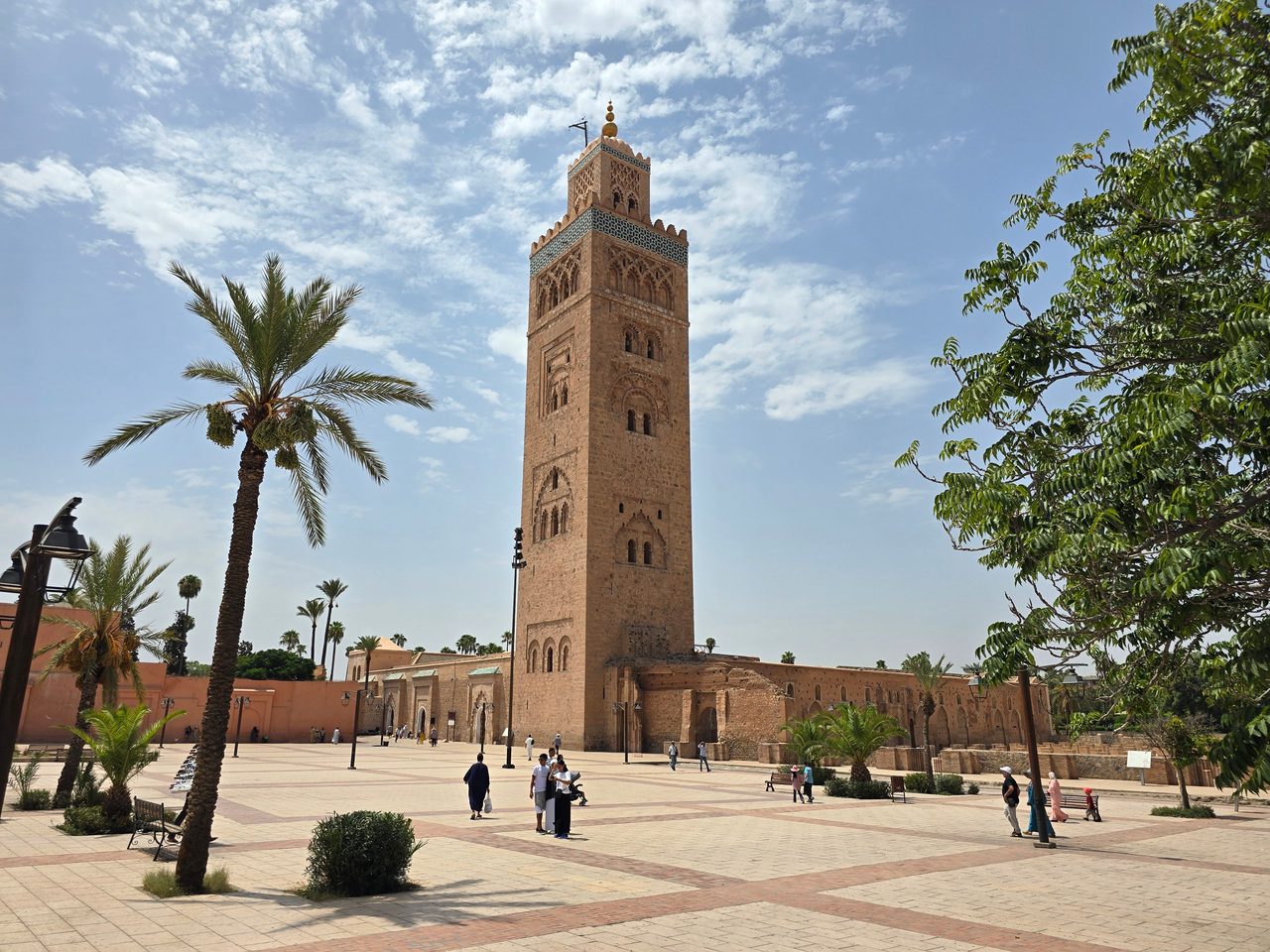
Marrakech-Safi centers on Marrakech, Morocco's fourth-largest city and its most visited, where a UNESCO-listed Medina of souks, palaces, and the Koutoubia Mosque's minaret sits beside the modern Gueliz district. West of the city, the region runs to the Atlantic coast at Safi, a working fishing port and Morocco's ceramics capital, and at Essaouira, a breezy 18th-century walled port popular as a day or overnight trip. South and east, the region climbs into the High Atlas foothills through the Ourika Valley and the trekking base of Imlil, gateway to Jbel Toubkal, North Africa's highest peak. Closer to the city, the stony Agafay Desert and the Palmeraie oasis offer desert and oasis experiences without the multi-day journey to the Sahara dunes. Whether visitors come for the souks and riads of the Medina, mountain trekking, or a slower coastal pace, Marrakech-Safi packs an unusually wide range of landscapes and cultures into a single region.
Jump straight to the experience you're planning.
The 27 destinations our editors recommend — from iconic landmarks to under-the-radar finds.
The vast main square of Marrakech's Medina, a UNESCO-recognized 'Masterpiece of Oral and Intangible Heritage' that fills with orange-juice stalls, snake charmers, henna artists, and food stalls by night.
A cobalt-blue botanical garden created by French painter Jacques Majorelle in the 1920s-30s and later restored by fashion designer Yves Saint Laurent, packed with cacti, bamboo groves, and a small Berber museum pavilion.
A striking terracotta-and-brick museum beside the Jardin Majorelle displaying YSL's haute couture sketches, fabrics, and garments alongside a research library and auditorium dedicated to the designer's decades-long relationship with Marrakech.
An expansive 12th-century olive grove built around a large reflecting pool and an Alaouite-era pavilion (rebuilt 1869), with the snow-capped High Atlas Mountains visible behind the water on clear days.
A restored 19th-century riad complex in the heart of the Medina with two traditional gardens, an Islamic garden with a central fountain and an exotic garden of arid-climate plants, plus a tower with rooftop city views.
The dense maze of covered markets north of Jemaa el-Fnaa, organized loosely by trade - leather, metalwork, spices, textiles, lanterns - and centered on the long covered Souk Semmarine artery.
Pick a length, follow the route. Each itinerary balances headline sights with breathing room.
Three tiers, every traveller covered — from cost-conscious to flagship hotels.
Hostels, budget hotels, and guesthouses offer affordable stays without sacrificing experience.
Boutique hotels and well-located accommodations provide comfort and convenience at reasonable prices.
World-class resorts and premium hotels deliver unforgettable experiences.
Cafés, neighbourhood gems, and tasting menus worth the table reservation.
Long-running, women-run restaurant in Gueliz serving refined Fassi (Fez-style) cuisine in a formal dining room, considered one of Marrakech's most authentic upscale Moroccan tables.
Opulent 17th-century riad near Bab Doukkala with a rooftop terrace over the Medina, serving a fixed multi-course Moroccan feast in an atmosphere of lanterns and mosaic courtyards.
Intimate candlelit riad restaurant tucked behind Bab Ksour, serving an unhurried, multi-course fixed Moroccan menu that has drawn returning diners for decades.
Riad once owned by designer Pierre Balmain, now a restaurant built around a garden courtyard and pool, serving reworked classics from the late chef Mohammed Fedal's recipes.
Small boutique riad restaurant near the Musee de Marrakech offering a refined tasting menu that blends Moroccan spicing with French technique in a quiet, design-forward dining room.
Airy multi-level rooftop above the spice square, blending Moroccan flavors with contemporary presentation - one of the Medina's most photographed lunch and sunset spots.
Book a food tour in Marrakech-Safi We may earn a commission from bookings made through this link.
Getting around Marrakesh combines the narrow alleys of the medina — best navigated on foot — with taxis and apps for longer distances. The city has no metro or tram. Bus Line 19 connects the airport to the centre cheaply but slowly. Grand taxis handle fixed intercity and airport runs. Ride-hailing apps Careem and InDriver operate city-wide and remove the hassle of fare negotiation.
Daily spend by tier in MAD, broken out by category.
| Category | Budget | Mid-range | Luxury |
|---|---|---|---|
| Accommodation | 200 MAD ($21.50) | 700 MAD ($75.50) | 2,800 MAD ($302) |
| Food (per day) | 150 MAD ($16) | 350 MAD ($37.50) | 900 MAD ($97) |
| Transportation | 80 MAD ($8.60) | 150 MAD ($16) | 400 MAD ($43) |
| Activities | 70 MAD ($7.50) | 200 MAD ($21.50) | 400 MAD ($43) |
| Daily total | 500 MAD ($54) | 1,400 MAD ($151) | 4,500 MAD+ ($485+) |
Best time Shoulder Worth avoiding
Average daytime temperature in °C. Figures are for Morocco.
Spring (March to May) brings warm, sunny days, blooming gardens, and lower crowds than the Christmas peak. Autumn (September to November) is equally pleasant and coincides with the Marrakesh International Film Festival in late November or early December. December and January attract Europeans escaping winter and coincide with the Marrakesh Marathon. Avoid mid-summer if heat is a concern — temperatures in July and August regularly exceed 40°C, making outdoor exploration uncomfortable for much of the day.
Keep valuables — passport, extra cash, and cards — in the hotel safe rather than carrying them into the medina.
Walk with bags positioned across the body and away from the road side to reduce the risk of moped bag snatching.
Use only licensed petit taxis with working meters, or arrange transfers through the hotel or a reputable app.
Dress modestly, covering shoulders and knees, especially when visiting mosques, souks, and residential neighborhoods. This also reduces unsolicited attention.
Stay aware in Djemaa el-Fna square, particularly at night, when pickpockets operate in the dense crowds around street performers and food stalls.
Pre-download an offline map (such as Maps.me or Google Maps offline) to navigate the medina's complex lanes without appearing lost or distracted.
If approached by an unofficial guide or tout, a firm and polite 'No thank you' repeated calmly is more effective than engaging in conversation.
Drink bottled or filtered water throughout the stay to avoid gastrointestinal illness, which is the most common health complaint among visitors.
Avoid walking alone in poorly lit areas of the medina after dark. Stick to main thoroughfares or take a taxi for longer evening journeys.
Report any theft or serious incident to the Tourist Police (Brigade Touristique) near Djemaa el-Fna, as they are experienced in handling tourist complaints and can issue police reports for insurance purposes.
Carry a small amount of local currency (Moroccan Dirhams) for small purchases in the souks, as many vendors do not accept cards.
Be cautious about accepting food or drink from strangers, particularly on overnight trains or buses from other Moroccan cities into Marrakesh.
Citizens of the US, UK, EU/Schengen countries, Canada, and Australia, among many others, may enter Morocco visa-free for up to 90 days with a passport valid for at least 6 months. Requirements vary by nationality, so check with the nearest Moroccan consulate or the official immigration website before traveling.
Within Marrakech, the Medina is walkable and pedestrian-only, while petit taxis and Careem cover longer hops to Gueliz and the airport. For day trips into the High Atlas or to the Agafay Desert, a grand taxi, organized transfer, or rental car works best. Essaouira is reached by CTM or Supratours coach, or ONCF trains link Marrakech to Casablanca, Rabat, and Tangier.
The region is known for slow-cooked tagines (lamb, chicken, or vegetable stews in a conical clay pot), mechoui (roasted lamb), pastilla (a sweet-savory pigeon or chicken pie), and mint tea served throughout the day. Street food in Jemaa el-Fnaa includes grilled skewers, harira soup, and snail broth.
The top attractions include Jemaa el-Fnaa, the Jardin Majorelle and Musee Yves Saint Laurent, Bahia Palace, the Ben Youssef Madrasa, and the Ourika Valley in the High Atlas foothills. Each offers a distinct experience, from the living square culture of the Medina to mountain scenery within an hour of the city.
The cities below have their own guides — hotels, attractions and where to eat, in depth.