Nagasaki · 20 Places · Best March-May, October-November
Nagasaki
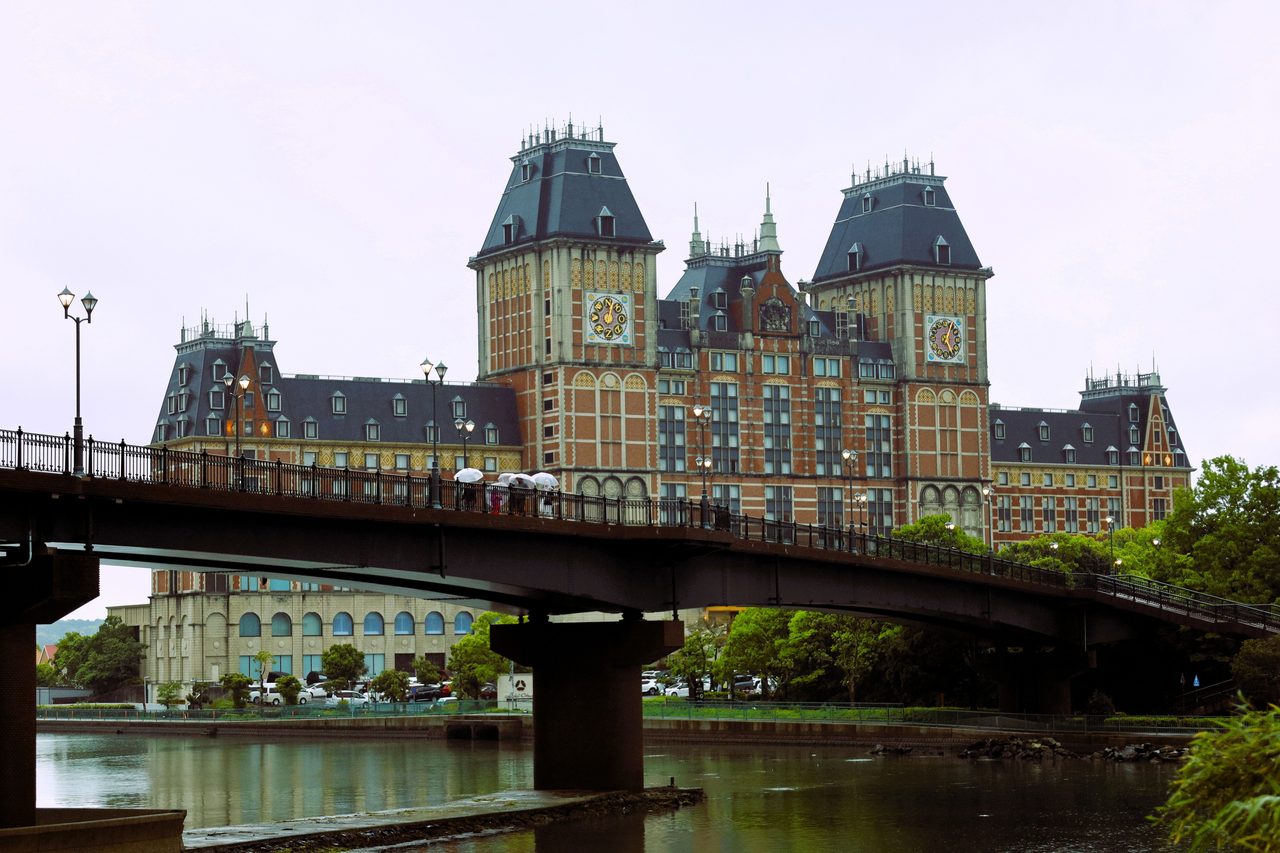
Nagasaki is a port city on Japan's Kyushu island with a uniquely layered history — centuries of trade with China, Portugal, and the Netherlands left behind temples, cathedrals, and Western-style mansions, while August 9, 1945 marked it as the second city struck by an atomic bomb. Today Nagasaki blends solemn peace memorials with lively Chinatown streets, hillside tram rides, and some of Japan's most distinctive cuisine.
Nagasaki sits on a deeply indented harbor at the western tip of Kyushu, its steep hills cascading down to the water in a way that recalls Lisbon or Hong Kong. For centuries it was Japan's only window to the outside world — first Portuguese traders and missionaries, then Chinese merchants through the Tōjin Yashiki quarter, then Dutch merchants confined to the man-made island of Dejima. That history produced a hybrid culture found nowhere else in Japan: champon noodles born from Chinese cooking, Glover Garden's Victorian mansions, and Oura Cathedral's Gothic spires overlooking the harbor. Then came August 9, 1945, and the atomic bomb that destroyed the Urakami valley. The Peace Park and Atomic Bomb Museum make Nagasaki a place of profound reflection, yet the city is also vibrantly alive — its trams rattle through narrow streets, Chinatown lanterns glow at New Year, and craft bars pour locally distilled spirits above the brilliantly lit night panorama from Inasayama.
The 20 destinations our editors recommend — from iconic landmarks to under-the-radar finds.
Atomic Bomb Museum (Nagasaki National Peace Memorial Hall)
This museum documents the 1945 atomic bombing of Nagasaki through recovered objects, photographs, and survivor testimony, walking visitors chronologically from the moment of the blast through the medical and social aftermath. It sits just below the hypocenter and was built specifically to preserve the physical evidence before it disappears. Exhibits move from twisted relics like a stopped clock and melted bottles into rooms on the nuclear arms race and postwar peace advocacy.
Peace Park (Heiwa Koen)
Laid out on a hillside above the atomic bomb hypocenter, this park centers on the large bronze Peace Statue, a seated figure with one hand pointing skyward and the other extended horizontally, symbolizing the threat of nuclear weapons and the wish for peace. The surrounding grounds hold dozens of peace monuments donated by countries and cities around the world, each in a different national style. It functions as both a memorial and an open public space used for the annual August 9th peace ceremony.
Glover Garden (Guraba-en)
This hillside garden preserves the residences of foreign merchants who settled in Nagasaki after the port opened to trade in the 1850s, centered on the home of Scottish trader Thomas Glover. Covered walkways and escalators carry visitors up through terraced grounds past several colonial-era wooden houses with harbor views, giving a sense of the mixed Japanese-European community that formed here. It's one of the clearer physical records of Nagasaki's role as a gateway for foreign trade and technology.
Dejima Dutch Trading Post
Dejima was the small fan-shaped artificial island where the Dutch East India Company was confined as Japan's only officially sanctioned Western trading partner during the roughly two centuries of national seclusion. Land reclamation long ago swallowed the original island into the surrounding city, so the site today is a set of reconstructed warehouses, merchant houses, and the Dutch trading chief's residence rebuilt on the historic footprint. It's the clearest place in Japan to see how tightly controlled that single channel of foreign contact actually was.
Nagasaki Chinatown (Shinchi Chukagai)
One of Japan's three official Chinatowns, this compact grid of streets grew from the Chinese merchant community that traded here alongside the Dutch during the Edo-period seclusion policy. Four ornamental gates mark the district's boundaries, and the streets are lined with restaurants serving Nagasaki's own Chinese-Japanese hybrid dishes rather than generic Chinese food. It's small enough to walk end to end in a few minutes, so it works as a meal stop rather than a half-day destination.
Oura Cathedral (Oura Tenshudo)
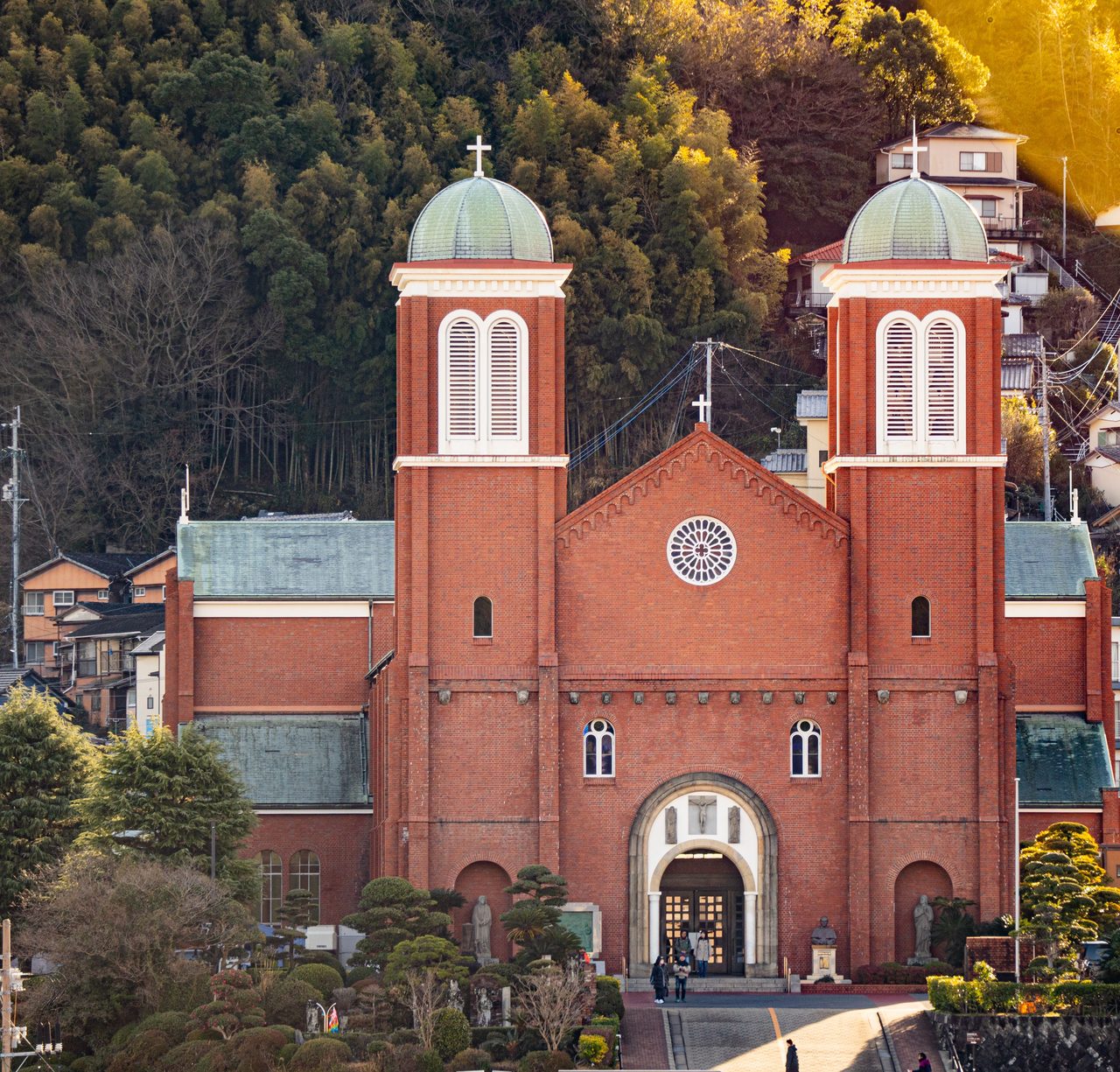
Built in 1864 for Nagasaki's foreign merchant community, this is the oldest standing Christian church in Japan and became famous months after opening when a group of local villagers secretly revealed themselves to the resident priest as descendants of Japan's underground Christians, who had preserved their faith through more than two centuries of prohibition. The wooden Gothic-style building with its pointed spire sits on the hillside near Glover Garden. It's a working Catholic church as well as a monument, and it anchors the wider story of Nagasaki's hidden Christian communities told at sites across the region.
Recommended itineraries
Pick a length, follow the route. Each itinerary balances headline sights with breathing room.
5-Day Nagasaki Explorer
Day 1Arrive in Nagasaki, explore city center
Day 2Visit top attractions and museums
Day 3Day trip to nearby highlights
Day 4Local markets and hidden gems
Day 5Final sightseeing, departure
7-Day Classic Nagasaki
Days 1-2Nagasaki city highlights
Days 3-4Regional exploration
Days 5-6Cultural immersion and local experiences
Day 7Return and departure
14-Day Ultimate Nagasaki
Days 1-3Nagasaki comprehensive city tour
Days 4-6Northern region exploration
Days 7-9Eastern highlights
Days 10-12Southern attractions
Days 13-14Return to Nagasaki, departure
Where to stay in Nagasaki
Three tiers, every traveller covered — from cost-conscious to flagship hotels.
Budget ¥7,000-12,000 ($45-78)
Hostels, budget hotels, and guesthouses offer affordable stays without sacrificing experience.
Mid-range ¥18,000-30,000 ($117-195)
Boutique hotels and well-located accommodations provide comfort and convenience at reasonable prices.
Luxury ¥45,000-100,000 ($293-650)
World-class resorts and premium hotels deliver unforgettable experiences.
Cafés, neighbourhood gems, and tasting menus worth the table reservation.
Shikairo (四海楼)
Nagasaki Chinese / Champon · $$
This is the restaurant that says it invented champon around 1899, when the founder created a filling one-bowl meal for Chinese students living in Nagasaki. It occupies a multi-storey building near the harbor, and the upper floors have a dining room with views out over the port. The cooking follows the Nagasaki Chinese style built on a pork-and-seafood bone broth rather than the Cantonese or Sichuan traditions found elsewhere in Japan.
Yossou (よっそう)
Nagasaki Champon · $
Hamakatsu (浜かつ 思案橋店)
Shippoku Ryori · $$$
A shippoku restaurant in the Shianbashi entertainment district, serving the Nagasaki banquet style that blends Japanese, Chinese, and Dutch dishes on a round table meant for a group. Courses are brought out and shared rather than plated individually, reflecting shippoku's origins as a format for entertaining foreign traders during the Edo period.
Kouzanrou (江山楼 中華街本店)
Nagasaki Chinese · $$
A long-running restaurant inside Nagasaki's Shinchi Chinatown, distinct from the harborside champon houses because it sits within the Chinatown grid itself and leans more toward a broader Nagasaki Chinese menu alongside its noodle dishes. The dining room is a standard Chinese-restaurant setup with round tables suited to sharing several dishes at once.
Nagasaki Shippoku Hamakatsu Honten
Shippoku Ryori · $$$
Tsuru Champon (つる茶ん)
Nagasaki Champon / Toruko Rice · $
A retro cafe-restaurant credited with inventing Toruko rice, the Nagasaki fusion plate that puts pilaf, a pork cutlet, and a pasta or curry component together on one dish. The interior keeps an old-fashioned Japanese kissaten look, with booth seating and a menu that treats champon and its own invented dishes as equally central.
Nagasaki is best navigated by its historic tram network, which runs four color-coded lines across the city for a flat ¥140 ($0.91) fare per ride. The day pass (¥600/$3.90) is the single best value purchase for most visitors. Taxis are plentiful, and ferries connect the downtown waterfront to outlying islands. Nagasaki Airport (NGS) sits 35 minutes east of the city center by bus or taxi.
Budget breakdown
Daily spend by tier in JPY, broken out by category.
Category
Budget
Mid-range
Luxury
Accommodation
¥3,000-6,000 ($19-39)
¥10,000-18,000 ($65-117)
¥25,000-60,000 ($163-390)
Food (per day)
¥2,000-4,000 ($13-26)
¥4,000-8,000 ($26-52)
¥10,000-25,000 ($65-163)
Transportation
¥600-1,000 ($4-6.50)
¥1,000-2,000 ($6.50-13)
¥3,000-8,000 ($19-52)
Activities
¥1,000-2,500 ($6.50-16)
¥2,000-4,000 ($13-26)
¥5,000-15,000 ($33-98)
Daily total
¥7,000-12,000 ($45-78)
¥18,000-30,000 ($117-195)
¥45,000-100,000 ($293-650)
Best time to visit Nagasaki
Weather through the year in Japan
Best timeShoulderWorth avoiding
Average daytime temperature in °C. Figures are for Japan.
Spring (late March to early May) brings cherry blossoms and mild temperatures. Autumn (October-November) offers comfortable weather and the spectacular Nagasaki Kunchi festival in early October. Winter (December-February) is cool but mild by Japanese standards, with fewer crowds.
Essential travel tips
Buy a 1-day Nagasaki tram pass (¥600/$3.90) for unlimited rides on all four tram lines
Many sights cluster in Urakami (north) and Minami-Yamate (south) — both reachable by tram
Book Hashima Island tours well in advance; departures cancel if weather is poor
Cash is widely preferred; carry yen as many small restaurants and tram stops are cash-only
The Nagasaki Museum of History and Culture and the Atomic Bomb Museum both offer free audio guides in English
Hidden gems
Off-the-beaten-path corners most travellers miss.
Nishizaka Hill Martyrs Site
Where 26 Christians were crucified in 1597; quiet hilltop museum overlooking the harbor
Megane-bashi (Spectacles Bridge)
Japan's oldest stone arch bridge (1634), reflected in the Nakasimagawa River to form 'glasses'
Glover Sky Road
Free public escalator climbing the hillside; locals' shortcut with harbor panoramas
Kofukuji Temple
Japan's oldest Zen temple built in Chinese style (1629); hidden Chinese garden behind the main hall
Safety information
INFO
Tap water is safe to drink throughout Nagasaki
INFO
Healthcare is excellent — Nagasaki University Hospital is a major regional facility
INFO
Traffic drives on the left; pedestrian crossings should be used
INFO
Typhoon season (June-October) can disrupt ferry services to Hashima Island
INFO
The Atomic Bomb Museum contains graphic exhibits; prepare children appropriately
Frequently asked questions
Is Nagasaki safe to visit in 2026?
Nagasaki is one of Japan's safest cities for travelers. Violent crime is extremely rare, and petty theft, while possible, is far less common than in most international destinations. The city is well-lit, welcoming to international visitors, and has a well-functioning emergency infrastructure.
What is the best time to visit Nagasaki?
The best time to visit Nagasaki is March-May, October-November. Nagasaki has a humid subtropical climate (Köppen Cfa) with hot, humid summers and mild winters. The rainy season (tsuyu) runs from mid-June through mid-July, bringing persistent rain. Typhoon season p
Do I need a visa to visit Nagasaki?
Entry follows Japan's visa rules. Citizens of over 60 countries enter visa-free for 90 days. Check the Japan Ministry of Foreign Affairs website at www.mofa.go.jp for your nationality's current requirements. Requirements vary by nationality, so check with your nearest embassy or the official immigration website before traveling.
What currency is used in Nagasaki?
The currency in Nagasaki is the Japanese Yen (JPY). ATMs are widely available in cities and tourist areas. Credit cards are accepted at most hotels and restaurants, but carry cash for markets and smaller establishments.
What language is spoken in Nagasaki?
The main language(s) spoken in Nagasaki: Japanese. In tourist areas, English is generally understood. Learning a few basic phrases in the local language is appreciated by locals.
What are the top attractions in Nagasaki?
The top attractions in Nagasaki include Atomic Bomb Museum (Nagasaki National Peace Memorial Hall), Peace Park (Heiwa Koen), Glover Garden (Guraba-en), Dejima Dutch Trading Post, and Nagasaki Chinatown (Shinchi Chukagai). Each offers a unique experience, from historic landmarks to natural wonders.