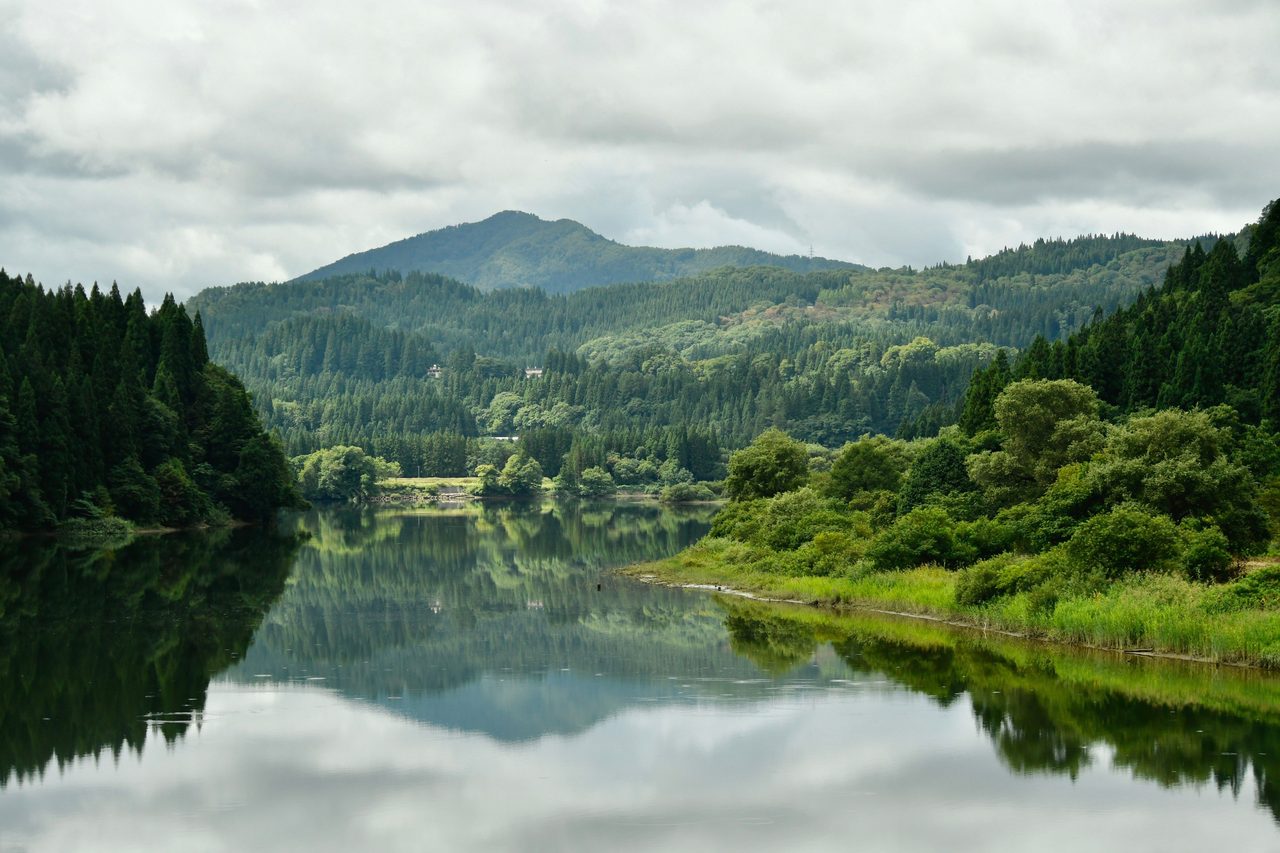
Fukushima Prefecture, set in Japan's Tohoku region, is a destination of striking contrasts — from the samurai castle towns of Aizu in the west to rugged volcanic highlands around Mt. Bandai and the Pacific coastline of Hamadori in the east. Centuries of feudal history live on in Tsuruga Castle, the thatched-roof post town of Ouchi-juku, and the stirring legacy of the Byakkotai teen warriors. Nature lovers find five-colored volcanic ponds, pristine highland lakes, and world-class sakura viewing at Miharu Takizakura. Fukushima's culinary identity is rich with Kitakata ramen, Aizu kozuyu soup, sake brewed from volcanic-spring water, and some of Japan's finest peaches.
Fukushima is Japan's third-largest prefecture by area and one of its most diverse. Three geographic corridors — the central Nakadori valley, the western Aizu mountain basin, and the eastern Hamadori coastline — each offer entirely different landscapes, histories, and food cultures. Visitors come to explore Aizuwakamatsu's well-preserved samurai heritage, hike the volcanic terrain of Bandai-Asahi National Park, soak in historic onsen, and witness spectacular seasonal scenery from cherry blossoms to autumn foliage. The prefecture has rebuilt its agricultural reputation following the 2011 earthquake and nuclear accident, and radiation monitoring data consistently show its tourist areas meet the strictest international safety standards.
The 22 destinations our editors recommend — from iconic landmarks to under-the-radar finds.
Tsuruga Castle (Aizuwakamatsu)
The current structure is a 1965 concrete reconstruction of the original castle, whose keep dates to the Muromachi period and which became the last stand of the Aizu domain's forces during the 1868 Boshin War siege. The keep now houses a museum on Aizu's samurai history and the castle's role in that conflict. Visitors climb through several floors of exhibits before reaching a top-floor viewing gallery.
Ouchi-juku Post Town
Ouchi-juku was a staging post on the Aizu-Nishikaido route connecting Aizuwakamatsu to Nikko during the Edo period, and its single street of thatched-roof farmhouses has been preserved as a living village rather than turned into a museum set. Many of the thatched buildings still operate as shops, soba restaurants, and minshuku guesthouses. The mountain setting means the roofs and street look markedly different across seasons.
Goshiki-numa (Five-Colored Ponds), Ura-Bandai
This chain of small volcanic lakes formed after the 1888 eruption of Mount Bandai, when the collapse dammed local streams and created a scattering of ponds. Mineral content and depth give each pond a distinct color, from cobalt to jade to a muddy green, and the colors shift with the light and season. A marked walking trail links the main ponds through forest between Bandai-kogen and Goshikinuma-iriguchi.
Miharu Takizakura Cherry Tree
This is one of Japan's oldest and most famous individual cherry trees, a weeping Edo higan zakura estimated at well over a thousand years old and designated a National Natural Monument. Its cascading branches spread wide from a thick, gnarled trunk supported by props. The tree blooms for a short window in mid-to-late April, drawing visitors specifically to see this one tree rather than a park of many.
Aquamarine Fukushima
This aquarium in Iwaki focuses on the marine life of the Black Current (Kuroshio) and Oyashio current confluence off Fukushima's coast, tying its exhibits directly to the local fishing grounds rather than generic ocean displays. Tanks progress from coastal species to open-water and deep-sea specimens drawn from that current system. It sits on the coast and pairs indoor tanks with some outdoor pool exhibits.
Hanamiyama Park
Hanamiyama began as a private hillside orchard that a local farmer planted with ornamental flowering trees and later opened to the public. It's now known for a dense mix of cherry, magnolia, and other flowering trees blooming together on the hillside in early-to-mid April, with the Azuma mountain range visible behind them. Paths wind up through the planted slopes rather than around a flat garden.
Recommended itineraries
Pick a length, follow the route. Each itinerary balances headline sights with breathing room.
5-Day Fukushima Explorer
Day 1Arrive in Fukushima, explore city center
Day 2Visit top attractions and museums
Day 3Day trip to nearby highlights
Day 4Local markets and hidden gems
Day 5Final sightseeing, departure
7-Day Classic Fukushima
Days 1-2Fukushima city highlights
Days 3-4Regional exploration
Days 5-6Cultural immersion and local experiences
Day 7Return and departure
14-Day Ultimate Fukushima
Days 1-3Fukushima comprehensive city tour
Days 4-6Northern region exploration
Days 7-9Eastern highlights
Days 10-12Southern attractions
Days 13-14Return to Fukushima, departure
Where to stay in Fukushima
Three tiers, every traveller covered — from cost-conscious to flagship hotels.
Budget ¥6,000–¥12,000 ($40–$80)
Hostels, budget hotels, and guesthouses offer affordable stays without sacrificing experience.
Mid-range ¥14,000–¥27,000 ($93–$180)
Boutique hotels and well-located accommodations provide comfort and convenience at reasonable prices.
Luxury ¥39,000–¥98,000 ($260–$653)
World-class resorts and premium hotels deliver unforgettable experiences.
Ryokan Mukaitaki
Higashiyama Onsen, Aizuwakamatsu · ¥28,000–¥60,000 ($187–$400) per person per night, including 2 meals
Cafés, neighbourhood gems, and tasting menus worth the table reservation.
Bannai Shokudo
Kitakata Ramen · ¥750–¥1,200 ($5–$8)
A no-frills counter shokudo in Kitakata serving the town's signature ramen style: thin, curly noodles in a light shoyu broth. The room is plain and functional, built for a quick bowl rather than lingering.
Mitsutaya
Kitakata Ramen · ¥700–¥1,100 ($4.67–$7.33)
One of the long-running Kitakata ramen shokudo, built around the town's flat, wide-noodle shoyu style rather than any trend-chasing menu. Seating is simple counter and table, oriented toward locals getting a fast bowl.
Ouchi-juku Sanzanya
Japanese / Soba · ¥1,200–¥1,800 ($8–$12)
A soba restaurant inside the thatched-roof post-town of Ouchi-juku, where the buildings are preserved Edo-period farmhouses now used as shops and eateries. The soba is served in the rustic style associated with this Aizu mountain village.
A restaurant in Aizuwakamatsu specializing in Aizu home-style cooking, built around the clear kozuyu soup and lacquerware presentation typical of the region. The food leans toward the preserved, fermented, and pickled dishes that define Aizu's mountain cuisine.
The Tohoku Shinkansen bullet train connects Tokyo to Fukushima Station in about 90 minutes (around ¥8,000–¥11,000 / $53–$73 with reserved seat). Within the prefecture, JR local lines reach Aizuwakamatsu, Koriyama, and Iwaki. Rental cars are recommended for rural sites like Ouchi-juku and Ura-Bandai.
Budget breakdown
Daily spend by tier in JPY, broken out by category.
Category
Budget
Mid-range
Luxury
Accommodation
¥3,500–¥6,000 ($23–$40) — guesthouses and business hotels
¥8,000–¥15,000 ($53–$100) — mid-range business hotels, smaller ryokan
¥25,000–¥60,000+ ($167–$400+) — premium ryokan with meals
Average daytime temperature in °C. Figures are for Japan.
April–May (cherry blossoms, mild temperatures) and October–November (autumn foliage)
March brings early plum blossoms; late April features Miharu Takizakura in peak bloom. Winter visitors can ski at Alts Bandai or Grandeco resorts in the Aizu highlands.
Essential travel tips
Purchase a Suica or Pasmo IC card at any major JR station for seamless payment on local buses and trains
The Aizu area has limited English signage — download Google Translate offline Japanese pack before arriving
Kitakata ramen shops traditionally open early (from 7 am) and sell out; arrive by 11 am
Fukushima peaches are available July–September at roadside stalls and supermarkets for ¥200–¥400 ($1.33–$2.67) per fruit
Many rural onsen ryokan require advance reservations, especially for dinner-inclusive plans
Hidden gems
Off-the-beaten-path corners most travellers miss.
Lake Akimoto in mid-October
Sake Tasting Bar Kura (Kitakata)
Higashiyama Onsen Evening Lanterns
Iimori Hill Hilltop Viewpoint
Sazaedo Spiral Stupa (1796)
Safety information
INFO
Check the current exclusion zone map before visiting coastal Hamadori: www.reconstruction.go.jp
INFO
Tap water throughout Fukushima City, Aizuwakamatsu, and Koriyama is safe to drink
Hospital with English support: Fukushima Medical University Hospital, 1 Hikarigaoka, Fukushima City, tel 024-547-1111
Frequently asked questions
Is Fukushima safe to visit in 2026?
Fukushima Prefecture is overwhelmingly safe for travelers. Japan consistently ranks among the world's lowest crime-rate countries, and Fukushima is no exception. The primary concern unique to Fukushima is public perception around the 2011 nuclear accident; however, all major tourist areas (Fukushima
What is the best time to visit Fukushima?
The best time to visit Fukushima is April–May. Fukushima Prefecture has a four-season humid continental climate with some regional variation. Fukushima City and the Nakadori corridor experience hot, humid summers (July–August averaging 27–30°C/81–
What currency is used in Fukushima?
The currency in Fukushima is the Japanese Yen (JPY). ATMs are widely available in cities and tourist areas. Credit cards are accepted at most hotels and restaurants, but carry cash for markets and smaller establishments.
What language is spoken in Fukushima?
The main language(s) spoken in Fukushima: Japanese. In tourist areas, English is generally understood. Learning a few basic phrases in the local language is appreciated by locals.
What are the top attractions in Fukushima?
The top attractions in Fukushima include Tsuruga Castle (Aizuwakamatsu), Ouchi-juku Post Town, Goshiki-numa (Five-Colored Ponds), Ura-Bandai, Miharu Takizakura Cherry Tree, and Aquamarine Fukushima. Each offers a unique experience, from historic landmarks to natural wonders.