World · 21 Places · Best May–June and September–October
Abruzzo
Abruzzo is a rugged, unspoiled region of central Italy where the Apennine mountains plunge toward the Adriatic Sea. One-third of its territory is protected parkland, sheltering brown bears, Apennine wolves, and golden eagles. Medieval hilltop villages, Roman ruins, saffron fields, and a coastline of blue-flag beaches make this Italy's last great undiscovered destination.
Abruzzo occupies the central spine of Italy, stretching from the Gran Sasso massif — the highest point in the Apennines at 2,912 m — down to 130 km of sandy Adriatic shoreline. The region divides naturally into four provinces: L'Aquila (mountains and national parks), Teramo (northern valleys and coast), Pescara (the commercial coast and gateway city), and Chieti (southern hills, coast, and the Majella massif). Ancient Roman settlements, Norman castles, Baroque churches, and albergo diffuso villages carved into medieval stone borghi coexist with modern ski resorts, kayak rivers, and one of Italy's most distinctive culinary traditions. Tourists remain far fewer here than in Tuscany or the Amalfi Coast, so prices are lower and experiences more authentic.
The 21 destinations our editors recommend — from iconic landmarks to under-the-radar finds.
Rocca Calascio
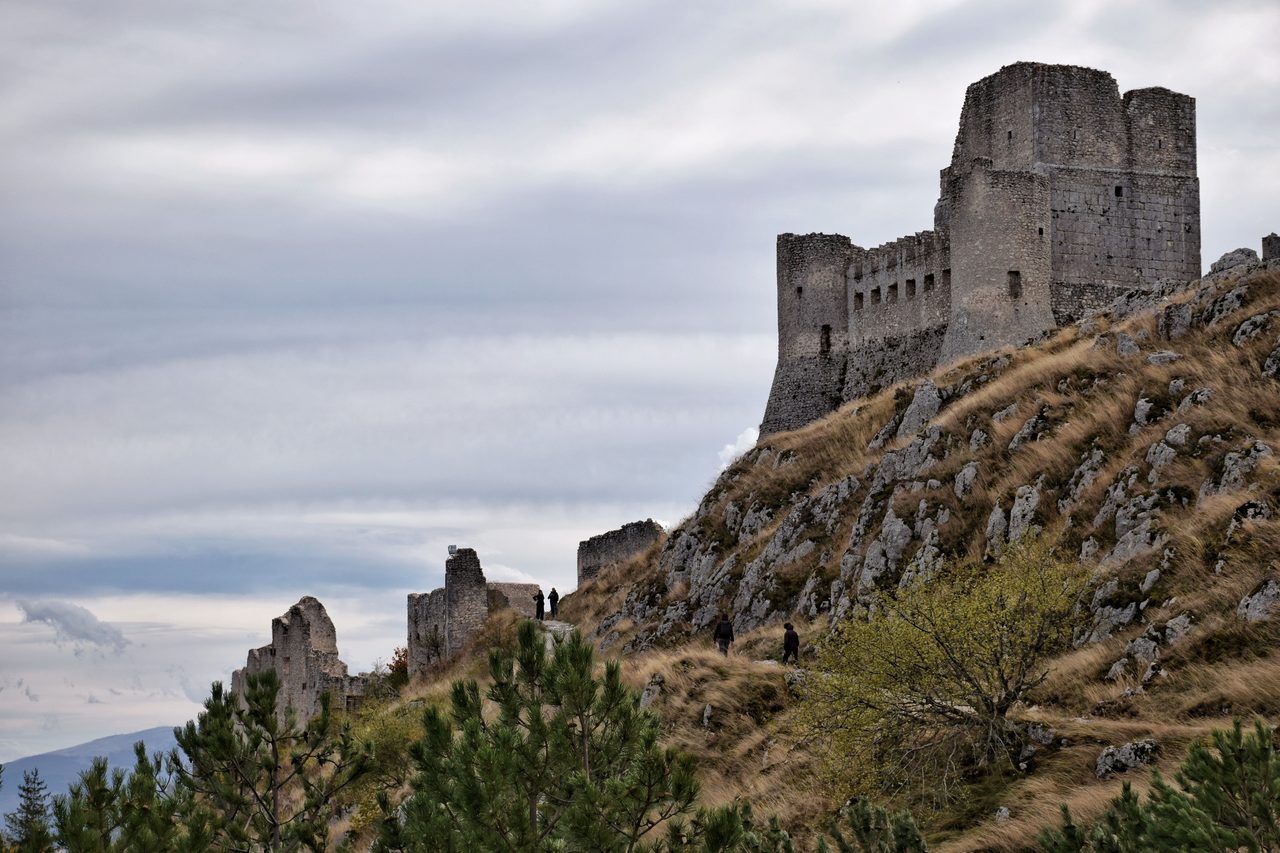
Rocca Calascio is a stone hilltop fortress in the Gran Sasso massif, built up from an earlier watchtower into the walled keep and four corner towers visible today. It sits above 1,400 metres, which made it one of the highest fortifications in the Apennines and a lookout post over the Navelli plain. Most visitors walk the gravel track up from the parking area near the village, then climb through the roofless keep to the wall walk.
Gran Sasso d'Italia & Campo Imperatore
Campo Imperatore is the high plateau below Corno Grande, the tallest peak in the Apennines, and its flat, treeless expanse has earned it the nickname 'Little Tibet' for the way snow and grazing land stretch to the horizon. A cable car from Assergi rises to the plateau, where a network of hiking trails fans out toward the peak and the old Albergo di Campo Imperatore, the hotel where Mussolini was briefly held in 1943. In summer the plateau is used for grazing and shepherd huts; in winter it becomes a ski area.
Parco Nazionale d'Abruzzo, Lazio e Molise
This is one of Italy's oldest national parks, established in the early 20th century to protect the beech forests and mountain valleys around Pescasseroli, and it remains the core refuge for the Apennine (Marsican) brown bear population. Marked trails lead from several villages into the Val Fondillo and other valleys, where wolves, chamois, and the bears are present but rarely seen up close. The visitor center in Pescasseroli has a small wildlife museum and enclosures with rescued animals.
Santo Stefano di Sessanio
Scanno and Lago di Scanno
Scanno is a medieval hill town in the Sagittario valley known for its tightly stacked stone houses and narrow alleys that follow the original defensive layout, and it's one of the few Abruzzo villages where older women could still occasionally be seen in the traditional local costume in recent decades. A few kilometres below, Lago di Scanno is a small heart-shaped lake formed by an ancient landslide that dammed the river, with a walking path circling the shore. The two make a natural half-day pairing, town in the morning and lake in the afternoon or vice versa.
Sulmona Old Town and Piazza Garibaldi
Sulmona is the birthplace of the Roman poet Ovid and the historic center of Italy's confetti (sugared almond) industry, with shopfronts along the Corso Ovidio still selling the flower-shaped confetti arrangements the town is known for. Piazza Garibaldi anchors the old town, bordered by the medieval aqueduct arches on one side and hosting a Wednesday and Saturday market. The old town's streets are walkable in a couple of hours, taking in the cathedral and the SS. Annunziata complex facing the square.
Recommended itineraries
Pick a length, follow the route. Each itinerary balances headline sights with breathing room.
5-Day Abruzzo Explorer
Day 1Arrive in Abruzzo, explore city center
Day 2Visit top attractions and museums
Day 3Day trip to nearby highlights
Day 4Local markets and hidden gems
Day 5Final sightseeing, departure
7-Day Classic Abruzzo
Days 1-2Abruzzo city highlights
Days 3-4Regional exploration
Days 5-6Cultural immersion and local experiences
Day 7Return and departure
14-Day Ultimate Abruzzo
Days 1-3Abruzzo comprehensive city tour
Days 4-6Northern region exploration
Days 7-9Eastern highlights
Days 10-12Southern attractions
Days 13-14Return to Abruzzo, departure
Where to stay in Abruzzo
Three tiers, every traveller covered — from cost-conscious to flagship hotels.
Budget €55–€110/day (~$61–$121)
Hostels, budget hotels, and guesthouses offer affordable stays without sacrificing experience.
Mid-range €165–€280/day (~$182–$308)
Boutique hotels and well-located accommodations provide comfort and convenience at reasonable prices.
Luxury €370–€790/day (~$407–$869)
World-class resorts and premium hotels deliver unforgettable experiences.
Sextantio Albergo Diffuso
Santo Stefano di Sessanio, Province of L'Aquila · €180–€320/night (~$198–$352)
Cafés, neighbourhood gems, and tasting menus worth the table reservation.
Ristorante Magione Papale
Abruzzese fine dining · €€€ (€45–€70/person, ~$50–$77)
Housed in a restored medieval palazzo in L'Aquila's historic center, this is one of the city's more ambitious kitchens, built around tasting menus that rework Abruzzese staples with fine-dining technique and plating. The dining room keeps the stone walls and vaulted ceilings of the old building rather than dressing the space up with anything modern.
La Bilancia
Traditional Abruzzese · €€ (€25–€40/person, ~$28–$44)
A family-run trattoria outside Loreto Aprutino that has built its reputation on reviving old Abruzzese farmhouse recipes rather than chasing trends, working with the region's Slow Food circles on dishes that had mostly disappeared from restaurant menus. The setting is plain and rural, geared toward the food rather than the room.
Il Sorpasso
Seafood and Abruzzese · €€ (€25–€45/person, ~$28–$50)
Abruzzo has limited public transport between mountain areas; a car is strongly recommended for visiting the national parks and hilltop villages. The A24 and A25 motorways cross the region. Pescara is the main transport hub with the closest airport.
Budget breakdown
Daily spend by tier in Euro (€), broken out by category.
Average daytime temperature in °C. Figures are for Italy.
Spring wildflowers on Campo Imperatore peak in late May. Autumn brings golden foliage and truffle season. Winter skiing at Roccaraso and Campo Felice.
Essential travel tips
Rent a car in Pescara or at the airport — public transport does not reach the most scenic mountain villages
Many hilltop villages close restaurants and shops during afternoon riposo (1:00–3:30 PM)
Saffron from Navelli (Abruzzo's DOP saffron) makes an excellent, authentic souvenir
Book albergo diffuso accommodation months in advance for July–August and ski season weekends
Abruzzo's beaches are among Italy's most affordable — local trattorie on the seafront serve fresh fish for €12–€20 (~$13–$22) per person
Hidden gems
Off-the-beaten-path corners most travellers miss.
Campo Imperatore
A vast high plateau at 1,800 m nicknamed 'Little Tibet of Italy'. Wildflowers carpet the plain in June, and the Saffron Route connects nearby Navelli and Barisciano villages.
Bominaco
Two extraordinary Romanesque churches — San Pellegrino and Santa Maria Assunta — stand almost forgotten in a hamlet of 15 residents. The 12th-century frescoes inside San Pellegrino are among the finest in Italy.
Atri Cathedral
The 13th-century Cattedrale di Santa Maria Assunta in Atri contains an almost complete cycle of late-Gothic frescoes by Andrea De Litio — rivaling anything in Rome, virtually unknown to tourists.
Civitella del Tronto Fortress
One of the largest fortresses in Europe, stretching 500 m along a ridge above the Vibrata valley. The last Bourbon stronghold to fall in 1861 after unification. Admission €5 (~$5.50).
Safety information
INFO
Mountain weather changes rapidly above 2,000 m — always carry a windproof layer even in summer
INFO
Wild brown bears inhabit the national parks; keep food in bear-proof containers when camping
INFO
The A24 motorway through the Gran Sasso tunnel has a 50 km/h speed limit due to ventilation restrictions
INFO
Emergency number across Italy: 112 (general) / 115 (fire) / 118 (medical emergency)
Frequently asked questions
Is Abruzzo safe to visit in 2026?
Abruzzo presents very low safety risks for tourists. Petty crime (pickpocketing) exists in Pescara's beach strip in summer but is uncommon. The mountain towns are extremely safe. Wildlife in the national parks (bears, wolves) requires basic precautions. Road safety in mountain areas requires attenti
What is the best time to visit Abruzzo?
The best time to visit Abruzzo is May–June and September–October. Abruzzo has two distinct climate zones. The Adriatic coastal strip experiences a Mediterranean climate with hot, dry summers and mild winters — Pescara averages 28°C (82°F) in July and 8°C (46°F) in J
What currency is used in Abruzzo?
The currency in Abruzzo is the Euro (€). ATMs are widely available in cities and tourist areas. Credit cards are accepted at most hotels and restaurants, but carry cash for markets and smaller establishments.
What language is spoken in Abruzzo?
The main language(s) spoken in Abruzzo: Italian, Abruzzese dialect. In tourist areas, English is generally understood. Learning a few basic phrases in the local language is appreciated by locals.
What are the top attractions in Abruzzo?
The top attractions in Abruzzo include Rocca Calascio, Gran Sasso d'Italia & Campo Imperatore, Parco Nazionale d'Abruzzo, Lazio e Molise, Santo Stefano di Sessanio, and Scanno and Lago di Scanno. Each offers a unique experience, from historic landmarks to natural wonders.