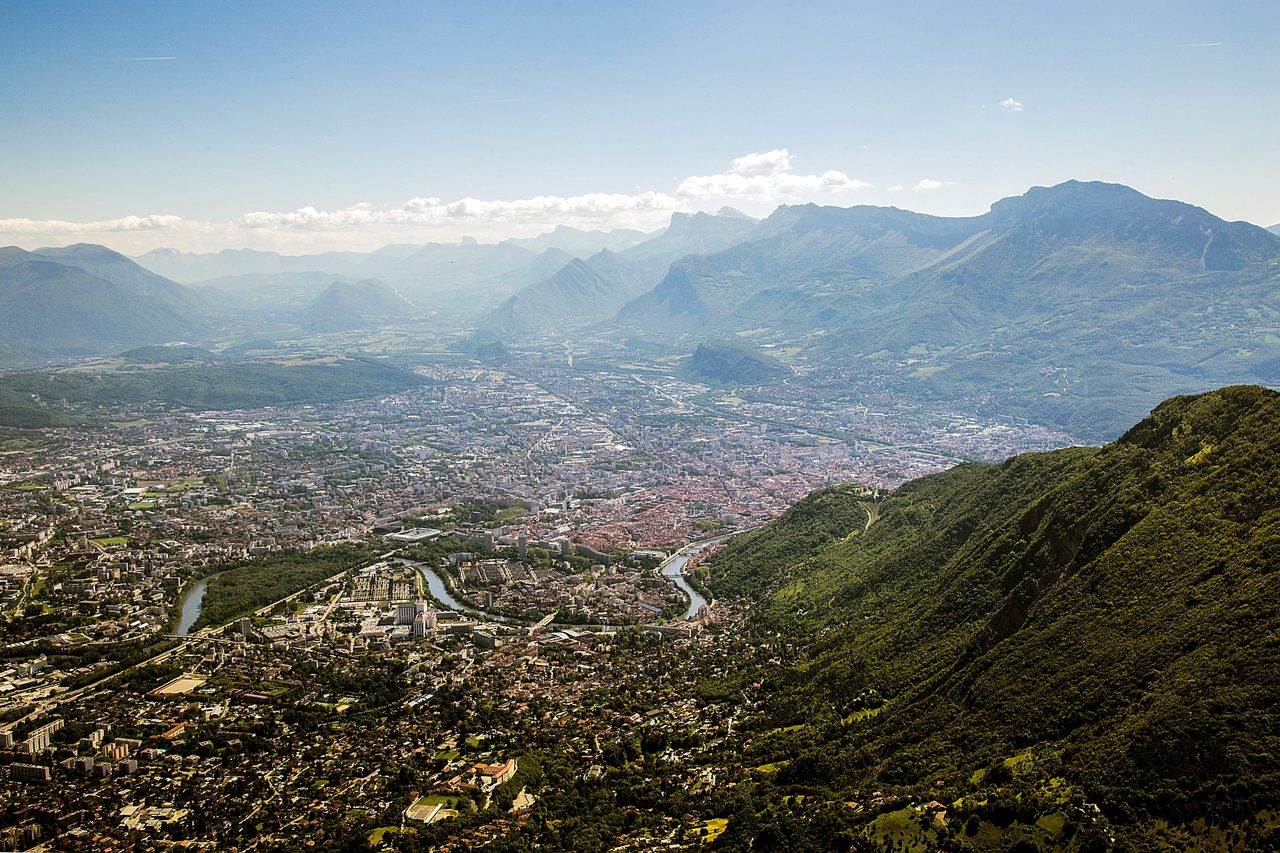
Auvergne-Rhône-Alpes is France's most geographically dramatic region, combining the ancient volcanic landscapes of the Massif Central with the highest peaks in the Alps. Lyon, its capital, is consistently ranked among the world's great food cities and is the birthplace of cinema. The region spans skiing at Chamonix and the Trois Vallées, lakeside beauty at Annecy, Roman heritage in Lyon, the volcanic chains of the Auvergne, and one of Europe's finest hiking networks.
Spanning 69,711 km² across south-central France, Auvergne-Rhône-Alpes is France's second-largest region by population (8.1 million) and the wealthiest after Île-de-France. The 2016 administrative merger joined two historically distinct territories: the Auvergne volcanic massif to the west (Clermont-Ferrand, Puy de Dôme, Cantal, Haute-Loire) and the Rhône-Alpes corridor to the east (Lyon, Grenoble, Annecy, Chambéry, Chamonix). Lyon anchors the region economically and culturally — it is France's second city by economic output and a UNESCO-listed historic centre. The Alps define the eastern border with Italy and Switzerland, hosting the world's most iconic ski resorts (Courchevel 1850, Val d'Isère, Méribel, Tignes, Chamonix). The Auvergne Volcanoes Regional Nature Park protects 80 aligned extinct volcanoes including Puy de Dôme (1,465m). Lake Annecy, the Gorges de l'Ardèche, the Vercors plateau, and the Chartreuse massif complete an extraordinary range of landscapes within one administrative boundary.
The 22 destinations our editors recommend — from iconic landmarks to under-the-radar finds.
Vieux Lyon — UNESCO Renaissance Quarter
This is one of the largest Renaissance districts in Europe, built up by Italian silk merchants and bankers who settled in Lyon in the 15th and 16th centuries. Its narrow streets are threaded by traboules — covered passageways that cut through buildings from one street to the next, originally used to move silk between workshops and the river. Walking it means weaving between Saint-Jean, Saint-Paul and Saint-Georges, the three old parishes that make up the quarter.
Notre-Dame de Fourvière Basilica
Built in the late 19th century on the hill overlooking Lyon, this basilica was funded by the city as a votive offering after Lyon was spared during the Franco-Prussian War. Its exterior mixes Romanesque and Byzantine influences with four corner towers, and the interior is covered almost entirely in mosaics depicting scenes tied to Lyon's religious history. The terrace outside gives a wide view over the Saône, the Rhône, and the city below.
Musée des Confluences
This natural history and anthropology museum sits at the literal confluence of the Rhône and Saône rivers, in a building whose angular, part-glass, part-steel form was designed to evoke a cloud resting on a crystal. Inside, the collection ranges across origins of the universe, evolution, and human societies, aimed at a broad audience rather than specialists. The building's setting at the tip of the peninsula is as much a draw as the exhibits.
Aiguille du Midi Cable Car
This cable car climbs from Chamonix to a rock spire at nearly 3,800 metres, making it one of the highest cable car ascents in Europe, with views toward Mont Blanc's summit. The ride itself is done in two stages and gives an increasingly steep view over the glaciers below. At the top, a series of platforms and a suspended walkway (Step into the Void) let visitors stand above sheer drops with the Mont Blanc massif directly in front.
Lac d'Annecy (Lake Annecy)
Often described for its clarity, this glacial lake sits surrounded by the Bornes and Bauges mountain ranges, with the old town of Annecy and its canals at its northern tip. A paved path (the Pâquier and beyond) runs along much of the shoreline, popular for walking and cycling, and the lake is used for swimming, sailing, and paddleboarding in summer. Boat trips from Annecy's port loop past lakeside villages like Talloires and Duingt.
Puy de Dôme — Volcanic Peak
This is the best-known summit of the Chaîne des Puys, a chain of roughly 80 dormant volcanoes in Auvergne recognized as a UNESCO site. A rack railway, the Panoramique des Dômes, carries visitors to the top, where a Roman temple to Mercury was once built and where remains are still visible. From the summit, the view stretches across the other puys in the chain and, on clear days, toward the Alps.
Recommended itineraries
Pick a length, follow the route. Each itinerary balances headline sights with breathing room.
5-Day Auvergne-Rhône-Alpes Explorer
Day 1Arrive in Auvergne-Rhône-Alpes, explore city center
Day 2Visit top attractions and museums
Day 3Day trip to nearby highlights
Day 4Local markets and hidden gems
Day 5Final sightseeing, departure
7-Day Classic Auvergne-Rhône-Alpes
Days 1-2Auvergne-Rhône-Alpes city highlights
Days 3-4Regional exploration
Days 5-6Cultural immersion and local experiences
Day 7Return and departure
14-Day Ultimate Auvergne-Rhône-Alpes
Days 1-3Auvergne-Rhône-Alpes comprehensive city tour
Days 4-6Northern region exploration
Days 7-9Eastern highlights
Days 10-12Southern attractions
Days 13-14Return to Auvergne-Rhône-Alpes, departure
Where to stay in Auvergne-Rhône-Alpes
Three tiers, every traveller covered — from cost-conscious to flagship hotels.
Budget $73
Hostels, budget hotels, and guesthouses offer affordable stays without sacrificing experience.
Mid-range $175
Boutique hotels and well-located accommodations provide comfort and convenience at reasonable prices.
Luxury $430
World-class resorts and premium hotels deliver unforgettable experiences.
InterContinental Lyon – Hôtel Dieu
Lyon · €€€€ – from €300 / approx USD 327 per night
Cafés, neighbourhood gems, and tasting menus worth the table reservation.
Bouchon des Filles
Traditional Lyonnais · €28–40 / approx USD 30–44 per person (3 courses)
One of Lyon's few bouchons run entirely by women, both in the kitchen and the dining room, which sets it apart from the male-chef tradition that still dominates the genre. The cooking sticks close to the bouchon canon rather than reinventing it, served in a small, tightly packed room typical of the Rue Sergent Blandan stretch near Croix-Rousse.
Café des Fédérations
Traditional Lyonnais · €25–35 / approx USD 27–38 per person
A Lyon institution near Place des Terreaux, with the checkered tablecloths, hanging sausages, and close-set wooden tables that define the classic bouchon look. It has been run by the same family for generations and keeps to a traditional, offal-heavy repertoire rather than chasing trends.
Le Garet
Traditional Lyonnais · €22–38 / approx USD 24–41 per person
A compact, old-school bouchon just off Rue de la République, favored by Lyonnais for its unpretentious take on offal-based classics. The pot of Beaujolais served in the traditional 46cl bottle is part of the ritual here as much as the food itself.
Daniel et Denise
Traditional Lyonnais · €35–55 / approx USD 38–60 per person
Run by chef Joseph Viola, whose pâté en croûte has repeatedly won France's national pâté en croûte championship, this bouchon takes traditional Lyonnais cooking and executes it with sharper technique than most of its peers. There are several locations across the city, but the Rue de Créqui address in the 3rd arrondissement is the original.
Chez Paul
Traditional Lyonnais · €20–35 / approx USD 22–38 per person
A neighborhood bouchon near Place des Terreaux serving the standard repertoire of offal and pork dishes in a small, wood-paneled room. It leans more toward a local clientele than some of the more tourist-heavy addresses nearby.
Mère Brazier
French / Contemporary Lyonnais · Lunch menu €75 / approx USD 82; dinner tasting €160–210 / approx USD 174–229
Founded by Eugénie Brazier, who in 1933 became one of the first people to hold three Michelin stars, this restaurant on Rue Royale is now run by chef Mathieu Viannay and holds two stars. The cooking updates Brazier's classic dishes with lighter, more contemporary technique while keeping her signatures on the menu.
Auvergne-Rhône-Alpes is France's most mountainous region, stretching from the volcanic Massif Central in the west to the high Alps on the Italian and Swiss borders. Lyon — France's second metropolis — is the region's transport spine, hosting the main international airport, a TGV station at Lyon Part-Dieu, and the comprehensive TCL metro/tram/bus network. High-speed TGV trains place Lyon two hours from Paris Gare de Lyon and connect south to Marseille and east toward Turin. The TER Auvergne-Rhône-Alpes regional network (76 lines, 3,187 km of track, 335 stations) links cities from Clermont-Ferrand to Annecy. The Léman Express cross-border commuter rail connects Haute-Savoie towns — Annecy, Annemasse, St-Gervais, Evian — directly to Geneva. A rental car is essential for alpine ski resorts, Ardèche gorges, Drôme lavender country, and Massif Central volcanic plateaus. In ski season, dedicated shuttles (Altibus, Transaltitude) run from Lyon and Grenoble airports directly to the major resorts.
TGV / High-Speed Train
Paris Gare de Lyon to Lyon Part-Dieu in 2h with TGV INOUI or Ouigo; Paris to Grenoble in approximately 3h; Paris to Chambéry in approximately 3h20. Lyon to Marseille takes 1h37 and to Turin (Italy) around 3h40. Multiple daily departures on all routes from Lyon Part-Dieu and Lyon Perrache. Book via SNCF Connect (sncf-connect.com) or the Ouigo app for budget fares.
Cost: €10–85 Paris–Lyon advance (Prem's from €10, full-flex up to €85) (~$11–93 USD); €12–80 Paris–Grenoble (~$13–87 USD)
TER Auvergne-Rhône-Alpes Regional Train
SNCF TER regional trains and coaches branded TER Auvergne-Rhône-Alpes serve 335 stations across 3,187 km of track. Key routes: Lyon–Grenoble (1h10), Lyon–Chambéry (1h15), Lyon–Annecy (2h), Lyon–Clermont-Ferrand (2h30), Grenoble–Chambéry (1h05). Coaches supplement trains on mountain and rural lines. Timetables and tickets at sncf-connect.com or transit app.
Cost: €5–30 depending on distance (~$5–33 USD); advance single fares available from €5
Léman Express (Cross-Border Rail)
Europe's largest cross-border commuter rail network, linking Geneva city centre to Haute-Savoie towns in France — Annemasse, Évian-les-Bains, Thonon-les-Bains, Annecy, Bellegarde, and St-Gervais-les-Bains. Operated jointly by SNCF and SBB. Accepts the Léman Pass multi-operator travelcard covering both French and Swiss carriers. Trains run frequently (every 15–30 minutes on busy corridors). Book at lemanexpress.com.
Cost: €3–18 depending on zones (~$3–20 USD); monthly Léman Pass subscription from €95 (~$104 USD)
TCL Lyon Metro, Tram and Bus
Lyon's Transports en Commun Lyonnais (TCL) network includes four metro lines (A, B, C, D), six tramway lines, and an extensive bus network covering Lyon and 63 surrounding municipalities. Metro lines A and B run underground across the city core; frequency every 2–5 minutes during peak hours. Two funiculars serve Fourvière hill. Journey planner and mobile tickets at tcl.fr.
Grenoble's urban transport network (M réso, operated by Transdev) includes five tramway lines (A, B, C, D, E) covering 32 km across the agglomeration, plus a network of city buses. Trams run from approximately 05:00 to 00:30 at 4–8 minute intervals. Tickets from machines at tram stops or via the M réso app. Journey planner at m-reso.fr.
Cost: €2.00/single ride (advance machine or app) (~$2.20 USD); 10-ride ticket €17.00 (~$18.50 USD); day pass €6.40 (~$7 USD)
Rhônexpress Airport Tram
Dedicated high-speed tram linking Lyon-Saint Exupéry Airport to Lyon Part-Dieu mainline station in under 30 minutes with no stops. Departs every 15–30 minutes; first service from airport at 05:25, last at 00:00. Tickets purchased at airport machines, at Part-Dieu station, or online at rhonexpress.fr — an on-board surcharge of €4 applies if purchased from staff. Since September 2025, TCL bus line C200 offers an alternative for €2.10, stopping at Meyzieu Z.I. tram station for connection into the city.
Cost: €15.20 one-way adult (~$16.50 USD); €10 for ages 12–25 (~$11 USD); children under 12 free; €26.70 return (~$29 USD)
Ski Resort Shuttles (Altibus / Transaltitude)
Dedicated scheduled coaches connect Lyon-Saint Exupéry and Grenoble airports — and Lyon Part-Dieu station — to the major ski resorts during the winter season (roughly November to late April). Altibus (altibus.com) serves Courchevel, Méribel, Val Thorens, Les Arcs, La Plagne, Tignes, and Val d'Isère from Lyon. Transaltitude (transaltitude.fr) runs routes to Alpe d'Huez, Les Deux Alpes, and Chamrousse from Grenoble airport. Booking in advance is strongly recommended during French school holiday weeks.
Cost: Altibus Lyon airport to Val Thorens from €40 one-way (~$44 USD); Transaltitude Grenoble airport to Alpe d'Huez from €18 (~$20 USD)
Car Rental
Strongly recommended for exploring the Alps (Col de l'Iseran, Col du Galibier, Mont Blanc valley), the Ardèche Gorge road (D290), the Vercors plateau, the Auvergne Volcanic Route, and village wine routes in the Drôme and Beaujolais. Cars available at Lyon-Saint Exupéry Airport, Lyon Part-Dieu and Perrache stations, Grenoble airport, Clermont-Ferrand airport, and central stations of major cities. Major providers: Europcar, Hertz, Avis, Budget, Sixt.
Cost: €30–70/day compact car (~$33–76 USD) plus fuel (~€1.75–1.90/litre, ~$2.04–2.21/litre) and motorway tolls
Intercity Coach (FlixBus / BlaBlaCar Bus)
FlixBus and BlaBlaCar Bus operate budget intercity coaches on key corridors: Lyon–Paris, Lyon–Grenoble, Lyon–Clermont-Ferrand, Lyon–Geneva, and Grenoble–Marseille. Coaches depart from Perrache coach station in Lyon and various city stops. Book at flixbus.com or blablacar.fr.
Cost: €5–25 (~$5–27 USD) booked in advance
Cycling (Voie Verte / EuroVelo 17)
EuroVelo 17 (Via Rhôna) follows the Rhône River from Lake Geneva to the Mediterranean, passing through Lyon and the Ardèche — one of Europe's most complete river greenway routes. The Via Vercors and Tour du Mont-Blanc (TMB) are world-class multi-day cycling itineraries. Bike rental available in Lyon (Vélo'v city scheme), Grenoble, Annecy lakeside, and Clermont-Ferrand.
Cost: €10–35/day rental (~$11–38 USD); Vélo'v Lyon city bike-share from €1.80/30 min (~$2 USD)
Budget breakdown
Daily spend by tier in EUR, broken out by category.
Category
Budget
Mid-range
Luxury
Accommodation
$30
$100
$250
Food (per day)
$23
$50
$130
Transportation
$8
$15
$30
Activities
$12
$10
$20
Daily total
$73
$175
$430
Best time to visit Auvergne-Rhône-Alpes
Weather through the year in France
Best timeShoulderWorth avoiding
Average daytime temperature in °C. Figures are for France.
Essential travel tips
Lyon's TCL Vélo'v bike-sharing system has over 340 stations and is the most practical way to navigate between Vieux-Lyon, the Presqu'île, and the Confluence district. A 24-hour subscription costs €1.80 / approx USD 2 with the first 30 minutes of each journey free.
The Lyon City Card (€29 / approx USD 32 for 24 hours; €39 / approx USD 42 for 48 hours; €49 / approx USD 53 for 72 hours) covers unlimited public transport, entry to 23 museums, and a Saône river cruise — it represents significant savings for visitors who plan to use museums heavily.
Ski passes in the Trois Vallées (Courchevel, Méribel, Val Thorens) should be booked online at least two weeks in advance for the best rates — peak week passes (Christmas, February half-term) can exceed €420 / approx USD 458 per person for six days. Early booking discounts of up to 20% are available.
The Mont Blanc Multipass covers public transport in the Chamonix valley including buses and the Mont Blanc Express train to Argentière and Vallorcine — it is included free with accommodation stays in participating hotels and is essential for moving between ski areas without a car.
Auvergne is a serious cheese region: Cantal, Saint-Nectaire, Fourme d'Ambert, Bleu d'Auvergne, and Salers are all AOC-protected. The Saturday market at Clermont-Ferrand's Place de la Victoire is the best place to sample and purchase direct from affineurs (cheese agers).
The GR4 long-distance trail traverses the Auvergne Volcanoes Regional Nature Park from north to south over approximately 10 days; mountain huts (gîtes d'étape) charge approximately €18–24 / approx USD 20–26 per night for a dormitory bunk with breakfast.
Hidden gems
Off-the-beaten-path corners most travellers miss.
Croix-Rousse Plateau Saturday Market
The Croix-Rousse plateau was the historic heart of Lyon's silk-weaving industry. On Saturday mornings, the long boulevard hosts one of Lyon's best food markets, with Auvergne cheeses, Rhône Valley wines, and Savoyard charcuterie sold from permanent market stalls. The surrounding streets of the former canuts (silk workers') neighbourhood contain some of the city's most atmospheric traboules and independent boutiques, largely unknown to visitors who stay in Vieux Lyon.
Lyon 4th arrondissement, Auvergne-Rhône-Alpes
Puy Mary — Volcanic Summit, Cantal
Puy Mary (1,787 m) is the centrepiece of the Cantal shield volcano — the largest extinct volcano in Europe by base diameter. A 30-minute walk from the Pas de Peyrol car park leads to the summit with 360-degree views over rolling green calderas. Unlike the busier Puy de Dôme, Puy Mary sees relatively few international tourists. The surrounding valleys are home to Salers cattle, whose milk produces Salers and Cantal AOP cheeses sold at small farm shops along the D17.
Mandailles-Saint-Julien, Cantal
Lac de Guéry — Auvergne's Highest Lake
At 1,244 m altitude, Lac de Guéry is the highest lake in the Auvergne. Fed by snowmelt and surrounded by peat bogs and ancient beech forest, it reflects the volcanic massif of the Banne d'Ordanche. The area is remote enough that visitors may encounter only a handful of walkers even in July. The lake sits along the Parc Naturel Régional des Volcans d'Auvergne's Route des Lacs, a scenic drive that links several Auvergne highland lakes.
Orcival, Puy-de-Dôme
Gorges de l'Allier — Haute-Loire Wild River
The Allier river cuts through a dramatic basalt gorge in Haute-Loire, mostly unknown to international visitors who head instead to the Ardèche. A railway line threads through the gorge between Brioude and Langeac, making it one of France's most scenic rail journeys and accessible without a car. Kayaking operators are based at Langeac. The gorge is also a nesting site for peregrine falcons and is popular with birdwatchers from March to July.
Prades, Haute-Loire
Yvoire — Medieval Village on Lake Geneva
Yvoire is a 14th-century fortified village on the southern shore of Lake Geneva (Lac Léman), classified among the Plus Beaux Villages de France (Most Beautiful Villages in France). Its stone walls, medieval gateway, and flower-draped lanes overlook the Alps across the lake. The Jardin des Cinq Sens (Garden of the Five Senses) within the medieval walls is one of Europe's most unusual themed gardens. Yvoire is easily combined with a ferry crossing on the lake to Swiss towns such as Nyon or Lausanne.
Yvoire, Haute-Savoie
Safety information
INFO
Keep wallets and phones in front pockets or secure cross-body bags on Lyon's metro, tram, and in crowded areas such as Vieux-Lyon and the Presqu'île — pickpocketing is the most common crime affecting tourists
INFO
Use only licensed taxis or Uber/Bolt apps and never accept rides from unlicensed drivers approaching you at Lyon-Saint-Exupéry Airport or Lyon Perrache station
INFO
Before any off-piste skiing or backcountry activity in the Alps, consult the official BERA avalanche bulletin at meteo.fr and check with the local mountain rescue post (PGHM) — avalanche risk regularly reaches Level 4–5 (high to very high) in Chamonix, Val d'Isère, and Courchevel
INFO
Always register your alpine route plan with local emergency services or the hut guardian (gardien de refuge) before setting out on multi-day treks such as the Tour du Mont Blanc — mobile coverage is unreliable above 2,000 m
INFO
Mountain weather in the Alps and the Massif Central can change within minutes — carry waterproof layers, a fully charged phone, and a paper topographic map on any hike above treeline
INFO
Avoid leaving valuables visible in rental cars, particularly at trailheads and ski resort car parks around Chamonix, Annecy, and Grenoble — vehicle break-ins are the most common property crime in these areas
INFO
In summer, Gorges de l'Ardèche and river canyons can be subject to flash flooding — heed red weather warnings from Météo France and never camp in gorges during storms
INFO
In winter and spring, check road and motorway closures before driving over Alpine passes; the A43 motorway through the Fréjus tunnel and pass roads to Les Arcs or Val Thorens can close with little notice
INFO
Carry cash when visiting remote volcanic villages in the Auvergne (Puy-de-Dôme, Cantal) — card acceptance is limited at smaller rural sites, farms, and mountain refuges
INFO
Always respect piste closures and off-piste warning signs at ski resorts — ski patrol notices are legally enforceable and rescue costs in France can be charged to the individual
INFO
Lyon's Guillotière and Part-Dieu neighbourhoods experience higher rates of opportunistic theft at night — keep valuables secured and avoid displaying expensive electronics
INFO
If cycling on the Voie Verte or along Annecy Lake, lock bicycles with a quality D-lock when unattended — cycle theft is common at tourist stops in Annecy and Chamonix
Frequently asked questions
Is Auvergne-Rhône-Alpes safe to visit in 2026?
Auvergne-Rhône-Alpes is a very safe region for travellers by European standards. The primary safety risks are petty theft in Lyon's tourist districts and the very serious natural hazards inherent to Alpine environments — avalanches, sudden weather changes, and altitude sickness. Violent crime agains Emergency services: police at 17 (Police Nationale / Gendarmerie — all regions); mountain rescue via PGHM Chamonix: +33 4 50 53 16 89, medical at 15 (SAMU — medical emergencies) or 18 (Sapeurs-Pompie
What is the best time to visit Auvergne-Rhône-Alpes?
Auvergne-Rhône-Alpes is France's most climatically diverse region, spanning lowland river valleys, Europe's highest Alpine peaks, and an ancient volcanic plateau. The Lyon and Rhône valley corridor ha
Do I need a visa to visit Auvergne-Rhône-Alpes?
France is in the Schengen Area. EU/EEA/Swiss citizens travel freely. Citizens of the USA, Canada, Australia, and UK can visit for up to 90 days within any 180-day period without a visa. From 2025, non-EU visitors entering the Schengen Zone will require ETIAS (European Travel Information and Authorisation System) pre-registration; check travel.ec.europa.eu for the latest status. All other nationalities should consult the French embassy website at france-visas.gouv.fr. Requirements vary by nationality, so check with your nearest embassy or the official immigration website before traveling.
What currency is used in Auvergne-Rhône-Alpes?
The currency in Auvergne-Rhône-Alpes is the Euro (EUR) (EUR). ATMs are widely available in cities and tourist areas. Credit cards are accepted at most hotels and restaurants, but carry cash for markets and smaller establishments.
What language is spoken in Auvergne-Rhône-Alpes?
The main language(s) spoken in Auvergne-Rhône-Alpes: French. In tourist areas, English is generally understood. Learning a few basic phrases in the local language is appreciated by locals.
What are the top attractions in Auvergne-Rhône-Alpes?
The top attractions in Auvergne-Rhône-Alpes include Vieux Lyon — UNESCO Renaissance Quarter, Notre-Dame de Fourvière Basilica, Musée des Confluences, Aiguille du Midi Cable Car, and Lac d'Annecy (Lake Annecy). Each offers a unique experience, from historic landmarks to natural wonders.
Explore Auvergne-Rhône-Alpes by city
The cities below have their own guides — hotels, attractions and where to eat, in depth.