
On this page
About Suqian
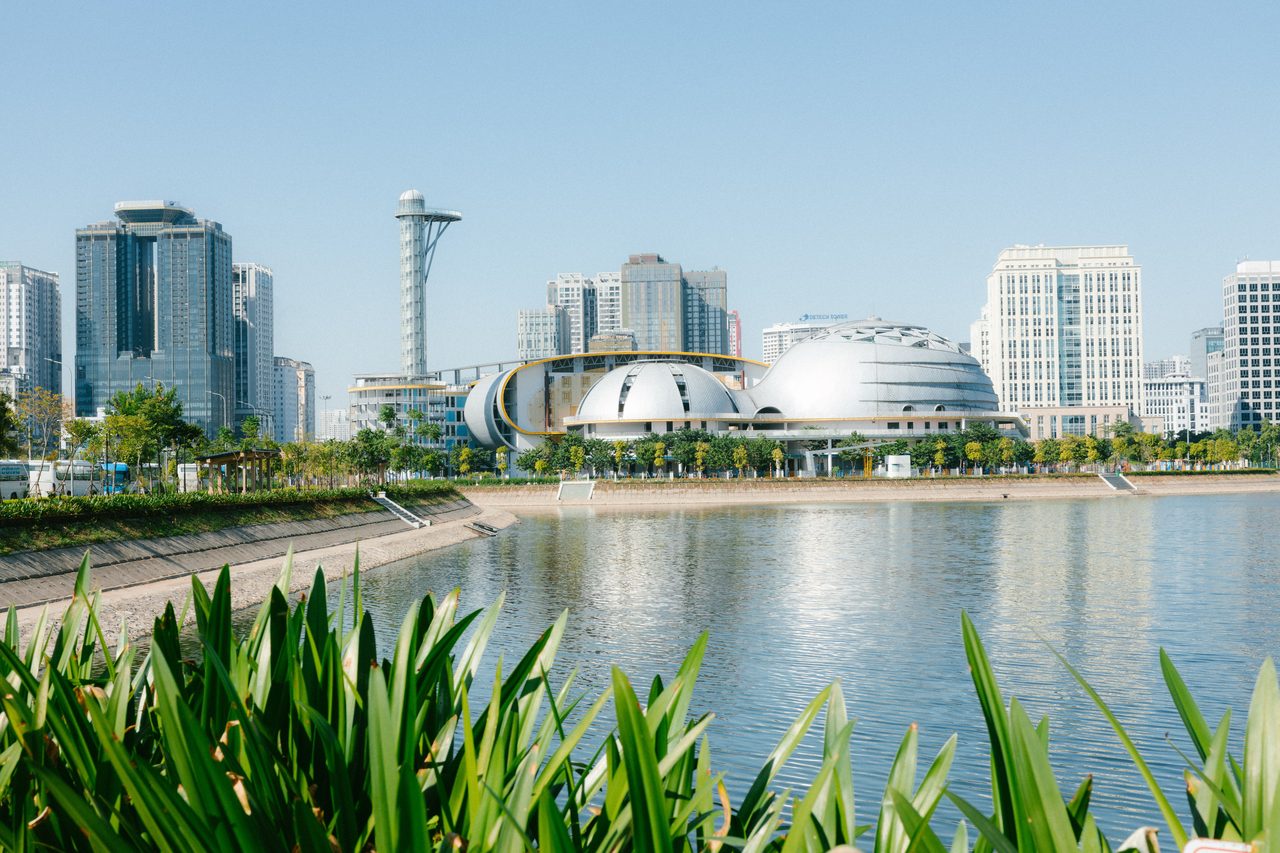
Suqian is a prefecture-level city in northern Jiangsu Province, set between the Grand Canal, the bed of the old Yellow River, Luoma Lake and Hongze Lake. It is the traditional birthplace of Xiang Yu, the Hegemon-King of Western Chu, and the home of Yanghe and Shuanggou baijiu. Highlights include the Xiang Wang Hometown scenic area, Longwang Temple Palace at Zaohe where Emperor Qianlong stayed on his southern tours, the Luoma Lake shore, Santaishan National Forest Park, the Yanghe Distillery Cultural Tourism Area and the Hongze Lake wetland in Sihong. This guide covers hotels, attractions, restaurants and practical tips for Suqian.
- Capital
- Suqian
- Largest city
- Suqian
- Population
- 4,986,192 in the prefecture-level city (2020 census), with about 1.62 million in the built-up urban area of Sucheng and Suyu districts
- Languages
- Mandarin Chinese (Putonghua); local speech is a northern Mandarin dialect
- Currency
- Renminbi (Yuan)
- Time zone
- China Standard Time (CST, UTC+8, no daylight saving)
Explore Suqian by topic
Jump straight to the experience you're planning.
Best places to visit in Suqian
The 14 destinations our editors recommend — from iconic landmarks to under-the-radar finds.
Longwang Temple Palace (Qianlong's Travelling Palace)
Santaishan National Forest Park
Yanghe Distillery Cultural Tourism Area
Sihong Hongze Lake Wetland
Shuanggou Liquor Culture Tourism Area
Recommended itineraries
Pick a length, follow the route. Each itinerary balances headline sights with breathing room.
5-Day Suqian Explorer
- Day 1Arrive in Suqian, explore city center
- Day 2Visit top attractions and museums
- Day 3Day trip to nearby highlights
- Day 4Local markets and hidden gems
- Day 5Final sightseeing, departure
7-Day Classic Suqian
- Days 1-2Suqian city highlights
- Days 3-4Regional exploration
- Days 5-6Cultural immersion and local experiences
- Day 7Return and departure
14-Day Ultimate Suqian
- Days 1-3Suqian comprehensive city tour
- Days 4-6Northern region exploration
- Days 7-9Eastern highlights
- Days 10-12Southern attractions
- Days 13-14Return to Suqian, departure
Where to stay in Suqian
Three tiers, every traveller covered — from cost-conscious to flagship hotels.
Budget CNY 220-340 (approx. $32-$50 USD)
Hostels, budget hotels, and guesthouses offer affordable stays without sacrificing experience.
Mid-range CNY 500-850 (approx. $74-$125 USD)
Boutique hotels and well-located accommodations provide comfort and convenience at reasonable prices.
Luxury CNY 1,200-2,400+ (approx. $176-$353+ USD)
World-class resorts and premium hotels deliver unforgettable experiences.
Hampton by Hilton Suqian Suning Plaza
Check rates on Booking.comHengli International Hotel
Check rates on Booking.comHengfeng International Hotel
Check rates on Booking.comSuqian Canal Jinling Grand Hotel
Check rates on Booking.comWhere to eat in Suqian
Cafés, neighbourhood gems, and tasting menus worth the table reservation.
Chuhan Renjia (Xiangwang Hometown branch)
Xiangjiazhuang (Xiangwang Hometown branch)
Lao Suqian
Yangjiawei (Branch 1)
A'Qingsao Restaurant
Luyishou Private Kitchen
Book a food tour in Suqian We may earn a commission from bookings made through this link.
Getting around Suqian
Suqian has no commercial airport. Suqian Station, on the Xuzhou-Yancheng high-speed line, lies on the southern edge of the city (Zhanxi Road, Sucheng District); a second station, Suqian East, is planned on the Weifang-Suqian high-speed line. The nearest airports are Xuzhou Guanyin (about 60 km), Lianyungang Baitabu (about 100 km) and Nanjing Lukou (about 260 km). Inside the city, buses, taxis and the Didi app serve the sights; there is no metro.
Budget breakdown
Daily spend by tier in CNY, broken out by category.
| Category | Budget | Mid-range | Luxury |
|---|---|---|---|
| Accommodation | CNY 80-140 (approx. $12-$21 USD) | CNY 250-450 (approx. $37-$66 USD) | CNY 600-1,400 (approx. $88-$206 USD) |
| Food (per day) | CNY 50-90 (approx. $7-$13 USD) | CNY 120-220 (approx. $18-$32 USD) | CNY 300-600 (approx. $44-$88 USD) |
| Transportation | CNY 10-30 (approx. $1.50-$4.50 USD) | CNY 40-90 (approx. $6-$13 USD) | CNY 100-250 (approx. $15-$37 USD) |
| Activities | CNY 0-80 (approx. $0-$12 USD) | CNY 80-160 (approx. $12-$24 USD) | CNY 150-300 (approx. $22-$44 USD) |
| Daily total | CNY 220-340 (approx. $32-$50 USD) | CNY 500-850 (approx. $74-$125 USD) | CNY 1,200-2,400+ (approx. $176-$353+ USD) |
Best time to visit Suqian
Weather through the year in Jiangsu
Best time Shoulder Worth avoiding
Average daytime temperature in °C. Figures are for Jiangsu.
Visit in late April-May or September-November for mild, drier weather; avoid July-August heat and rain and the October 1-7 holiday crowds.
Suqian has a warm temperate monsoon climate with four seasons. The January mean high is 5.4C (42F) and the low is -2.4C (28F); the July mean high is 31.1C (88F) and the low is 24.1C (75F). Annual rainfall is about 922 mm, with July the wettest month at about 211 mm. Autumn is clear and mild; winter is cold, and the lakes host wintering birds from November to February. The city recorded -23.4C in February 1969, so winter cold snaps can be severe.
Essential travel tips
- Download a VPN before arrival, as many Western websites and apps are blocked in mainland China
- Stay in Sucheng District near Xingfu Road or West Lake Road; the Xiang Wang Hometown sights are a short taxi ride away
- Use Didi or hotel-called taxis for the outlying sights (Zaohe, Yanghe, Santaishan), because public transport is thin
- Set up Alipay or WeChat Pay with an international card in advance, as cash is accepted less widely than mobile payment
- Use Amap (Gaode) or Baidu Maps for navigation, as Google Maps is unreliable in mainland China
Safety information
Install a reliable VPN before arriving; Google and many Western apps are blocked in mainland China
Carry your passport; hotels, train stations and some attractions require it
Set up Alipay or WeChat Pay with a foreign card before arrival
Swim only in designated areas; Luoma Lake and Hongze Lake have boat traffic and changing conditions
Use insect repellent from June to September
Keep a hotel card with the address in Chinese
Share your itinerary with someone when visiting Hongze Lake Wetland, which is remote
Check typhoon and heavy-rain warnings in July-September
Frequently asked questions
Is Suqian safe to visit in 2026?
Suqian has low rates of violent crime and is generally safe for tourists. The main concerns are petty theft in crowded places, unlicensed taxis at stations, and price disputes at tourist-area restaurants. The US State Department places mainland China at Level 2: Exercise Increased Caution. Emergency numbers: police 110, ambulance 120, fire 119.
What is the best time to visit Suqian?
The best time is late April-May and September-November, when temperatures are mild. July is the wettest month at about 211 mm and has a mean high near 31C (88F); January has lows near -2C (28F). Avoid the National Day Golden Week (October 1-7) and Chinese New Year if possible.
How do I get to Suqian?
Suqian has no airport. Take a high-speed train to Suqian Station on the Xuzhou-Yancheng line, or fly into Xuzhou Guanyin Airport (about 60 km) and take a taxi or coach. Coaches from Nanjing take about 3 hours and from Xuzhou about 1 hour. Book trains on the 12306 app or Trip.com.
What currency is used in Suqian?
The currency is the Renminbi (Yuan), CNY. Alipay and WeChat Pay are used for most transactions and can be linked to a foreign bank card; set up mobile payment before arrival. At 1 USD = 6.8 CNY, CNY 100 is about $14.70 USD.
What language is spoken in Suqian?
Mandarin Chinese (Putonghua) is the main language; the local dialect is a northern Mandarin variety. English signage is limited outside major hotels and museums, so a translation app is useful.
What are the top attractions in Suqian?
Xiang Wang Hometown (the birthplace of Xiang Yu), Longwang Temple Palace at Zaohe, Luoma Lake, Santaishan National Forest Park, the Yanghe Distillery Cultural Tourism Area and the Sihong Hongze Lake Wetland.