
On this page
About Harbin
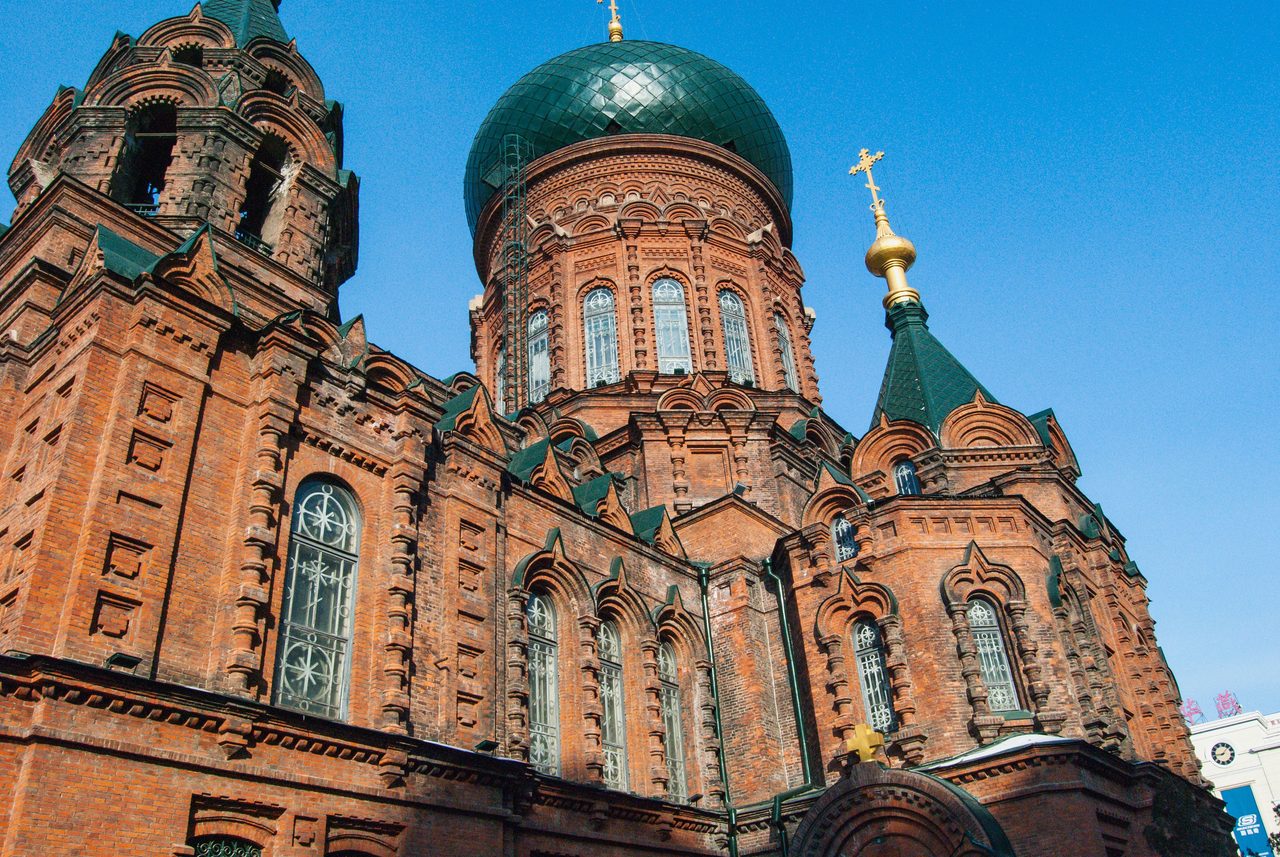
Harbin sits on the south bank of the Songhua River in the Manchurian plain, about 1,200 km north-east of Beijing and roughly 500 km from the Russian border. Founded in 1898 as a hub of the Chinese Eastern Railway, it grew into a cosmopolitan city with Russian, Jewish, Japanese, and Polish communities, and the legacy survives in Byzantine and Art Nouveau architecture along Central Street (Zhongyang Dajie) and around Saint Sophia Cathedral. In winter, the Harbin International Ice and Snow Festival draws millions of visitors to Harbin Ice and Snow World, the Sun Island International Snow Sculpture Art Expo, and the Zhaolin Park ice lantern show, while Yabuli, China's biggest ski resort, lies about 250 km east. Year-round highlights include the Siberian Tiger Park, the Harbin Grand Theatre by Ma Yansong's MAD Architects, Volga Manor, and the sobering Unit 731 Museum. Winter is spectacular but severe, so visitors should plan for -20°C to -30°C; summer is mild and green with far fewer crowds.
- Capital
- Harbin (capital of Heilongjiang province)
- Largest city
- Harbin
- Population
- ~10 million (metropolitan area; roughly 6 million in the urban core)
- Languages
- Mandarin Chinese (Northeastern dialect), Russian is visible on some heritage signage; English is limited outside major hotels and tourist sites
- Currency
- Chinese Yuan Renminbi (¥)
- Time zone
- China Standard Time (UTC+8), no daylight saving
Explore Harbin by topic
Jump straight to the experience you're planning.
Best places to visit in Harbin
The 19 destinations our editors recommend — from iconic landmarks to under-the-radar finds.
Central Street (Zhongyang Dajie)
Harbin Ice and Snow World
Sun Island International Snow Sculpture Art Expo
Sun Island Scenic Area
Harbin Polarland
Recommended itineraries
Pick a length, follow the route. Each itinerary balances headline sights with breathing room.
5-Day Harbin Explorer
- Day 1Arrive in Harbin, explore city center
- Day 2Visit top attractions and museums
- Day 3Day trip to nearby highlights
- Day 4Local markets and hidden gems
- Day 5Final sightseeing, departure
7-Day Classic Harbin
- Days 1-2Harbin city highlights
- Days 3-4Regional exploration
- Days 5-6Cultural immersion and local experiences
- Day 7Return and departure
14-Day Ultimate Harbin
- Days 1-3Harbin comprehensive city tour
- Days 4-6Northern region exploration
- Days 7-9Eastern highlights
- Days 10-12Southern attractions
- Days 13-14Return to Harbin, departure
Where to stay in Harbin
Three tiers, every traveller covered — from cost-conscious to flagship hotels.
Budget ¥330 (~$49)
Hostels, budget hotels, and guesthouses offer affordable stays without sacrificing experience.
Mid-range ¥800 (~$119)
Boutique hotels and well-located accommodations provide comfort and convenience at reasonable prices.
Luxury ¥2,200+ (~$328+)
World-class resorts and premium hotels deliver unforgettable experiences.
Shangri-La Harbin
A 5-star, roughly 390-room riverside hotel on Youyi Road facing the Songhua River, a taxi ride from Central Street and the railway station.
Check rates on Booking.comThe Ritz-Carlton, Harbin
Opened in 2021 on the upper floors of the 57-storey R&F Center tower (about 300 m), with 366-368 rooms overlooking the Songhua River.
Check rates on Booking.comSofitel Harbin
A 5-star Accor hotel in Xiangfang District with the Elements all-day dining restaurant; suits visitors who prefer the south-east of the city.
Check rates on Booking.comSheraton Harbin Xiangfang Hotel
A 5-star Sheraton beside the Yongtai City shopping complex in Xiangfang; far from the historic centre, so best for business or car-based trips.
Check rates on Booking.comWhere to eat in Harbin
Cafés, neighbourhood gems, and tasting menus worth the table reservation.
Huamei Western Restaurant (华梅西餐厅)
Portman Western Restaurant (波特曼西餐厅)
Tatoc Western Restaurant (塔道斯西餐厅)
Laochujia (老厨家, Central Street branch)
Dongfang Jiaozi Wang (东方饺子王, Central Street)
Laoduyichu (老都一处)
Book a food tour in Harbin We may earn a commission from bookings made through this link.
Getting around Harbin
Harbin is the capital of Heilongjiang and the northeast's main rail and air hub, about 1,000 km northeast of Beijing. Harbin Taiping International Airport (HRB) is about 35 km southwest of the centre and is served by airport express buses and taxis; there is no metro or rail link running to the terminal. Three high-speed railway stations connect the city to Shenyang, Beijing, Changchun, Jiamusi, Qiqihar and Mudanjiang, and a three-line metro covers the central districts. Taxis and Didi are cheap. For day trips, high-speed rail is the fastest and cheapest option, and a chartered car is the best way to reach places such as Volga Manor.
Budget breakdown
Daily spend by tier in CNY, broken out by category.
| Category | Budget | Mid-range | Luxury |
|---|---|---|---|
| Accommodation | ¥130 (~$19) | ¥400 (~$60) | ¥1,400 (~$209) |
| Food (per day) | ¥90 (~$13) | ¥200 (~$30) | ¥500 (~$75) |
| Transportation | ¥40 (~$6) | ¥80 (~$12) | ¥150 (~$22) |
| Activities | ¥70 (~$10) | ¥120 (~$18) | ¥150 (~$22) |
| Daily total | ¥330 (~$49) | ¥800 (~$119) | ¥2,200+ (~$328+) |
Best time to visit Harbin
Weather through the year in Harbin
Best time Shoulder Worth avoiding
Average daytime temperature in °C.
Winter (December to February) offers the ice and snow spectacle; summer (June to August) is comfortable at 20-28°C with fewer crowds; spring and autumn are short and cool.
Winter lows average -20°C to -25°C in January and can drop to -35°C. Hotel prices roughly double in festival weeks, so book 2-3 months ahead through Trip.com or Fliggy.
Essential travel tips
- Install Alipay (with international cards linked), WeChat, Didi, and Amap or Baidu Maps before arrival, since Google services are blocked and cash is rarely used
- Book Ice and Snow World, Sun Island Snow Expo, and Unit 731 Museum slots online in advance using your passport
- Visit Ice and Snow World after sunset when the sculptures are lit, and arrive by 3:30PM to see the transition from daylight to illumination
- Buy train tickets on the 12306 app or Trip.com; keep your passport handy for gate checks
- Try guobaorou (sweet-and-sour pork), Russian bread (lieba), and Harbin red sausage at local restaurants
Safety information
Harbin is very safe for solo travellers with low violent crime; the main risks are cold-weather injuries, icy pavements, petty theft on crowded Central Street and at train stations, and tourist-priced taxis and shops
Cold is the biggest hazard: winter temperatures fall to -20°C to -30°C. Wear thermal base layers, insulated boots, a windproof outer layer, a hat, and gloves, and keep exposed skin covered to avoid frostbite; limit continuous outdoor time to 20-30 minutes at Ice and Snow World
Do not touch metal surfaces with bare skin or lick ice at very low temperatures; skin can freeze to metal, and phone batteries die quickly, so carry a power bank kept inside a warm pocket
Pavements and crossings are icy from December to March; wear shoes with rubber soles or ice grips and walk with short steps. Never walk on the Songhua River ice outside the marked zones; ice thickness is managed only in official areas
Pickpockets work crowded places such as Central Street (中央大街), Harbin Railway Station, Qiulin and the Ice Festival entrances; wear bags in front and keep passport and phone in inner pockets
Use only metered taxis (ask for da biao, 打表), Didi, or the airport buses; avoid unmarked cars that approach visitors at the airport or station
Carry your passport at all times; hotels register foreign guests with the police, and station security checks require the original passport. Police may ask for ID at random
Air quality in the heating season (October-March) can be poor on some days; check the AQI on the Amap or the China Air Quality app and wear an N95 mask when readings are above 150
Foreign travellers should download Alipay or WeChat Pay before arrival, because many small vendors do not accept foreign cards and cash use is declining; keep some ¥100 notes (~$15) as backup
Mosquitoes and ticks are present in summer in wetland and forest areas such as Zhalong and Sun Island; use repellent and check for ticks after hiking
Frequently asked questions
Do I need a visa to visit Harbin?
Most visitors need a Chinese visa or an eligible visa-free arrangement. Many nationalities can enter visa-free for short stays under China's 2026 policy, and citizens of about 55 countries can use the 240-hour transit rule via designated ports including Harbin Taiping Airport. Rules change frequently, so check nia.gov.cn or your nearest Chinese embassy.
When is the best time to visit Harbin?
For the ice festival, visit from late December to February; Harbin Ice and Snow World typically opens around 20-24 December, with dates confirmed each autumn. For comfortable weather, June to early September is best, with highs of 20-28°C.
How cold does Harbin get in winter?
January averages about -20°C to -25°C, and nights can fall to -35°C. Wear a -30°C-rated down coat, thermal layers, insulated boots, and a face covering, and limit time outdoors.
How do foreigners pay for things in Harbin?
Link a foreign Visa or Mastercard to Alipay or WeChat Pay before arrival. Most shops, taxis, and restaurants use QR payments; carry some cash (¥200-300, about $30-45) for small vendors, and use Didi for taxis.
What are the top attractions in Harbin?
The top attractions are Saint Sophia Cathedral, Central Street, Harbin Ice and Snow World (winter), the Sun Island Snow Expo, the Siberian Tiger Park, and the Unit 731 Museum. Yabuli ski resort is a popular winter day trip.