
On this page
About Sofia Grad (Sofia City Province)
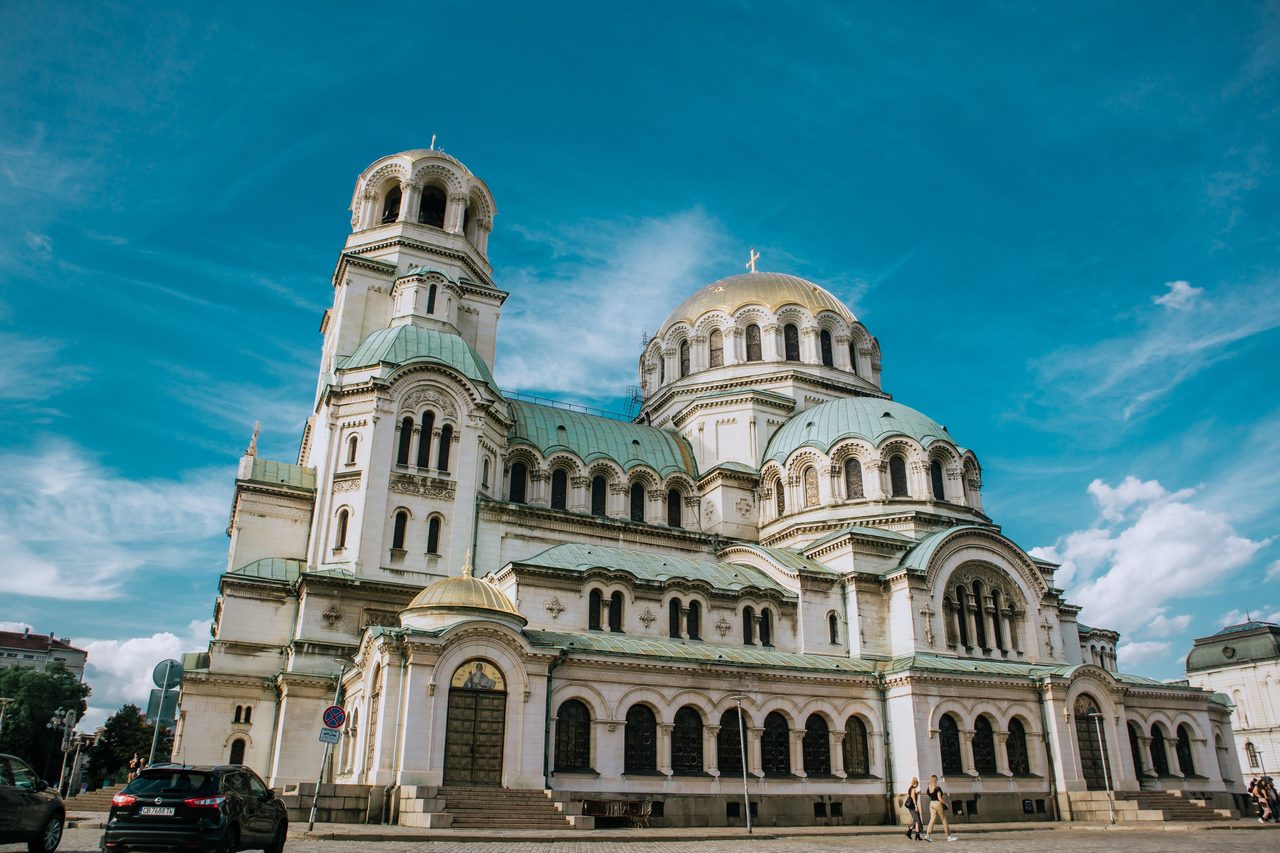
Sofia Grad covers about 1,344 km² and is home to roughly 1.3 million people, around a fifth of Bulgaria's population. The province is made up of Sofia city, the capital since 1879, and the small village of Lozen on the eastern edge, with its medieval monastery below Lozen Mountain. The city centre is built around the excavated Roman town of Serdica, the golden-domed Alexander Nevsky Cathedral, the Church of St Nedelya, the Banya Bashi Mosque and the pedestrian Vitosha Boulevard. UNESCO-listed Boyana Church, the Vitosha nature park with its Cherni Vrah peak (2,290 m) and the Rila Monastery day trip make Sofia a strong base for a long weekend or a week. Bulgaria adopted the euro on 1 January 2026 (fixed rate 1 EUR = 1.95583 BGN), and prices remain well below Western European levels. Sofia Airport (SOF) has a direct metro link to the centre.
- Capital
- Sofia
- Largest city
- Sofia
- Population
- ~1.3 million
- Languages
- Bulgarian
- Currency
- Euro
- Time zone
- EET/EEST (UTC+2/+3)
Explore Sofia Grad (Sofia City Province) by topic
Jump straight to the experience you're planning.
Best places to visit in Sofia Grad (Sofia City Province)
The 22 destinations our editors recommend — from iconic landmarks to under-the-radar finds.
Boyana Church
National Museum of History
Sveta Nedelya Church
Serdica Archaeological Complex
Church of St George Rotunda
Recommended itineraries
Pick a length, follow the route. Each itinerary balances headline sights with breathing room.
5-Day Sofia Grad (Sofia City Province) Explorer
- Day 1Arrive in Sofia Grad (Sofia City Province), explore city center
- Day 2Visit top attractions and museums
- Day 3Day trip to nearby highlights
- Day 4Local markets and hidden gems
- Day 5Final sightseeing, departure
7-Day Classic Sofia Grad (Sofia City Province)
- Days 1-2Sofia Grad (Sofia City Province) city highlights
- Days 3-4Regional exploration
- Days 5-6Cultural immersion and local experiences
- Day 7Return and departure
14-Day Ultimate Sofia Grad (Sofia City Province)
- Days 1-3Sofia Grad (Sofia City Province) comprehensive city tour
- Days 4-6Northern region exploration
- Days 7-9Eastern highlights
- Days 10-12Southern attractions
- Days 13-14Return to Sofia Grad (Sofia City Province), departure
Where to stay in Sofia Grad (Sofia City Province)
Three tiers, every traveller covered — from cost-conscious to flagship hotels.
Budget EUR 45 (~$52)
Hostels, budget hotels, and guesthouses offer affordable stays without sacrificing experience.
Mid-range EUR 100 (~$115)
Boutique hotels and well-located accommodations provide comfort and convenience at reasonable prices.
Luxury EUR 250+ (~$287+)
World-class resorts and premium hotels deliver unforgettable experiences.
Sofia Hotel Balkan, A Luxury Collection Hotel
Five-star hotel on Sveta Nedelya Square beside the Serdika metro station, operated as a Luxury Collection property and long regarded as a landmark of central Sofia.
Check rates on Booking.comGrand Hotel Sofia
Five-star city-centre hotel on Gurko Street with a basement-level spa that includes a pool, sauna, steam room and jacuzzi.
Check rates on Booking.comHilton Sofia
Five-star Hilton on Bulgaria Boulevard, close to the National Palace of Culture and the southern end of Vitosha Boulevard.
Check rates on Booking.comInterContinental Sofia
Five-star hotel facing the Bulgarian National Assembly, close to Alexander Nevsky Cathedral and the Sofia University area; the building formerly operated as the Radisson Blu Grand Hotel.
Check rates on Booking.comWhere to eat in Sofia Grad (Sofia City Province)
Cafés, neighbourhood gems, and tasting menus worth the table reservation.
Hadjidraganovite Kashti
Manastirska Magernitsa
Cosmos
Shtastlivetsa (Vitosha Boulevard)
Constantinoff RestoBar
Dobro
Book a food tour in Sofia Grad (Sofia City Province) We may earn a commission from bookings made through this link.
Getting around Sofia Grad (Sofia City Province)
Sofia Grad is a compact province dominated by the capital, which is the hub of Bulgaria's rail, bus and air network. The metro covers the main axis from the airport through Serdika to the south and west, while trams and buses fill in the rest. Trains and coaches from Central Railway Station and Central Bus Station reach Plovdiv, Veliko Tarnovo, Varna, Burgas and neighbouring capitals. Since 1 January 2026 all fares are priced in euros.
Budget breakdown
Daily spend by tier in EUR, broken out by category.
| Category | Budget | Mid-range | Luxury |
|---|---|---|---|
| Accommodation | EUR 15 (~$17.25) | EUR 55 (~$63) | EUR 150 (~$172.50) |
| Food (per day) | EUR 20 (~$23) | EUR 28 (~$32) | EUR 65 (~$75) |
| Transportation | EUR 3 (~$3.45) | EUR 7 (~$8) | EUR 15 (~$17.25) |
| Activities | EUR 7 (~$8) | EUR 10 (~$11.50) | EUR 20 (~$23) |
| Daily total | EUR 45 (~$52) | EUR 100 (~$115) | EUR 250+ (~$287+) |
Best time to visit Sofia Grad (Sofia City Province)
Weather through the year in Sofia Grad (Sofia City Province)
Best time Shoulder Worth avoiding
Average daytime temperature in °C. Figures are for Sofia Grad (Sofia City Province).
Sofia has a continental climate with warm, mostly dry summers and cold, snowy winters. Late spring and early autumn are the most comfortable for sightseeing, while the Vitosha trails are best from June to September and skiing runs roughly December to March.
Summer highs reach 28-32 C (82-90 F) with occasional thunderstorms. January averages about -1 C (30 F). Orthodox Easter and national holidays close some shops. Check airbg.info for winter air quality.
Essential travel tips
- Bulgaria uses the euro since 1 January 2026; older shop displays may still show a lev price next to the euro price (1 EUR = 1.95583 BGN)
- Take metro line M4 from the airport (Terminal 2 station) straight to the centre for EUR 0.80 instead of a taxi
- Use the free Sofia walking tour (freesofiatour.com) on the first day to orient around Serdika, St Nedelya and Alexander Nevsky
- Learn to read the Cyrillic alphabet; street signs and bus numbers show Latin letters on major routes, but menus and small shops are often in Cyrillic only
- Bulgarians nod to mean no and shake the head to mean yes; confirm with the word 'da' (yes) or 'ne' (no)
- Tipping of 10% for restaurant service is customary; service is rarely included in the bill
Safety information
Sofia is a generally safe capital with low violent crime; the main risk is petty theft such as pickpocketing on crowded trams, the metro, Vitosha Boulevard, Women's Market (Zhenski Pazar) and around the Central Railway Station and Central Bus Station
The single European emergency number 112 works from any phone, including without a SIM; direct numbers are police 166, ambulance 150 and fire 160
Pavements are often uneven, cars park on them and drivers frequently do not give way at crossings; look both ways even on green pedestrian lights
Mountain weather on Vitosha changes fast; carry water and a rain jacket, and check the forecast at weather.bg or meteoblue before hiking above 1,500 m
Mountain rescue is reached via 112; give the exact location and number of casualties, and install the 112 BG app, which sends a GPS position
Tap water in Sofia is safe to drink; public mineral-water fountains in the centre are also drinkable
An electronic vignette (bgtoll.bg) is required on national roads outside the city; driving without one brings a fine, and rental cars should come with one already
Ticks that carry Lyme disease are present in Vitosha and city parks from spring to autumn; wear long trousers and check skin after walks
Winter air pollution can be poor in cold, still weather from December to February; check the live air quality at airbg.info and limit outdoor exertion on red days
Sofia lies in an active seismic zone; in an earthquake, drop, cover and hold on, and follow hotel evacuation signs
Frequently asked questions
Do I need a visa to visit Sofia?
Bulgaria is a full member of the Schengen Area. EU citizens need only a national ID card or passport; visitors from the US, UK, Canada, Australia and many other countries may stay visa-free for up to 90 days in any 180-day period, and others require a Schengen visa. Non-EU visitors are registered under the EU Entry/Exit System at the border. The ETIAS authorisation is planned but not yet in operation, so check travel-europe.europa.eu before travelling.
What currency does Sofia use in 2026?
Bulgaria adopted the euro on 1 January 2026 at a fixed rate of 1 EUR = 1.95583 BGN. The lev is no longer legal tender. Cards are accepted widely in Sofia, and ATMs dispense euros.
What is the best way to get from Sofia Airport to the city centre?
Sofia Airport (SOF) is about 10 km east of the centre. Metro line M4 from Terminal 2 reaches the centre in roughly 20-30 minutes for EUR 0.80 (~$0.92). Buses 84 and 184 take 35-45 minutes for the same fare. A taxi or Bolt ride costs about EUR 10-15 (~$11.50-17.25) and takes about 25 minutes.
What are the top attractions in Sofia?
The top attractions are Alexander Nevsky Cathedral, the Serdica archaeological complex, UNESCO-listed Boyana Church, the Banya Bashi Mosque, the Church of St Nedelya, Vitosha Boulevard, Borisova Gradina and Vitosha Nature Park. Most central sights are within a 20-minute walk of Serdika metro station.
What food is Sofia famous for?
Specialities include banitsa (cheese pastry), shopska salad, tarator (cold cucumber soup), kavarma, kebapche and sarmi, plus rakia fruit brandy and Bulgarian wine. A traditional restaurant meal costs about EUR 8-15 (~$9-17) per person.
Explore Sofia Grad (Sofia City Province) by city
The cities below have their own guides — hotels, attractions and where to eat, in depth.