
On this page
About New Orleans
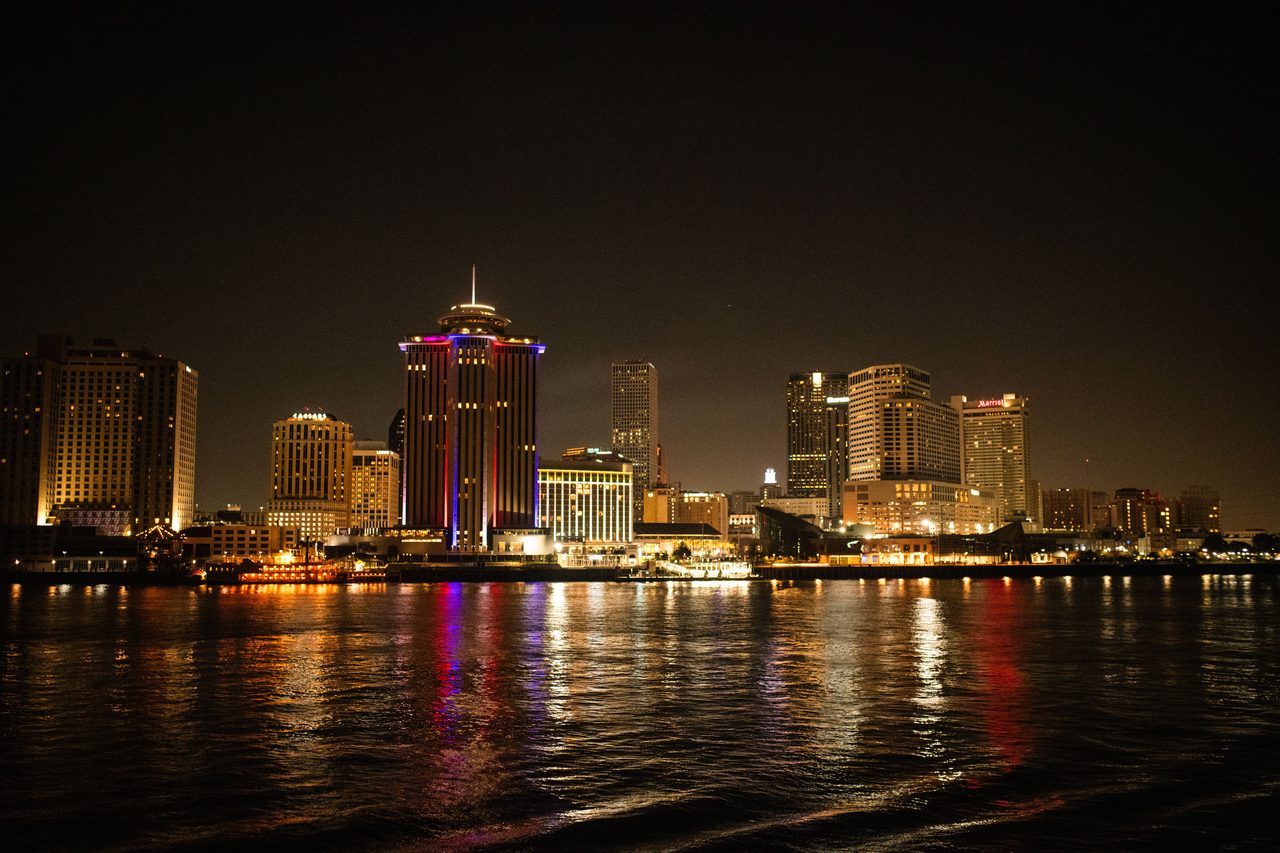
New Orleans sits on a crescent bend of the Mississippi River in southeast Louisiana, about 105 miles upriver from the Gulf of Mexico and below the level of the river and Lake Pontchartrain, which is why the city depends on levees and pumps. The French Quarter (Vieux Carre), laid out in 1721 and built mostly under Spanish rule in the late 1700s, holds Jackson Square, St. Louis Cathedral, Bourbon Street and the French Market. Canal Street separates it from the Central Business District and the Warehouse District, where the National WWII Museum stands. Upriver, the St. Charles Avenue streetcar runs through the Garden District and Uptown to Audubon Park, while the Faubourg Marigny, Frenchmen Street and Bywater downriver are known for live music and nightlife. City Park, with the New Orleans Museum of Art, lies north of Mid-City. The RTA (Ride New Orleans) runs streetcars, buses and the Algiers Point ferry, the airport is about 13 miles west in Kenner, and Amtrak, Greyhound and FlixBus use Union Passenger Terminal. The climate is humid subtropical: hot, humid summers, mild winters and a hurricane season from 1 June to 30 November. Day trips include Oak Alley and Whitney plantations, swamp tours in Jean Lafitte and the Honey Island Swamp, Fontainebleau State Park across Lake Pontchartrain, Bay St. Louis and Biloxi on the Mississippi Gulf Coast, and Baton Rouge.
- Capital
- New Orleans (the Louisiana state capital is Baton Rouge)
- Largest city
- New Orleans
- Population
- About 384,000 (383,997 at the 2020 census); about 1.27 million in the metropolitan area
- Languages
- English, Spanish, Vietnamese, Louisiana French
- Currency
- US Dollar
- Time zone
- Central Time (CT): CST UTC-6 in winter, CDT UTC-5 from the second Sunday of March to the first Sunday of November (America/Chicago)
Explore New Orleans by topic
Jump straight to the experience you're planning.
Best places to visit in New Orleans
The 20 destinations our editors recommend — from iconic landmarks to under-the-radar finds.
St. Louis Cathedral
The National WWII Museum
Garden District and Lafayette Cemetery No. 1
St. Louis Cemetery No. 1
New Orleans Museum of Art (NOMA)
Recommended itineraries
Pick a length, follow the route. Each itinerary balances headline sights with breathing room.
5-Day New Orleans Explorer
- Day 1Arrive in New Orleans, explore city center
- Day 2Visit top attractions and museums
- Day 3Day trip to nearby highlights
- Day 4Local markets and hidden gems
- Day 5Final sightseeing, departure
7-Day Classic New Orleans
- Days 1-2New Orleans city highlights
- Days 3-4Regional exploration
- Days 5-6Cultural immersion and local experiences
- Day 7Return and departure
14-Day Ultimate New Orleans
- Days 1-3New Orleans comprehensive city tour
- Days 4-6Northern region exploration
- Days 7-9Eastern highlights
- Days 10-12Southern attractions
- Days 13-14Return to New Orleans, departure
Where to stay in New Orleans
Three tiers, every traveller covered — from cost-conscious to flagship hotels.
Budget $120-180 (about US$120-180) per person
Hostels, budget hotels, and guesthouses offer affordable stays without sacrificing experience.
Mid-range $300-450 (about US$300-450) per person
Boutique hotels and well-located accommodations provide comfort and convenience at reasonable prices.
Luxury $700+ (about US$700+) per person
World-class resorts and premium hotels deliver unforgettable experiences.
Hotel Monteleone
Family-owned 1886 landmark with the revolving Carousel Bar, a rooftop pool and a spa, in the heart of the French Quarter.
Check rates on Booking.comOmni Royal Orleans Hotel
Grand Omni hotel on St. Louis Street, steps from Royal Street antiques shops.
Check rates on Booking.comRoyal Sonesta New Orleans
Large full-service hotel on Bourbon Street with a courtyard pool and balconies overlooking the French Quarter.
Check rates on Booking.comBourbon Orleans Hotel
Historic hotel on Orleans Street beside the Bourbon Street strip, with a courtyard pool.
Check rates on Booking.comWhere to eat in New Orleans
Cafés, neighbourhood gems, and tasting menus worth the table reservation.
Commander's Palace
Landmark Creole fine-dining restaurant in a turquoise Garden District mansion; jackets preferred at dinner.
Dooky Chase's Restaurant
Leah Chase's historic Treme Creole restaurant, a civil rights era meeting place.
Galatoire's
Century-old Bourbon Street Creole institution known for long lunches and white-jacket service.
Antoine's Restaurant
Founded 1840, birthplace of oysters Rockefeller and one of the oldest family-run restaurants in the US.
Arnaud's Restaurant
Opulent 1918 Creole dining rooms with a Sunday jazz brunch and the French 75 bar next door.
Brennan's
Pink Royal Street courtyard restaurant where bananas Foster was invented.
Book a food tour in New Orleans We may earn a commission from bookings made through this link.
Getting around New Orleans
New Orleans pairs a streetcar-and-bus network with a short river ferry and heavy walking in the center. Most visitors take a taxi or rideshare from the airport, then use walking, streetcars and rideshare, and rent a car only for plantations, swamp tours and Gulf Coast day trips.
Budget breakdown
Daily spend by tier in USD, broken out by category.
| Category | Budget | Mid-range | Luxury |
|---|---|---|---|
| Accommodation | $40-80 (US$40-80) for a hostel dorm bed such as India House Hostel, or $110-170 (US$110-170) for a basic hotel room away from the French Quarter on non-festival dates | $200-330 (US$200-330) per night for a mid-range hotel in the French Quarter, Central Business District or Garden District, before about 16-17% in taxes | $450+ (US$450+) per night at grand hotels such as the Ritz-Carlton New Orleans and Windsor Court |
| Food (per day) | $30-45 (US$30-45) (po-boys, red beans and rice lunch specials, beignets and grocery picnics) | $80-130 (US$80-130) (sit-down lunch and dinner, cocktails, coffee and beignets) | $200-400+ (US$200-400+) (Creole fine dining at Commander's Palace, tasting menus and cocktails) |
| Transportation | $3-8 (US$3-8) (Jazzy Pass 1-day pass at $3 or single streetcar fares at $1.25) | $10-40 (US$10-40) (streetcar passes, occasional rideshare or taxi) | $60-200 (US$60-200) (private car service and valet parking at $45-60 per night) |
| Activities | $0-30 (US$0-30) (free street music, Jackson Square, the riverfront Moonwalk, City Park and parades) | $40-100 (US$40-100) (National WWII Museum, a swamp tour or a cemetery walking tour) | $150+ (US$150+) (private tours, jazz dinner cruises and spa days) |
| Daily total | $120-180 (about US$120-180) per person | $300-450 (about US$300-450) per person | $700+ (about US$700+) per person |
Best time to visit New Orleans
Weather through the year in New Orleans
Best time Shoulder Worth avoiding
Average daytime temperature in °C.
New Orleans has a humid subtropical climate. Summer highs reach about 90-91F (32-33C) with heat index values above 100F (38C); winter highs are about 62-66F (17-19C) with occasional freezes. Annual rainfall is about 62 inches (1,570 mm), spread through the year with the wettest months from June to September. The Atlantic hurricane season runs from 1 June to 30 November, with the highest risk from mid-August to early October.
Summer afternoons bring brief, heavy thunderstorms and street flooding in low spots such as Mid-City and Canal Street. Evenings stay warm into October. Winter days can be damp and chilly, so pack a light jacket and layers. Hotels book out months ahead for Mardi Gras and Jazz Fest.
Essential travel tips
- Base in the French Quarter, Central Business District or Marigny for walkability; the streetcar covers the Garden District and Uptown.
- Buy a Jazzy Pass (1-day $3) in the Le Pass app or at norta.com for streetcars and buses; single streetcar rides are $1.25 and cash requires exact change.
- Book Mardi Gras, Jazz Fest, French Quarter Festival and Sugar Bowl hotels 6-12 months ahead; rates double and minimum stays apply.
- Reserve Commander's Palace, Brennan's, Cochon and other top restaurants weeks ahead, and expect lines at Cafe du Monde (open 24 hours), Willie Mae's Scotch House and Parkway Bakery.
- Tip 18-20% at restaurants and bars, $1-2 per drink, and tip street musicians who play for tips.
- Wear comfortable shoes; French Quarter sidewalks are narrow and uneven, and a light rain jacket helps in any season.
- Carry photo ID for alcohol purchases (minimum age 21); open drinks in plastic cups are legal on the street but not inside shops or on streetcars.
Safety information
Stay on busy, well-lit streets at night and use rideshare or a licensed taxi between the French Quarter, Marigny, Treme, Central City and the Central Business District after dark; many street robberies happen on quiet side streets.
Watch drinks at all times in Bourbon Street and Frenchmen Street bars and never accept drinks from strangers; drink spiking and overpriced drinks are reported. Open drinks in plastic go-cups are legal on the street, but the drinking age is 21.
Keep phones and wallets in front pockets or zipped bags on Bourbon Street, at parades and on streetcars; pickpocketing rises in crowds during Mardi Gras and festivals.
Never leave anything visible in a parked car, including bags, jackets and chargers; car break-ins are common around the French Quarter, Warehouse District and cemeteries. Empty the car completely.
Carry water and limit midday outdoor activity from June to September; heat index values often exceed 100F (38C), and heat exhaustion is common among visitors.
Do not enter St. Louis Cemetery No. 1 without a licensed guide, which the Archdiocese requires; unaccompanied visitors have been robbed. Visit other cemeteries in daylight and in groups.
In hurricane season (1 June to 30 November), buy travel insurance with storm cover, follow nhc.noaa.gov and register for NOLA Ready alerts by texting NOLAREADY to 77295 or at nola.gov/nola-ready; leave when the city orders an evacuation.
Avoid floodwater after heavy rain; low streets in Mid-City and near Canal Street can flood quickly, and storm drains may be blocked. Never drive through flooded streets.
Carry insect repellent in warm months; mosquitoes are active from spring to autumn and can carry West Nile virus.
Treat unsolicited offers from strangers on Bourbon Street, such as bets about where visitors bought their shoes, as scams and decline.
Use only licensed carriage rides, taxis and tours; check licenses and agree on prices before starting.
Carry travel insurance with medical cover; US emergency care is costly for visitors without it.
Frequently asked questions
Is New Orleans safe for tourists?
Generally yes in the main tourist areas such as the French Quarter, Central Business District, Garden District and Marigny by day, and in busy areas at night. The city has higher violent and property crime rates than many US cities, so stay on lit, busy streets after dark, use rideshare, watch drinks and belongings and avoid isolated areas. Dial 911 in any emergency.
How many days are enough for New Orleans?
Three to four days cover the French Quarter, the National WWII Museum, a Garden District and streetcar day, live music on Frenchmen Street and the main restaurants. Allow extra days for a plantation or swamp tour, or for Mardi Gras and Jazz Fest.
Do visitors need a car in New Orleans?
No for the French Quarter, Central Business District, Marigny and Garden District, which walking, streetcars, buses and rideshare cover. A car helps for plantations, swamp tours and the Gulf Coast, but French Quarter hotel parking costs about $35-60 per night.
What is the best time to visit New Orleans?
February to May and October to November have the best weather. Mardi Gras (Fat Tuesday is 9 February 2027) and Jazz Fest (22 April to 2 May 2027) are the busiest and priciest. Summers are hot and humid, and hurricane season runs from 1 June to 30 November.
How do visitors get from New Orleans Airport to the French Quarter?
The airport is about 13 miles west of the French Quarter. A taxi costs a flat $36 for up to two passengers from Door 7 outside baggage claim, rideshare typically costs $35-55, and the RTA 202 Airport Express bus costs about $1.25-2 and runs to Downtown. Allow 25-45 minutes by road.
Can visitors drink alcohol on the street in New Orleans?
Yes. Open containers are allowed on the street in the city if poured into a plastic cup (a go-cup), but glass is not allowed, and the drinking age is 21. Drinks may not be carried onto streetcars, and some events and parades ban outside drinks.