Asturias is an autonomous community on Spain's rugged northern coast, bordered by the Cantabrian Sea to the north and the Cantabrian Mountains to the south. Known as the 'Natural Paradise,' the region combines dramatic cliffs, emerald valleys, medieval villages, and the towering peaks of Picos de Europa National Park. Its Celtic heritage, distinctive cider culture, world-class seafood, and UNESCO-listed pre-Romanesque monuments make it one of Iberia's most rewarding destinations for independent travelers.
Asturias stretches 334 km across Spain's 'Green Coast,' receiving abundant Atlantic rainfall that keeps the landscape brilliantly verdant year-round. The capital Oviedo preserves Spain's finest concentration of pre-Romanesque architecture, while Gijón serves as the region's cosmopolitan harbor city. The interior harbors ancient beech forests, wolf and bear territory, and pastoral landscapes dotted with granaries (hórreos). Asturias was the starting point of the Reconquista—King Pelayo's victory at Covadonga in 718 AD launched the Christian kingdoms' centuries-long campaign to reclaim Iberia, and the region's historical pride runs deep.
The 21 destinations our editors recommend — from iconic landmarks to under-the-radar finds.
Picos de Europa National Park
Spain's first national park spans limestone peaks rising abruptly from the Cantabrian coast, split across Asturias, Cantabria and Castilla y León. The Asturian side centers on the Cares Gorge and the Fuente Dé-adjacent Naranjo de Bulnes massif, with jagged summits that stay snow-capped into early summer. Most visitors experience it via day hikes or the Covadonga lakes road rather than serious mountaineering.
Oviedo Cathedral (Catedral de San Salvador)
Oviedo's cathedral mixes Gothic construction with an older core, but its real significance is the Cámara Santa, a pre-Romanesque chamber built to house relics including the Sudario (Holy Shroud relic) and the Cross of the Angels, both tied to the Asturian kingdom's early medieval prestige. The cathedral museum displays these and other treasury pieces. Because Oviedo was a royal seat before the Reconquista pushed south, the building carries weight beyond its architecture.
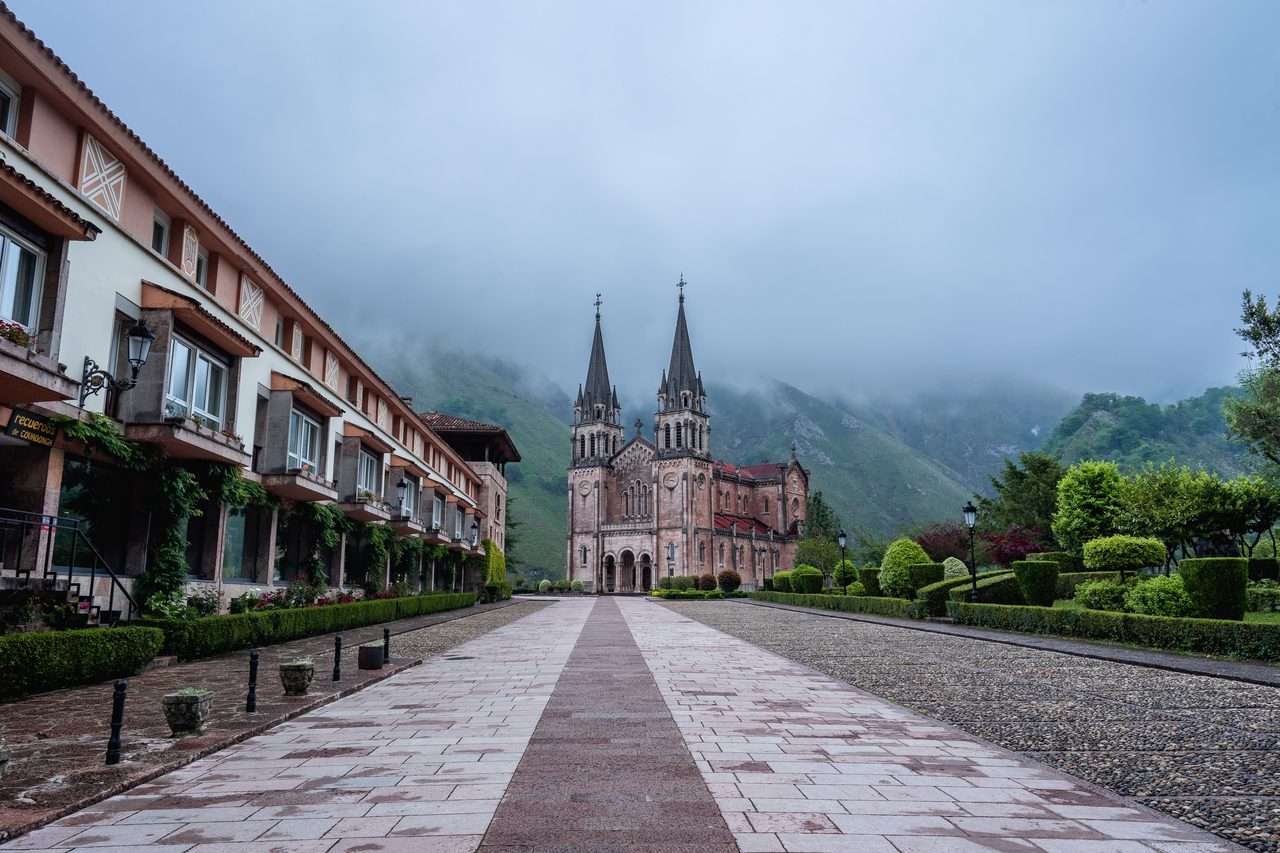
Covadonga Sanctuary & Picos Lakes
Covadonga is where, by tradition, Pelagius's Asturian forces halted the Muslim advance in 722, an event later mythologized as the start of the Reconquista. The basilica and grotto sit at the base of the mountains, while a mountain road climbs from there to Lake Enol and Lake Ercina, two glacial lakes used as trailheads for Picos hikes. The site pairs a national origin story with genuinely striking high-mountain scenery.
Cave of Tito Bustillo
This cave near Ribadesella holds Upper Paleolithic paintings and engravings, primarily horses and other animals, dated to roughly 14,000-18,000 years ago, and is part of the UNESCO-listed group of Cantabrian cave art alongside Altamira. Because the original cave is fragile, visits are limited and the on-site interpretation center explains the art's context and techniques before or after entry. It's a genuine prehistoric site, not a replica experience.
Santa María del Naranco
Built around 848 under King Ramiro I on a hillside above Oviedo, this building is one of the finest surviving examples of Asturian pre-Romanesque architecture, likely constructed as a royal hall rather than a church. Its barrel-vaulted upper hall, open loggias and carved medallions predate Romanesque style elsewhere in Europe by more than a century. Nearby San Miguel de Lillo, from the same royal complex, can be visited on the same trip.
Ruta del Cares (Cares Gorge)
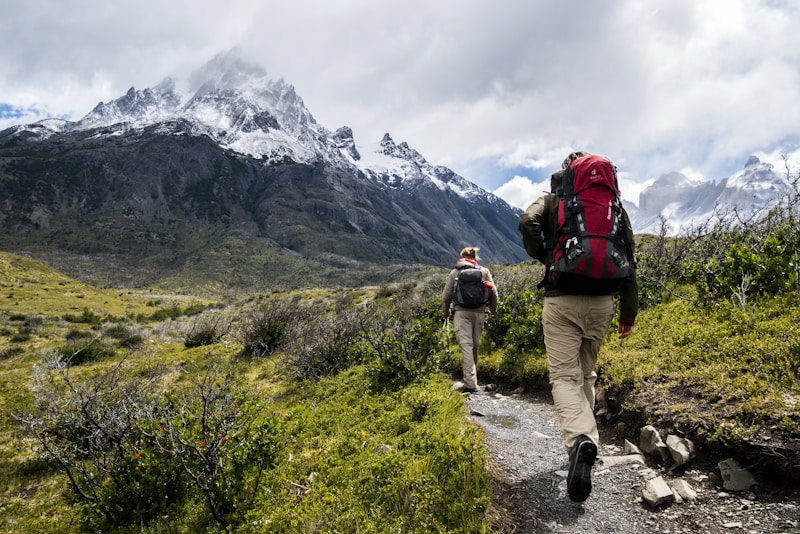
This roughly 12-kilometer trail (one-way from Poncebos to Caín, on the Castilla y León side) follows a walkway and tunnels carved into the gorge wall above the Cares River, built originally to service a hydroelectric channel. The path clings to sheer limestone cliffs with the river far below, making it one of the most exposed but non-technical walks in the Picos. Most hikers walk in and back rather than arranging transport for a one-way trip.
Recommended itineraries
Pick a length, follow the route. Each itinerary balances headline sights with breathing room.
5-Day Asturias Explorer
Day 1Arrive in Asturias, explore city center
Day 2Visit top attractions and museums
Day 3Day trip to nearby highlights
Day 4Local markets and hidden gems
Day 5Final sightseeing, departure
7-Day Classic Asturias
Days 1-2Asturias city highlights
Days 3-4Regional exploration
Days 5-6Cultural immersion and local experiences
Day 7Return and departure
14-Day Ultimate Asturias
Days 1-3Asturias comprehensive city tour
Days 4-6Northern region exploration
Days 7-9Eastern highlights
Days 10-12Southern attractions
Days 13-14Return to Asturias, departure
Where to stay in Asturias
Three tiers, every traveller covered — from cost-conscious to flagship hotels.
Budget €50–€100 / $54–$109
Hostels, budget hotels, and guesthouses offer affordable stays without sacrificing experience.
Mid-range €140–€275 / $152–$299
Boutique hotels and well-located accommodations provide comfort and convenience at reasonable prices.
Luxury €370–€950 / $403–$1,034
World-class resorts and premium hotels deliver unforgettable experiences.
Hotel de la Reconquista
Oviedo city center · €€€€ (€200–€400/night / ~$218–$436)
Cafés, neighbourhood gems, and tasting menus worth the table reservation.
Casa Gerardo
Modern Asturian · €€€€ (tasting menu €110–€160 / ~$120–$174)
A family-run restaurant on the AS-19 outside Gijón that has been in the same family for generations, now led by Marcos Morán in the kitchen. The cooking reworks Asturian staples like fabada and rice pudding into tasting-menu form, plating classic flavors with a modern, technique-driven touch rather than abandoning them. The dining room is formal but not stiff, with white tablecloths and a pace built around a multi-course menu.
Real Balneario de Salinas
Asturian Seafood · €€€ (€60–€120 / ~$65–$131 per person)
Set right on the seafront in Salinas, next to the beach, this restaurant built its reputation on straightforward, ingredient-led treatment of fish and shellfish. The style favors letting good raw product speak for itself over heavy sauces, with rice and seafood dishes that lean into the coastal setting. The room has sea views and a more upscale, white-tablecloth feel than the average sidrería.
El Corral del Indianu
Creative Asturian · €€€€ (tasting menu €90–€130 / ~$98–$141)
Located in Arriondas, a town better known for whitewater rafting on the Sella than fine dining, this restaurant under chef Nacho Manzano built a reputation for taking rustic Asturian home cooking and refining it with contemporary plating and technique. The menu plays with texture on things like cider and croquettes, and the room is more understated and countryside in feel than the formal fine-dining norm.
Tierra Astur (Oviedo)
Traditional Asturian · €€ (€25–€45 / ~$27–$49 per person)
One of the anchor sidrerías on Oviedo's Calle Gascona, the strip of cider houses known locally as the 'cider boulevard.' It's a large, rustic space with hanging hams and barrels lining the walls, built for groups and built around cider poured from height (escanciado) alongside hearty plates. The food is unfussy and portion-driven rather than delicate.
Sidrería Casa Paulino
Asturian / Cider House · €€ (€20–€40 / ~$22–$44 per person)
Also on Calle Gascona, this is a smaller, more traditional sidrería than some of its bigger neighbors on the same street, with the same wood-and-barrel decor typical of the strip. The kitchen sticks to Asturian cider-house staples rather than reaching for anything modern, and cider is escanciado (poured from height) at the table or bar in the customary way.
La Máquina (Oviedo)
Asturian Seafood and Grills · €€ (€30–€60 / ~$33–$65 per person)
Named for its origins as a spot popular with railway workers, this restaurant on Avenida de Galicia has built its name on seafood and grilled dishes rather than the cider-house format of Gascona. It's a more straightforward, traditional restaurant setting than a sidrería, with a menu centered on shellfish brought fresh and cooked simply.
Asturias is served by Asturias International Airport (OVD) near Avilés. Regional ALSA buses connect all major towns and villages, and RENFE trains link Oviedo, Gijón, and Avilés. A rental car is strongly recommended for exploring the interior mountains and rural villages.
Budget breakdown
Daily spend by tier in EUR (€) / USD ($), broken out by category.
Category
Budget
Mid-range
Luxury
Accommodation
€25–€50 / $27–$55
€80–€150 / $87–$163
€200–€500 / $218–$544
Food (per day)
€15–€25 / $16–$27
€30–€60 / $33–$65
€80–€200 / $87–$218
Transportation
€5–€10 / $5–$11
€15–€35 / $16–$38
€40–€100 / $44–$109
Activities
€5–€15 / $5–$16
€15–€30 / $16–$33
€50–€150 / $54–$163
Daily total
€50–€100 / $54–$109
€140–€275 / $152–$299
€370–€950 / $403–$1,034
Best time to visit Asturias
Weather through the year in Spain
Best timeShoulderWorth avoiding
Average daytime temperature in °C. Figures are for Spain.
Asturias is green year-round due to Atlantic rainfall. Summer (July–August) is warmest and busiest. Late June and September offer mild weather with fewer crowds. Spring (April–May) is lush with wildflowers. Winter is mild on the coast but mountain passes may close.
Essential travel tips
Siesta hours (2–5 PM) mean many shops close in smaller towns; plan accordingly
Sidrerías (cider houses) pour cider from height—this is traditional and expected
Book Covadonga Lakes bus tickets in advance during summer (July–August)
Many rural roads are narrow; drive slowly and give way on blind corners
Hidden gems
Off-the-beaten-path corners most travellers miss.
Playa de Gulpiyuri
An inland beach formed by a natural tunnel connecting sea to meadow—one of the most unique beaches in the world.
Near Llanes
Taramundi
A remote medieval village in western Asturias, famous for traditional knife-making craft and Celtic heritage.
Western Asturias
Somiedo Nature Reserve
A UNESCO Biosphere Reserve sheltering brown bears, wolves, and spectacular glacial lakes amid ancient pastoral landscapes.
Central-Southern Asturias
Cudillero Fishing Village
A photogenic amphitheater fishing village tumbling down a narrow ravine to a tiny harbor—arguably Asturias' most picturesque coastal village.
Inform someone of hiking plans before entering Picos de Europa
INFO
Be cautious of rip currents on Atlantic beaches; observe warning flag systems
INFO
Tap water is safe to drink throughout the region
Frequently asked questions
Is Asturias safe to visit in 2026?
Asturias poses very low personal safety risks. The region lacks the pickpocket density of Barcelona or Madrid. Mountain activities carry inherent risk managed by preparation; beach safety flags must be respected. Tap water is safe. Healthcare facilities are good in cities.
What is the best time to visit Asturias?
The best time to visit Asturias is June to September. Asturias has a humid oceanic climate (Köppen Cfb), earning it the nickname 'the Natural Paradise.' Rainfall is distributed year-round due to Atlantic weather systems, keeping the landscape permanently
What currency is used in Asturias?
The currency in Asturias is the Euro (EUR). ATMs are widely available in cities and tourist areas. Credit cards are accepted at most hotels and restaurants, but carry cash for markets and smaller establishments.
What language is spoken in Asturias?
The main language(s) spoken in Asturias: Spanish (Castilian), Asturian. In tourist areas, English is generally understood. Learning a few basic phrases in the local language is appreciated by locals.
What are the top attractions in Asturias?
The top attractions in Asturias include Picos de Europa National Park, Oviedo Cathedral (Catedral de San Salvador), Covadonga Sanctuary & Picos Lakes, Cave of Tito Bustillo, and Santa María del Naranco. Each offers a unique experience, from historic landmarks to natural wonders.