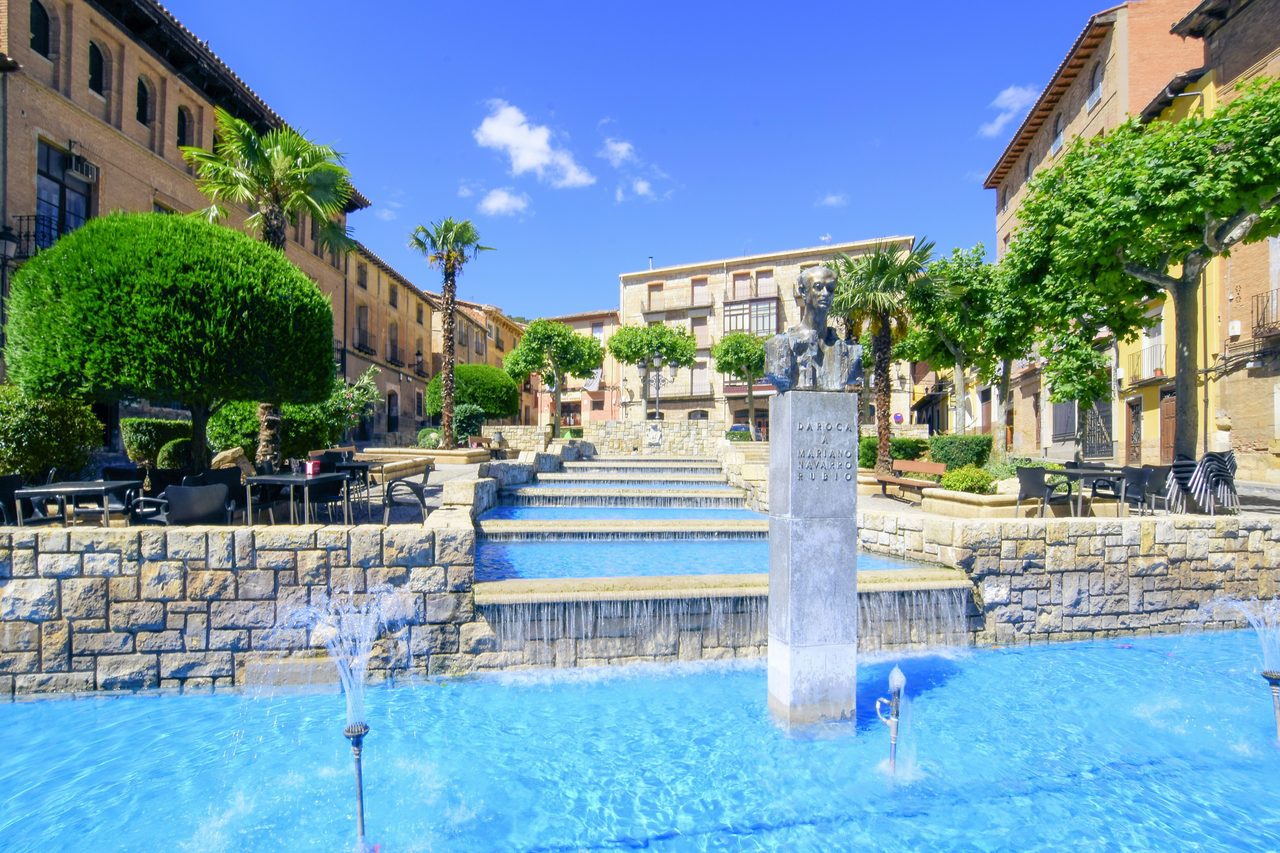
World · 21 Places · Best May–June and September–October
Aragon
Aragon is a landlocked autonomous community in northeastern Spain stretching from the crest of the Pyrenees in the north to the semi-arid steppes of the Ebro basin in the center and the rugged Iberian System in the south. Its capital Zaragoza holds two-thirds of the regional population and anchors a rich tapestry of Mudéjar Islamic-Gothic architecture recognized by UNESCO. Beyond the city, medieval hilltop villages such as Alquézar and Aínsa overlook river gorges, Ordesa y Monte Perdido National Park offers some of Iberia's finest high-altitude scenery, and Cañón del Río Ara draws canyoneers from across Europe.
Aragon occupies a strategic corridor between Iberia's Meseta plateau and the Mediterranean coast. The Ebro River bisects the region, creating fertile plains famous for stone-fruit, olives, and the vines of the Cariñena and Campo de Borja D.O. appellations. Three distinct geographic zones—Pyrenean high country, Ebro basin, and the southern Iberian ranges—give the region extraordinary ecological diversity. The medieval Crown of Aragon was once a Mediterranean empire spanning Sicily and Naples; its architectural legacy survives in dozens of Mudéjar bell towers, Romanesque monasteries, and the Moorish Aljafería palace in Zaragoza. Aragon combines accessible mountain adventure, world-class Romanesque art, and genuine Spanish small-town hospitality with far fewer crowds than coastal Spain.
Capital
Zaragoza
Largest city
Zaragoza
Population
1,326,000
Languages
Spanish (Castilian), Aragonese, Catalan (in eastern fringe)
The 21 destinations our editors recommend — from iconic landmarks to under-the-radar finds.
Basílica de Nuestra Señora del Pilar
This is the church that gives Zaragoza its skyline: a vast Baroque basilica on the Ebro river, built around a pillar where tradition holds the Virgin Mary appeared to Saint James. Its eleven domes and four corner towers were largely shaped by the Churriguera family and later finished with input from Goya, who painted part of the ceiling fresco. Inside, pilgrims queue to kiss a small exposed section of the original pillar behind the altar.
Palacio de la Aljafería
A fortified Islamic palace built in the 11th century for the Banu Hud dynasty, the Aljafería is one of the best-preserved examples of Taifa-era architecture in Spain, comparable in style to parts of the Alhambra though far less visited. It was later reworked by the Catholic Monarchs, who added a Mudéjar-Gothic upper floor, and today it houses the regional parliament of Aragon. The horseshoe arches and carved stucco of the original throne room are the main reason to visit.
Castillo de Loarre
Set on a limestone ridge overlooking the Aragonese plain, Loarre is one of the best-preserved Romanesque castles in Europe, built in the 11th century by Sancho III and Ramiro I as both a military stronghold and a monastery. Its long curtain walls, cylindrical towers, and the crypt-like church of Santa María de la Peña give it a starkly fortified character rather than a decorative one. The site was used as a filming location for scenes in Ridley Scott's Kingdom of Heaven.
Ordesa y Monte Perdido National Park
A glacial canyon in the central Pyrenees carved by the Arazas river, Ordesa was one of Spain's first national parks, designated in 1918, and its limestone cliffs and beech-fir forests sit beneath Monte Perdido, one of the highest peaks in the range. The main valley trail follows the river past a series of waterfalls, including the Cola de Caballo at the head of the valley. It's a full-day hiking destination rather than a quick stop.
Alquézar
A medieval village in the Sierra de Guara built on a rock outcrop above the Vero river gorge, Alquézar grew up around a Moorish fortress that was later converted into a collegiate church. Its stone streets, arcaded plaza, and the church cloister with faded Gothic frescoes make it one of the more architecturally intact villages in the region. The village is also the main access point for canyoning routes into the Vero gorge below.
Aínsa Historic Quarter
Aínsa's old town sits on a hill at the meeting point of the Cinca and Ara rivers, its cobbled Plaza Mayor ringed by stone arcades and anchored by the Romanesque church of Santa María. The quarter retains its medieval street plan almost intact, with a ruined castle at one end offering views toward the Pyrenean foothills. It functions as a gateway town for the Sobrarbe region and the approach to Ordesa.
Recommended itineraries
Pick a length, follow the route. Each itinerary balances headline sights with breathing room.
5-Day Aragon Explorer
Day 1Arrive in Aragon, explore city center
Day 2Visit top attractions and museums
Day 3Day trip to nearby highlights
Day 4Local markets and hidden gems
Day 5Final sightseeing, departure
7-Day Classic Aragon
Days 1-2Aragon city highlights
Days 3-4Regional exploration
Days 5-6Cultural immersion and local experiences
Day 7Return and departure
14-Day Ultimate Aragon
Days 1-3Aragon comprehensive city tour
Days 4-6Northern region exploration
Days 7-9Eastern highlights
Days 10-12Southern attractions
Days 13-14Return to Aragon, departure
Where to stay in Aragon
Three tiers, every traveller covered — from cost-conscious to flagship hotels.
Budget €50–€95/day (~$55–$104)
Hostels, budget hotels, and guesthouses offer affordable stays without sacrificing experience.
Mid-range €130–€240/day (~$142–$262)
Boutique hotels and well-located accommodations provide comfort and convenience at reasonable prices.
Luxury €300–€630/day (~$328–$688)
World-class resorts and premium hotels deliver unforgettable experiences.
NH Collection Zaragoza Grand Hotel
Zaragoza city center · €120–€220/night (~$131–$240)
Cafés, neighbourhood gems, and tasting menus worth the table reservation.
La Rinconada de Lorenzo
Aragonese · €20–€35/person (~$22–$38)
A straightforward Aragonese dining room in Zaragoza built around roasting and slow-cooked regional dishes rather than tapas or fusion plates. The kitchen leans on the wood-fired oven for its roasts, and the room is set up for sit-down meals rather than quick bites.
Casa Lac
Traditional Aragonese · €30–€50/person (~$33–$55)
One of the oldest continuously operating restaurants in Zaragoza, occupying a historic building near the Coso with a formal, old-fashioned dining room of dark wood and white tablecloths. The menu stays close to Aragonese classics like salt cod and slow-cooked vegetable stews rather than following current trends.
Restaurante Callizo
Modern Aragonese / Creative · €45–€70/person (~$49–$76)
A tasting-menu restaurant in the hilltop town of Aínsa that builds its cooking around Pyrenean ingredients - wild mushrooms, mountain herbs, and local truffle - reworked into contemporary plating. The setting is intimate, occupying a historic stone building in the old town, and the pace of the meal is deliberately slow, multi-course.
La Mar de Tapas
Tapas / Spanish · €2–€5/tapa (~$2.20–$5.50)
El Cachirulo
Traditional Aragonese · €35–€55/person (~$38–$60)
A large, long-running restaurant on the outskirts of Zaragoza best known for pairing traditional Aragonese roasts with folkloric jota performances, making it as much a night out as a meal. The scale of the place suits groups and set-menu dining more than an intimate dinner.
A modern Spanish kitchen in Zaragoza that reworks regional ingredients - Cariñena wine reductions, Ibérico pork, Pyrenean cheeses - into contemporary, plated-course cooking rather than the roasts and stews of the city's traditional houses. The dining room favors a clean, contemporary look over the wood-and-tile style of the older restaurants nearby.
Zaragoza is well connected by high-speed AVE rail (Madrid 1.5 hrs, Barcelona 1.5 hrs). Regional buses link major towns. The Pyrenean valleys require a car. Zaragoza has a tram network and urban bus system.
Budget breakdown
Daily spend by tier in EUR, broken out by category.
Category
Budget
Mid-range
Luxury
Accommodation
€25–€45/night (~$27–$49)
€70–€130/night (~$76–$142)
€150–€350/night (~$164–$382)
Food (per day)
€15–€25/day (~$16–$27)
€30–€50/day (~$33–$55)
€70–€120/day (~$76–$131)
Transportation
€5–€10/day (~$5–$11)
€15–€30/day (~$16–$33)
€40–€80/day (~$44–$87)
Activities
€5–€15/day (~$5–$16)
€15–€30/day (~$16–$33)
€40–€80/day (~$44–$87)
Daily total
€50–€95/day (~$55–$104)
€130–€240/day (~$142–$262)
€300–€630/day (~$328–$688)
Best time to visit Aragon
Weather through the year in Spain
Best timeShoulderWorth avoiding
Average daytime temperature in °C. Figures are for Spain.
Spring and autumn offer moderate temperatures, wildflower meadows, and lower prices. Ski season in the Pyrenees runs December–April.
Essential travel tips
Book AVE trains 2–4 weeks ahead for the best fares via Renfe.com
Festivals fill Zaragoza hotels: book early for Fiestas del Pilar (October 12)
A rental car is essential for visiting Ordesa, Loarre Castle, and Pyrenean villages
Most restaurants serve lunch 2–4 pm and dinner from 9 pm
Many museums close Monday; verify hours at official websites
Hidden gems
Off-the-beaten-path corners most travellers miss.
Ruta del Tambor y el Bombo (Bajo Aragón)
An intense Holy Week drumming ritual where dozens of towns beat drums for days straight — a declared Intangible Cultural Heritage event with no tourist overlay.
Híjar, Teruel
Congosto de Ventamillo
A dramatic limestone gorge cut by the Ésera River north of Graus, accessible by a riverside path, virtually unknown outside Spain.
Huesca
Monasterio de San Juan de la Peña
Romanesque monastery tucked under an overhanging cliff face, legendary burial site of Aragonese kings, well off the main tourist circuit.
Huesca
Safety information
INFO
Keep photocopies of your passport separate from the original
INFO
Use hotel safes for valuables; pickpocketing occurs near Basílica del Pilar during festivals
INFO
Tap water is safe to drink throughout Aragon
INFO
Emergency number for all services: 112
Frequently asked questions
Is Aragon safe to visit in 2026?
Spain's Foreign Ministry classifies Aragon as safe for travel. The UK FCDO, US State Department, and Australian DFAT all assess Spain at their lowest risk tier as of 2026. Zaragoza has a lower crime rate than Madrid or Barcelona. The principal risks are opportunistic pickpocketing near Basílica del
What is the best time to visit Aragon?
The best time to visit Aragon is May–June and September–October. Zaragoza has a semi-arid continental climate (Köppen BSk). Summers are hot and dry (July average 33°C/91°F, peaks to 42°C/108°F). Winters are cold with frost but little snow (January average 8°C/46°F)
What currency is used in Aragon?
The currency in Aragon is the Euro (EUR). ATMs are widely available in cities and tourist areas. Credit cards are accepted at most hotels and restaurants, but carry cash for markets and smaller establishments.
What language is spoken in Aragon?
The main language(s) spoken in Aragon: Spanish (Castilian), Aragonese, Catalan (in eastern fringe). In tourist areas, English is generally understood. Learning a few basic phrases in the local language is appreciated by locals.
What are the top attractions in Aragon?
The top attractions in Aragon include Basílica de Nuestra Señora del Pilar, Palacio de la Aljafería, Castillo de Loarre, Ordesa y Monte Perdido National Park, and Alquézar. Each offers a unique experience, from historic landmarks to natural wonders.