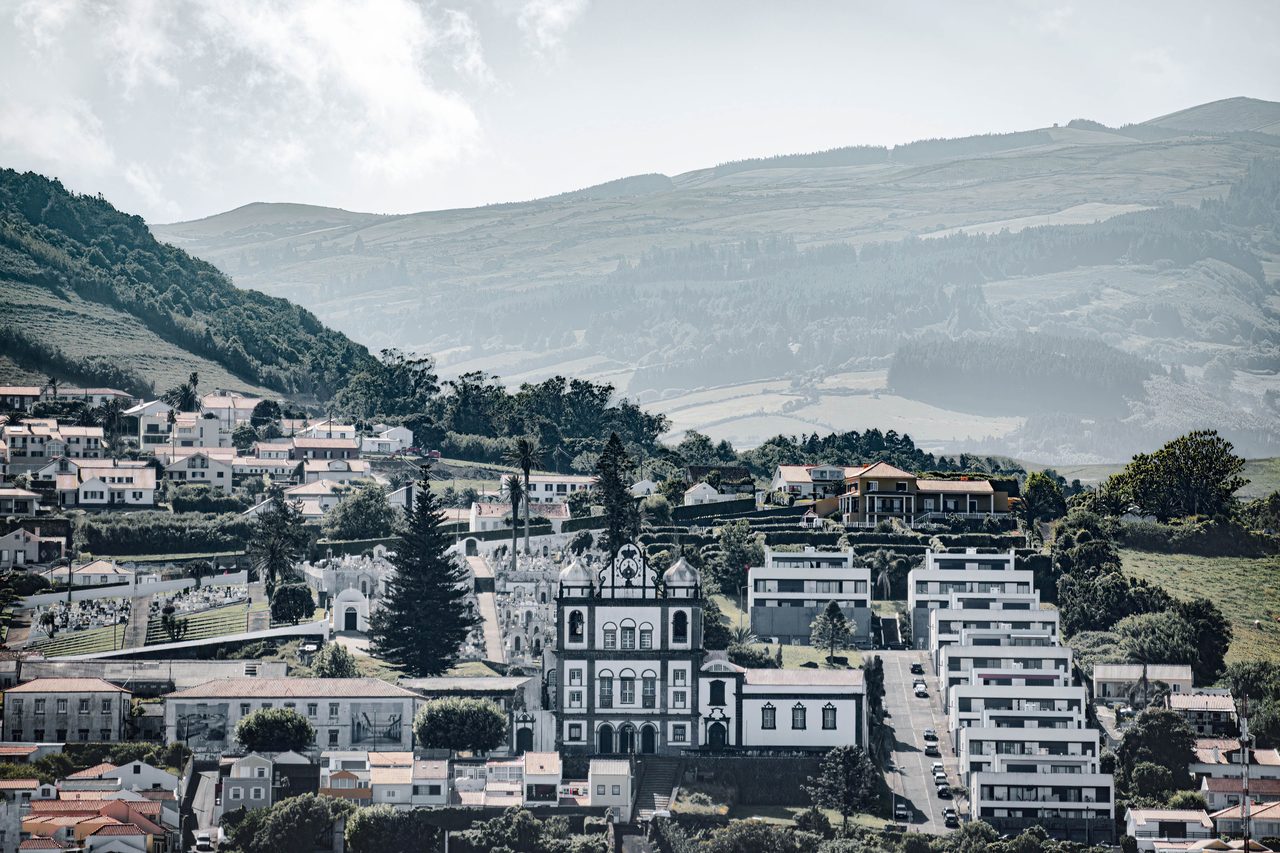
The Azores (Açores) are a chain of nine volcanic islands scattered across the mid-Atlantic, roughly 1,400 km west of mainland Portugal. Known for crater lakes, dramatic sea cliffs, thermal springs, and green pastureland, the archipelago offers whale watching, hiking, and diving in a landscape often compared to Ireland and Hawaii combined. Ponta Delgada, on São Miguel, is the archipelago's largest city and main gateway.
The Azores archipelago is made up of nine volcanic islands grouped into three clusters: the Eastern Group (São Miguel and Santa Maria), the Central Group (Terceira, Faial, Pico, São Jorge, and Graciosa), and the Western Group (Flores and Corvo). São Miguel, the largest island, is home to the crater lakes of Sete Cidades, the geothermal village of Furnas, and the capital Ponta Delgada. Pico, dominated by Portugal's highest mountain, produces UNESCO-listed vineyard wine grown in volcanic stone enclosures, while Faial's marina at Horta is a legendary mid-Atlantic sailing stop. The islands share a mild, rainy, changeable oceanic climate, lush green landscapes, hydrangea-lined roads, and some of the best whale and dolphin watching in Europe. Travel between islands is by short regional flights or interisland ferries, and each island rewards a slower, nature-focused pace rather than a checklist of sights.
Capital
Ponta Delgada
Largest city
Ponta Delgada
Population
~236,000
Languages
Portuguese
Currency
Euro
Time zone
Azores Time, UTC-1 (one hour behind mainland Portugal)
The 24 destinations our editors recommend — from iconic landmarks to under-the-radar finds.
Miradouro da Vista do Rei (Sete Cidades)
The most famous viewpoint in the Azores, perched on the southern rim of the Sete Cidades caldera at roughly 656 meters above sea level. It overlooks the twin crater lakes, Lagoa Azul and Lagoa Verde, which appear blue and green side by side inside the same volcanic basin. An abandoned mid-century hotel, the Monte Palace, stands beside the viewpoint and is a well-known photo subject in its own right.
Lagoa do Fogo
A crater lake sitting inside a dormant volcano in the Serra de Água de Pau, part of a protected nature reserve near the geographic center of São Miguel. The lake is one of the highest and least developed of the island's crater lakes, ringed by steep, largely untouched slopes, and reachable by a marked hiking trail down to its shore.
Terra Nostra Park
A historic botanical garden in the Furnas valley dating to the 18th century, spread across more than 12 hectares of subtropical planting, camellia collections, and a large thermal swimming pool fed by iron-rich, mineral-warm spring water that stains the water a distinctive orange-brown. Visitors can walk the garden paths and bathe in the heated pool on the same ticket.
Poça da Dona Beija
A set of open-air thermal pools fed by natural hot springs on the edge of Furnas, landscaped with small waterfalls and changing facilities. The iron-rich water runs warm year-round, and the pools are popular with both visitors and locals for a soak after exploring the surrounding valley.
Caldeira Velha
A forested thermal park on the lower slopes of the Lagoa do Fogo volcano, centered on a warm waterfall that cascades into a natural bathing pool ringed by ferns and hydrangeas. It is one of the more scenic hot-spring sites on São Miguel, set directly beside the main road up to Lagoa do Fogo.
Gruta do Carvão
A lava tube running beneath the streets of Ponta Delgada, formed by a volcanic eruption from the Picos volcanic system thousands of years ago. It is one of the longest known urban lava tubes in the world and is visited on guided walks that explain the island's volcanic formation.
Recommended itineraries
Pick a length, follow the route. Each itinerary balances headline sights with breathing room.
5-Day Azores Explorer
Day 1Arrive in Azores, explore city center
Day 2Visit top attractions and museums
Day 3Day trip to nearby highlights
Day 4Local markets and hidden gems
Day 5Final sightseeing, departure
7-Day Classic Azores
Days 1-2Azores city highlights
Days 3-4Regional exploration
Days 5-6Cultural immersion and local experiences
Day 7Return and departure
14-Day Ultimate Azores
Days 1-3Azores comprehensive city tour
Days 4-6Northern region exploration
Days 7-9Eastern highlights
Days 10-12Southern attractions
Days 13-14Return to Azores, departure
Where to stay in Azores
Three tiers, every traveller covered — from cost-conscious to flagship hotels.
Budget €65 ($70)
Hostels, budget hotels, and guesthouses offer affordable stays without sacrificing experience.
Mid-range €150 ($162)
Boutique hotels and well-located accommodations provide comfort and convenience at reasonable prices.
Luxury €380+ ($410+)
World-class resorts and premium hotels deliver unforgettable experiences.
Grand Hotel Acores Atlantico
Ponta Delgada marina · $$$
A five-star seafront hotel opposite the marina in Ponta Delgada, offering direct Atlantic views, an indoor and outdoor pool, and a spa within walking distance of the historic city centre.
A design hotel on the Ponta Delgada waterfront known for its black-stone rooftop infinity pool and panoramic marina and Atlantic views, formerly branded as the Azor Hotel.
A boutique hotel in the historic centre of Ponta Delgada celebrating Azorean art and craft, with an indoor saltwater pool, spa, and steam room a few minutes from the harbour.
Cafés, neighbourhood gems, and tasting menus worth the table reservation.
Alcides Restaurant
Azorean steakhouse · $$
A long-running, family-run steakhouse in central Ponta Delgada, part of a small hotel, known island-wide for its Azorean-style steak served on a hot volcanic stone with salt-crusted red pepper and garlic. Also serves morcela (blood sausage) with fresh local pineapple. A meal runs roughly EUR 20-30 (approx USD 22-32) per person.
Restaurante Mariserra
Azorean seafood · $$
A coastal seafood restaurant in the São Roque neighbourhood east of central Ponta Delgada, serving grilled local fish, seafood rice and bacalhau to a mostly local crowd. Mains run about EUR 15-25 (approx USD 16-27).
Tasquinha Vieira
Contemporary Azorean · $$
A small, contemporary tasquinha in Ponta Delgada's old town reworking Azorean staples with modern touches, such as açorda with swordfish and mussels in coconut curry. Plates run about EUR 12-20 (approx USD 13-22).
Petiscaria O Calheta
Modern Azorean petiscos · $$
A modern petiscaria in central Ponta Delgada serving small-plate Azorean dishes with European-influenced technique, including smoked fish croquettes, moray eel with charred greens and octopus with polenta. Sharing plates run EUR 8-16 (approx USD 9-17) each.
Cais 20 Restaurant
Azorean beef and pork · $$
A cosy seaside restaurant on Ponta Delgada's waterfront specialising in Azorean beef and pork, grilled simply to let the quality of the local meat stand out. A meal runs roughly EUR 18-28 (approx USD 19-30).
Boca de Cena
Seafood, Mediterranean and Portuguese · $$
A restaurant in Ponta Delgada's historic district blending Portuguese, Mediterranean and seafood-focused dishes in a relaxed dining room. Mains run about EUR 14-24 (approx USD 15-26).
The Azores are a chain of nine volcanic islands spread across roughly 600 km of the mid-Atlantic, and there is no bridge or tunnel connecting any of them - moving between islands always means a flight with Azores Airlines or, for the closely grouped Faial, Pico, and São Jorge 'Triangle Islands', a short Atlânticoline ferry crossing. Within each island, a rental car is by far the most practical way to reach volcanic crater lakes, coastal villages, and hiking trailheads, since public bus networks are thin and built around residents' commuting hours rather than sightseeing. Ponta Delgada on São Miguel is the main international gateway and the largest town in the archipelago, with Angra do Heroísmo on Terceira and Horta on Faial as the next-largest hubs.
Budget breakdown
Daily spend by tier in EUR, broken out by category.
Category
Budget
Mid-range
Luxury
Accommodation
€28 ($30)
€85 ($92)
€230 ($248)
Food (per day)
€18 ($19)
€35 ($38)
€90 ($97)
Transportation
€12 ($13)
€18 ($19)
€35 ($38)
Activities
€7 ($8)
€12 ($13)
€25 ($27)
Daily total
€65 ($70)
€150 ($162)
€380+ ($410+)
Best time to visit Azores
Weather through the year in Portugal
Best timeShoulderWorth avoiding
Average daytime temperature in °C. Figures are for Portugal.
Essential travel tips
Book interisland flights well ahead in summer, as SATA Air Açores seats sell out during peak season
Pack layers and rain protection regardless of season, since Azorean weather shifts quickly
Reserve a rental car in advance on São Miguel and Terceira, especially in July and August
Try cozido das Furnas, slow-cooked in volcanic steam, and local Pico wine or São Miguel pineapple liqueur
Hidden gems
Off-the-beaten-path corners most travellers miss.
Miradouro do Pico do Carvao above Sete Cidades
before the tour buses arrive
Serra do Cume viewpoint
over Terceira's patchwork pastures
Monte Brasil summit
over Angra do Heroismo's bay
Poca da Dona Beija thermal pools
in Furnas after 6PM
Biscoitos natural volcanic-rock swimming pools
on Terceira's north coast
The Horta marina breakwater murals
painted by generations of sailors
Skip the crowded Vista do Rei midday parking lot
arrive at sunrise or late afternoon for the same view without the tour buses
Vista do Rei over the Sete Cidades twin lakes
Ponta Delgada's Avenida do Mar marina
Mosteiros black-sand coast
São Miguel
Monte Brasil summit, Angra do Heroismo
Capelinhos lighthouse ruins, Faial
Safety information
INFO
The Azores rank consistently among the safest destinations in the world, ranking in the top tier of the Global Peace Index alongside mainland Portugal
INFO
Check trail and weather conditions before hiking, since fog and heavy rain can roll in quickly at higher elevations such as Sete Cidades, Lagoa do Fogo, and Pico Mountain
INFO
Wear sturdy, closed footwear on volcanic terrain, which is often sharp, wet, and uneven, especially on crater rim trails
INFO
Respect posted warnings at natural sea pools (piscinas naturais) and coastal viewpoints, where sudden swells and strong currents can sweep people off rocks
INFO
Book whale and dolphin watching trips only with licensed operators who follow marine wildlife distance and interaction regulations
INFO
Carry a light rain jacket year-round, since Azorean weather can change within the same day, particularly at altitude
INFO
Take care around geothermal features in Furnas; fumaroles and boiling mud pools can cause serious burns if approached too closely
INFO
Driving on narrow, winding volcanic roads requires caution, especially in mist or rain; watch for livestock crossing rural roads
INFO
Interisland ferries and some flights can be canceled at short notice due to Atlantic swell or wind; build flexibility into island-hopping plans
INFO
Keep valuables out of sight in parked rental cars at trailheads and viewpoints, as opportunistic theft from vehicles occasionally occurs
Frequently asked questions
Do I need a visa to visit the Azores?
Entry requirements follow Portugal/Schengen rules. EU citizens need only a national ID card; non-EU visitors from many countries, including the US, Canada, UK, and Australia, may stay visa-free for up to 90 days within a 180-day period; others require a Schengen visa. Requirements vary by nationality, so check with the nearest embassy or the official immigration website before traveling.
What is the best way to island-hop in the Azores?
Interisland flights operated by SATA Air Açores link all nine islands from Ponta Delgada and typically take under an hour. In the Central Group, Atlânticoline ferries connect Faial, Pico, São Jorge, and Terceira, mainly from June through September. A rental car is recommended on each island to reach trailheads, crater lakes, and viewpoints not served by public buses.
What food is the Azores famous for?
The Azores are known for cozido das Furnas, a stew of meats and vegetables cooked slowly underground using volcanic heat. Other specialities include fresh tuna and limpets, São Jorge cheese, Pico Island wine grown in volcanic stone enclosures, and São Miguel pineapples and tea, along with the local liqueur licor de ananás.
What are the top attractions in the Azores?
The top attractions in the Azores include the twin crater lakes of Sete Cidades, the geothermal village of Furnas, Pico Mountain and its UNESCO-listed vineyard landscape, the crater lake of Lagoa do Fogo, and Horta marina on Faial. Each island offers a different mix of volcanic scenery, hiking, and marine wildlife.