
On this page
About Casablanca
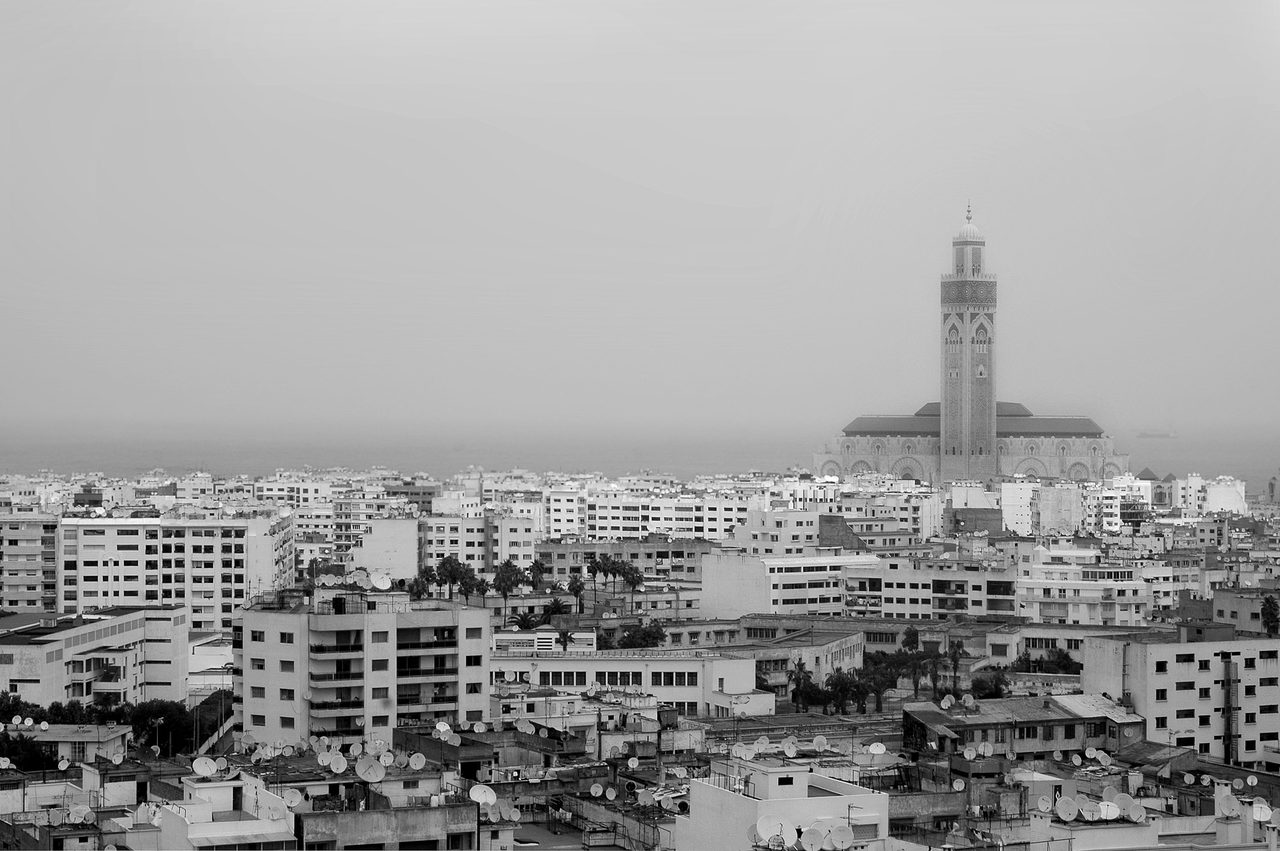
Casablanca is Morocco's largest city and its economic capital, a sprawling Atlantic port where the Hassan II Mosque, one of the largest mosques in the world, rises from the shoreline beside a compact Old Medina. The city grew under the French protectorate from 1912 and is known for its Mauresque and Art Deco downtown around Place Mohammed V, Boulevard Mohammed V and the Habous Quarter, a 1930s neo-traditional medina. The Corniche at Ain Diab holds beach clubs, seafood restaurants and the El Hank lighthouse, while Maarif, Gauthier and Anfa hold the boutiques, hotels and cafes. Casablanca has Morocco's busiest airport (Mohammed V, CMN), the high-speed Al Boraq train to Rabat and Tangier, four tram lines and two busway lines. It is a working business city rather than a postcard medina, and most visitors spend one to three days here before heading to Rabat, Marrakech or the coast.
- Capital
- Rabat (national capital); Casablanca is the largest city and economic capital of Morocco and the capital of the Casablanca-Settat region
- Largest city
- Casablanca
- Population
- approximately 3.4 million in the city proper and about 4.3 million in the wider prefecture (2024 census figures)
- Languages
- Arabic and Tamazight (Berber) are official; Moroccan Arabic (Darija) is spoken day to day; French is widely used in business, signage and restaurants; English is increasingly common in hotels and among younger residents
- Currency
- Moroccan Dirham (MAD) - a closed currency; it cannot be obtained or exchanged back outside Morocco, so convert cash at the airport, a bank or an authorized bureau de change and keep exchange receipts
- Time zone
- Morocco has been on UTC+1 for most of the year with a temporary shift to UTC+0 during Ramadan; Moroccan decrees reported in 2026 move the country to permanent UTC+0 from 20 September 2026, so travelers should confirm the offset on a phone or an official source before travel
Explore Casablanca by topic
Jump straight to the experience you're planning.
Best places to visit in Casablanca
The 15 destinations our editors recommend — from iconic landmarks to under-the-radar finds.
Casablanca Old Medina
Habous Quarter (Quartier des Habous)
Corniche Ain Diab
Villa des Arts de Casablanca
Rick's Café
Recommended itineraries
Pick a length, follow the route. Each itinerary balances headline sights with breathing room.
5-Day Casablanca Explorer
- Day 1Arrive in Casablanca, explore city center
- Day 2Visit top attractions and museums
- Day 3Day trip to nearby highlights
- Day 4Local markets and hidden gems
- Day 5Final sightseeing, departure
7-Day Classic Casablanca
- Days 1-2Casablanca city highlights
- Days 3-4Regional exploration
- Days 5-6Cultural immersion and local experiences
- Day 7Return and departure
14-Day Ultimate Casablanca
- Days 1-3Casablanca comprehensive city tour
- Days 4-6Northern region exploration
- Days 7-9Eastern highlights
- Days 10-12Southern attractions
- Days 13-14Return to Casablanca, departure
Where to stay in Casablanca
Three tiers, every traveller covered — from cost-conscious to flagship hotels.
Budget MAD 250-650/day (~$27-70)
Hostels, budget hotels, and guesthouses offer affordable stays without sacrificing experience.
Mid-range MAD 1,050-2,450/day (~$113-263)
Boutique hotels and well-located accommodations provide comfort and convenience at reasonable prices.
Luxury MAD 4,000-10,300/day (~$430-1,108)
World-class resorts and premium hotels deliver unforgettable experiences.
Hyatt Regency Casablanca
Five-star hotel on Place des Nations Unies, within walking distance of the Old Medina and the central market, with an indoor pool and spa.
Check rates on Booking.comSofitel Casablanca Tour Blanche
Five-star hotel near the port and the Old Medina with Atlantic views from upper floors, a pool and a spa.
Check rates on Booking.comFour Seasons Hotel Casablanca
Oceanfront five-star hotel on the Corniche inside the Anfa Place development, with an outdoor pool, spa and direct beach-promenade access.
Check rates on Booking.comKenzi Tower Hotel
Five-star tower hotel in the Twin Center complex in Maarif, close to the main business district and shopping streets.
Check rates on Booking.comWhere to eat in Casablanca
Cafés, neighbourhood gems, and tasting menus worth the table reservation.
Rick's Café
La Sqala
Le Cabestan
La Taverne du Dauphin
Al Mounia
Restaurant du Port de Pêche
Book a food tour in Casablanca We may earn a commission from bookings made through this link.
Getting around Casablanca
Mohammed V International Airport (CMN) lies about 30 km south-east of the center and is linked to Casa Voyageurs and Casa Port stations by an ONCF airport train. The city is served by four Casatramway lines and two Busway lines, plus red petit taxis for trips within the city, white grands taxis for longer rides and ride apps such as inDrive and Careem.
Budget breakdown
Daily spend by tier in MAD, broken out by category.
| Category | Budget | Mid-range | Luxury |
|---|---|---|---|
| Accommodation | MAD 150-350/night (~$16-38) | MAD 600-1,400/night (~$65-151) | MAD 2,500-6,000/night (~$269-645) |
| Food (per day) | MAD 80-150/day (~$9-16) | MAD 250-500/day (~$27-54) | MAD 700-1,500/day (~$75-161) |
| Transportation | MAD 15-40/day (~$2-4) | MAD 60-150/day (~$6-16) | MAD 300-800/day (~$32-86) |
| Activities | MAD 0-120/day (~$0-13) | MAD 150-400/day (~$16-43) | MAD 500-2,000/day (~$54-215) |
| Daily total | MAD 250-650/day (~$27-70) | MAD 1,050-2,450/day (~$113-263) | MAD 4,000-10,300/day (~$430-1,108) |
Best time to visit Casablanca
Weather through the year in Morocco
Best time Shoulder Worth avoiding
Average daytime temperature in °C. Figures are for Morocco.
Spring and autumn are best.
The sea is cold for most of the year; swimming is best June to September.
Essential travel tips
- Carry cash: small shops, taxis and Old Medina stalls usually do not take cards, while hotels, malls and larger restaurants do; ATMs are at Morocco Mall, Boulevard Zerktouni and Casa Voyageurs station
- Dress modestly with shoulders and knees covered for the Hassan II Mosque, the Habous Quarter and religious sites
- Book the Hassan II Mosque guided tour for the morning, because visits close at prayer times and the interior closes early in the afternoon
- The ONCF airport train is the cheapest way from CMN to the center; tickets are sold at the airport station
- Allow time for traffic: rush hours 8-10am and 5-8pm can double taxi travel times
- Many restaurants close between lunch and dinner, and seafood is best at lunchtime in Marche Central
Safety information
Decline unofficial guides and book mosque tours at the official ticket office
Use metered petit taxis or ride apps
Keep valuables in zipped pockets and away from the road side
Avoid lonely streets in the port area after dark
Swim only at lifeguarded beaches
Keep copies of passport and travel insurance details
Frequently asked questions
Is Casablanca safe to visit in 2026?
Casablanca is a large city where tourists mostly face petty crime and scams rather than violent crime.
What is the best time to visit Casablanca?
The best time to visit Casablanca is April. Casablanca has a mild Mediterranean-oceanic climate moderated by the Atlantic, with warm dry summers and mild wet winters.
Do I need a visa to visit Casablanca?
Citizens of the US, UK, Canada, Australia, the EU/Schengen area and many other countries may enter Morocco visa-free for up to 90 days; no advance application or fee is required, only a passport valid for at least 3 to 6 months beyond arrival (6 months is the safe rule). Travelers who need a visa can check eligibility on the Moroccan e-visa portal (acces-maroc.ma). Staying beyond 90 days requires a residence permit application before the visa-free period ends. Requirements vary by nationality, so check with your nearest embassy or the official immigration website before traveling.
What currency is used in Casablanca?
The currency in Casablanca is the Moroccan Dirham (MAD) - a closed currency; it cannot be obtained or exchanged back outside Morocco, so convert cash at the airport, a bank or an authorized bureau de change and keep exchange receipts (MAD). ATMs are widely available in cities and tourist areas. Credit cards are accepted at most hotels and restaurants, but carry cash for markets and smaller establishments.
What language is spoken in Casablanca?
The main language(s) spoken in Casablanca: Arabic and Tamazight (Berber) are official; Moroccan Arabic (Darija) is spoken day to day; French is widely used in business, signage and restaurants; English is increasingly common in hotels and among younger residents. In tourist areas, English is generally understood. Learning a few basic phrases in the local language is appreciated by locals.
What are the top attractions in Casablanca?
The top attractions in Casablanca include Hassan II Mosque, Casablanca Old Medina, Habous Quarter (Quartier des Habous), Corniche Ain Diab, and Villa des Arts de Casablanca. Each offers a unique experience, from historic landmarks to natural wonders.