
Korakuen Garden
One of Japan's 'three great gardens,' Korakuen sits on an island in the Asahi River next to Okayama Castle, with wide lawns, tea houses, a plum orchard and borrowed views of the castle keep.
World · 12 Places · Best March–May
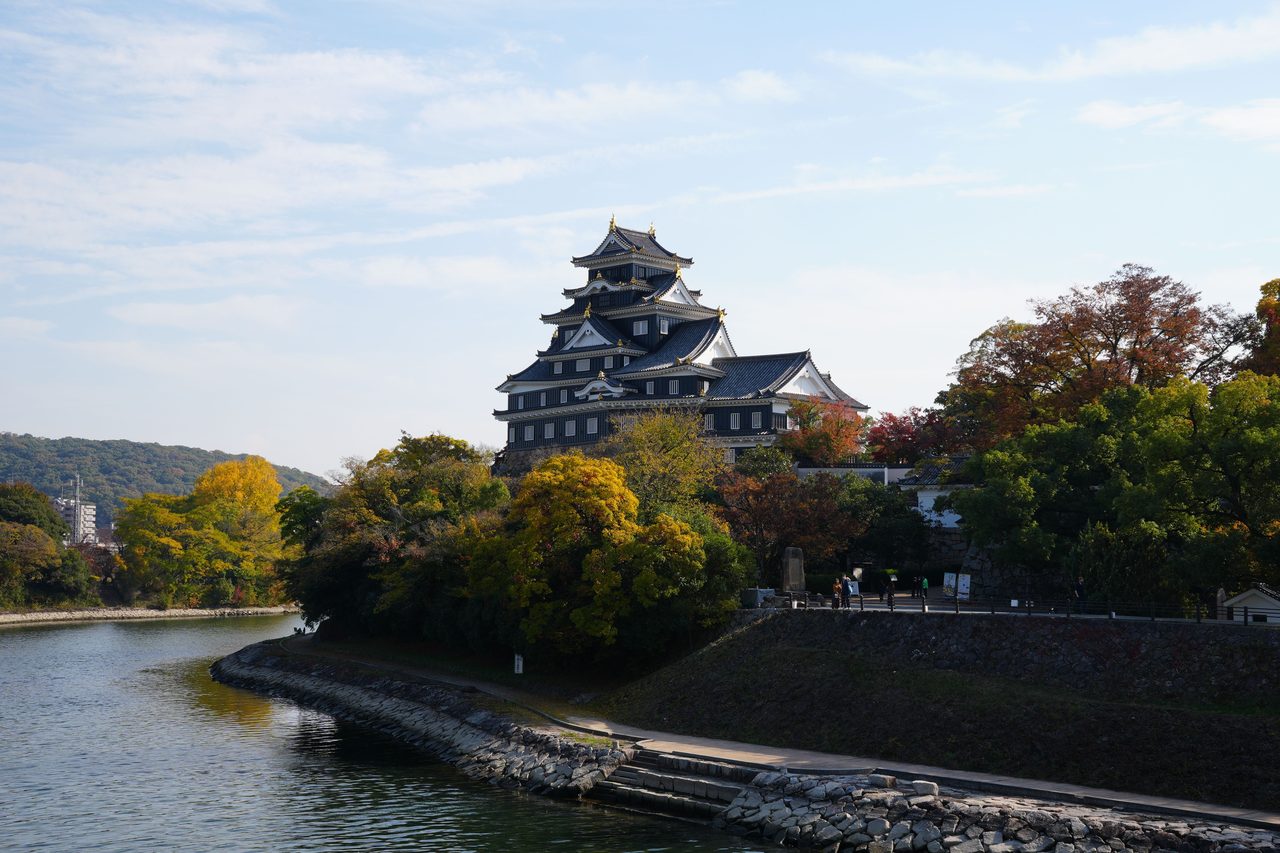
Okayama Prefecture, nestled in the Chugoku region of western Honshu, blends feudal heritage with pastoral beauty. The city anchors around Korakuen—one of Japan's three great landscape gardens—and Okayama Castle, the striking 'Crow Castle' finished in black lacquered wood. Nearby Kurashiki preserves a canal-lined merchant quarter frozen in the Edo period, while the fertile Kibi Plain produces the country's finest peaches and Muscat grapes. Mild weather, efficient Shinkansen access, and a relaxed pace make Okayama an ideal gateway for exploring the San'yo coast and beyond.
Okayama sits at the crossroads of western Japan, offering visitors a compelling mix of samurai history, refined garden culture, and an exceptionally prosperous food scene rooted in the Seto Inland Sea. Its compact city centre can be explored on foot or by tram, while day trips to Kurashiki, Naoshima art island, and Hiroshima are all within easy range. The prefecture earns the nickname 'Land of Sunshine' for having one of Japan's lowest average annual rainfall totals, making it a reliable destination year-round.
Jump straight to the experience you're planning.
The 12 destinations our editors recommend — from iconic landmarks to under-the-radar finds.
One of Japan's 'three great gardens,' Korakuen sits on an island in the Asahi River next to Okayama Castle, with wide lawns, tea houses, a plum orchard and borrowed views of the castle keep.
Nicknamed 'Crow Castle' for its black-lacquered exterior, this reconstructed keep stands on the Asahi River in the Marunouchi district, a short walk from Korakuen Garden.
An Edo-period canal town of willow-lined waterways and white-walled kura storehouses, about 15 minutes from Okayama Station by JR Sanyo Line to Kurashiki Station.

Japan's first museum devoted to Western art, fronting the main canal in the Bikan Historical Quarter, with works by El Greco, Monet and Gauguin.

An ancient Shinto shrine on the Kibi Plain famed for its 360-metre covered corridor, linked to the Kibitsuhiko legend widely regarded as the basis for the Momotaro (Peach Boy) folktale.

A 17km cycling route across the Kibi Plain linking ancient shrines and burial mounds, starting near Bizen-Ichinomiya Station west of Okayama city.
Pick a length, follow the route. Each itinerary balances headline sights with breathing room.
Three tiers, every traveller covered — from cost-conscious to flagship hotels.
Hostels, budget hotels, and guesthouses offer affordable stays without sacrificing experience.
Boutique hotels and well-located accommodations provide comfort and convenience at reasonable prices.
World-class resorts and premium hotels deliver unforgettable experiences.
Cafés, neighbourhood gems, and tasting menus worth the table reservation.
Book a food tour in Okayama We may earn a commission from bookings made through this link.
Okayama is served by the San'yo Shinkansen (bullet train) stopping at Okayama Station, roughly 50 min from Hiroshima and 3.5 hours from Tokyo. Within the city, trams (Okaden), buses, and a free Loop Bus connect major attractions. Kurashiki is a 15-min JR express ride away.
Daily spend by tier in JPY, broken out by category.
| Category | Budget | Mid-range | Luxury |
|---|---|---|---|
| Accommodation | ¥3,500–¥6,000 (~$23–$40) | ¥8,000–¥15,000 (~$54–$100) | ¥20,000–¥60,000 (~$133–$400) |
| Food (per day) | ¥2,000–¥3,500 (~$13–$23) | ¥4,000–¥8,000 (~$27–$54) | ¥10,000–¥25,000 (~$67–$167) |
| Transportation | ¥500–¥1,000 (~$3–$7) | ¥1,000–¥2,000 (~$7–$13) | ¥3,000–¥8,000 (~$20–$54) |
| Activities | ¥500–¥1,500 (~$3–$10) | ¥1,500–¥3,000 (~$10–$20) | ¥5,000–¥15,000 (~$33–$100) |
| Daily total | ¥6,500–¥12,000 (~$43–$80) | ¥14,500–¥28,000 (~$97–$187) | ¥38,000–¥108,000 (~$254–$720) |
Best time Shoulder Worth avoiding
Average daytime temperature in °C. Figures are for Japan.
March–May (cherry blossoms, mild temperatures) and October–November (autumn foliage in Korakuen)
Okayama averages the fewest rainy days in Japan; even the rainy season (June) is milder here than most of the country. Winters are cool but rarely cold enough for snow.
Register with an embassy's travel registration service before visiting Japan (e.g., UK FCDO Locate at gov.uk/locate; US STEP at step.state.gov)
Keep a photocopy of a passport and travel insurance policy separate from the originals
Japan Post ATMs and 7-Eleven ATMs accept most foreign Visa, Mastercard, and Maestro cards, which are more reliable than international bank ATMs
Download the NHK World app before arriving for English-language emergency news and earthquake alerts
Carry an insurer's emergency number since Okayama emergency hospitals provide care regardless of insurance status and can arrange direct billing
During the rainy season (mid-June to mid-July) and typhoon season (August-September), monitor weather warnings before travelling to low-lying areas such as Mabi in Kurashiki, which suffered severe flooding in July 2018
Okayama is an extremely safe destination. Violent crime against tourists is virtually non-existent. The main practical risks are earthquakes (standard Japan advice applies), summer heat exhaustion, and occasional typhoons in August-September. Petty theft in busy transit hubs is rare but not unknown.
The best time to visit Okayama is March–May. Okayama enjoys one of Japan's mildest and sunniest climates, earning the prefecture the nickname 'Land of Sunshine' (Harenokuni). Annual rainfall is the lowest among all Japanese prefectures at around
The currency in Okayama is the Japanese Yen (JPY). ATMs are widely available in cities and tourist areas. Credit cards are accepted at most hotels and restaurants, but carry cash for markets and smaller establishments.
The main language(s) spoken in Okayama: Japanese. In tourist areas, English is generally understood. Learning a few basic phrases in the local language is appreciated by locals.
The top attractions in Okayama include Korakuen Garden, Okayama Castle (Ujo), Kurashiki Bikan Historical Quarter, Ohara Museum of Art, and Kibitsu Shrine. Each offers a unique experience, from historic landmarks to natural wonders.