
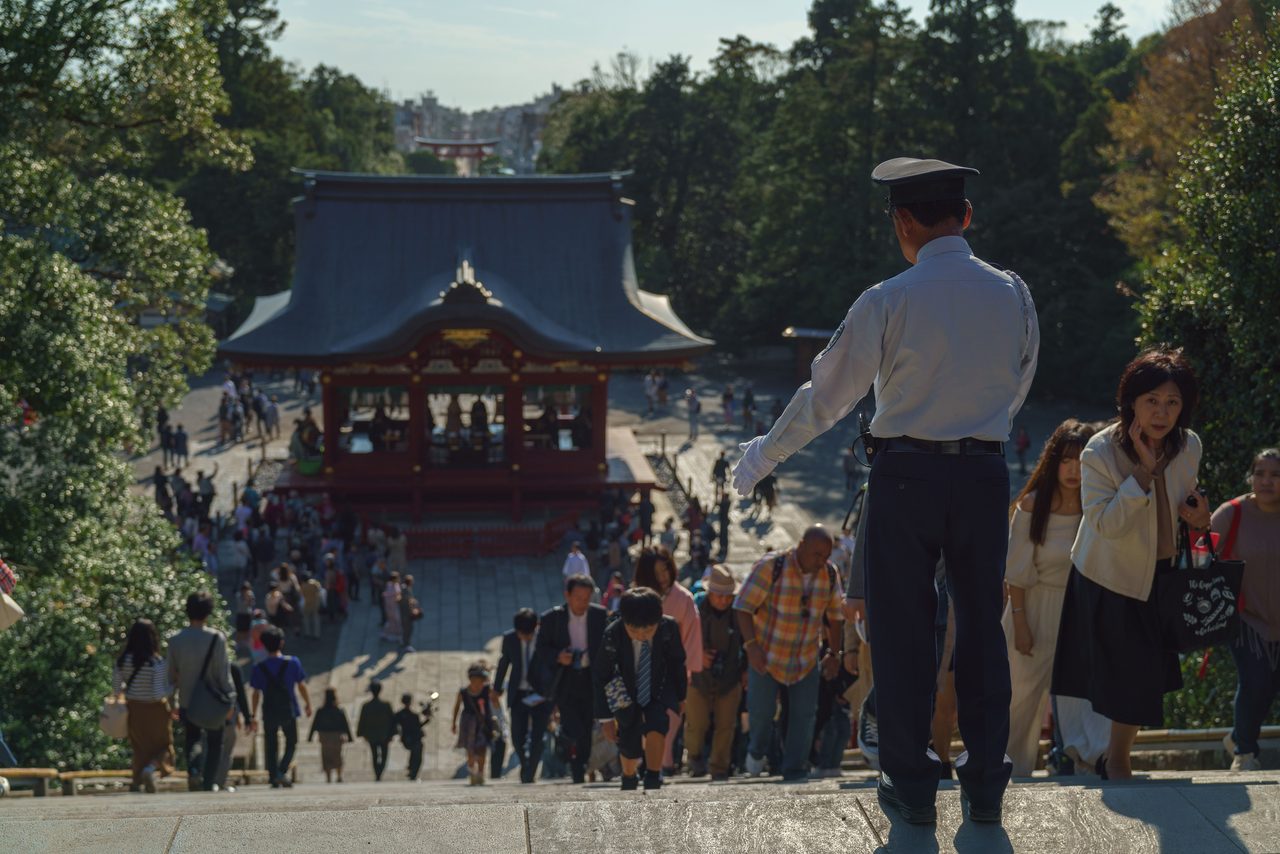
Osaki Hachimangu is a Shinto shrine at 4-6-1 Hachiman in Aoba-ku, Sendai, in Miyagi Prefecture, Japan. Date Masamune ordered its construction in 1607 and the main hall was completed in 1607 as a showcase of Momoyama-era architecture, which later earned it National Treasure status. The hall is raised on a stone base and finished in black lacquer with elaborate gold fittings, carved beams and a roof of heavy shingles, giving it a dramatic look against the forest of tall trees that surrounds it. It is considered one of the oldest surviving examples of the gongen-zukuri style in the Tohoku region. Visitors approach along a long stone path under a torii gate, past stone lanterns and a purification fountain, before reaching the main hall. A smaller worship hall and subsidiary shrines sit nearby, and the shrine sells amulets and fortune slips at an office near the main hall. The most striking event of the year is the Dontosai fire festival on January 14, when residents carry New Year decorations to a huge bonfire and men in white loincloths walk through the streets in the cold. The shrine is also crowded in the first days of January for hatsumode, the first shrine visit of the year, when long queues form along the approach. At other times it is calm, and the grounds can be explored in 45 minutes to an hour. Good photo angles include the view of the lacquered hall from the foot of the steps and the lantern-lined path in soft morning light. Weekday mornings are the quietest. Visitors should bow at the torii, rinse hands at the fountain and avoid photographing worshippers closely.
| Admission | Grounds free |
|---|---|
| Hours | Shrine grounds open daily; shrine office around 09:00-17:00; confirm locally |
| Typical visit | 45 minutes-1 hour |
| Best time | Early January for hatsumode crowds; January 14 for the Dontosai fire festival |
| Getting there | City bus from Sendai Station toward Hachiman (Osaki Hachimangu stop), or Namboku Line to Kita-Yobancho Station then about 20 minutes on foot |
| Address | 4-6-1 Hachiman, Aoba-ku, Sendai, Miyagi 980-0871 |
Location
4-6-1 Hachiman, Aoba-ku, Sendai, Miyagi 980-0871
38.2722, 140.8450 View on map
Highlights
- National Treasure main hall of black lacquer and gold dating from 1607
- Dontosai fire festival every January 14
- Tree-lined stone approach with lanterns and torii gate
- Hatsumode New Year visits with traditional stalls
Tips for visiting
- Avoid January 1-3 unless the hatsumode atmosphere is the goal; queues are long.
- For Dontosai on January 14, arrive early and dress very warmly.
- Bow at the torii and rinse hands at the fountain before approaching the hall.
- Weekday mornings give the quietest visit and the best light on the lacquer.
- Amulets and fortune slips are sold at the shrine office during office hours.
When to visit
Early January for hatsumode and January 14 for Dontosai are the liveliest dates. Quiet weekday mornings suit a calm visit in any other season.
Accessibility
The approach is a long gravel and stone path with some steps near the main hall. Wheelchair access to the main hall is limited.
Frequently asked questions
How long does a visit take?
Most visitors spend 45 minutes to an hour, including the approach, the main hall and the smaller shrines.
Is it worth it for kids?
Children generally enjoy the festival atmosphere in January and the open grounds. Outside festival days the shrine is quiet and best suited to a short visit.
Is photography allowed?
Photography of the buildings and grounds is generally accepted. Visitors should avoid close photos of worshippers and follow any signs near the main hall.