Gunma · 21 Places · Best May–June and late September–November
Gunma
Gunma Prefecture is Japan's hot spring capital, mountain playground, and silk heritage land — a landlocked prefecture north of Tokyo where volcanic peaks, therapeutic onsen, pristine highland forests, and the UNESCO World Heritage Tomioka Silk Mill define a destination unlike anywhere else in Japan.
Gunma Prefecture occupies the northwestern reaches of the Kanto region, flanked by volcanic mountain ranges on three sides that create a natural fortress of hot springs and highland scenery. Kusatsu Onsen, consistently ranked Japan's finest hot spring resort, draws visitors to its yubatake (hot water field) and the theatrical netsu-no-yu communal bathing ritual. The prefecture claims more than half of Japan's most beloved hot spring resorts: Ikaho, Shima, Minakami, Takaragawa, and Hoshi are all within an hour of each other. Beyond onsen, Gunma shaped the modern world through silk: the Tomioka Silk Mill, built in 1872 as Japan's first modern industrial facility, is now a UNESCO World Heritage Site that explains how this mountain prefecture drove Japan's industrialization. The Oze National Park in the north — Japan's largest highland wetland — rewards hikers with vast wooden boardwalk trails through pristine marshland. Mount Akagi, Mount Haruna, and Mount Myogi form Joshu's famous three mountains, each with distinct character and hiking trails. Gunma also produces Japan's favourite mascot: the Daruma doll, hand-painted in Takasaki and sold for good luck across the country.
The 21 destinations our editors recommend — from iconic landmarks to under-the-radar finds.
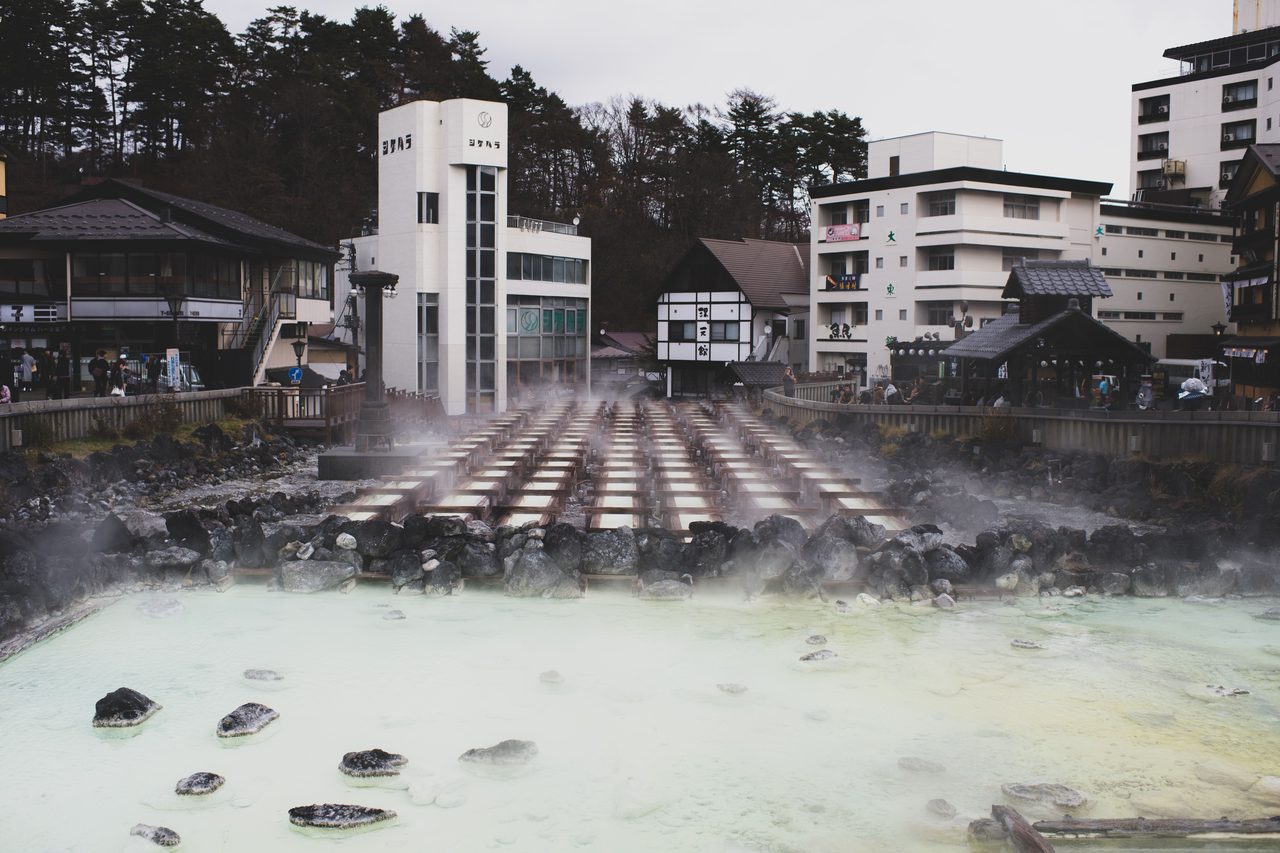
Kusatsu Onsen Yubatake (Hot Water Field)
Yubatake means 'hot water field,' and it is the literal and symbolic center of Kusatsu, one of Japan's most celebrated hot spring towns. Wooden channels called yuage-oke funnel scalding, sulfur-rich water down from the source, cooling it as it flows while releasing clouds of steam and a strong sulfur smell over the surrounding square. At night the wooden troughs and the gyokusendo channel are lit up, and the area is ringed by ryokan, footbaths, and souvenir shops that make it the natural starting point for exploring the town on foot.
Tomioka Silk Mill
Tomioka Silk Mill was Japan's first modern, mechanized silk-reeling factory, built by the Meiji government in 1872 with French engineer Paul Brunat overseeing the design and imported French machinery. It became a model for industrializing Japan's raw silk production and training a national workforce of female mill operatives, which is why UNESCO inscribed it as a World Heritage Site in 2014. Visitors walk through the brick cocoon warehouses and the reeling plant itself, seeing preserved Meiji-era industrial architecture that blends French building techniques with Japanese materials.
Oze National Park
Oze is a high-altitude wetland plateau straddling Gunma, Fukushima, and Niigata, protected as a national park for its expansive marshland ringed by beech and birch forest. Visitors move through the marsh on raised wooden boardwalks that protect the fragile peat bog beneath, passing ponds and open grassland with Mount Hiuchigatake and Mount Shibutsu visible on clear days. The best-known sight is the early-summer bloom of mizubasho (skunk cabbage), which draws hikers from across the country to the boardwalk trails.
Netsu-no-Yu Ritual Bathing
Netsu-no-Yu is a staged demonstration of yumomi, the traditional Kusatsu technique of stirring the naturally very hot spring water with long wooden paddles to cool it without diluting its mineral content. Performers in traditional dress rhythmically paddle the water in a large wooden bath while singing the Kusatsu bushi folk song that historically set the pace of the work. The show preserves a practice that was once a practical necessity for making the town's scalding water bathable, and it runs multiple short sessions a day at the Netsu-no-Yu hall next to Yubatake.
Ikaho Onsen Ishidan-dori (Stone Step Street)
Ishidan-dori is the stone staircase street that forms the spine of Ikaho Onsen, lined on both sides with ryokan, souvenir shops, and small eateries as it climbs the hillside. The street is built directly over the course of the hot spring water source, and its stepped layout dates back centuries as the town's organizing feature, culminating at Ikaho Shrine at the top. Walking the full run of stairs gives a sense of the town's layered, sloped geography that flat hot spring towns don't have.
Mount Akagi (Akagi-san)
Akagi is a large stratovolcano and one of Japan's designated 100 Famous Mountains, with a broad caldera at its summit area containing Lake Onuma. The Akagi Shrine sits on the lakeshore, connected to a small island by a footbridge, and is a popular destination in its own right separate from hiking the surrounding peaks. The mountain's outer slopes are also known for the Akagi toll road's hairpin turns, which draw driving and motorcycling visitors in addition to hikers heading to the crater lake area.
Recommended itineraries
Pick a length, follow the route. Each itinerary balances headline sights with breathing room.
5-Day Gunma Explorer
Day 1Arrive in Gunma, explore city center
Day 2Visit top attractions and museums
Day 3Day trip to nearby highlights
Day 4Local markets and hidden gems
Day 5Final sightseeing, departure
7-Day Classic Gunma
Days 1-2Gunma city highlights
Days 3-4Regional exploration
Days 5-6Cultural immersion and local experiences
Day 7Return and departure
14-Day Ultimate Gunma
Days 1-3Gunma comprehensive city tour
Days 4-6Northern region exploration
Days 7-9Eastern highlights
Days 10-12Southern attractions
Days 13-14Return to Gunma, departure
Where to stay in Gunma
Three tiers, every traveller covered — from cost-conscious to flagship hotels.
Budget ¥6,000–10,000 ($40–67)
Hostels, budget hotels, and guesthouses offer affordable stays without sacrificing experience.
Mid-range ¥16,500–30,000 ($111–201)
Boutique hotels and well-located accommodations provide comfort and convenience at reasonable prices.
Luxury ¥48,000–127,000 ($322–852)
World-class resorts and premium hotels deliver unforgettable experiences.
Kusatsu Onsen Hotel Ichii
Kusatsu Onsen, Agatsuma District · ¥18,000–35,000 ($121–234) per person, 2 meals included
Gunma has limited rail coverage outside Takasaki and Maebashi. A rental car or the Joshinetsu Expressway bus network is essential for reaching Kusatsu, Ikaho, Minakami, and remote onsen. Tokyo is 50–80 minutes by Shinkansen to Takasaki.
Budget breakdown
Daily spend by tier in JPY, broken out by category.
Category
Budget
Mid-range
Luxury
Accommodation
¥3,000–5,000 ($20–34) guesthouses and budget ryokan
¥10,000–18,000 ($67–121) mid-range ryokan with 2 meals
¥30,000–80,000 ($201–536) premium ryokan with kaiseki meals
Food (per day)
¥1,500–2,500 ($10–17) eating at casual restaurants and convenience stores
¥3,000–5,000 ($20–34) restaurant meals and snacks
¥8,000–20,000 ($54–134) kaiseki and fine dining
Transportation
¥800–1,500 ($5–10) local buses and trains
¥1,500–3,000 ($10–20) rented car or combined transit
¥5,000–12,000 ($34–80) private taxi or rental car
Activities
¥500–1,500 ($3–10) day onsen and site admissions
¥2,000–4,000 ($13–27) guided onsen, attractions
¥5,000–15,000 ($34–101) exclusive experiences
Daily total
¥6,000–10,000 ($40–67)
¥16,500–30,000 ($111–201)
¥48,000–127,000 ($322–852)
Best time to visit Gunma
Weather through the year in Japan
Best timeShoulderWorth avoiding
Average daytime temperature in °C. Figures are for Japan.
Spring cherry blossoms at Haruna Lake peak mid-April. Autumn foliage (koyo) in Agatsuma Gorge and Oze runs mid-October to mid-November and is spectacular.
Essential travel tips
Buy a Suica or Pasmo IC card at any major JR station for local buses and trains
JR East Gunma Area Pass (¥3,000 / ~$20) covers unlimited local JR trains for 1 day — useful if exploring multiple areas
Most onsen prohibit entry with tattoos; check individual facility policies in advance
Gunma's mountains can be extremely cold from November to April; pack layers even in September
Reserve onsen ryokan for Friday/Saturday nights at least 2–4 weeks in advance, especially in Kusatsu
Hidden gems
Off-the-beaten-path corners most travellers miss.
Safety information
INFO
Check volcanic alert levels for Mt. Shirane (Kusatsu area) before hiking — Level 1 is normal; Level 2 restricts crater access. Monitor at volcano.kishou.go.jp
INFO
Carry cash: many rural onsen towns and mountain restaurants do not accept cards
INFO
In winter (Dec–Mar), mountain roads can close with little notice — carry tire chains or rent a 4WD
INFO
River activities near Minakami require using licensed operators for safety
INFO
Download the Safety tips for Japan app (published by Japan Tourism Agency) for emergency info in English
Frequently asked questions
Is Gunma safe to visit in 2026?
Gunma is one of Japan's safest prefectures. Violent crime is extremely rare. The primary risks for travellers are natural hazards: volcanic activity near Kusatsu's Mt. Shirane, winter mountain road conditions, river sports hazards near Minakami, and wild animal encounters on hiking trails.
What is the best time to visit Gunma?
The best time to visit Gunma is May–June and late September–November. Gunma Prefecture has a continental-influenced climate accentuated by its mountain topography. The lowland areas around Maebashi and Takasaki are among Japan's hottest in summer (regularly exceeding 37
Do I need a visa to visit Gunma?
Entry requirements follow Japan national rules. Many nationalities can enter visa-free for 90 days. Check the Japan Ministry of Foreign Affairs website at mofa.go.jp for current requirements. Requirements vary by nationality, so check with your nearest embassy or the official immigration website before traveling.
What currency is used in Gunma?
The currency in Gunma is the Japanese Yen (JPY). ATMs are widely available in cities and tourist areas. Credit cards are accepted at most hotels and restaurants, but carry cash for markets and smaller establishments.
What language is spoken in Gunma?
The main language(s) spoken in Gunma: Japanese. In tourist areas, English is generally understood. Learning a few basic phrases in the local language is appreciated by locals.
What are the top attractions in Gunma?
The top attractions in Gunma include Kusatsu Onsen Yubatake (Hot Water Field), Tomioka Silk Mill, Oze National Park, Netsu-no-Yu Ritual Bathing, and Ikaho Onsen Ishidan-dori (Stone Step Street). Each offers a unique experience, from historic landmarks to natural wonders.