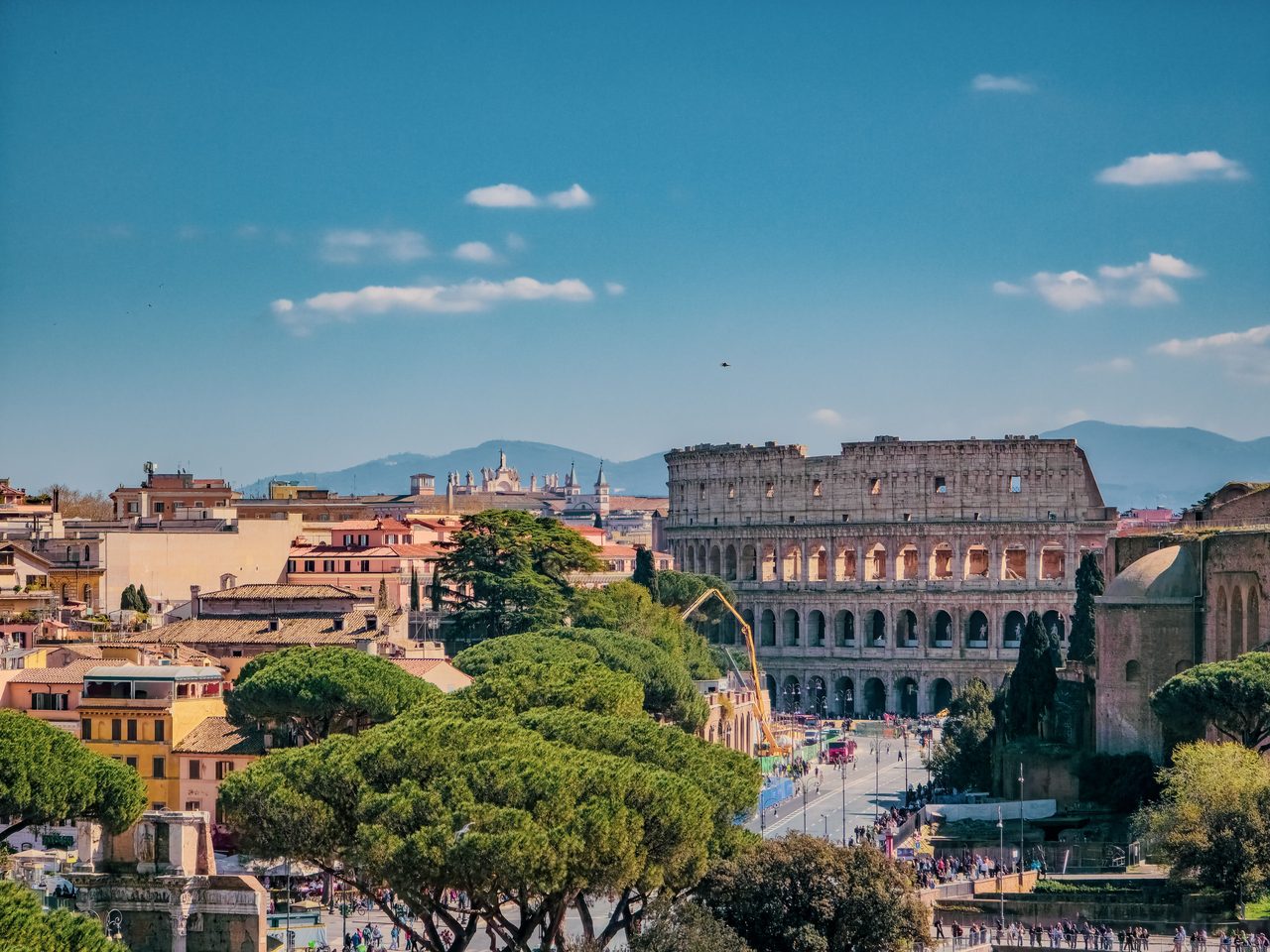
The 29 destinations our editors recommend — from iconic landmarks to under-the-radar finds.
Colosseum
The iconic 2,000-year-old amphitheater is Rome's most visited monument and a symbol of Imperial Roman engineering genius. Built between 70-80 AD, it once held up to 80,000 spectators watching gladiatorial contests and public spectacles. The underground hypogeum and upper tiers are accessible with premium tickets.
Vatican Museums & Sistine Chapel
One of the world's greatest museum complexes housing an incomparable collection of art accumulated by the Catholic Church over centuries. The highlight is Michelangelo's breathtaking ceiling fresco in the Sistine Chapel, while the galleries contain Egyptian antiquities, Greek sculptures, Renaissance masterpieces and the Raphael Rooms. Plan at least 3-4 hours.
St. Peter's Basilica
The world's largest church and the spiritual center of Roman Catholicism, topped by Michelangelo's magnificent dome offering panoramic views over Rome and Vatican City. The basilica contains Michelangelo's Pietà, Bernini's spectacular baldachin and the tombs of numerous popes. Entry to the basilica is free; a fee applies for the dome climb.
Trevi Fountain
Rome's most famous fountain, a dazzling Baroque masterpiece designed by Nicola Salvi and completed in 1762. Neptune commands a shell-shaped chariot drawn by sea horses amid cascading water and rococo statues. Legend says tossing a coin over your left shoulder with your right hand ensures your return to Rome.
Roman Forum & Palatine Hill
The political, commercial and religious heart of ancient Rome, stretching beside the Colosseum in a vast archaeological park. The Forum's temples, triumphal arches and basilicas recall the grandeur of the Republic and Empire, while Palatine Hill above holds the ruins of imperial palaces with sweeping views over the city.
Pantheon
The best-preserved ancient Roman building in the world, built around 125 AD by Emperor Hadrian. Its unreinforced concrete dome, with a central oculus open to the sky, remains an engineering marvel over 1,900 years later. The interior houses tombs of Renaissance painter Raphael and Italian kings.
Recommended itineraries
Pick a length, follow the route. Each itinerary balances headline sights with breathing room.
5-Day Rome Explorer
Day 1Arrive in Rome, explore city center
Day 2Visit top attractions and museums
Day 3Day trip to nearby highlights
Day 4Local markets and hidden gems
Day 5Final sightseeing, departure
7-Day Classic Rome
Days 1-2Rome city highlights
Days 3-4Regional exploration
Days 5-6Cultural immersion and local experiences
Day 7Return and departure
14-Day Ultimate Rome
Days 1-3Rome comprehensive city tour
Days 4-6Northern region exploration
Days 7-9Eastern highlights
Days 10-12Southern attractions
Days 13-14Return to Rome, departure
Where to stay in Rome
Three tiers, every traveller covered — from cost-conscious to flagship hotels.
Budget €60
Hostels, budget hotels, and guesthouses offer affordable stays without sacrificing experience.
Mid-range €150
Boutique hotels and well-located accommodations provide comfort and convenience at reasonable prices.
Luxury €400+
World-class resorts and premium hotels deliver unforgettable experiences.
Hotel de Russie
Piazza del Popolo, Rome · $$$$
One of Rome's most iconic five-star hotels, occupying a neoclassical building near Piazza del Popolo with a stunning terraced garden. The hotel features Michelin-starred dining, a world-class spa and sumptuous rooms decorated with bold Mediterranean colours.
A 17th-century palazzo transformed into a sophisticated boutique hotel in the Prati neighbourhood, featuring a rooftop pool with views toward Vatican City. Elegant rooms blend historic architecture with contemporary Italian design.
A magical boutique hotel occupying a medieval building above the Roman Forum, offering private terrace rooms with direct views over ancient ruins. Only 12 rooms make this an intimate and exclusive retreat at the heart of ancient Rome.
A grand dame of Roman luxury hotels perched on the Via Veneto hill with panoramic views across Rome's skyline. The La Terrazza rooftop restaurant is one of Rome's most celebrated, and rooms exude timeless elegance.
Cafés, neighbourhood gems, and tasting menus worth the table reservation.
Da Enzo al 29
Roman · $$
A beloved Trastevere institution serving quintessential Roman cuisine with market-fresh ingredients and no pretension. Famous for its cacio e pepe, rigatoni alla gricia and offal dishes beloved by both locals and discerning visitors.
Roscioli
Roman/Deli · $$$
Part deli, part trattoria and part wine bar, Roscioli is a Rome institution near Campo de' Fiori serving exceptional Roman classics alongside an outstanding cheese and salumi counter and one of the city's best wine lists.
Baccano
Italian/Brasserie · $$$
A stylish all-day brasserie near the Pantheon with a stunning Art Deco interior, serving everything from breakfast to late-night cocktails with an excellent selection of Roman and national dishes.
Flavio al Velavevodetto
Roman · $$
Built into the ancient Monte Testaccio (a hill made of Roman amphora shards), this beloved Testaccio trattoria serves impeccably authentic Roman cucina with a particular focus on offal and slow-cooked meats.
Supplì Roma
Roman street food · $
The best place in Rome to eat supplì — the iconic fried rice balls stuffed with tomato sauce and mozzarella — freshly made throughout the day in Trastevere. Long queues at lunchtime testify to their excellence.
Pierluigi
Seafood/Roman · $$$
An elegant seafood restaurant in the heart of Rome near Campo de' Fiori, with a beautiful outdoor terrace opening onto a quiet piazza. Excellent fresh fish preparations and a superb wine list in a refined setting.
Rome has two main airports; the region is well served by trains and buses
Metro
Rome Metro has 3 lines covering key areas
Cost: €1.50
Bus
COTRAL buses connect towns across Lazio
Cost: €1.50-€5
Train
Trenitalia connects Rome to Tivoli, Viterbo, Frosinone and more
Cost: €2-€15
Taxi
Licensed taxis with meters; apps like itTaxi available
Cost: €10-€30
Budget breakdown
Daily spend by tier in EUR, broken out by category.
Category
Budget
Mid-range
Luxury
Accommodation
€25
€80
€250
Food (per day)
€20
€45
€100
Transportation
€8
€15
€30
Activities
€7
€10
€20
Daily total
€60
€150
€400+
Best time to visit Rome
Weather through the year in Lazio
Best timeShoulderWorth avoiding
Average daytime temperature in °C. Figures are for Lazio.
Spring and early autumn bring mild temperatures (18-25°C / 64-77°F) and manageable crowds at major sites. July-August is hot (often above 35°C / 95°F) and heavily booked, though many Romans leave the city for the coast, quieting some neighbourhoods. Easter week and Christmas/New Year also draw large crowds to St. Peter's Basilica and the Vatican Museums, so tickets should be booked well in advance for those dates.
Essential travel tips
Book the Colosseum, Vatican Museums and Borghese Gallery well in advance
Validate metro/bus tickets before boarding to avoid fines
Many churches require covered shoulders and knees for entry
Restaurants typically serve lunch 12:30-3PM and dinner 7:30-10:30PM
Hidden gems
Off-the-beaten-path corners most travellers miss.
Janiculum Hill terrace (free, 24h)
Orange Garden on Aventine Hill (rose garden views)
Café terrace at Palazzo Senatorio on Capitoline
Calcata
clifftop artists' village in Viterbo province
Ninfa Garden
appointment-only romantic garden
Sutri amphitheatre
free and crowd-free Etruscan site
Janiculum Hill terrace
Via Sacra looking toward Colosseum
Ponte Sant'Angelo over the Tiber
Janiculum Hill
Civita di Bagnoregio viewpoint from Bagnoregio
Monte Circeo summit trail
Ponte Sisto over the Tiber
Safety information
INFO
Keep bags zipped and worn crossbody in crowded tourist areas
INFO
Use only licensed taxis (white cars with taxi sign) or ride-hailing apps
INFO
Be wary of distraction scams near major monuments
INFO
Avoid unlicensed tour guides and street sellers near the Colosseum
Frequently asked questions
Is Lazio safe to visit in 2026?
Lazio and Rome are generally safe destinations with low violent crime rates. The primary concern for tourists is non-violent petty theft — particularly pickpocketing in crowded tourist areas and on public transport — which affects a disproportionately high number of visitors. Emergency services: police at 113 (State Police) or 112 (emergency), medical at 118 (ambulance) or 112.
What is the best time to visit Lazio?
The best time to visit Lazio is April-June and September-October. Lazio has a Mediterranean climate with hot, dry summers and mild, occasionally rainy winters. Rome rarely experiences snow and temperatures stay above 5°C even in January. The coastal areas (Sperlonga
Do I need a visa to visit Lazio?
Entry requirements follow Italy/Schengen rules. EU/EEA citizens need only a valid ID; most non-EU visitors may stay up to 90 days without a visa under the Schengen agreement. Requirements vary by nationality, so check with your nearest embassy or the official immigration website before traveling.
What currency is used in Lazio?
The currency in Lazio is the Euro (EUR). ATMs are widely available in cities and tourist areas. Credit cards are accepted at most hotels and restaurants, but carry cash for markets and smaller establishments.
What language is spoken in Lazio?
The main language(s) spoken in Lazio: Italian. In tourist areas, English is generally understood. Learning a few basic phrases in the local language is appreciated by locals.
What are the top attractions in Lazio?
The top attractions in Lazio include Colosseum, Vatican Museums & Sistine Chapel, St. Peter's Basilica, Trevi Fountain, and Roman Forum & Palatine Hill. Each offers a unique experience, from historic landmarks to natural wonders.