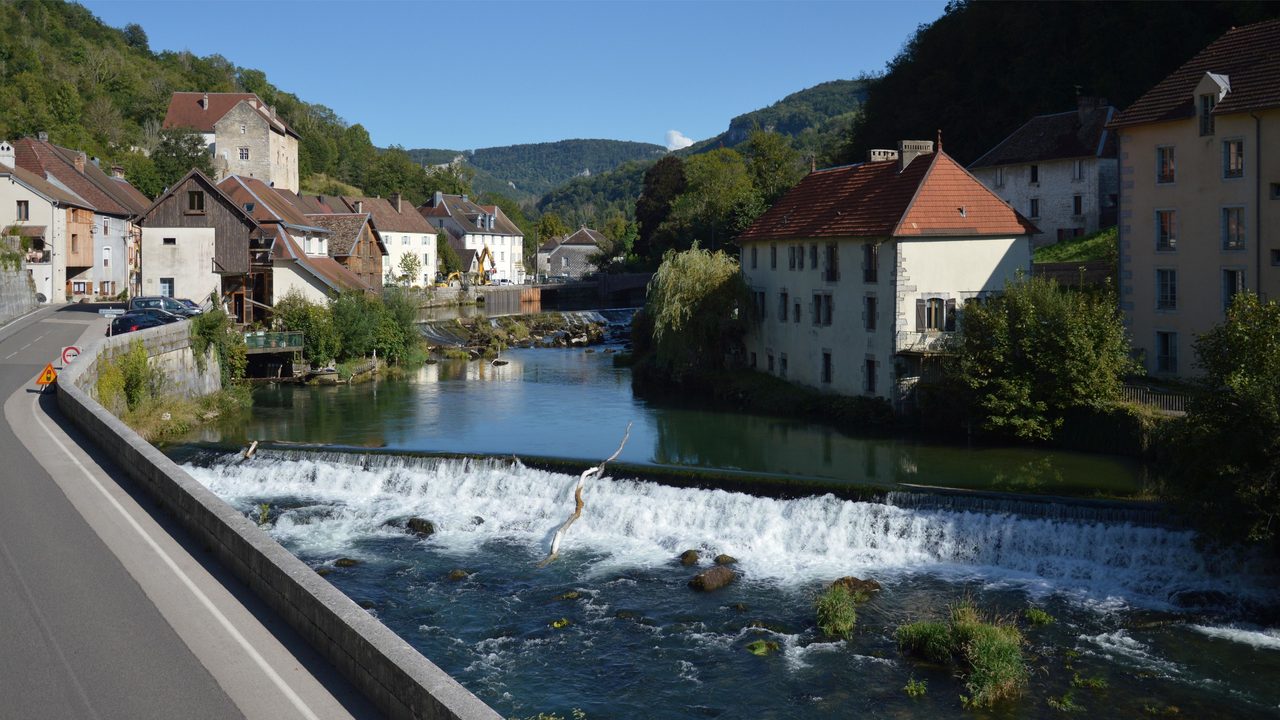
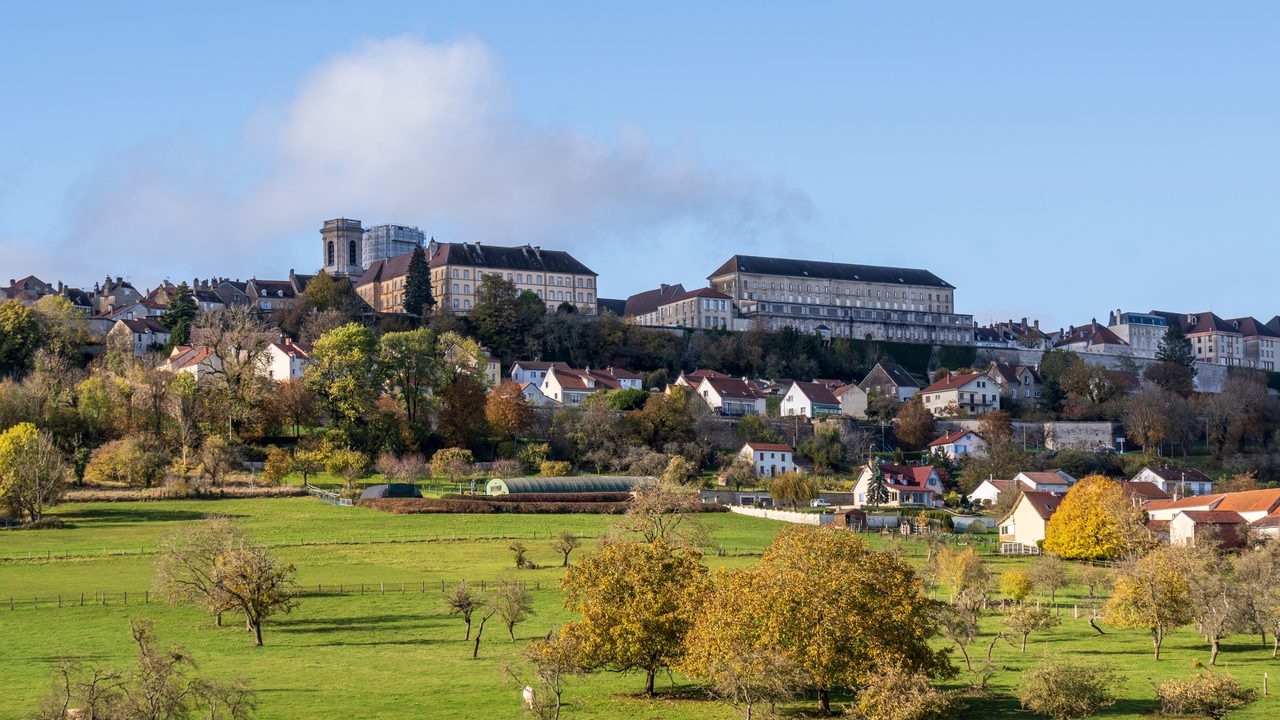
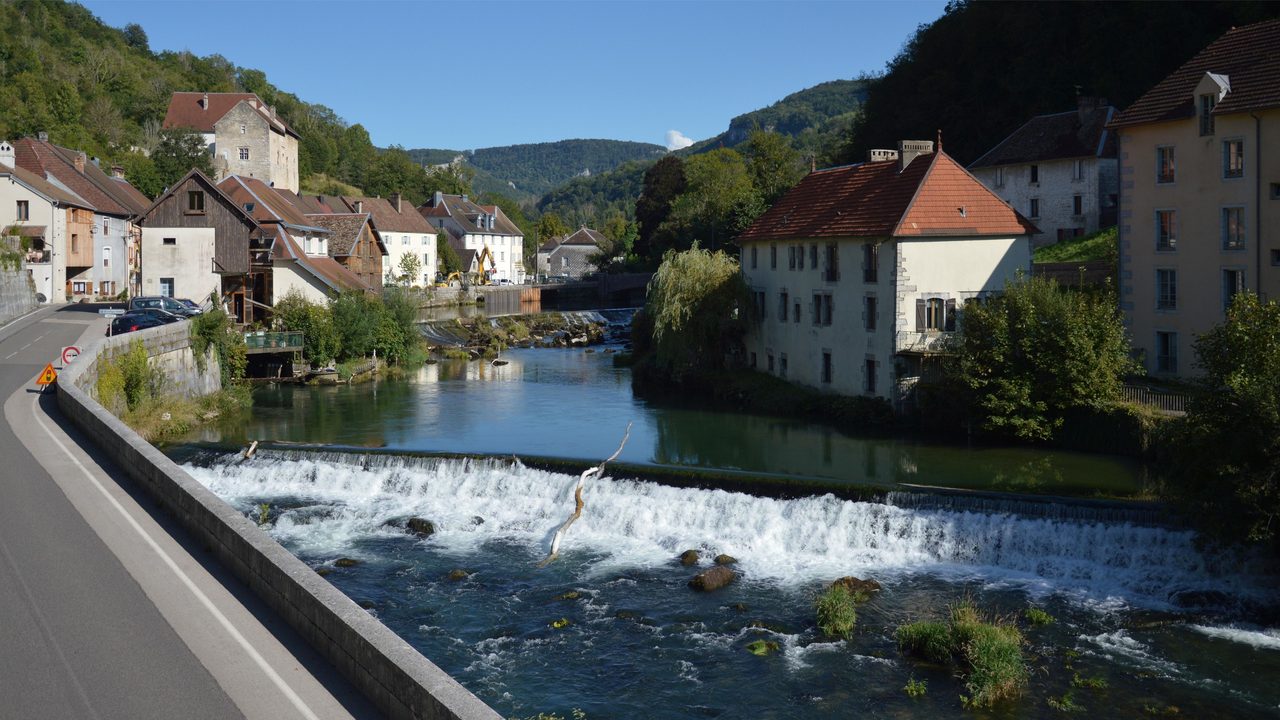
Bourgogne-Franche-Comté is France's great dual-heritage region — the grand cru vineyards and Romanesque abbeys of Burgundy in the west, and the forested Jura mountains, Comté dairies, and UNESCO-listed Vauban citadel of Franche-Comté in the east. From the medieval ramparts of Beaune and the ducal palace of Dijon to the cascading waterfalls and ski resorts of the Jura plateau, the region delivers extraordinary depth for travellers willing to look beyond the Eiffel Tower.
Bourgogne-Franche-Comté fuses two proud regional identities: the grand viticultural civilisation of Burgundy, where wine is history and landscape alike, and the quieter, self-sufficient mountain culture of Franche-Comté, shaped by centuries of cooperative cheese-making, precision watchmaking, and Jura wilderness. Dijon, the former ducal capital, anchors Burgundian life with its medieval palaces, mustard heritage, and lively covered market; Besançon, encircled by a UNESCO-listed Vauban citadel, holds the soul of Franche-Comté. The region contains four UNESCO World Heritage Sites, some of the most valuable agricultural land on Earth (the Côte d'Or vineyards), and a network of canals, Roman roads, Romanesque churches, and Cistercian abbeys that reward slow, attentive travel.
The 8 destinations our editors recommend — from iconic landmarks to under-the-radar finds.
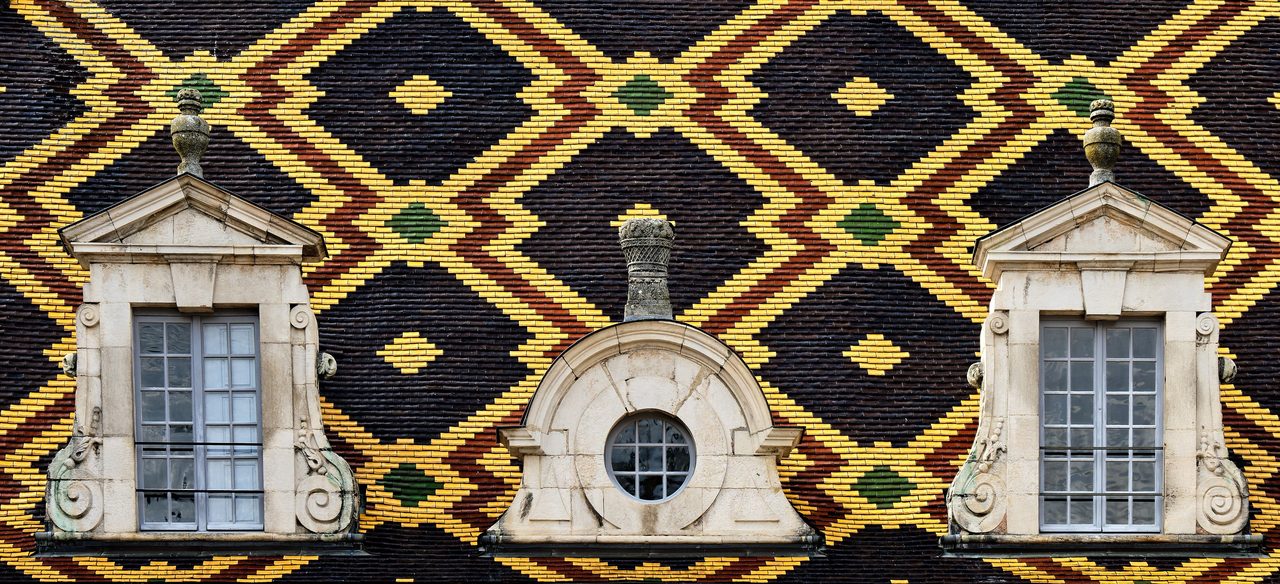
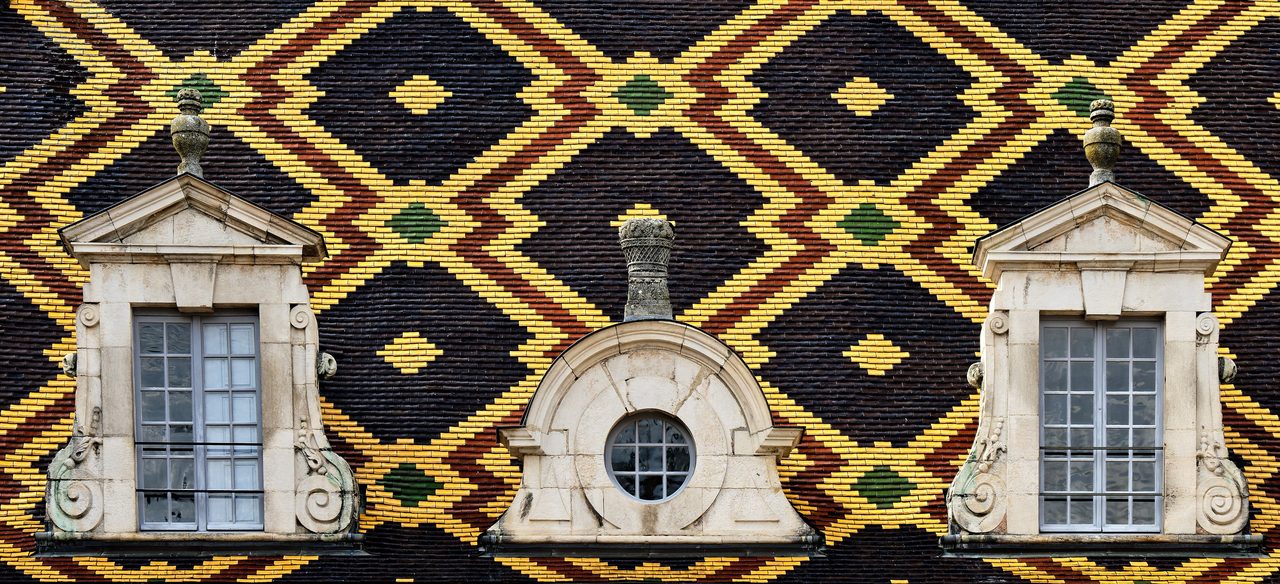
Hospices de Beaune (Hôtel-Dieu)
A 15th-century Gothic masterpiece — the most iconic building in Burgundy. The polychrome glazed-tile roof, the Grand'Salle des Malades, and the altarpiece by Rogier van der Weyden are unmissable. Site of the world's most famous wine charity auction each November.
Abbaye de Cluny
Once the largest church in Christendom and the spiritual centre of medieval Europe. The scale of the surviving south transept and the Farinier museum's capitals reveal the ambition of the Cluniac reform movement.
Citadelle de Besançon
Vauban's masterwork of military engineering perches above a bend in the Doubs river. UNESCO-listed. Contains a zoo, insectarium, aquarium, and the Musée de la Résistance — a full day of exploration.
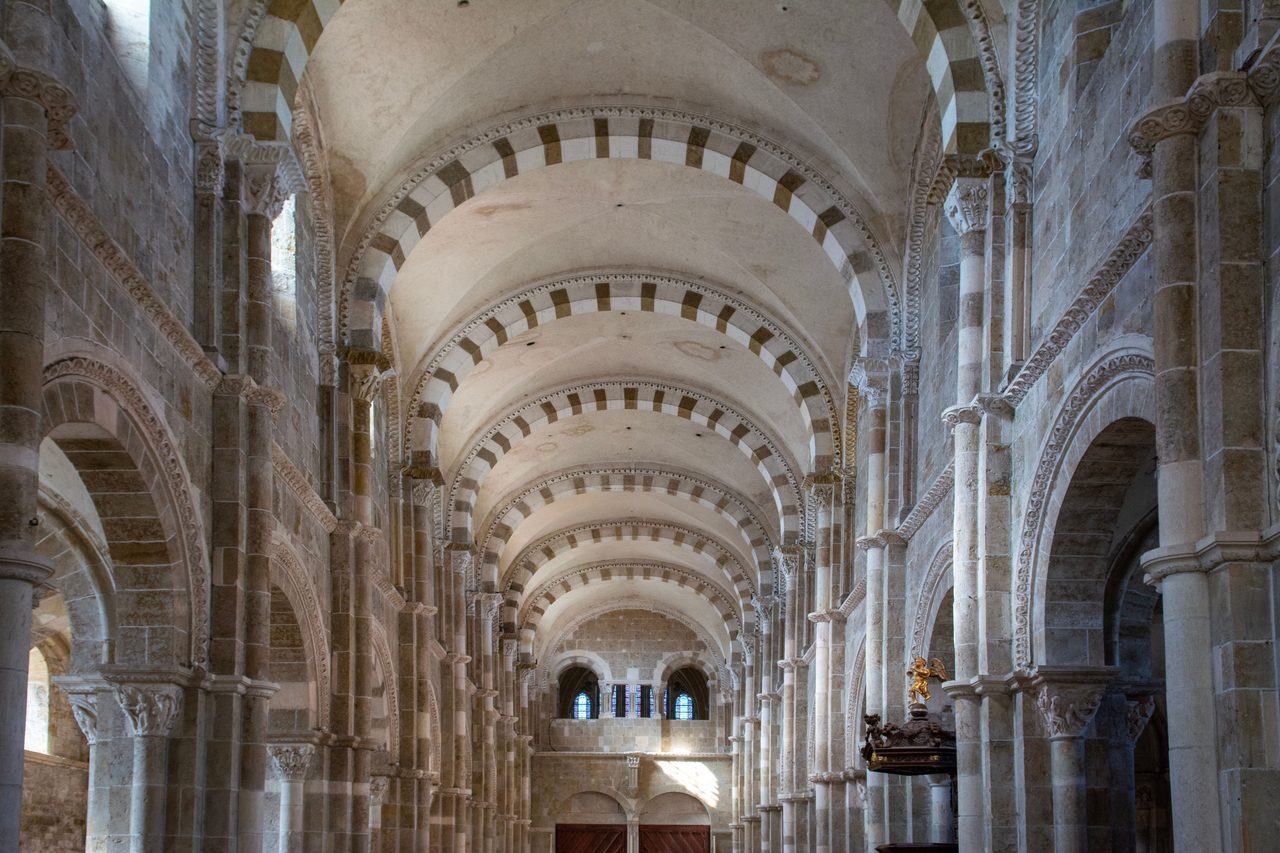
Basilique Sainte-Marie-Madeleine de Vézelay
A Romanesque pilgrimage basilica crowning a hilltop village — one of the great monuments of medieval Europe and a UNESCO World Heritage Site. The tympanum's Last Judgement is the finest Romanesque sculpture in France.
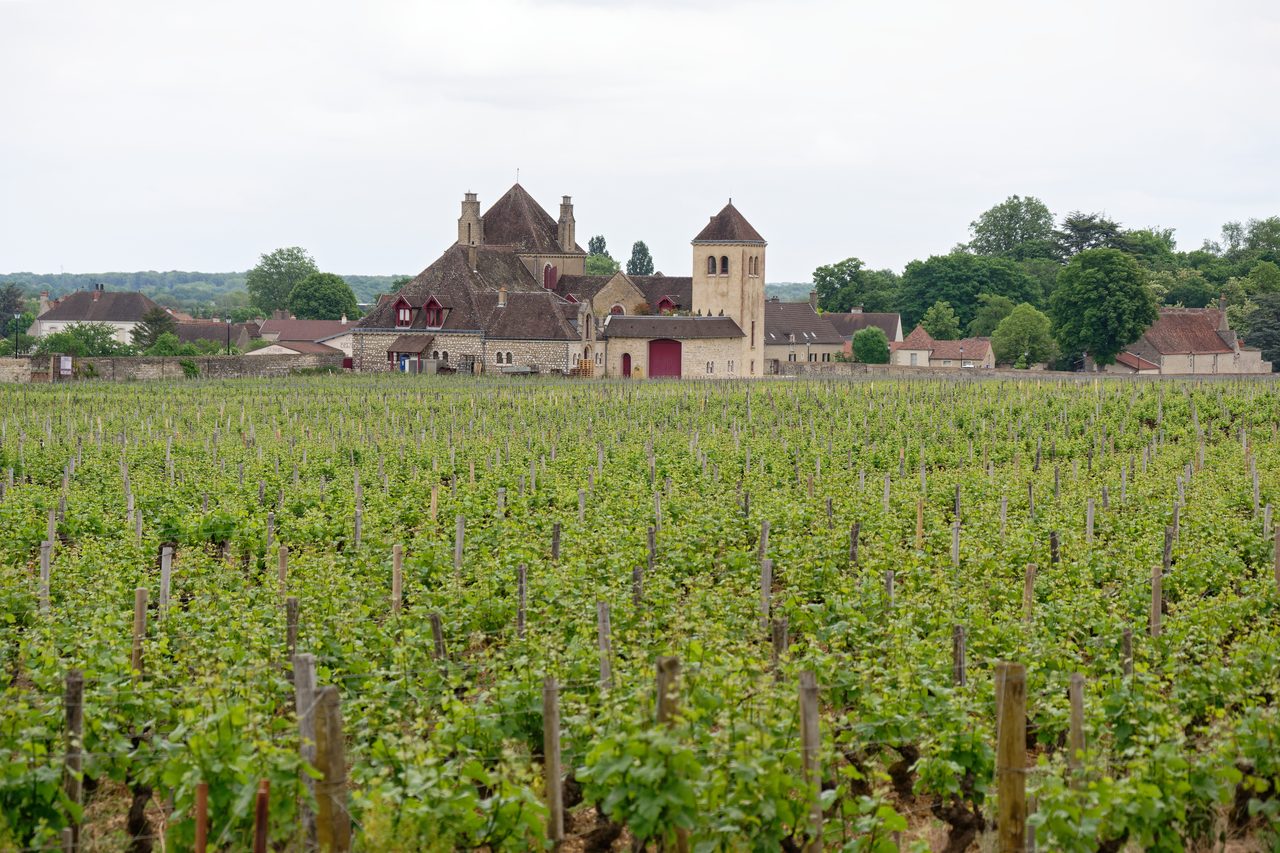
Route des Grands Crus
A 60km wine route through the most valuable vineyards on Earth — Chambertin, Clos de Vougeot, Romanée-Conti, Montrachet. Best experienced by bicycle through the golden stone villages of Gevrey-Chambertin, Nuits-Saint-Georges, Beaune, and Meursault.
Palais des Ducs de Bourgogne
The seat of the Dukes of Burgundy — once more powerful than the French kings — now houses the Musée des Beaux-Arts de Dijon, one of France's finest fine art collections. The Tour Philippe le Bon offers the best view of Dijon's rooftops.
Recommended itineraries
Pick a length, follow the route. Each itinerary balances headline sights with breathing room.
5-Day Bourgogne-Franche-Comté Explorer
Day 1Arrive in Bourgogne-Franche-Comté, explore city center
Day 2Visit top attractions and museums
Day 3Day trip to nearby highlights
Day 4Local markets and hidden gems
Day 5Final sightseeing, departure
7-Day Classic Bourgogne-Franche-Comté
Days 1-2Bourgogne-Franche-Comté city highlights
Days 3-4Regional exploration
Days 5-6Cultural immersion and local experiences
Day 7Return and departure
14-Day Ultimate Bourgogne-Franche-Comté
Days 1-3Bourgogne-Franche-Comté comprehensive city tour
Days 4-6Northern region exploration
Days 7-9Eastern highlights
Days 10-12Southern attractions
Days 13-14Return to Bourgogne-Franche-Comté, departure
Where to stay in Bourgogne-Franche-Comté
Three tiers, every traveller covered — from cost-conscious to flagship hotels.
Budget €55–125/day (~$60–136)
Hostels, budget hotels, and guesthouses offer affordable stays without sacrificing experience.
Mid-range €185–340/day (~$201–370)
Boutique hotels and well-located accommodations provide comfort and convenience at reasonable prices.
Luxury €460–1250+/day (~$501–1362)
World-class resorts and premium hotels deliver unforgettable experiences.
Château de Gilly
Gilly-lès-Cîteaux, Côte de Nuits · €180–380/night (~$196–414)
Cafés, neighbourhood gems, and tasting menus worth the table reservation.
Maison Lameloise
French haute cuisine / Burgundian · €225–400/person (~$245–436)
A three-Michelin-star house run by the Lameloise family for generations before passing to chef Eric Pras, set in a half-timbered former coaching inn in the center of Chagny. The cooking is refined Burgundian haute cuisine, built around escargots, pigeon, and local game, plated with classical technique rather than experimental flourish. Dining rooms are formal and hushed, with beamed ceilings and white linen, geared toward a slow multi-hour tasting menu.
William Frachot
Creative French / Modern Burgundian · €90–160/person (~$98–174)
The one-star restaurant of the Hôtel du Chapeau Rouge in central Dijon, run by chef William Frachot, who took over the family hotel and modernized its kitchen. The cooking is contemporary French with Burgundian roots, favoring precise, seasonal tasting menus over heavy sauces. The dining room is elegant and understated, fitting a townhouse hotel rather than a flashy destination restaurant.
Stéphane Derbord
Classic French Burgundian · €75–150/person (~$82–163)
Skab
Creative French / Modern Bisontin · €80–140/person (~$87–153)
A small bistro tucked in a passage near Beaune's covered market, known as much for its wine list as its food. The cooking is straightforward Burgundian bistro fare, think coq au vin, boeuf bourguignon, and other braises suited to sharing a bottle over lunch. The room is tight and simple, with a blackboard menu and a wine list that runs to hundreds of Burgundy producers by vintage.
Loiseau des Vignes
Modern Burgundian / Wine-focused · €55–120/person (~$60–131)
A wine-focused restaurant in Beaune from the Bernard Loiseau group, distinct from the family's flagship in Saulieu. The kitchen turns out modern Burgundian dishes designed to be paired course by course, and the restaurant is built around an Enomatic-style system that lets diners taste a wide range of Burgundy wines by the glass rather than committing to a full bottle. The setting is contemporary rather than rustic, aimed at visitors moving through the Beaune wine trade.
Bourgogne-Franche-Comté is well connected to the rest of France by high-speed TGV rail, placing Dijon just 1h32 from Paris Gare de Lyon and Besançon around 2h15 from Paris via TGV Lyria. The regional Mobigo network of TER trains and coaches links cities, market towns, and villages across both Burgundy and the Jura. A rental car is strongly recommended for exploring the Côte de Nuits and Côte de Beaune wine routes, the Jura mountain valleys, and the Morvan regional natural park. Major international airports at Lyon and Paris provide the main long-haul access points.
TGV High-Speed Train
Paris Gare de Lyon to Dijon Ville in 1h32 with TGV INOUI; Paris to Besançon Franche-Comté TGV station in approximately 2h15 by TGV Lyria (Lausanne–Bern services). Multiple daily departures on both routes. Dijon to Besançon takes around 57 minutes by fast TER.
SNCF TER trains branded Mobigo serve 200 stations across 1,951 km of track throughout the region. Key routes include Dijon–Mâcon, Dijon–Auxerre, Dijon–Belfort, Besançon–Belfort, and Besançon–Pontarlier toward Switzerland. Current timetables run until December 12, 2026.
Cost: €2–20 depending on distance (~$2–22 USD); capped at €2, €5, or €12 for most regional journeys
Mobigo Regional Coach
Regional coaches operated under the Mobigo brand serve towns and villages not reached by rail, including routes through the Morvan, the Bresse, and Jura valleys. Schedules available at viamobigo.fr.
Cost: €2–15 (~$2–17 USD)
Intercity Coach (FlixBus / BlaBlaCar Bus)
FlixBus serves intercity routes including Dijon–Paris, Dijon–Lyon, and Besançon–Strasbourg. BlaBlaCar Bus is a popular lower-cost option on high-traffic corridors.
Cost: €5–25 (~$5–27 USD)
Car Rental
Essential for touring Burgundy's wine villages (Nuits-Saint-Georges, Beaune, Meursault), the Jura Loops scenic drive, Morvan lakes, and the Saône and Doubs river valleys. Available at Dijon Bourgogne Airport, Dijon-Ville station, Besançon Viotte station, and Dole-Jura Airport.
Cost: €30–65/day compact car (~$33–71 USD) plus tolls and fuel
Divia Tram and Bus (Dijon)
DiviaMobilités operates Dijon's tram line (T1, 22 km) and bus network covering the Greater Dijon metropolitan area. Contactless ticketing throughout the network; children under 5 ride free.
Cost: €1.60/single ride (~$1.75 USD); 10-trip carnet €13 (~$14 USD); day pass also available
Ginko Tram and Bus (Besançon)
Ginko Mobilités operates Besançon's tram and bus network. Free travel every Saturday for all passengers (from 04:30 Saturday to 02:30 Sunday). Tourism Pass (Citadelle + transport) available for visitors.
Cost: Single ride approx. €1.60 (~$1.75 USD); 24h–72h Tourism Pass €10.90–24.90 (~$12–27 USD) incl. museum access
Cycling (EuroVelo 6 / Wine Route)
EuroVelo 6 (Atlantic–Black Sea route) follows the Saône and Doubs rivers through the region and is one of France's most popular long-distance cycling itineraries. The Route des Grands Crus wine route (Dijon to Santenay, approx. 60 km) is excellent for day rides through vineyard villages.
Cost: €10–30/day bike rental (~$11–33 USD)
Budget breakdown
Daily spend by tier in EUR, broken out by category.
Category
Budget
Mid-range
Luxury
Accommodation
€25–60/night (~$27–65) — hostel dorm or budget hotel
€90–160/night (~$98–174) — 3–4 star hotel
€200–600+/night (~$218–654) — 4–5 star château hotel
€80–200/day (~$87–218) — private cellar visits, hot air balloon, spa
Daily total
€55–125/day (~$60–136)
€185–340/day (~$201–370)
€460–1250+/day (~$501–1362)
Best time to visit Bourgogne-Franche-Comté
Weather through the year in France
Best timeShoulderWorth avoiding
Average daytime temperature in °C. Figures are for France.
Essential travel tips
A rental car is essential for exploring Burgundy wine villages and Jura mountain valleys — public transport is limited in rural areas
Always say 'Bonjour' when entering any shop, café, or restaurant — it is the most important social norm in France
Book Burgundy wine domaine visits at least one week ahead — small estates require appointments and do not accept walk-ins
Carry cash for markets, farm stalls, and village boulangeries; many do not accept cards
Download the Mobigo app for regional train and bus timetables across both Burgundy and Franche-Comté
The Dijon–Beaune–Chablis triangle and the Besançon citadel are the essential starting points — plan at least 4–5 days for a meaningful visit
Hidden gems
Off-the-beaten-path corners most travellers miss.
Baume-les-Messieurs (Les Reculées)
A spectacular blind valley — one of the Jura's great reculées — where cliffs rise 400m above an ancient village, abbey ruins, and a waterfall-fed river. Far quieter than the Cascades du Hérisson and deeply atmospheric.
Jura
Château de Guédelon
A medieval château being built from scratch since 1997 using only 13th-century tools and techniques. Stonemasons, woodcutters, and tile-makers work daily; visitors walk among the active construction. Unique in Europe.
Treigny, Yonne
Arbois — Maison de Pasteur
The childhood home of Louis Pasteur preserved as a museum, in a Jura wine village renowned for vin jaune. The Fête du Biou harvest festival (first Sunday in September) is one of France's oldest.
Arbois, Jura
Arc-et-Senans (Royal Saltworks)
Ledoux's 18th-century utopian industrial complex — a UNESCO World Heritage Site — built to process Jura salt. The semicircular complex is one of the great pieces of Enlightenment-era architecture in France.
Arc-et-Senans, Doubs
Safety information
INFO
Perform full body tick checks after every outdoor activity in forests, vineyards, or grasslands — Bourgogne-Franche-Comté is one of France's four highest-risk regions for Lyme disease, and tick season peaks from May to July
INFO
Remove ticks immediately with fine-tipped tweezers gripping close to the skin and pulling steadily upward; never squeeze the body or use heat. A bull's-eye rash within 30 days of a bite warrants urgent medical attention
INFO
Wear long trousers tucked into socks and apply DEET repellent before hiking in wooded or grassy areas, including the Jura forests and Morvan hills
INFO
Never swim in rivers (Saône, Doubs, Loue) without checking for current conditions — rivers account for roughly half of France's annual drowning deaths; the Doubs gorges have cold temperatures and powerful currents year-round
INFO
Swim only at designated supervised beaches (plages surveillées) on lakes such as Lac de Vouglans, Lac Saint-Point, and Lac des Rousses during the supervised season (typically mid-June to August)
INFO
On Burgundy vineyard roads (D-roads around Beaune, Gevrey-Chambertin, Meursault, Nuits-Saint-Georges), drive slowly — lanes are narrow, tractors emerge without warning, cyclists are abundant, and priorité à droite applies at unmarked junctions
INFO
Vehicles in mountain communes of Doubs and Jura departments must carry winter-rated tyres (marked 3PMSF or M+S) from November 1 to March 31; check the official LoiMontagne.fr map before driving to Pontarlier, Les Rousses, or Champagnole in winter
INFO
Carry emergency equipment in the car in winter (blanket, torch, bottled water, hi-vis vest, warning triangle) — Jura plateau roads can be snowbound and isolated
INFO
During summer heat alerts (orange or red canicule from Météo-France), avoid outdoor exertion between noon and 4 pm in the Saône valley — temperatures regularly exceeded 35°C during summer 2025 in Dijon and Chalon-sur-Saône
INFO
In the Jura mountains (Haut-Jura park, Gorges du Doubs, Cascades du Hérisson), tell your accommodation your planned hiking route and expected return time — mobile signal is absent in many gorge sections
INFO
Carry a paper map on Jura hikes; GPS devices and downloaded offline maps are also recommended for the Gorges du Doubs near Villers-le-Lac and Besançon
INFO
Do not leave valuables visible in parked cars, especially at trailhead car parks, vineyard viewpoints, and heritage site car parks — break-ins targeting tourists' bags occur at isolated locations
INFO
Keep bags closed and wear crossbody bags at Dijon's Saturday Halles market, Beaune's Thursday market, and Besançon's central market where opportunistic pickpocketing can occur
INFO
Dial 112 from any mobile — including with no SIM credit — for all emergencies; English-speaking operators are available on this European number
INFO
Check Météo-France mountain forecasts before heading into the Jura in June–August — summer convective thunderstorms develop rapidly on exposed ridges and plateaus
Frequently asked questions
Is Bourgogne-Franche-Comté safe to visit in 2026?
Bourgogne-Franche-Comté is one of France's safer regions for visitors. Violent crime is rare, wine-country villages and Jura hiking routes are peaceful, and the region's mid-sized cities (Dijon, Besançon) have manageable urban risk profiles. The primary hazards are natural and seasonal: ticks carryi Emergency services: police at 17 (Police Nationale / Gendarmerie — use Gendarmerie for rural areas), medical at 15 (SAMU — 24/7 medical emergency dispatch) or 112.
What is the best time to visit Bourgogne-Franche-Comté?
Bourgogne-Franche-Comté spans two historically distinct landscapes — the vine-covered limestone escarpment of Burgundy in the west and the forested Jura mountains in the east — and their climates diff
Do I need a visa to visit Bourgogne-Franche-Comté?
France is a Schengen Area member. US, UK, Australian, and Canadian citizens may enter for up to 90 days in a 180-day period without a visa. EU/EEA citizens have unlimited entry. ETIAS (European Travel Information and Authorisation System) is planned for non-EU visitors in 2026 — check your government's travel advice before departure. Requirements vary by nationality, so check with your nearest embassy or the official immigration website before traveling.
What currency is used in Bourgogne-Franche-Comté?
The currency in Bourgogne-Franche-Comté is the Euro (EUR) (EUR). ATMs are widely available in cities and tourist areas. Credit cards are accepted at most hotels and restaurants, but carry cash for markets and smaller establishments.
What language is spoken in Bourgogne-Franche-Comté?
The main language(s) spoken in Bourgogne-Franche-Comté: French. In tourist areas, English is generally understood. Learning a few basic phrases in the local language is appreciated by locals.
What are the top attractions in Bourgogne-Franche-Comté?
The top attractions in Bourgogne-Franche-Comté include Hospices de Beaune (Hôtel-Dieu), Abbaye de Cluny, Citadelle de Besançon, Basilique Sainte-Marie-Madeleine de Vézelay, and Route des Grands Crus. Each offers a unique experience, from historic landmarks to natural wonders.