Jiangsu · 18 Places · Best March-May and September-November
Suzhou
Suzhou (苏州) is a canal-laced city in Jiangsu province, eastern China, about 25 minutes by high-speed train from Shanghai. It is famous for its classical gardens, several of which are UNESCO World Heritage sites, its whitewashed lanes and stone bridges, and its silk and Kunqu opera traditions. Suzhou has been called the Venice of the East for more than 2,500 years of waterside history.
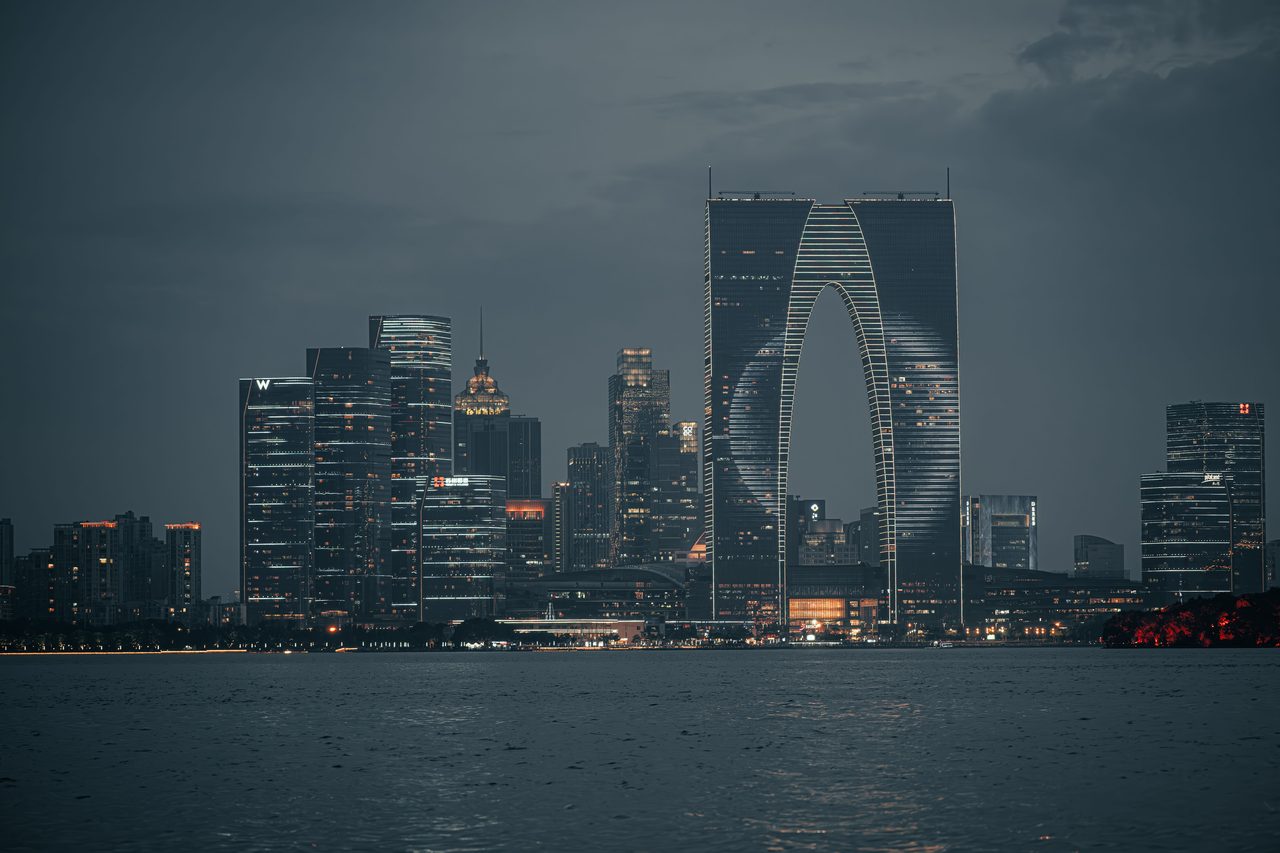
Suzhou sits on the eastern shore of Lake Tai in the Yangtze River Delta, in Jiangsu province, roughly 100 km west of Shanghai. Its walled old town is threaded with canals and holds nine UNESCO-listed classical gardens, including the Humble Administrator's Garden, the Lingering Garden, and the Master of the Nets Garden, plus the leaning Tiger Hill Pagoda and the Suzhou Museum designed by I. M. Pei. Pingjiang Road and Shantang Street offer canalside strolling, tea houses, and Suzhou cuisine, while the nearby water towns of Tongli, Zhouzhuang, and Luzhi make easy day trips. Beyond the old town, Suzhou Industrial Park and Jinji Lake present a modern skyline, night cruises, and the Suzhou Center complex. The city is well suited to independent travellers: high-speed trains reach Shanghai in about 25 minutes, the metro covers the main sights, and Alipay and WeChat Pay work for foreign visitors once linked to an overseas card.
Capital
Nanjing (provincial capital of Jiangsu)
Largest city
Suzhou (prefecture-level city; Jiangsu's most populous city)
Population
~12.9 million (prefecture-level city, latest official annual figure)
The 18 destinations our editors recommend — from iconic landmarks to under-the-radar finds.
Humble Administrator's Garden (Zhuozheng Yuan)
The largest of Suzhou's classical gardens at about 5.2 hectares, created in the early 16th century by a retired imperial censor and part of the UNESCO World Heritage listing since 1997. Water and pavilions dominate the layout, divided into eastern, central and western sections.
Lion Grove Garden (Shizi Lin)
A UNESCO-listed Yuan dynasty garden built in 1342 by monks, known for its labyrinth of Taihu limestone rockeries shaped like lions. It is compact and best visited with a light crowd.
Lingering Garden (Liu Yuan)
A UNESCO-listed garden dating to the Ming dynasty (1593) and expanded in the Qing period, ranked among the four famous gardens of China. It is famed for its long covered corridors with carved windows, the Cloud-Capped Peak rock and elegant halls.
Master of the Nets Garden (Wangshi Yuan)
The smallest of the UNESCO gardens, first laid out in the 12th century and rebuilt in the 18th, admired for its intimate scale and its scholar's-studio courtyards. Evening performances have historically run here, but the night show was reported suspended from 9 August 2026 pending notice.
Canglang Pavilion (Surging Waves Pavilion)
The oldest of the surviving classical gardens, tracing to a Song dynasty scholar's residence in the 11th century. Its long lattice-window corridor and open, borrowed-scenery layout differ from other gardens. UNESCO-listed in 2000 as an extension.
Couple's Retreat Garden (Ou Yuan)
A small UNESCO-listed garden from the Qing dynasty, arranged as a pair of gardens joined by a central hall and set beside a quiet canal. It is much less crowded than the big-name gardens.
Recommended itineraries
Pick a length, follow the route. Each itinerary balances headline sights with breathing room.
5-Day Suzhou Explorer
Day 1Arrive in Suzhou, explore city center
Day 2Visit top attractions and museums
Day 3Day trip to nearby highlights
Day 4Local markets and hidden gems
Day 5Final sightseeing, departure
7-Day Classic Suzhou
Days 1-2Suzhou city highlights
Days 3-4Regional exploration
Days 5-6Cultural immersion and local experiences
Day 7Return and departure
14-Day Ultimate Suzhou
Days 1-3Suzhou comprehensive city tour
Days 4-6Northern region exploration
Days 7-9Eastern highlights
Days 10-12Southern attractions
Days 13-14Return to Suzhou, departure
Where to stay in Suzhou
Three tiers, every traveller covered — from cost-conscious to flagship hotels.
Budget CNY 300 (~$45)
Hostels, budget hotels, and guesthouses offer affordable stays without sacrificing experience.
Mid-range CNY 800 (~$119)
Boutique hotels and well-located accommodations provide comfort and convenience at reasonable prices.
Luxury CNY 2,200+ (~$328+)
World-class resorts and premium hotels deliver unforgettable experiences.
Park Hyatt Suzhou
Jinji Lake / Suzhou Industrial Park · $$$$
Park Hyatt Suzhou is a contemporary Suzhou-style mansion beside Jinji Lake in Suzhou Industrial Park. It is the city's leading design-led luxury address and suits travellers who prefer the lakeside modern district over the old town.
Hyatt Regency Suzhou stands in the heart of Suzhou Industrial Park, steps from Jinji Lake. It is a full-service five-star hotel with several restaurants and a convenient base for the lakeside promenade and the Suzhou Center area.
Hilton Suzhou is located in the central business district of Suzhou Industrial Park. Its position on Suzhou Avenue East makes it a practical business-and-leisure base with metro access to the old town.
Courtyard by Marriott Suzhou is about a five-minute walk from Suzhou Center and Jinji Lake in Suzhou Industrial Park. It offers modern rooms and flexible workspaces at mid-range prices.
Cafés, neighbourhood gems, and tasting menus worth the table reservation.
Songhe Lou (Taijian Lane)
Suzhou / Su-style · $$$
Founded in 1737 as a noodle shop, Songhe Lou is Suzhou's best-known heritage restaurant. The Taijian Lane branch off Guanqian Street serves squirrel-shaped mandarin fish, Biluochun shrimp and red soup noodles.
Songhe Lou (Shantang Street)
Suzhou / Su-style · $$$
The Shantang Street branch of the 1737 heritage restaurant sits by the historic canal quarter, close to Pingjiang Road, and serves the same signature Su-style dishes.
Deyuelou (Taijian Lane)
Suzhou / Su-style · $$$
Deyuelou traces its origins to 1522 in the Ming dynasty and is associated with a visit by the Qianlong Emperor. The Guanqian-area flagship serves Su-style classics including mandarin fish, fried shredded eel and Biluochun shrimp.
Deyuelou (Ligongdi)
Suzhou / Su-style · $$$
A lakeside branch of the Ming-era heritage restaurant on the Ligongdi causeway at Jinji Lake, popular for group dinners and views over the water.
Zhu Hong Xing Noodle House (朱鸿兴)
Suzhou noodles · $
Long-established Suzhou noodle brand around Guanqian Street known for red soup noodles with separately ordered toppings such as braised fish, pork and shrimp. Exact branch address should be confirmed in Dianping before visiting.
Wu Fang Zhai (五芳斋)
Jiangnan snacks · $
Chain of time-honoured Jiangnan snack shops famous for glutinous rice dumplings (zongzi), sweet rice balls and pastries, with outlets in the Guanqian shopping district. Branch address should be confirmed in Dianping.
Suzhou is one of China's easiest cities to reach and to move around in. High-speed rail brings visitors from Shanghai Hongqiao in about 25-35 minutes, and the Suzhou Metro links the railway stations with the old city, Suzhou Industrial Park, and the water towns. Didi ride-hailing, Alipay QR payment, and bike sharing fill the gaps. Wuxi Shuofang Airport (WUX) is the only airport in the Suzhou region, and most international visitors arrive through Shanghai Hongqiao (SHA) or Shanghai Pudong (PVG) and continue by rail.
Budget breakdown
Daily spend by tier in CNY, broken out by category.
Category
Budget
Mid-range
Luxury
Accommodation
CNY 120 (~$18)
CNY 420 (~$63)
CNY 1,400 (~$209)
Food (per day)
CNY 80 (~$12)
CNY 190 (~$28)
CNY 500 (~$75)
Transportation
CNY 30 (~$4)
CNY 70 (~$10)
CNY 150 (~$22)
Activities
CNY 70 (~$10)
CNY 120 (~$18)
CNY 150 (~$22)
Daily total
CNY 300 (~$45)
CNY 800 (~$119)
CNY 2,200+ (~$328+)
Best time to visit Suzhou
Weather through the year in Suzhou
Best timeShoulderWorth avoiding
Average daytime temperature in °C.
Suzhou has four distinct seasons with a humid subtropical climate. Spring and autumn are the most comfortable for garden visits and canal walks, while summers are hot and humid with plum rains in June and typhoon influence in late summer.
Spring brings wisteria and azalea blooms in the gardens; late October to November has autumn colour and cooler air. Winter (December-February) is damp and chilly, around 0-8 °C, but gardens are quiet and hotels are cheaper.
Essential travel tips
Buy garden tickets on the official WeChat mini-program or Trip.com and bring your passport; typical 2026 prices are CNY 70-80 (~$10-12) for the Humble Administrator's Garden, about CNY 70 (~$10) for Tiger Hill, and about CNY 30-40 (~$4.50-6) for Master of the Nets by day
Book the Suzhou Museum free slot in advance; it is released on the museum's official WeChat account
Visit the Humble Administrator's Garden at opening time to avoid tour groups
Use the 12306 app or Trip.com for train tickets and download Amap or Apple Maps, since Google Maps is unreliable in China
Foreign travellers on the 240-hour visa-free transit policy must hold a confirmed onward ticket to a third country and can visit Jiangsu, Shanghai, and Zhejiang
Show addresses in Chinese characters to drivers and use Didi's English interface
Hidden gems
Off-the-beaten-path corners most travellers miss.
Pingjiang Road at 7:00
Before the shops open the canal is used by residents for shopping, washing vegetables and morning tea, and the street is nearly empty of tour groups.
Mudu Xiangxi lanes
Residents use the back canal lanes for evening walks; tour groups stay on the main street.
Pingtan performance at a Pingjiang Road teahouse
Pingtan (storytelling and ballad singing in Suzhou dialect, a UNESCO-listed intangible heritage form) is still performed daily in teahouses for a mainly local, older audience.
Guanqian back lanes at dawn
Old noodle shops and dumpling stalls open before 6:30 for residents, well before Taijian Lane's tourist restaurants.
Ruiguang Pagoda from Pan Men
Wumen Bridge and the Ruiguang Pagoda frame the old moat at sunset; entry to the scenic area is about CNY 40 and includes the pagoda garden.
Pan Men Scenic Area, Dong Da Jie, south-west Suzhou (盘门景区)
Tiger Hill Pagoda from the back path
The leaning Yunyan Temple Pagoda is best photographed from the lower Sword Pool path before the tour groups arrive.
Tiger Hill Scenic Area, Huqiu (苏州虎丘)
Ligongdi from the Jinji Lake boardwalk
The skyline of Suzhou Center and the Gate of the Orient is reflected in the lake; the lakeside path is free and good for a run.
Li Gong Di, Suzhou Industrial Park (李公堤)
Pingjiang Road bridge at Xiaoxinqiao
One of the few bridge views with no crowds; the canal reflects the white-walled houses.
Xiaoxinqiao Lane, Pingjiang Road (小新桥巷)
Safety information
INFO
Suzhou is one of China's safest cities. Violent crime against tourists is rare; the usual risk is petty theft on the metro and at crowded sights, so keep your phone and wallet in a front pocket.
INFO
Emergency numbers: police 110, ambulance 120, fire 119, traffic accident 122; the national tourist complaint line is 12301. Operators may not speak English, so show an address in Chinese from your phone.
INFO
For medical help, Suzhou Kowloon Hospital (苏州九龙医院, 118 Wansheng Street, Suzhou Industrial Park) runs an international clinic; the First Affiliated Hospital of Soochow University (苏州大学附属第一医院, 899 Pinghai Road) is the largest public hospital. Bring your passport and expect to pay a deposit; carry travel insurance.
INFO
Unlicensed taxis and pedicab operators near Tiger Hill, Zhouzhuang and the railway station overcharge; use metered green taxis or the Didi app, which gives an upfront fare.
INFO
Tea-house scams, where a friendly local invites you to a teahouse or art gallery and leaves you with a large bill, occur around Guanqian Street and Pingjiang Road; politely decline invitations and always check menus for prices first.
INFO
Air quality is usually moderate; check the AQI in your weather app between November and February. N95 masks are cheap in pharmacies if needed.
INFO
Tap water is not drinkable; buy bottled water or boil it. Wash fruit and choose busy food stalls to avoid stomach upsets.
INFO
Register with your embassy or consulate in Shanghai for long stays; foreigners must register accommodation with the police, which hotels do automatically at check-in, but Airbnb-style stays need a police station visit within 24 hours.
INFO
Crossing roads: electric scooters often run red lights and use pavements; watch for silent e-bikes before stepping off the kerb.
Frequently asked questions
Do I need a visa to visit Suzhou?
It depends on nationality. Many countries currently have visa-free entry to mainland China for 30 days under a unilateral policy in effect through 31 December 2026, and most other passport holders can use the 240-hour visa-free transit policy with an onward ticket to a third country. All others need a visa. Rules change, so check the National Immigration Administration website or the nearest Chinese embassy before travelling.
How do I get from Shanghai to Suzhou?
High-speed trains from Shanghai Hongqiao Railway Station take about 25-30 minutes to Suzhou Station and cost roughly CNY 25-40 (~$4-6). Tickets can be bought on Trip.com or the 12306 app with a passport. Trains run frequently from early morning to late evening.
Which Suzhou garden is best for first-time visitors?
The Humble Administrator's Garden is the largest and most famous, while the Lingering Garden and Master of the Nets Garden are more compact and often less crowded. All three are UNESCO World Heritage sites, and a passport is needed for tickets. Visiting at opening time helps avoid tour groups.
What are the top attractions in Suzhou?
The top attractions in Suzhou include the Humble Administrator's Garden, the Lingering Garden, the Master of the Nets Garden, Tiger Hill, the Suzhou Museum, Pingjiang Road, Shantang Street, and Jinji Lake. Water towns such as Tongli and Zhouzhuang are popular day trips.