
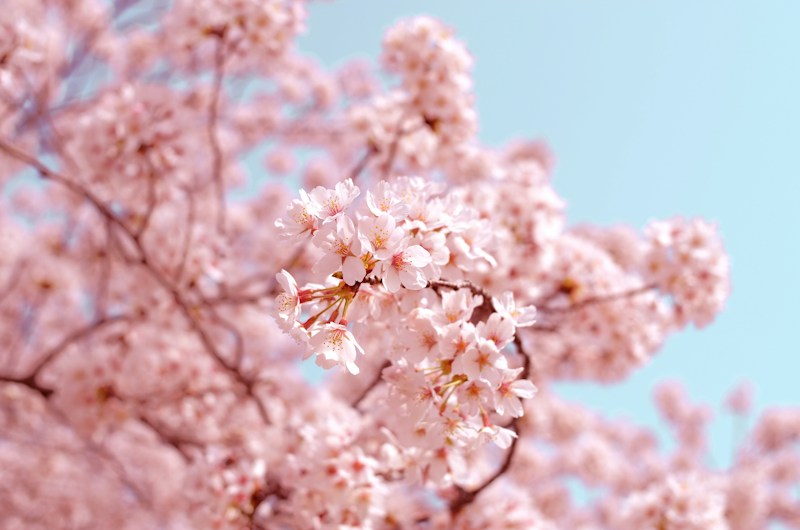
Wuhan University's campus on Luojia Hill holds one of China's best-known cherry blossom displays, with trees lining the paths near the university's distinctive Chinese-roofed old administration and library buildings. The bloom is short, typically peaking in the second half of March, and draws large domestic crowds who come specifically for it. Outside bloom season the same paths are a normal, much quieter university campus walk past the same historic buildings.
Wuhan University's main campus on Luojia Hill is regarded as one of China's most beautiful, combining 1930s Sino-Western Revival-style academic buildings with a hillside setting above East Lake. For most of the year the campus is simply a pleasant place to walk among historic architecture, but for roughly two to three weeks in late March into early April it becomes one of China's most famous cherry blossom destinations, when the rows of sakura trees planted along the main academic quadrangle burst into bloom against the backdrop of the university's grey-tiled library and administration buildings. Demand during peak bloom is intense, and the university caps daily visitor numbers with an online reservation system, typically requiring a booking a few days in advance through the campus's official WeChat account; outside the blossom window, casual visitors can generally walk sections of the public-facing campus without a reservation. A visit to see the blossoms and the surrounding historic quadrangle takes one and a half to three hours; arriving at opening is the only realistic way to avoid the heaviest crowds during peak bloom, since afternoon visits during the festival period can involve significant queuing. Outside cherry blossom season, the campus is a quieter, low-key stop to see the architecture and enjoy views toward East Lake from the upper slopes of Luojia Hill.
| Admission | Free most of the year; a timed-entry reservation and, in peak bloom, a nominal fee (varies by year) apply during the cherry blossom season |
|---|---|
| Hours | Campus grounds generally accessible 8:00 AM-6:00 PM to visitors during blossom season, subject to daily entry caps |
| Typical visit | 1.5-3 hours |
| Best time | Late March to early April for peak cherry blossoms; early morning to beat both crowds and entry caps |
| Getting there | Metro Line 2 to Luojiashan Station, Exit C, walk to the Bayi Road (Luojia Hill) entrance |
| Address | 299 Bayi Road, Wuchang District, Wuhan, Hubei, China |
Location
299 Bayi Road, Wuchang District, Wuhan, Hubei, China
30.5392, 114.3654 View on map
Highlights
- 1930s Sino-Western Revival academic architecture on a hillside campus
- Famous cherry blossom display along the main quadrangle each spring
- Elevated views toward East Lake from Luojia Hill
- Quiet, low-key campus walk outside the blossom season
Tips for visiting
- Book the online entry reservation as early as the booking window allows during cherry blossom season, typically late March into early April
- Arrive at opening during peak bloom, since afternoon queues can be long
- Outside blossom season, casual campus visits generally do not require a reservation
- Wear comfortable shoes, since the hillside campus involves some walking on slopes
When to visit
Late March to early April for peak cherry blossoms, ideally at opening time to beat both crowds and daily entry caps.
Accessibility
Main quadrangle paths are paved, but the hillside campus includes slopes and some stairs between different sections.
Visit, book or contact
Frequently asked questions
Do I need a reservation to see the cherry blossoms?
Yes, during peak bloom (typically late March into early April) the university caps daily visitors and requires an online reservation made a few days ahead.
Is it worth it for kids?
Yes, the blossoms and open quadrangle are popular with families, though the crowds during peak bloom can be intense for young children.
When exactly do the cherry blossoms bloom?
Peak bloom typically falls in the last week of March into the first week of April, though exact timing shifts slightly year to year with the spring weather.