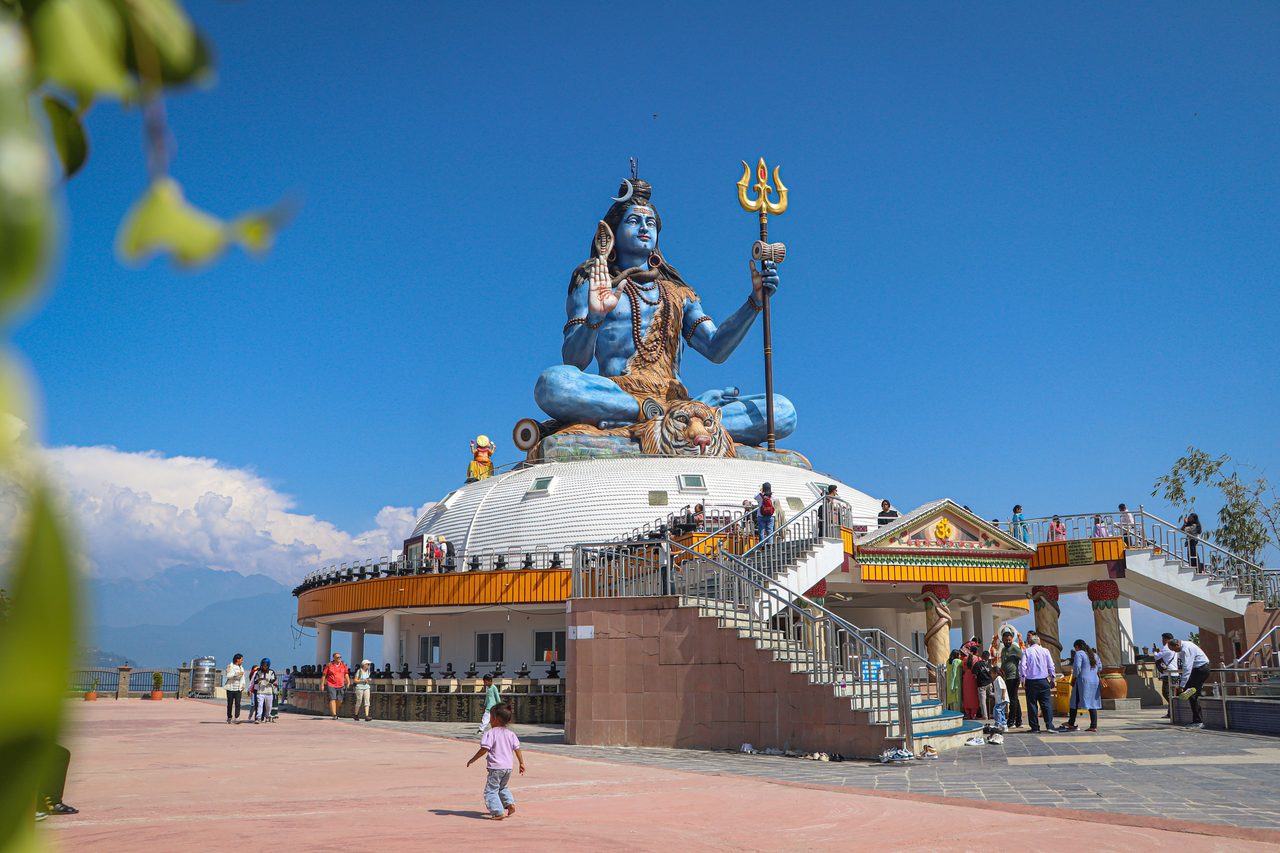
Gandaki Province · 27 Places · Best October to November
Gandaki
Gandaki Province is Nepal's adventure heartland, home to Pokhara—the gateway to the Annapurna Himalayas—and encompassing some of the world's most dramatic landscapes from subtropical valleys to high-altitude deserts. The province stretches from the Terai plains to the peaks of the Annapurna and Manaslu ranges, including the mystical kingdom of Mustang.
Gandaki Province encompasses Nepal's most iconic trekking destinations and adventure experiences. Pokhara, the provincial capital, sits beside the serene Phewa Lake with Machhapuchhre and Annapurna peaks as a backdrop. The province is home to the Annapurna Conservation Area, the world's most popular trekking destination, as well as the restricted kingdom of Upper Mustang with its Tibetan Buddhist heritage.
Capital
Pokhara
Largest city
Pokhara
Population
2.4 million
Languages
Nepali, Gurung, Magar, Thakali, English (tourist areas)
The 27 destinations our editors recommend — from iconic landmarks to under-the-radar finds.
Phewa Lake (Fewa Tal)
The jewel of Pokhara and Nepal's second-largest lake, Phewa Lake stretches 5.23 square kilometers through the heart of the city with a maximum depth of 24 meters. The lake's glassy surface reflects the Annapurna and Machhapuchhre (Fishtail Mountain) peaks on clear mornings, creating one of Nepal's most photographed scenes. Visitors can rent rowboats or paddleboats to explore the lake, visit the Tal Barahi Island Temple by boat, or simply walk the lakeside promenade.
World Peace Pagoda (Shanti Stupa)
A gleaming white Buddhist stupa built in 1999 by the Japanese Nipponzan-Myohoji order, perched atop Anadu Hill at 1,113 meters above sea level. The pagoda offers one of the most spectacular panoramic views in Nepal, encompassing Phewa Lake far below, the entire Pokhara Valley, and the Annapurna and Dhaulagiri Himalayan ranges. The climb or boat-and-hike approach is well worth the effort.
Sarangkot Viewpoint
The most famous sunrise viewpoint near Pokhara, Sarangkot sits at 1,592 meters and provides an unobstructed panoramic view of the Annapurna Range (I, II, III, IV, and South), Dhaulagiri, and the iconic spire of Machhapuchhre (6,993m). Dawn here is a spectacular spectacle as Himalayan peaks glow pink and gold in the first light. Sarangkot is also the take-off point for Pokhara's famous paragliding flights.
Davis Falls (Devi's Falls)
A dramatic waterfall located 2km southwest of Pokhara Airport on the Siddhartha Highway, where the Pardi Khola river plunges into a deep underground gorge. The falls are named after a Swiss woman who was tragically swept away in 1961. During the monsoon season (July-August), the torrent is truly ferocious; in dry season the falls are more approachable. Directly opposite is the entrance to Gupteshwor Cave.
Gupteshwor Mahadev Cave
The longest cave in South Asia, located directly opposite Davis Falls in Chhorepatan. The cave is dedicated to Lord Shiva (Mahadev) and contains a revered naturally-formed lingam (phallic idol) worshipped by Hindu pilgrims. The dramatic cavern descends underground and connects to a subterranean view of Davis Falls from below, creating a unique geological and spiritual experience. The name translates as 'Hidden God'.
International Mountain Museum
One of Asia's finest mountaineering museums, dedicated to the mountains and people of the Nepal Himalayas. The museum covers the history of Himalayan exploration, the cultures of mountain peoples (Sherpa, Gurung, Thakali, Manangi), and the ecology of the high Himalaya. Exhibits include original equipment from first ascents of all 14 eight-thousanders, rare photographs, and scale models of major peaks. A must-visit for trekkers and mountaineering enthusiasts.
Recommended itineraries
Pick a length, follow the route. Each itinerary balances headline sights with breathing room.
5-Day Gandaki Explorer
Day 1Arrive in Gandaki, explore city center
Day 2Visit top attractions and museums
Day 3Day trip to nearby highlights
Day 4Local markets and hidden gems
Day 5Final sightseeing, departure
7-Day Classic Gandaki
Days 1-2Gandaki city highlights
Days 3-4Regional exploration
Days 5-6Cultural immersion and local experiences
Day 7Return and departure
14-Day Ultimate Gandaki
Days 1-3Gandaki comprehensive city tour
Days 4-6Northern region exploration
Days 7-9Eastern highlights
Days 10-12Southern attractions
Days 13-14Return to Gandaki, departure
Where to stay in Gandaki
Three tiers, every traveller covered — from cost-conscious to flagship hotels.
Budget $15-30/day in Pokhara (excluding activities)
Hostels, budget hotels, and guesthouses offer affordable stays without sacrificing experience.
Mid-range $60-120/day in Pokhara
Boutique hotels and well-located accommodations provide comfort and convenience at reasonable prices.
Luxury $200-500+/day
World-class resorts and premium hotels deliver unforgettable experiences.
Temple Tree Resort & Spa
Damside, Pokhara · $$$
Pokhara's most acclaimed boutique resort, combining Western standards with the architecture and culture of Nepal's Western Himalayas. Set in the Dam Side area with 68 beautifully appointed rooms, Temple Tree features two restaurants, a large outdoor pool, and a full-service spa. The lush tropical gardens, warm staff, and easy walk to restaurants and the lakeside make it the benchmark for luxury in Gandaki Province.
An iconic Pokhara institution set on a forested peninsula in Phewa Lake, accessible only by a hand-drawn raft. Fish Tail Lodge offers extraordinary seclusion with stunning Himalayan views including Machhapuchhre (Fishtail Mountain). The 50 cottages blend traditional Nepali architecture with modern comforts. The lakeside setting, panoramic mountain views, and tranquil atmosphere make it unlike any other hotel in Nepal.
A sustainability-focused luxury retreat located one hour outside Pokhara's center, surrounded by rice terraces and Himalayan peaks. Powered by solar energy with rainwater harvesting, the property features an organic farm restaurant, a pool with Himalayan salt filtration, and stunning panoramic mountain views. Ideal for travelers wanting a peaceful, eco-conscious luxury escape in the Gandaki hills.
A legendary eco-lodge set on a hilltop ridge above Pokhara with unobstructed 270-degree panoramic views of the entire Annapurna and Dhaulagiri ranges. Comprising beautifully appointed stone cottages with thatched roofs and local wood interiors, Tiger Mountain offers guided nature walks, birdwatching, yoga, and a superb farm-to-table restaurant. One of the finest lodge experiences in all of Nepal.
Cafés, neighbourhood gems, and tasting menus worth the table reservation.
Caffe Concerto
Italian / Nepali fusion · $$-$$$
Pokhara's most distinguished restaurant, open since 1987 and still one of the best in the city. Caffe Concerto uses certified organic produce to create wood-fired pizzas, handmade pasta, and house-made gelato. The terrace overlooks Phewa Lake, making it the ideal setting for a special evening meal. Consistently ranked among the top dining experiences in all of Nepal.
Old Star Restaurant
Nepali / International · $-$$
A beloved Lakeside institution with outstanding lake views from its terrace. Old Star serves excellent dal bhat thali, momos, lassi, and a broad international menu. Popular with both international visitors and Nepali locals, the restaurant has built a loyal following for its consistent quality and unbeatable setting overlooking Phewa Lake.
Moondance Restaurant
Asian / Nepali fusion · $-$$
A perennial favourite on the Lakeside restaurant strip, Moondance is renowned for its Pad Thai, Nepali curries, and relaxed evening atmosphere. The cozy multi-level space fills up most evenings with travelers fresh from treks. The menu balances Asian flavours with Western comfort food, and the cocktail list is well-regarded for Pokhara.
Godfather's Pizzeria
Italian / Pizza · $
The most popular pizza destination in Pokhara, Godfather's turns out consistently excellent wood-fired pizzas with a wide range of toppings including local yak cheese. The relaxed atmosphere and reasonable prices attract a broad mix of trekkers, families, and long-term travelers. The garlic bread and tiramisu are standouts.
Natssul Korean Restaurant
Korean · $$
Pokhara's best Korean restaurant, run by a Korean expat and delivering authentic Korean barbecue, bibimbap, ramen, kimchi, and banchan side dishes. The tabletop grills are a fun group experience and the kimchi is made in-house. A welcome change of pace from the Nepali-international menu that dominates most Lakeside restaurants.
Fresh Elements
International / Fusion · $$
A stylish restaurant offering one of Pokhara's broadest menus: Mexican wraps, sandwiches, pasta, steaks, and an excellent wine and cocktail list. Fresh Elements is popular with travelers celebrating a trek completion or looking for a more cosmopolitan dining experience. The Mexican burrito and the fresh-squeezed juice bar are highlights.
Pokhara International Airport (PKR) serves as the main hub with flights from Kathmandu (25 min). Tourist buses run between Pokhara and Kathmandu (7-8 hours, $10-20). Local jeeps and buses connect district headquarters.
Flight
Buddha Air, Yeti Airlines, Shree Airlines fly Kathmandu-Pokhara
Cost: $50-90
Tourist Bus
Air-conditioned tourist buses Pokhara-Kathmandu
Cost: $10-20
Local Bus
Public buses within Gandaki
Cost: $1-5
Taxi
Available in Pokhara
Cost: $2-10
Budget breakdown
Daily spend by tier in , broken out by category.
Category
Budget
Mid-range
Luxury
Accommodation
$8-20/night (hostel dorm or basic guesthouse)
$40-80/night (3-star hotel)
$120-350/night (Temple Tree, Fish Tail Lodge)
Food (per day)
$5-10/day (local restaurants and street food)
$15-25/day (restaurant meals, occasional Western cuisine)
Average daytime temperature in °C. Figures are for Nepal.
Essential travel tips
Exchange money in Pokhara at banks for best rates
Carry cash—ATMs are rare above Besisahar on treks
Book accommodation in advance during October-November peak season
Hire a licensed guide for any trekking above 3500m
Hidden gems
Off-the-beaten-path corners most travellers miss.
Tilicho Lake
One of the world's highest lakes at 4919m, rarely visited compared to ABC
Manang District
Bandipur
A perfectly preserved Newari hilltop town with stunning Himalayan views
Tanahun District
Jhinu Danda Hot Springs
Natural hot springs near Chomrong on the ABC trail
Kaski District
Safety information
INFO
Purchase trekking insurance that specifically covers helicopter evacuation above 5,000m before arriving in Nepal - do not skip this.
INFO
Always carry ACAP and TIMS permits while trekking in the Annapurna Conservation Area; checkpoints verify them throughout the route.
INFO
Acclimatize properly above 3,000m by following the rule of ascending no more than 300-500 meters per day and taking a rest day in Manang.
INFO
Never cross Thorong La Pass (5,416m) after 10am - afternoon winds and weather develop rapidly and conditions can turn dangerous.
INFO
Hire a licensed guide for all trekking above 3,500m; solo trekking without a registered guide is now illegal in Nepal's conservation areas.
INFO
Carry sufficient NPR cash for your entire trek plus a safety reserve - ATMs are unavailable above Besisahar on the Annapurna Circuit.
INFO
Purchase a Nepali SIM card (Ncell or NTC) in Pokhara and share your trekking itinerary with family, friends, and your country's embassy.
INFO
Use hotel safes for passports, extra cash, and important documents in Pokhara; on the trail keep permits in a waterproof inner pocket.
INFO
Drink only bottled water, boiled water, or use water purification tablets or a filter - never drink untreated tap or stream water.
INFO
Always ask permission before photographing people, temples, or religious ceremonies; some temples prohibit photography entirely.
INFO
Verify guide licenses with the Nepal Tourism Board before paying any trekking package deposit and avoid touts offering suspiciously cheap deals.
INFO
In the event of altitude sickness symptoms (headache, nausea, dizziness), descend immediately and do not sleep at a higher altitude until fully recovered.
Frequently asked questions
What is the best time to visit Gandaki?
The best time to visit Gandaki is October to November.
Do I need a visa to visit Gandaki?
Most nationalities require a visa on arrival at Tribhuvan International Airport Kathmandu or Pokhara International Airport. Tourist visas cost USD 30 (15 days), USD 50 (30 days), or USD 125 (90 days). Indian nationals do not require a visa. Requirements vary by nationality, so check with your nearest embassy or the official immigration website before traveling.
What currency is used in Gandaki?
The currency in Gandaki is the Nepalese Rupee (NPR). ATMs are widely available in cities and tourist areas. Credit cards are accepted at most hotels and restaurants, but carry cash for markets and smaller establishments.
What language is spoken in Gandaki?
The main language(s) spoken in Gandaki: Nepali, Gurung, Magar. In tourist areas, English is generally understood. Learning a few basic phrases in the local language is appreciated by locals.
What are the top attractions in Gandaki?
The top attractions in Gandaki include Phewa Lake (Fewa Tal), World Peace Pagoda (Shanti Stupa), Sarangkot Viewpoint, Davis Falls (Devi's Falls), and Gupteshwor Mahadev Cave. Each offers a unique experience, from historic landmarks to natural wonders.