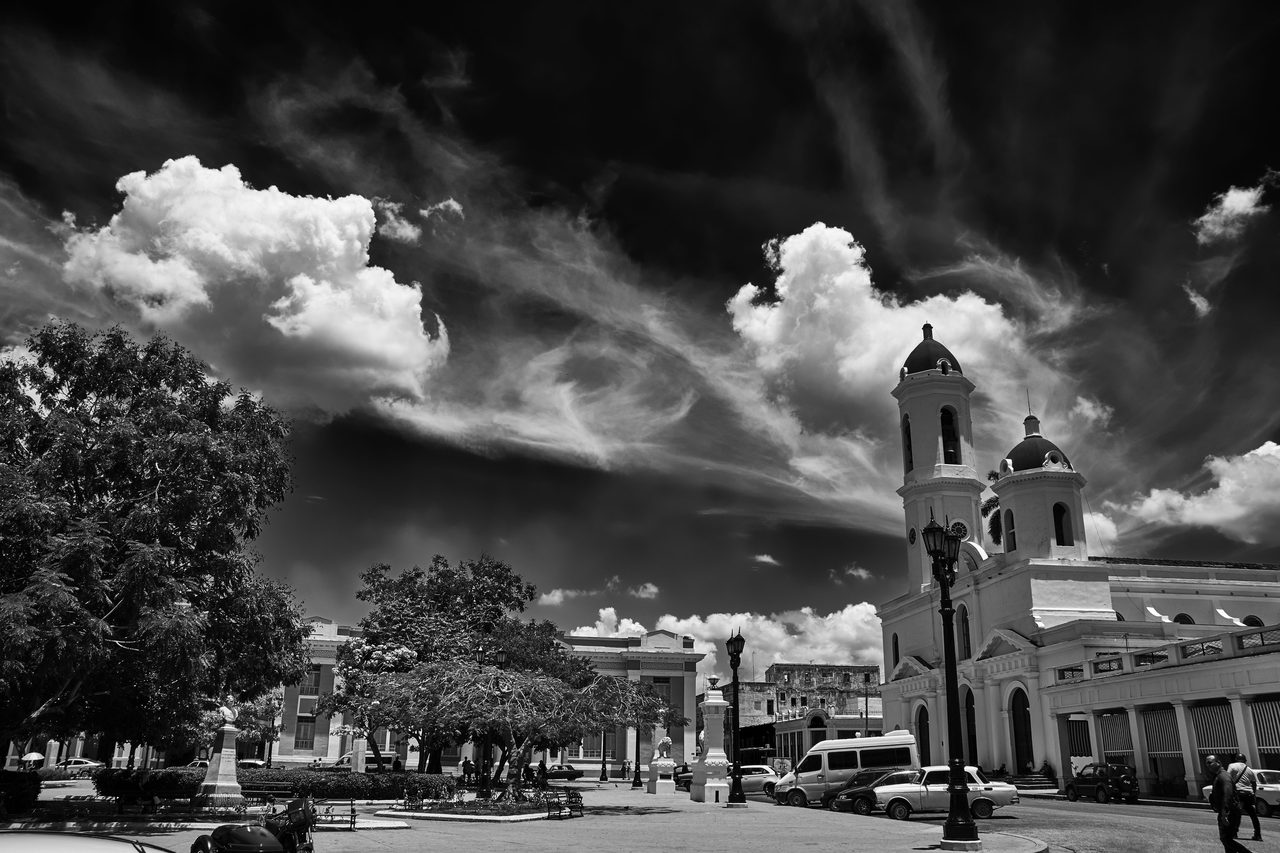
Campeche is a Gulf-coast state on the western side of Mexico's Yucatan Peninsula, best known for its walled capital, San Francisco de Campeche, a UNESCO World Heritage city of pastel facades, baroque churches, and Spanish colonial ramparts built to repel Caribbean pirates. Inland, the state holds two-thirds of the Yucatan Peninsula's tropical forest and the vast Maya metropolis of Calakmul, hidden inside a biosphere reserve on the Guatemalan border. Campeche receives a fraction of the visitors that reach Cancun or Merida, which is precisely its appeal.
Campeche stretches from the Gulf of Mexico coast deep into the lowland jungle of the southern Yucatan Peninsula, covering 57,507 km² with barely a million residents. The capital, San Francisco de Campeche, was inscribed on the UNESCO World Heritage list in 1999 as the best-preserved example of a fortified Spanish colonial port city in the Americas: two surviving bastioned forts, seven baluartes, and a candy-coloured grid of streets behind the old sea wall. Two hundred kilometres south, the Calakmul Biosphere Reserve protects Mexico's largest tropical forest reserve along with Calakmul itself, a mixed UNESCO World Heritage property whose Structure II is the tallest Maya pyramid in the country. Between the two lie Edzná with its five-storey palace, the Chenes and Río Bec architectural zones, the Pueblos Mágicos of Palizada, Isla Aguada, and Candelaria, and the hat-weaving caves of Bécal. Campeche also carries the lowest United States travel advisory rating in Mexico, making it an unusually relaxed base for independent travel, road trips, and archaeology-focused itineraries.
The 27 destinations our editors recommend — from iconic landmarks to under-the-radar finds.
Calakmul Archaeological Zone and Biosphere Reserve
Calakmul is the largest Maya city yet excavated in Mexico and the only property in the country inscribed by UNESCO as a mixed cultural and natural World Heritage site, listed in 2002 and extended in 2014. Buried in the Peten rainforest 60 km down a paved side road from Highway 186, it preserves more than 6,750 recorded structures, including Structure II, one of the tallest pyramids in the Maya world at around 45 m. Entry involves three separate payments: an ejido road toll at Conhuas, a CONANP biosphere reserve fee and the INAH archaeological ticket.
Edzna Archaeological Zone
Edzna, meaning House of the Itzas, is the most accessible major Maya city in Campeche, 55 km southeast of the state capital. Its centrepiece is the five-storey Edificio de los Cinco Pisos, a rare pyramid-palace hybrid rising above the Gran Acropolis, alongside the Templo de los Mascarones and an extensive pre-Hispanic canal and reservoir network engineered to manage the seasonal floods of the Chenes plain. The site is set on open lawns rather than dense jungle, making it comfortable to walk.
Historic Fortified Town of Campeche (Centro Historico)
The walled colonial core of San Francisco de Campeche was inscribed on the UNESCO World Heritage List in 1999 as the best-preserved example of a fortified Spanish port town on the American mainland. A grid of pastel houses in ochre, indigo and coral fills roughly nine blocks between the two surviving city gates, ringed by a baroque hexagonal wall circuit begun in 1686 to repel English and Dutch pirates. Calle 59, the pedestrian spine, links the Puerta de Tierra to the Puerta de Mar past cafes, galleries and the cathedral square.
Puerta de Tierra and the City Walls
The Land Gate of 1732 is the surviving eastern entrance to the walled city and anchors Campeche's best-preserved stretch of rampart, running some 200 m between the Baluarte de San Juan and the Baluarte de San Francisco. Visitors can walk the paso de ronda along the top of the wall for views over the Barrio de Guadalupe and the rooftops of the historic centre. On show nights the gate hosts the light-and-sound spectacle El Lugar del Sol, which narrates the pirate assaults that prompted the fortifications.
Fuerte de San Miguel and the Museo de Arqueologia Maya
Completed in 1801 on a hill 3 km southwest of the historic centre, this moated, drawbridge-fronted fort commands the widest view of the Gulf of Mexico in Campeche and still bristles with its original cannon. Inside, the Museo de Arqueologia Maya displays finds from Calakmul, Edzna and Jaina, including the jade funerary masks recovered from royal burials at Calakmul and the celebrated Jaina island ceramic figurines. The combination of ramparts, sea panorama and first-rank Maya collection makes it the most rewarding museum visit in the state.
Baluarte de la Soledad and the Museo de Arquitectura Maya
The largest of Campeche's eight surviving bastions guards the seaward side of the walled city beside the Puerta de Mar. Its vaulted casemates house the Museo de Arquitectura Maya, which explains the five regional building styles of the Yucatan peninsula, Rio Bec, Chenes, Puuc, Peten and Costa Oriental, through stelae, carved lintels and architectural fragments drawn from sites across the state. A short stair leads to the roof terrace, which overlooks the Plaza de la Independencia and the sea.
Recommended itineraries
Pick a length, follow the route. Each itinerary balances headline sights with breathing room.
5-Day Campeche Explorer
Day 1Arrive in Campeche, explore city center
Day 2Visit top attractions and museums
Day 3Day trip to nearby highlights
Day 4Local markets and hidden gems
Day 5Final sightseeing, departure
7-Day Classic Campeche
Days 1-2Campeche city highlights
Days 3-4Regional exploration
Days 5-6Cultural immersion and local experiences
Day 7Return and departure
14-Day Ultimate Campeche
Days 1-3Campeche comprehensive city tour
Days 4-6Northern region exploration
Days 7-9Eastern highlights
Days 10-12Southern attractions
Days 13-14Return to Campeche, departure
Where to stay in Campeche
Three tiers, every traveller covered — from cost-conscious to flagship hotels.
Budget MXN 850 (~USD 50)
Hostels, budget hotels, and guesthouses offer affordable stays without sacrificing experience.
Mid-range MXN 2,400 (~USD 141)
Boutique hotels and well-located accommodations provide comfort and convenience at reasonable prices.
Luxury MXN 6,500+ (~USD 382+)
World-class resorts and premium hotels deliver unforgettable experiences.
Hacienda Puerta Campeche, a Luxury Collection Hotel
Centro Historico, San Francisco de Campeche · MXN 5,100-11,900 (~USD 300-700) per night
A row of 17th-century mansions on Calle 59 was joined into a single 15-room hotel whose central swimming pool runs through the roofless shells of the original houses. The property sits inside the walled city, a five-minute walk from Puerta de Tierra, and is the most expensive address in the state capital.
Uayamon, 25 km inland from Campeche city · MXN 5,100-12,750 (~USD 300-750) per night
Twenty minutes inland from the capital, this restored henequen estate dating from the 1700s keeps its ruined chapel and machine house as garden features around 12 villa-style rooms. Several suites have private plunge pools, and the spa and candlelit dining room in the old engine house are the reasons most guests make the drive.
Calle 59, Centro Historico · MXN 2,210-4,250 (~USD 130-250) per night
An 18th-century merchant house on Calle 59 restored with its original tiles, ironwork, and family portraits, holding ten individually decorated rooms around a courtyard with a small pool and whirlpool. A full breakfast is included and the in-house restaurant serves Campechano cooking in the arcaded patio.
Centro Historico, near Baluarte de San Carlos · MXN 1,190-1,870 (~USD 70-110) per night
A colonial building near the Baluarte de San Carlos, Castelmar was a 19th-century boarding house and keeps its patterned pasta tile floors, high ceilings, and a long arcaded courtyard with a small pool. Rooms are simple but generously sized, and the location two blocks from the main square is among the best value inside the walls.
Cafés, neighbourhood gems, and tasting menus worth the table reservation.
La Pigua
Campechano seafood · $$$
The reference address for Campeche seafood, set in a glass-walled dining room shaped like a conservatory on the Malecon Miguel Aleman in Barrio de Guadalupe. The kitchen works almost entirely with the Gulf catch, and the menu covers pan de cazon, pulpo Sir Francis Drake, manos de cangrejo (crab claws) and pampano en verde. It has been the city's benchmark restaurant for regional fish cooking for decades.
La Maria Cocina Peninsular
Modern peninsular Mexican · $$$
A small contemporary kitchen on Calle 8 in the historic centre that rebuilds peninsular recipes with modern technique and consistently ranks as the top-rated restaurant in Campeche city. The signature pulpo Maria, tacos of shrimp al pastor and Jamaica-flower tacos sit beside more traditional plates. Seating is limited and the room fills quickly on Friday and Saturday nights.
Marganzo
Campechano regional and seafood · $$
A long-running regional restaurant just inside the Puerta del Mar on Calle 8, decorated in colonial style with waitresses in traditional Campechano dress and live marimba at peak hours. The menu is a survey of state classics, with a theatrical pan de cazon presentation, chile mestizo relleno, panuchos and Gulf fish. It is the most straightforward single stop for tasting the regional repertoire in one sitting.
La Parroquia
Mexican and regional home cooking · $
The one restaurant in Campeche's historic centre that never closes, open around the clock on Calle 55 with a rotating weekly menu of home-style Mexican and Campechano dishes. Breakfast eggs, sopa de lima, cochinita and comida corrida plates arrive fast and cheap in a plain, brightly lit dining room. It is the default choice for early bus departures, late arrivals and any meal outside normal hours.
Casa Vieja de los Arcos
Yucatecan and Campechano · $$
An upstairs terrace restaurant set behind the colonial arcades on Calle 10, looking straight down onto the Parque Principal and the cathedral facade. The kitchen serves peninsular staples such as poc chuc, queso relleno and pan de cazon, with cocktails and Cuban-leaning music in the evening. The view over the zocalo is the main reason to book the balcony rail.
Casa Don Gustavo
Campechano and international · $$$$
The restaurant of a 17th-century mansion turned boutique hotel on Calle 59, serving in a stone courtyard framed by heavy arches or at tables set out on the pedestrian street. The menu pairs polished versions of Campeche classics with international options and a full breakfast service. It is the most formal courtyard setting in the historic centre without being stiff.
Campeche is Mexico's second-least-densely-populated Gulf state, and distances are long: 190 km from the capital to Ciudad del Carmen, 300 km to Escárcega and Xpujil, and 120 km of dirt-and-asphalt approach road to Calakmul from Highway 186. Since December 2023 the Tren Maya has transformed north-south travel, putting Mérida 2h14m away and Palenque within a five-hour ride of San Francisco de Campeche. ADO buses remain the backbone for anything the train misses, running 82 daily departures to Mérida alone. Inside the capital, the new Tren Ligero light-rail line stitches the airport, the Tren Maya station and the historic centre together for a flat 18 MXN (approx. USD 1.06). For the Calakmul Biosphere Reserve, the Petenes wetlands and the state's quiet Gulf beaches, a rental car or an organised tour is the realistic answer.
Budget breakdown
Daily spend by tier in MXN, broken out by category.
Category
Budget
Mid-range
Luxury
Accommodation
MXN 400 (~USD 24)
MXN 1,300 (~USD 76)
MXN 4,000 (~USD 235)
Food (per day)
MXN 250 (~USD 15)
MXN 600 (~USD 35)
MXN 1,500 (~USD 88)
Transportation
MXN 120 (~USD 7)
MXN 300 (~USD 18)
MXN 600 (~USD 35)
Activities
MXN 80 (~USD 5)
MXN 200 (~USD 12)
MXN 400 (~USD 24)
Daily total
MXN 850 (~USD 50)
MXN 2,400 (~USD 141)
MXN 6,500+ (~USD 382+)
Best time to visit Campeche
Weather through the year in Campeche
Best timeShoulderWorth avoiding
Average daytime temperature in °C. Figures are for Campeche.
November through February combines warm dry days near 30°C (86°F), low humidity, comfortable evenings, and the state's richest cultural calendar with Hanal Pixan and Carnaval. Visitors focused on Calakmul and Edzna should strongly favour this window, since the jungle sites are gruelling in the hot months. Travellers prioritising low prices and empty ruins can do well in September and October, provided the itinerary stays flexible for rain.
Essential travel tips
Calle 59 between the Puerta de Mar and the Puerta de Tierra is closed to traffic in the evenings and is the best place for an early dinner before the free sound-and-light show at the Puerta de Tierra
Cash matters far more here than in Cancun or Merida; keep small peso notes for colectivos, community fees, and market stalls
The Museo Arqueológico de Campeche at Fuerte de San Miguel is closed on Mondays, so plan the fort visit for another day
Calakmul deserves a night in Xpujil or at a lodge on Highway 186 rather than a day trip from the capital, which would mean twelve hours of driving
Order pan de cazón at least once, and try camarones al coco and the local chile x'catic stuffed with cheese
Sunset over the Gulf from the malecón near the Baluarte de San Carlos is a nightly local ritual and costs nothing
Hidden gems
Off-the-beaten-path corners most travellers miss.
Rampart walk above Puerta de Tierra
Looks straight down the length of pastel Calle 59
Structure II summit, Calakmul
Rainforest canopy to the Guatemalan border with no built horizon
Fuerte de San Jose el Alto terrace
The best panorama over the walled town and the Gulf
Nohochna terrace at Edzna
The viewing platform facing the Gran Acropolis in late afternoon light
Barrio de San Roman plaza
Neighbourhood evening life around the church of the black Christ
Champoton river mouth at dawn
Shrimp boats unloading the night's catch
Xmuch'haltun botanical garden
A walled garden inside Baluarte de Santiago, usually deserted in the morning
Becal side-street weaving caves
Families weaving jipijapa palm in limestone cellars under their houses
Hochob and Dzibilnocac on the Chenes route
Monster-mouth facades an hour from Edzna with almost no visitors
Calakmul access road at sunrise
One of Mexico's finest wildlife drives, best before 08:00
Campeche Malecon at sunset
The city faces due west over the Gulf of Mexico
Miguel Colorado cenote viewpoint
Jade-green sinkhole lakes below limestone walls, with howler monkeys at dusk
Safety information
INFO
Campeche state carries the US State Department's Level 1 rating, the lowest of four levels and shared only with Yucatan among Mexican states, so standard travel precautions rather than heightened vigilance are what is called for
INFO
The walled historic centre and the Malecon are comfortable to walk after dark and are busy with local families most evenings; ordinary awareness in quieter side streets outside the walls is still sensible
INFO
Agree taxi fares before departure because Campeche cabs are unmetered, and use the authorised taxi desk at Ingeniero Alberto Acuna Ongay International Airport (CPE)
INFO
Hurricane season runs from June to November with peak risk in September and October; monitor the Servicio Meteorologico Nacional and state Proteccion Civil alerts and know the hotel's evacuation plan when staying on the coast
INFO
Nortes, cold-front winds from November to February, bring sudden strong gusts, rough Gulf seas, and occasional flooding of the Malecon; boat trips are frequently cancelled at short notice during these events
INFO
April and May are dangerously hot, often above 36°C (97°F) with high humidity, so archaeological sites should be visited at opening time with plenty of water and sun protection
INFO
Drive the Escarcega-Xpujil highway to Calakmul only in daylight: the road is narrow, unlit, crossed by wildlife, and punctuated by unmarked topes (speed bumps), and there are long stretches with no fuel or phone signal
INFO
Fill the tank before leaving for Calakmul and carry cash, as the access road has no services and the three site fee checkpoints do not take cards
INFO
Use repellent from dusk onwards during the June to November rainy season, when dengue-carrying mosquitoes are most active
INFO
Swimming off Campeche city's Malecon is not recommended because of murky water and boat traffic; Playa Bonita and the beaches around Champoton and Sabancuy are the safe options
INFO
Carry a photocopy or phone photo of the passport and FMM tourist card and leave the originals in the hotel safe
INFO
Keep 078 saved in the phone for bilingual tourist and roadside assistance and 911 for all emergencies
Frequently asked questions
Do travellers need a visa to visit Campeche?
Entry requirements follow Mexico rules. Citizens of the United States, Canada, the United Kingdom, the European Union, Australia, and many other countries enter visa-free as tourists for up to 180 days, with the permitted stay recorded on arrival by immigration officers. Nationals of countries outside the visa-waiver list must apply at a Mexican consulate in advance, though holders of a valid US, Canadian, Japanese, UK, or Schengen visa are usually exempt. Requirements vary by nationality, so check with the nearest Mexican embassy or the official immigration website before travelling.
Is Campeche safe for tourists in 2026?
Campeche is rated Level 1, Exercise Normal Precautions, by the United States Department of State, the lowest advisory level applied to any Mexican state and shared only with Yucatan. The walled capital is comfortable to walk in the evening and violent crime affecting visitors is rare. The practical hazards are heat, mosquitoes in the rainy season, and unlit rural highways with livestock and unmarked speed bumps, so daylight driving and plenty of water matter more than security precautions.
How much does it cost to visit Calakmul?
Reaching Calakmul involves three separate cash-only payments at three checkpoints: a community fee at the Highway 186 turnoff, a CONANP fee for entering the biosphere reserve, and the INAH archaeological site fee. For a foreign visitor the total lands around MXN 500-560 (~USD 29-33) per person, plus a per-vehicle charge. There are no card readers or ATMs on the 60 km reserve road, so cash should be withdrawn in Xpujil or Escarcega beforehand, and the reserve gate stops admitting vehicles in the early afternoon.
How do travellers get from Campeche city to Merida?
ADO first-class coaches leave the terminal at Avenida Patricio Trueba 237 throughout the day and reach Merida in about two and a half hours for roughly MXN 380-520 (~USD 22-31). The Tren Maya also serves San Francisco de Campeche on the Palenque to Cancun corridor, with tickets sold at station windows and through the official reservation portal. Driving Highway 180 takes a similar two and a half hours.
What food is Campeche famous for?
Campeche's signature dish is pan de cazón, layers of tortilla, shredded dogfish shark, refried black beans, and tomato sauce stacked like a savoury cake. Other local specialities include camarones al coco (coconut shrimp), pampano en verde, cocteles de camarón, chile x'catic stuffed with cheese, and tamales colados. The state's Gulf seafood tradition is distinct from the drier Yucatecan cooking found inland in Merida.
How many days are needed for Campeche?
Two days cover the walled capital, Fuerte de San Miguel, and a half-day trip to Edzná. Adding Calakmul requires at least two more days, since the drive from the capital is five to six hours each way and an overnight in Xpujil or at a lodge on Highway 186 is needed to reach the ruins early. A five- to six-day itinerary comfortably combines the colonial city, Edzná, the Chenes sites, Calakmul, and one coastal stop such as Isla Aguada or Sabancuy.