
St John's Co-Cathedral
The Knights of St John's conventual church, finished in 1577, with a lavishly carved Baroque interior, a marble-tomb floor and Caravaggio's 'The Beheading of Saint John the Baptist' in the oratory.
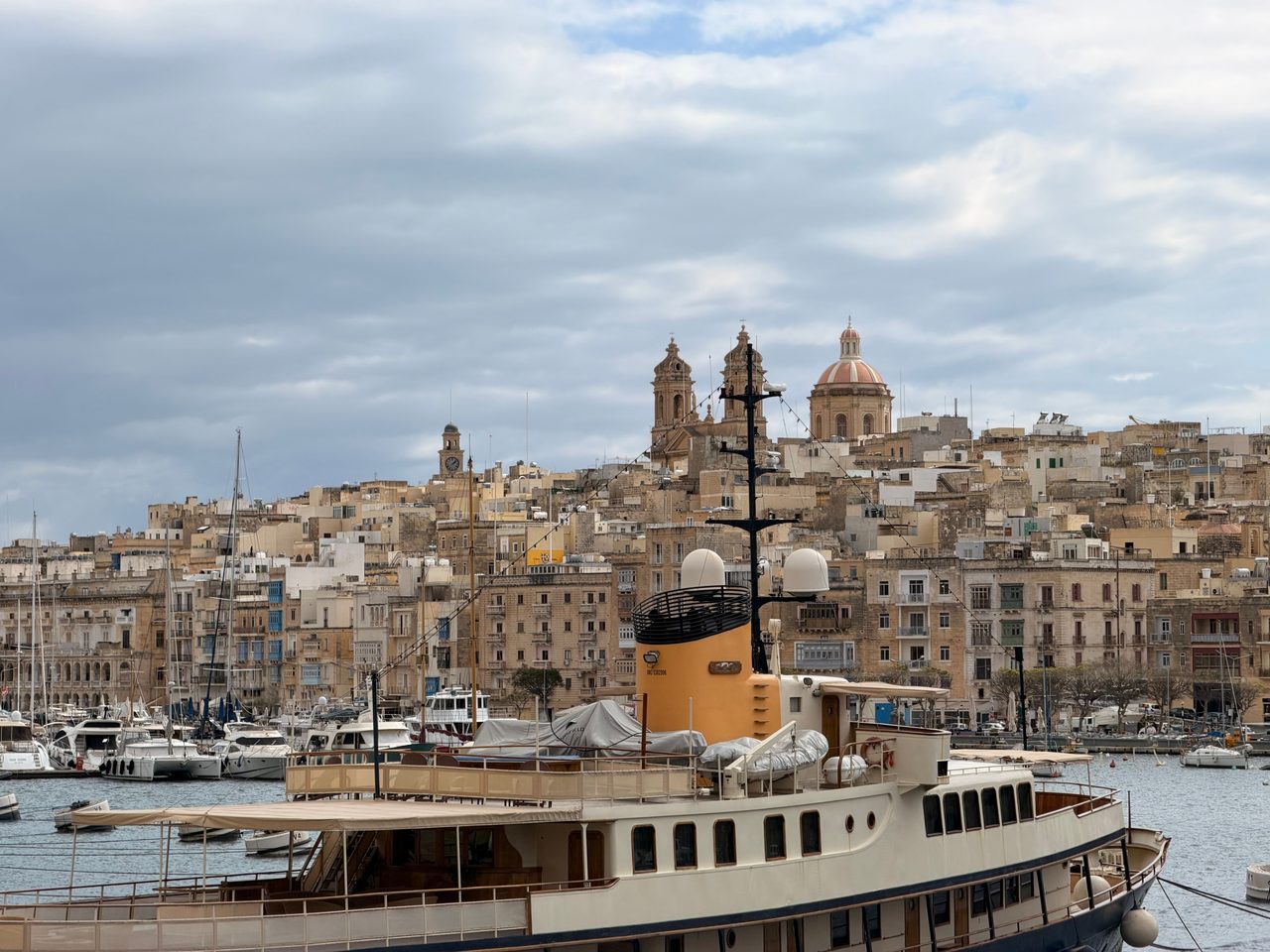
South Eastern · 15 Places · Best April-June and September-October
Valletta travel guide: UNESCO-listed capital of Malta with Baroque churches, bastion gardens, museums and Strait Street nightlife. Where to stay, eat and what to see.
Valletta is the capital of Malta, a fortified city on a rocky peninsula between the Grand Harbour and Marsamxett Harbour. Founded in 1566 by the Knights of St John after the Great Siege of 1565, it is only about 1 km long and is a UNESCO World Heritage Site. Its grid of steep, stepped streets holds St John's Co-Cathedral with its Caravaggio, Grand Master's Palace, the Upper and Lower Barrakka Gardens with their harbour views, the Lascaris War Rooms and Fort St Elmo. It is easily walked in a day but rewards two or three, with Strait Street bars and Michelin-starred dining after dark.
Jump straight to the experience you're planning.
The 15 destinations our editors recommend — from iconic landmarks to under-the-radar finds.
The Knights of St John's conventual church, finished in 1577, with a lavishly carved Baroque interior, a marble-tomb floor and Caravaggio's 'The Beheading of Saint John the Baptist' in the oratory.
The seat of the Grand Masters and now the Office of the President, with painted State Rooms, tapestries and one of Europe's largest surviving arsenals of Knights' armour.
A raised arcaded garden on the bastions with the finest panorama of the Grand Harbour and the Three Cities, plus the daily time-gun salute from the Saluting Battery below.
A quiet, shaded garden with a small Doric temple memorial to Sir Alexander Ball and wide views across the Grand Harbour to Fort Ricasoli and Fort St Angelo.
The underground tunnels from which the Allied Mediterranean campaign, including the defence of Malta and the 1943 invasion of Sicily, was directed in World War II.
The star-shaped fort at the tip of the peninsula that fell in the 1565 Great Siege, now housing the National War Museum covering Malta's military history from prehistory to World War II.
Pick a length, follow the route. Each itinerary balances headline sights with breathing room.
Three tiers, every traveller covered — from cost-conscious to flagship hotels.
Hostels, budget hotels, and guesthouses offer affordable stays without sacrificing experience.
Boutique hotels and well-located accommodations provide comfort and convenience at reasonable prices.
World-class resorts and premium hotels deliver unforgettable experiences.
Luxury harbour-view townhouse hotel on the Grand Harbour bastions; it houses the two-Michelin-star restaurant ION Harbour by Simon Rogan on the top floor.
Check rates on Booking.comSmall luxury boutique hotel in a restored 19th-century townhouse on Old Theatre Street, steps from the Manoel Theatre.
Check rates on Booking.comBoutique palazzo hotel on Merchants Street in the centre of the grid, a short walk from Grand Master's Palace.
Check rates on Booking.comBoutique hotel on Merchants Street, a two-minute walk from St John's Co-Cathedral and Is-Suq tal-Belt.
Check rates on Booking.comCafés, neighbourhood gems, and tasting menus worth the table reservation.
Malta's only two-Michelin-star restaurant (retained in the 2026 Michelin Guide), with Grand Harbour views.
Michelin-starred restaurant on Republic Street; prices shown are from a 2024 review and should be confirmed.
Michelin-starred room on Merchants Street with a more relaxed price point than most starred restaurants.
Long-standing Valletta restaurant with a blackboard menu that changes through the evening.
Valletta's best-known cafe, dating to the 19th century, with outdoor tables in Palace Square (Misraħ San Ġorġ).
Fine-dining restaurant inside an 18th-century palazzo on Strait Street.
Book a food tour in Valletta We may earn a commission from bookings made through this link.
Valletta is compact and best explored on foot. Buses terminate at City Gate; ferries link the city to Sliema and the Three Cities; the Barrakka Lift connects the gardens to the Grand Harbour.
Daily spend by tier in EUR, broken out by category.
| Category | Budget | Mid-range | Luxury |
|---|---|---|---|
| Accommodation | EUR 50-100 (~$58-115) | EUR 100-220 (~$115-253) | EUR 250-900 (~$288-1,035) |
| Food (per day) | EUR 20-30 (~$23-35) | EUR 45-80 (~$52-92) | EUR 120-300 (~$138-345) |
| Transportation | EUR 2-5 (~$2.30-5.75) | EUR 5-12 (~$5.75-14) | EUR 20-60 (~$23-69) |
| Activities | EUR 10-20 (~$11.50-23) | EUR 25-50 (~$29-58) | EUR 50-150 (~$58-173) |
| Daily total | EUR 85-150 (~$98-173) | EUR 175-360 (~$201-414) | EUR 440-1,400 (~$506-1,610) |
Best time Shoulder Worth avoiding
Average daytime temperature in °C. Figures are for South Eastern.
Spring and autumn are the sweet spots: warm, walkable and less crowded than summer.
Valletta has a Mediterranean climate: hot dry summers, mild wet winters. Spring and autumn give 20-26C (68-79F) for walking. February brings Carnival and the 10 February Feast of St Paul's Shipwreck, a public holiday in Valletta.
Keep bags zipped on Republic Street
Use licensed taxis or apps
Drink water in summer heat
Mind steep steps at night
Carry a photo ID or copy of the passport; Maltese police may ask for identification, and the emergency number is 112
Cover shoulders and knees when entering St John's Co-Cathedral and other churches, which enforce dress rules
Valletta is safe for solo and family travellers. Take normal precautions against pickpockets in crowds and heat exhaustion in summer.
The best time to visit Valletta is April-June and September-October. Valletta has a hot-summer Mediterranean climate: hot dry summers, mild wet winters and a long sunny spring and autumn. Values below are approximate averages.
Malta is in the Schengen Area. US, UK, Canadian and Australian citizens can visit visa-free for up to 90 days in any 180-day period. The EU's ETIAS travel authorisation is scheduled to start operating in the last quarter of 2026 with a transition period afterwards; check travel-europe.europa.eu/etias for the start date and fee before you travel. Requirements vary by nationality, so check with your nearest embassy or the official immigration website before traveling.
The currency in Valletta is the Euro (EUR). ATMs are widely available in cities and tourist areas. Credit cards are accepted at most hotels and restaurants, but carry cash for markets and smaller establishments.
The main language(s) spoken in Valletta: Maltese, English. In tourist areas, English is generally understood. Learning a few basic phrases in the local language is appreciated by locals.
The top attractions in Valletta include St John's Co-Cathedral, Grand Master's Palace and Palace Armoury, Upper Barrakka Gardens and the Saluting Battery, Lower Barrakka Gardens, and Lascaris War Rooms. Each offers a unique experience, from historic landmarks to natural wonders.