
On this page
About Ivory Coast
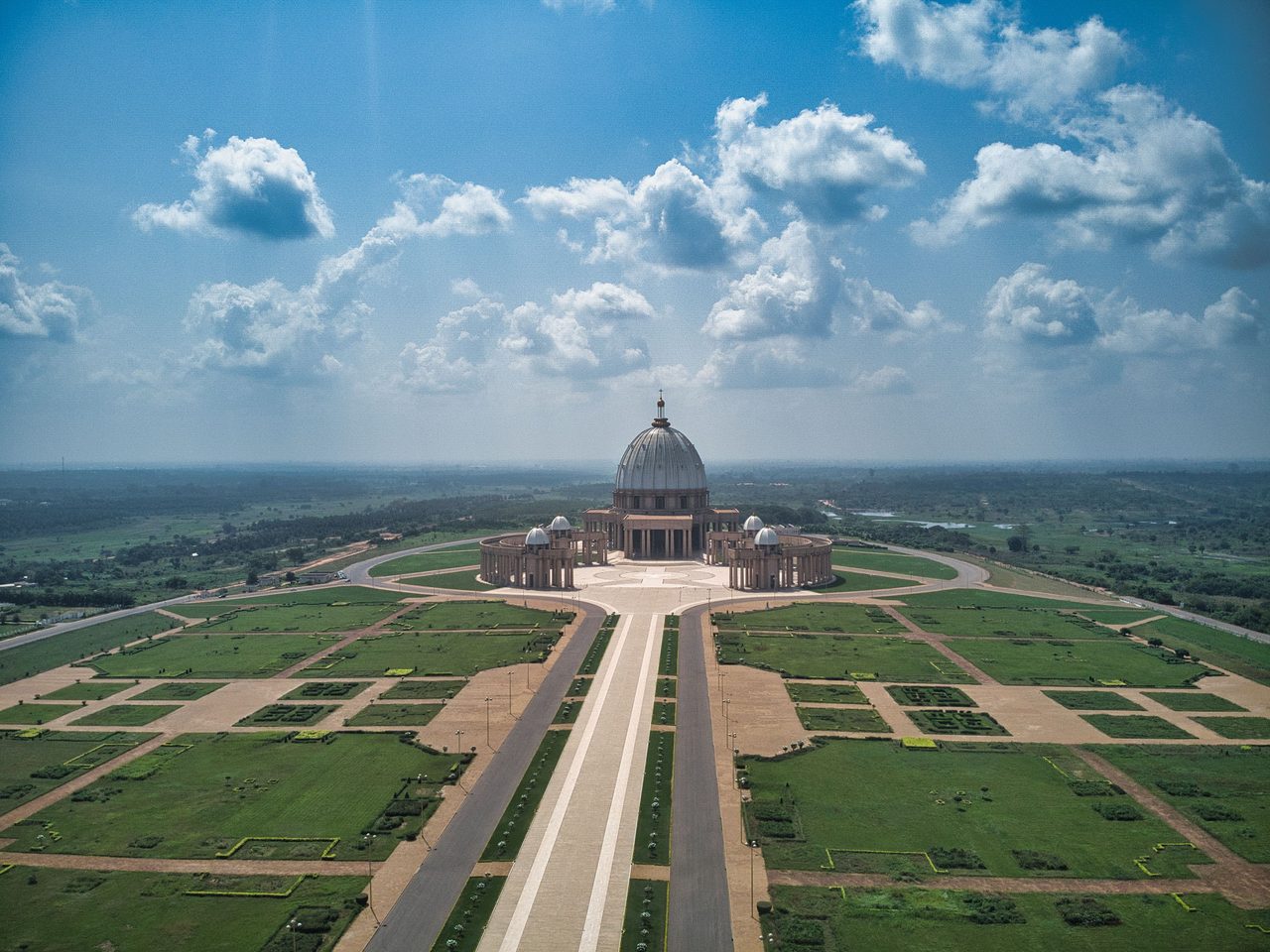
Ivory Coast stretches from the Atlantic beaches of Grand-Bassam and Assinie in the southeast, through the commercial capital Abidjan with its Plateau skyscrapers and Ébrié Lagoon, to the political capital Yamoussoukro in the center, home to the Basilica of Our Lady of Peace, one of the largest churches in the world. The south is humid and forested, with the port city of San-Pédro and Taï National Park's rainforest near the Liberian border; the north around Korhogo and Man is drier, hillier, and home to Senufo and Malinké communities known for masks, weaving, and mountain scenery. Ivory Coast produces around 40% of the world's cocoa and remains West Africa's largest economy, with an increasingly modern transport and hotel infrastructure concentrated around Abidjan, though the far north near the Mali and Burkina Faso borders carries a heightened security risk and is generally avoided by travelers.
- Capital
- Yamoussoukro
- Largest city
- Abidjan
- Population
- ~29.4 million
- Languages
- French, Dioula, Baoulé, Bété, Senufo
- Currency
- West African CFA franc
- Time zone
- GMT (UTC+0)
Explore Ivory Coast by topic
Jump straight to the experience you're planning.
Best places to visit in Ivory Coast
The 26 destinations our editors recommend — from iconic landmarks to under-the-radar finds.
St. Paul's Cathedral
Banco National Park
Comoe National Park
Tai National Park
Grand-Bassam Historic Quarter (UNESCO)
Recommended itineraries
Pick a length, follow the route. Each itinerary balances headline sights with breathing room.
5-Day Ivory Coast Explorer
- Day 1Arrive in Ivory Coast, explore city center
- Day 2Visit top attractions and museums
- Day 3Day trip to nearby highlights
- Day 4Local markets and hidden gems
- Day 5Final sightseeing, departure
7-Day Classic Ivory Coast
- Days 1-2Ivory Coast city highlights
- Days 3-4Regional exploration
- Days 5-6Cultural immersion and local experiences
- Day 7Return and departure
14-Day Ultimate Ivory Coast
- Days 1-3Ivory Coast comprehensive city tour
- Days 4-6Northern region exploration
- Days 7-9Eastern highlights
- Days 10-12Southern attractions
- Days 13-14Return to Ivory Coast, departure
Where to stay in Ivory Coast
Three tiers, every traveller covered — from cost-conscious to flagship hotels.
Budget XOF 20,000 (~$35)
Hostels, budget hotels, and guesthouses offer affordable stays without sacrificing experience.
Mid-range XOF 57,000 (~$100)
Boutique hotels and well-located accommodations provide comfort and convenience at reasonable prices.
Luxury XOF 172,000+ (~$300+)
World-class resorts and premium hotels deliver unforgettable experiences.
Sofitel Abidjan Hotel Ivoire
Check rates on Booking.comPullman Abidjan
Check rates on Booking.comNovotel Abidjan Plateau
Check rates on Booking.comNovotel Abidjan Marcory
Check rates on Booking.comWhere to eat in Ivory Coast
Cafés, neighbourhood gems, and tasting menus worth the table reservation.
Le Toit d'Abidjan
The signature fine-dining restaurant of the Sofitel Abidjan Hotel Ivoire, set on the 23rd floor of the hotel tower in Cocody with a 180-degree view over the Ébrié Lagoon and the city skyline. The kitchen pairs French technique with Ivorian ingredients such as attiéké, palm-nut cream, and lagoon fish. It is widely regarded as Abidjan's most prestigious dinner address.
Le Jardin
The garden restaurant of the Sofitel Abidjan Hotel Ivoire, set beside the pool and lawns in Cocody and specializing in African cuisine alongside international staples. It offers a relaxed alternative to the hotel's rooftop fine dining, popular for weekend brunch and family lunches in the open air.
La Brasserie
A daily French brasserie inside the Sofitel Abidjan Hotel Ivoire in Cocody, serving breakfast, lunch, dinner, and light fare in a bright, contemporary room. It is a dependable option for classic bistro dishes and a full breakfast spread away from the more formal rooftop restaurant.
Le Wafou
A landmark hotel-restaurant on the edge of the Ébrié Lagoon in Biétry, Marcory, built with architecture inspired by a Dogon village. Le Wafou serves a broad Ivorian and international menu across several dining areas and terraces overlooking the water, and has been a fixture of Abidjan dining and events for decades.
La Note Bleue
A bar-restaurant on Avenue Jean Mermoz in Cocody built around live jazz and a French-Ivorian menu, popular with Abidjan's music and arts crowd. The relaxed, dimly lit setting suits an evening of dinner and live sets rather than a quick meal.
Bushman Café
A relaxed café-restaurant on Route de M'Pouto in Cocody Riviera, open from early morning to late evening with an international fusion menu spanning breakfast, salads, burgers, and grilled dishes. It draws a mixed local and expatriate crowd for its long hours and easy, contemporary setting.
Getting around Ivory Coast
Abidjan, the economic capital, is split by the Ébrié Lagoon into distinct communes (Plateau, Cocody, Treichville, Yopougon, Marcory, and others), so getting around mixes SOTRA city buses, lagoon ferries, gbaka minibuses, wôrô-wôrô shared taxis, and metered or app-based taxis. Beyond Abidjan there is no functioning passenger rail network for travelers - intercity coach companies such as UTB, Utrans, and STMB link Abidjan to Yamoussoukro, Bouaké, San-Pédro, and other regional towns on paved but sometimes pothole-scarred highways. A car with a driver is the most practical way to reach beach towns like Grand-Bassam and Assinie that lie off the main coach routes.
Budget breakdown
Daily spend by tier in XOF, broken out by category.
| Category | Budget | Mid-range | Luxury |
|---|---|---|---|
| Accommodation | XOF 9,000 (~$16) | XOF 29,000 (~$51) | XOF 103,000 (~$180) |
| Food (per day) | XOF 6,000 (~$10) | XOF 14,000 (~$24) | XOF 40,000 (~$70) |
| Transportation | XOF 3,000 (~$5) | XOF 8,000 (~$14) | XOF 17,000 (~$30) |
| Activities | XOF 2,000 (~$3.50) | XOF 6,000 (~$10) | XOF 11,000 (~$20) |
| Daily total | XOF 20,000 (~$35) | XOF 57,000 (~$100) | XOF 172,000+ (~$300+) |
Best time to visit Ivory Coast
Weather through the year in Ivory Coast
Best time Shoulder Worth avoiding
Average daytime temperature in °C. Figures are for Ivory Coast.
The best time to visit Ivory Coast is during the long dry season from November to March, when humidity is lower and rainfall is minimal across the south. The main wet season runs April through July, with a shorter rainy spell in September-October; the north has a single wet season from June to September.
The north (Korhogo, Man) is more comfortable November-February; the south stays humid year-round even in the dry season.
Essential travel tips
- Apply for the e-visa online at least two weeks before departure and print a copy of the approval
- Carry your yellow fever certificate at all times; it is checked on arrival and at some internal checkpoints
- French is essential outside upscale hotels; learning basic greetings goes a long way
- Withdraw XOF cash in Abidjan before heading to smaller towns, where ATMs are scarce
Safety information
As of the US State Department's February 18, 2026 advisory, Cote d'Ivoire is rated Level 2: Exercise Increased Caution, citing crime, terrorism, civil unrest, health concerns, and piracy at sea
A Level 4: Do Not Travel warning applies specifically to areas within roughly 50km of the borders with Mali and Burkina Faso, due to terrorism and kidnapping risk linked to groups such as Jama'at Nusrat al-Islam wal-Muslimin (JNIM) operating from the Sahel
The UK FCDO advises against all but essential travel within 20km of the border with Liberia due to the risk of violence by local militias, and notes that terrorist attacks cannot be ruled out even in Abidjan, including at hotels, cafes, and beach resorts
A yellow fever vaccination certificate is mandatory for entry for all travelers over 9 months old; travelers arriving without one can be vaccinated on the spot at Felix Houphouet-Boigny Airport for a fee, but arriving with a valid certificate avoids delay
Petty theft, pickpocketing, and bag-snatching are the most common risks to visitors, concentrated in crowded markets (Adjame, Treichville), on gbaka minibuses, and around Marcory and Treichville, which have a reputation for scam activity
Groups of young men known locally as 'microbes' have carried out opportunistic street crime, including phone and bag snatching, in specific Abidjan neighborhoods; avoid displaying phones, cameras, or jewelry openly in crowded or poorly lit areas
Political demonstrations occur periodically in Abidjan and regional towns, especially around elections; police sometimes use tear gas to disperse unauthorized gatherings and roadblocks can appear quickly, so avoid protest areas
Malaria risk is present countrywide year-round; antimalarial medication and mosquito precautions (repellent, long sleeves at dusk, treated nets) are strongly recommended
Piracy and armed robbery affect vessels in Ivorian coastal waters; travelers on private boats or engaging in offshore activity near the coast should check current maritime advisories
Frequently asked questions
Do I need a visa to visit Ivory Coast?
Yes. Almost all foreign visitors, including U.S., Canadian, UK, and EU citizens, need a visa to enter Ivory Coast. Most travelers can apply for an e-visa online, valid for 90 days from issue and permitting a stay of up to 30 days, but it must be used to enter through Abidjan's Félix Houphouët-Boigny International Airport. Entry at land borders or other airports requires a visa obtained in advance from an embassy. A yellow fever vaccination certificate is also required for entry.
Is Ivory Coast safe to visit?
The U.S. State Department rates Ivory Coast Level 2: Exercise Increased Caution, due to crime, terrorism, and piracy risks in Gulf of Guinea waters. The main tourist areas, Abidjan, Yamoussoukro, and the southern coast, are generally manageable for cautious travelers. However, the area within 50 km of the Mali and Burkina Faso borders is rated Level 4: Do Not Travel because of active jihadist violence and should be avoided entirely.
What currency is used in Ivory Coast and how much should I budget?
Ivory Coast uses the West African CFA franc (XOF), pegged to the Euro and shared across eight West African countries (1 USD is approximately 572 XOF as of September 2026). Budget travelers can get by on roughly XOF 20,000 (about $35) per day using shared taxis and local food, while a mid-range trip with hotels and private transport runs closer to XOF 57,000 (about $100) per day.
What are the top attractions in Ivory Coast?
The top attractions include the Basilica of Our Lady of Peace in Yamoussoukro, one of the largest churches in the world; Grand-Bassam's UNESCO-listed colonial quarter and beaches; Abidjan's Plateau skyline and lagoon ferries; Taï National Park's rainforest; and the Assinie-Mafia beach peninsula east of Abidjan.
What food is Ivory Coast known for?
Ivory Coast is known for attiéké (fermented cassava couscous, usually served with grilled fish), kedjenou (a slow-cooked chicken stew), garba (fried tuna over attiéké, a popular street food), and foutou served with peanut or palm-nut sauce. Meals are commonly eaten at open-air local restaurants known as maquis.