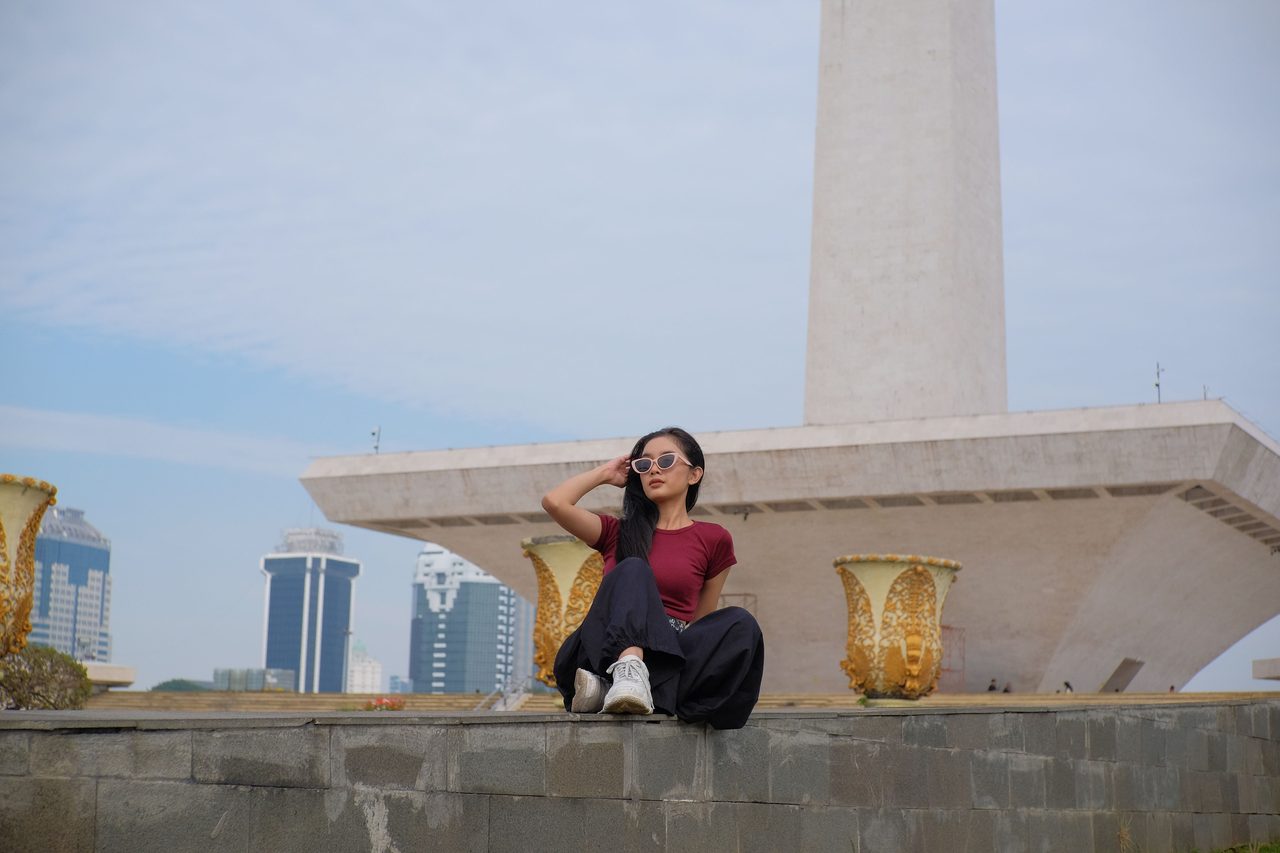
Jakarta is Indonesia's sprawling capital megacity, a fast-moving mix of Dutch colonial Kota Tua, national monuments, glass towers, huge malls, street-food alleys and a thriving nightlife and arts scene. It is the main gateway to Java and the launch point for the Thousand Islands and day trips to Bogor, Bandung and the Puncak highlands.
Jakarta, officially the Special Capital Region of Jakarta (DKI Jakarta), sits on the northwest coast of Java and remains Indonesia's economic and cultural centre. The city is divided into five administrative cities: Central Jakarta (Monas, Menteng, Thamrin), North Jakarta (Kota Tua, Sunda Kelapa, Ancol), West Jakarta (Glodok Chinatown), South Jakarta (Kemang, Blok M, SCBD) and East Jakarta (Taman Mini Indonesia Indah). Travelers find colonial architecture, the National Museum, Istiqlal Mosque and Jakarta Cathedral, Betawi culture, some of Southeast Asia's best malls and a serious food scene from street warungs to fine dining. Traffic is heavy, so the MRT, LRT, TransJakarta and KRL Commuterline are the fastest ways to move around, and Thousand Islands (Kepulauan Seribu) offers beach escapes by boat from Marina Ancol.
Capital
Jakarta
Largest city
Jakarta
Population
10.7 million (city); over 30 million in the Jabodetabek metropolitan area
Languages
Indonesian, Betawi, English (in hotels, malls and business districts)
The 18 destinations our editors recommend — from iconic landmarks to under-the-radar finds.
National Monument (Monas)
A 132-metre marble tower topped with a gold-leaf flame, Monas stands in the middle of Merdeka Square and commemorates Indonesia's struggle for independence. A lift climbs to an observation platform with views across the capital, and the base holds a diorama museum of national history.
Kota Tua and Fatahillah Square
The heart of old Batavia, centred on a cobbled square ringed by Dutch colonial buildings. Cafes, street performers, rental bicycles with colourful hats and several museums make it Jakarta's most walkable historic quarter.
Jakarta History Museum (Museum Fatahillah)
Housed in the 1710 former Batavia Town Hall, this museum covers Jakarta's story from prehistory through the Dutch East India Company era. Displays include colonial furniture, Betawi artefacts and the old prison cells in the basement.
Istiqlal Mosque
Southeast Asia's largest mosque, completed in 1978 and designed by Christian architect Frederich Silaban. Visitors of all faiths can join free guided tours outside prayer times; the vast marble prayer hall and 45-metre dome are the highlights.
Jakarta Cathedral
Neo-Gothic Catholic cathedral completed in 1901, directly across the road from Istiqlal Mosque and a well-known symbol of interfaith harmony. The interior has stained glass and twin spires, and a small museum sits on the upper level.
National Museum of Indonesia (Museum Nasional)
Indonesia's largest museum, known as the Elephant Museum for the bronze elephant outside. Galleries cover archaeology, ethnography, ceramics and Java Man fossils, plus a gold treasury.
Recommended itineraries
Pick a length, follow the route. Each itinerary balances headline sights with breathing room.
5-Day Jakarta Explorer
Day 1Arrive in Jakarta, explore city center
Day 2Visit top attractions and museums
Day 3Day trip to nearby highlights
Day 4Local markets and hidden gems
Day 5Final sightseeing, departure
7-Day Classic Jakarta
Days 1-2Jakarta city highlights
Days 3-4Regional exploration
Days 5-6Cultural immersion and local experiences
Day 7Return and departure
14-Day Ultimate Jakarta
Days 1-3Jakarta comprehensive city tour
Days 4-6Northern region exploration
Days 7-9Eastern highlights
Days 10-12Southern attractions
Days 13-14Return to Jakarta, departure
Where to stay in Jakarta
Three tiers, every traveller covered — from cost-conscious to flagship hotels.
Budget IDR 620,000-885,000 (~$35-50)
Hostels, budget hotels, and guesthouses offer affordable stays without sacrificing experience.
Mid-range IDR 1,500,000-2,700,000 (~$85-150)
Boutique hotels and well-located accommodations provide comfort and convenience at reasonable prices.
Luxury IDR 5,300,000-12,400,000 (~$300-700)
World-class resorts and premium hotels deliver unforgettable experiences.
Hotel Indonesia Kempinski Jakarta
Thamrin, Central Jakarta · IDR 3,200,000-6,500,000 (~$181-367)/night
A 1962 landmark on the Bundaran HI roundabout, restored as a five-star hotel connected to Grand Indonesia mall.
Cafés, neighbourhood gems, and tasting menus worth the table reservation.
Nusa Indonesian Gastronomy
Modern Indonesian tasting menu · $$$$
Nusa serves a multi-course Indonesian tasting menu built on ingredients from geographical-indication-certified regions, plated with modern technique. It is one of Jakarta's best-known fine-dining rooms and suits a special-occasion dinner.
Lara Djonggrang
Indonesian, fine dining · $$$
Lara Djonggrang occupies a heritage-style villa decorated with Indonesian art and antiques. The menu covers Javanese, Sumatran and Balinese classics; the oxtail soup and house gado-gado are the usual orders.
Cafe Batavia
Indonesian & European colonial cafe · $$$
Cafe Batavia sits in a colonial-era building on the north side of Fatahillah Square. The dark-wood dining room, jazz evenings and upstairs bar make it the standard place to sit down after walking the Old Town.
Kopi Tiam Oey
Peranakan coffee shop · $
Kopi Tiam Oey is a nostalgic Chinese-Indonesian coffee house serving kopi tubruk, kaya toast and Peranakan rice plates in a colonial-style setting. It is a relaxed breakfast or light-lunch stop in Menteng.
Sate Khas Senayan
Indonesian satay · $$
Sate Khas Senayan is a well-known Indonesian mid-range chain built around grilled skewers, peanut sauce and regional side dishes. It is a reliable, air-conditioned introduction to sate ayam, sate kambing and Betawi dishes.
Gado-Gado Bonbin
Gado-gado (Betawi salad) · $
Gado-Gado Bonbin is a long-running, no-frills warung near Taman Ismail Marzuki. It serves gado-gado with a thick peanut sauce, lontong and crackers in a simple open dining room.
Jakarta has some of the worst traffic in Asia, but the network of MRT, LRT, TransJakarta buses and KRL commuter trains now covers most tourist areas. Rail and busway services avoid gridlock and are the most reliable way to travel at rush hour (07:00-09:30 and 16:30-20:00). Grab, Gojek and Bluebird cover the last mile. Visitors should pay with a tap-in e-money card or the Jakarta transit apps and avoid driving themselves.
Budget breakdown
Daily spend by tier in IDR, broken out by category.
Category
Budget
Mid-range
Luxury
Accommodation
IDR 250,000-400,000 (~$14-23)
IDR 800,000-1,600,000 (~$45-90)
IDR 3,000,000-8,000,000 (~$170-450)
Food (per day)
IDR 120,000-200,000 (~$7-11)
IDR 350,000-700,000 (~$20-40)
IDR 1,000,000-2,500,000 (~$56-140)
Transportation
IDR 50,000-100,000 (~$3-6)
IDR 150,000-350,000 (~$8-20)
IDR 700,000-1,500,000 (~$40-85)
Activities
IDR 50,000-150,000 (~$3-8)
IDR 150,000-350,000 (~$8-20)
IDR 500,000-1,500,000 (~$28-85)
Daily total
IDR 620,000-885,000 (~$35-50)
IDR 1,500,000-2,700,000 (~$85-150)
IDR 5,300,000-12,400,000 (~$300-700)
Best time to visit Jakarta
Weather through the year in Indonesia
Best timeShoulderWorth avoiding
Average daytime temperature in °C. Figures are for Indonesia.
May-September (dry season, less rain and flooding)
Essential travel tips
Use the MRT and TransJakarta with a bank e-money card to avoid traffic
Travel between 10:00 and 15:00 on weekdays to avoid rush-hour gridlock
Carry small IDR notes for warungs, parking attendants and ojek rides
Download Grab, Gojek and the Access by KAI app before arriving
Visit Monas and Kota Tua early in the morning or on weekdays to avoid weekend crowds
Plan Bogor and Bandung as day trips by train rather than driving, especially on weekends
Hidden gems
Off-the-beaten-path corners most travellers miss.
Sunda Kelapa Harbour
Historic 14th-century port where traditional Bugis pinisi schooners still load cargo; boat rides and sunrise photography
Penjaringan, North Jakarta
Museum Taman Prasasti
Former Dutch cemetery turned open-air museum with ornate colonial-era tombstones and sculptures
Tanah Abang, Central Jakarta
Petak Sembilan Market
Glodok Chinatown market lanes with traditional food stalls and Jin De Yuan Temple, one of the oldest Chinese temples in Jakarta
Glodok, West Jakarta
Setu Babakan Betawi Cultural Village
Lakeside cultural village preserving Betawi houses, crafts, food and weekend performances
Jagakarsa, South Jakarta
Safety information
INFO
Use Grab, Gojek or Blue Bird taxis instead of unmarked cabs, and confirm the meter is on
INFO
Keep phones and wallets in front pockets or zipped bags on TransJakarta and KRL trains
INFO
Avoid political demonstrations, often near Monas and the parliament complex
INFO
Check flood updates and avoid low-lying areas after heavy rain during January-February
INFO
Drink only sealed bottled or filtered water and avoid ice from street stalls
INFO
Check air quality on IQAir and carry a N95 mask on high-pollution days
INFO
Dress modestly at mosques (cover shoulders and knees) and remove shoes at entrances
INFO
Use Jakarta's official tourist information line and keep a copy of your passport and visa
Frequently asked questions
Do I need a visa to visit Jakarta?
Entry requirements follow Indonesia rules. Many nationalities can obtain a 30-day extendable Visa on Arrival (approximately IDR 500,000, ~$28) at Soekarno-Hatta International Airport or apply for an e-VOA before travel at evisa.imigrasi.go.id. Requirements vary by nationality, so check with your nearest embassy or the official immigration website before traveling.
What currency is used in Jakarta?
The currency in Jakarta is the Indonesian Rupiah (IDR). ATMs are widely available in malls and tourist areas, and cards and QRIS payments are accepted at most hotels, restaurants and malls, but carry small notes for warungs, markets and parking.
What language is spoken in Jakarta?
The main languages spoken in Jakarta are Indonesian and Betawi. In hotels, malls and business districts English is generally understood. Learning a few basic phrases such as terima kasih (thank you) is appreciated by locals.
How do I get from Soekarno-Hatta Airport to central Jakarta?
The Airport Rail Link train from CGK to BNI City station costs about IDR 70,000 (~$4) and takes around 55 minutes, with onward connections to the MRT at Dukuh Atas. Damri buses, Grab and Blue Bird taxis also serve central Jakarta; a taxi typically costs IDR 250,000-400,000 (~$14-23) including toll fees.
Explore Jakarta by city
The cities below have their own guides — hotels, attractions and where to eat, in depth.