
Hallgrímskirkja
Landmark Lutheran church designed by Guðjón Samúelsson, begun in 1945 and consecrated in 1986, with a 74.5-metre tower whose observation deck overlooks Reykjavik's colourful rooftops, the bay and Mount Esja.
Capital Region · 21 Places · Best June
Reykjavik is Iceland's capital and northernmost capital city of a sovereign state, set on the Faxaflói bay with mountains and glaciers on the horizon. Known for the Hallgrímskirkja church, the Harpa concert hall, geothermal swimming pools and a compact, colourful old town, it is the base for the Golden Circle, the South Coast and northern lights tours.
Reykjavik is a small, walkable capital on the south-west coast of Iceland with a colourful old centre around Laugavegur and Skólavörðustígur, the Harpa concert hall on the harbour and the Hallgrímskirkja tower above the town. Highlights are the Settlement Exhibition and the National Museum, the Sun Voyager sculpture, the Perlan glass dome, whale watching from the Old Harbour and the city's geothermal swimming pools such as Laugardalslaug. The city is also the starting point for Golden Circle, South Coast and northern lights tours. English is spoken everywhere and cards are accepted almost universally, but prices are among the highest in Europe.
Jump straight to the experience you're planning.
The 21 destinations our editors recommend — from iconic landmarks to under-the-radar finds.
Landmark Lutheran church designed by Guðjón Samúelsson, begun in 1945 and consecrated in 1986, with a 74.5-metre tower whose observation deck overlooks Reykjavik's colourful rooftops, the bay and Mount Esja.
Concert hall and conference centre on the harbour, opened in 2011, with a glass facade designed by artist Ólafur Elíasson and home to the Iceland Symphony Orchestra and the Icelandic Opera.
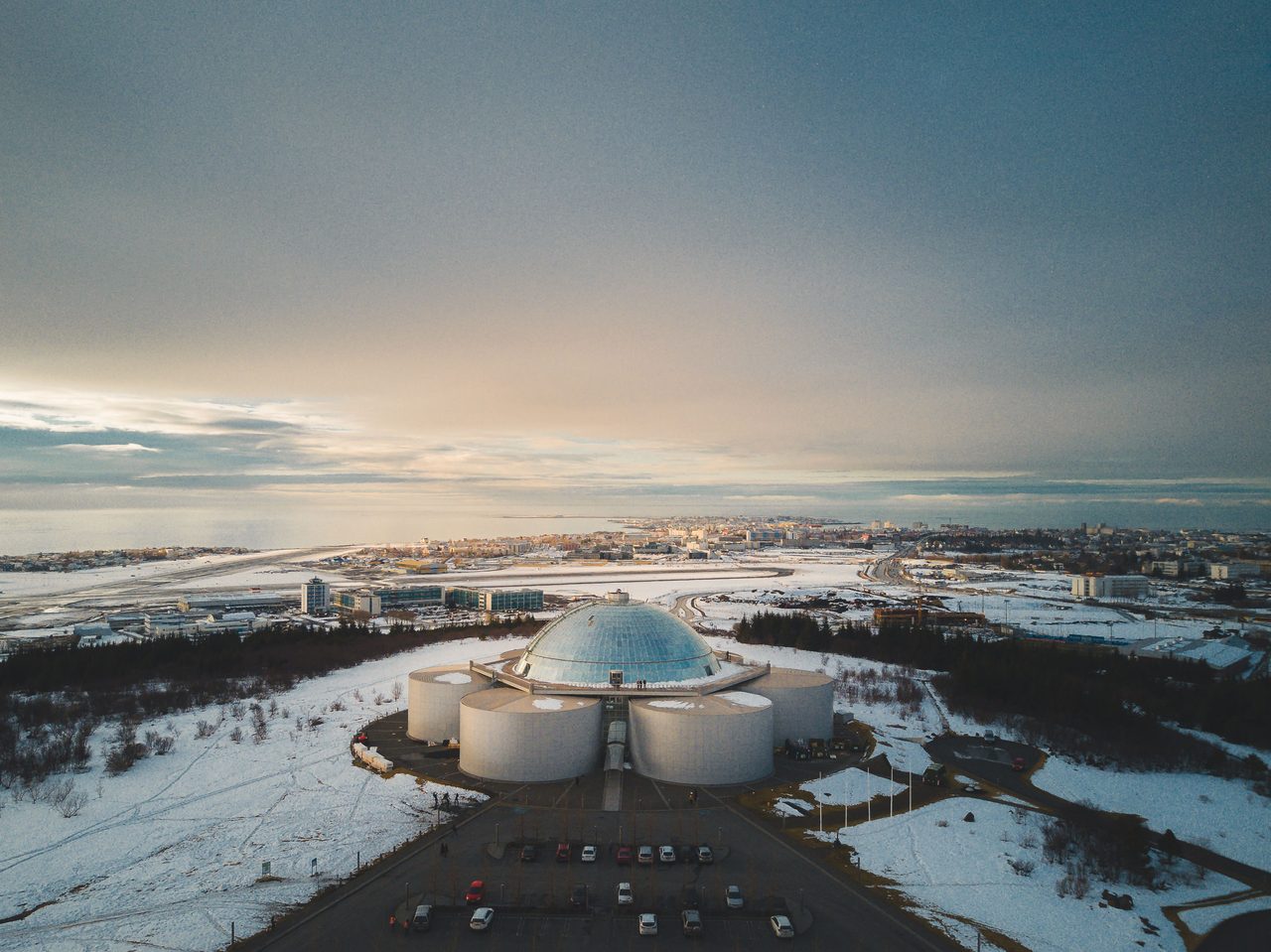
Glass dome on top of six former hot water tanks on Öskjuhlíð hill housing the Wonders of Iceland exhibition, a 100-metre artificial ice cave, a planetarium show and a 360-degree viewing deck.
Underground museum built around the excavated ruins of a 10th-century longhouse, with interactive displays on the first settlers of Reykjavik and a layer of volcanic tephra dated to about 871.
Iceland's main cultural history museum, whose permanent exhibition 'Making of a Nation' follows the country from the Settlement Age to the present through more than 2,000 objects.
Stainless steel sculpture by Jón Gunnar Árnason on the seafront in the shape of a Viking ship, installed in 1990, with views across Faxaflói bay to Mount Esja.
Pick a length, follow the route. Each itinerary balances headline sights with breathing room.
Three tiers, every traveller covered — from cost-conscious to flagship hotels.
Hostels, budget hotels, and guesthouses offer affordable stays without sacrificing experience.
Boutique hotels and well-located accommodations provide comfort and convenience at reasonable prices.
World-class resorts and premium hotels deliver unforgettable experiences.
Five-star design hotel beside Harpa concert hall with a rooftop bar and harbour views.
Check rates on Booking.comContemporary four-star hotel in the shopping and nightlife quarter close to Hallgrimskirkja.
Check rates on Booking.comArt Deco hotel opened in 1930 facing Austurvöllur square and the Parliament.
Check rates on Booking.comBoutique hotel known for its collection of Icelandic art and a quiet residential setting.
Check rates on Booking.comCafés, neighbourhood gems, and tasting menus worth the table reservation.
One-Michelin-star New Nordic restaurant on Laugavegur, also holding a Michelin Green Star, built around seasonal Icelandic produce.
Michelin-starred 17-seat chef's counter off Laugavegur serving a tasting menu of Icelandic ingredients.
Grandi Harbour restaurant with a Michelin recommendation that reinterprets old Icelandic recipes in a former fish-processing building.
Central restaurant focused on grilled Icelandic lamb, beef and fish, set in a room of lava rock, wood and sheepskin.
Seafood restaurant in the old town combining Icelandic fish with Japanese and Nordic techniques, known for its sushi bar.
Bistro near Hallgrímskirkja serving modern Icelandic dishes and cocktails in a warm, dark-wood room.
Book a food tour in Reykjavik We may earn a commission from bookings made through this link.
Reykjavik is compact and walkable, with Strætó buses connecting the wider capital area. Most visitors walk around the centre, use buses or taxis for the pools, Perlan and Laugardalur, and rent a car or join tours for day trips. There is no metro or train.
Daily spend by tier in ISK, broken out by category.
| Category | Budget | Mid-range | Luxury |
|---|---|---|---|
| Accommodation | ISK 8,000 (~$64) | ISK 25,000 (~$200) | ISK 55,000 (~$440) |
| Food (per day) | ISK 6,000 (~$48) | ISK 12,000 (~$96) | ISK 30,000 (~$240) |
| Transportation | ISK 2,000 (~$16) | ISK 3,000 (~$24) | ISK 12,000 (~$96) |
| Activities | ISK 1,500 (~$12) | ISK 8,000 (~$64) | ISK 25,000 (~$200) |
| Daily total | ISK 17,500 (~$140) | ISK 48,000 (~$384) | ISK 122,000+ (~$976+) |
Best time Shoulder Worth avoiding
Average daytime temperature in °C.
Visit June to August for long days and easy day trips, or September to March for northern lights and cheaper rooms; pack waterproof layers in every season.
Summer highs are about 11-14°C with nearly 21 hours of daylight around the June solstice and no true darkness; winter hovers around 0°C with about 4 hours of daylight in late December, strong wind and frequent rain or sleet. The aurora season runs roughly September to mid-April on clear, dark nights. Reykjavik Culture Night (Menningarnótt) is held in August and the Iceland Airwaves music festival in November.
Reykjavik is one of the safest capitals in the world; violent crime is rare and petty theft is the main concern, mostly bags left unattended in bars, cars and at tourist sites.
Check road conditions at road.is and weather warnings at vedur.is before any trip outside the city; register travel plans and read alerts at safetravel.is.
Never leave valuables visible in a parked car, particularly at trailheads and tourist car parks.
Public transport and the city centre are safe at night, though central bars on Friday and Saturday nights can be rowdy after midnight.
Winter pavements are icy from November to March; wear shoes with grip and treat strong wind warnings seriously, since car doors can be torn off in gusts.
Iceland follows Schengen rules but is not in the EU. EU/EEA citizens need only a national ID card; visitors from the US, UK, Canada and Australia can stay up to 90 days in 180 days without a visa. Check utl.is and your government's travel advice, because the EU Entry/Exit System and ETIAS rules are being introduced.
Two days cover the old town, Hallgrímskirkja, Harpa and a geothermal pool; four to five days add the Golden Circle, a South Coast day trip and whale watching.
Yes. A budget traveller needs about ISK 17,500 (~$140) a day, mid-range about ISK 48,000 (~$384). Free sights such as Hallgrímskirkja's nave, Harpa's public areas, the Sun Voyager and Nauthólsvík in summer help keep costs down.
The Flybus and Airport Direct coaches take about 45-50 minutes and cost roughly ISK 4,000-4,500 (~$32-36) one way; a taxi costs roughly ISK 25,000-30,000 (~$200-240). Confirm current fares at re.is.
June to August for midnight sun, whale watching and easy day trips; September to March for northern lights; shoulder months have lower prices and fewer crowds.
Icelandic króna (ISK). About ISK 125 equals $1.00 in this guide. Cards and mobile payment are accepted almost everywhere, and cash is rarely needed.