
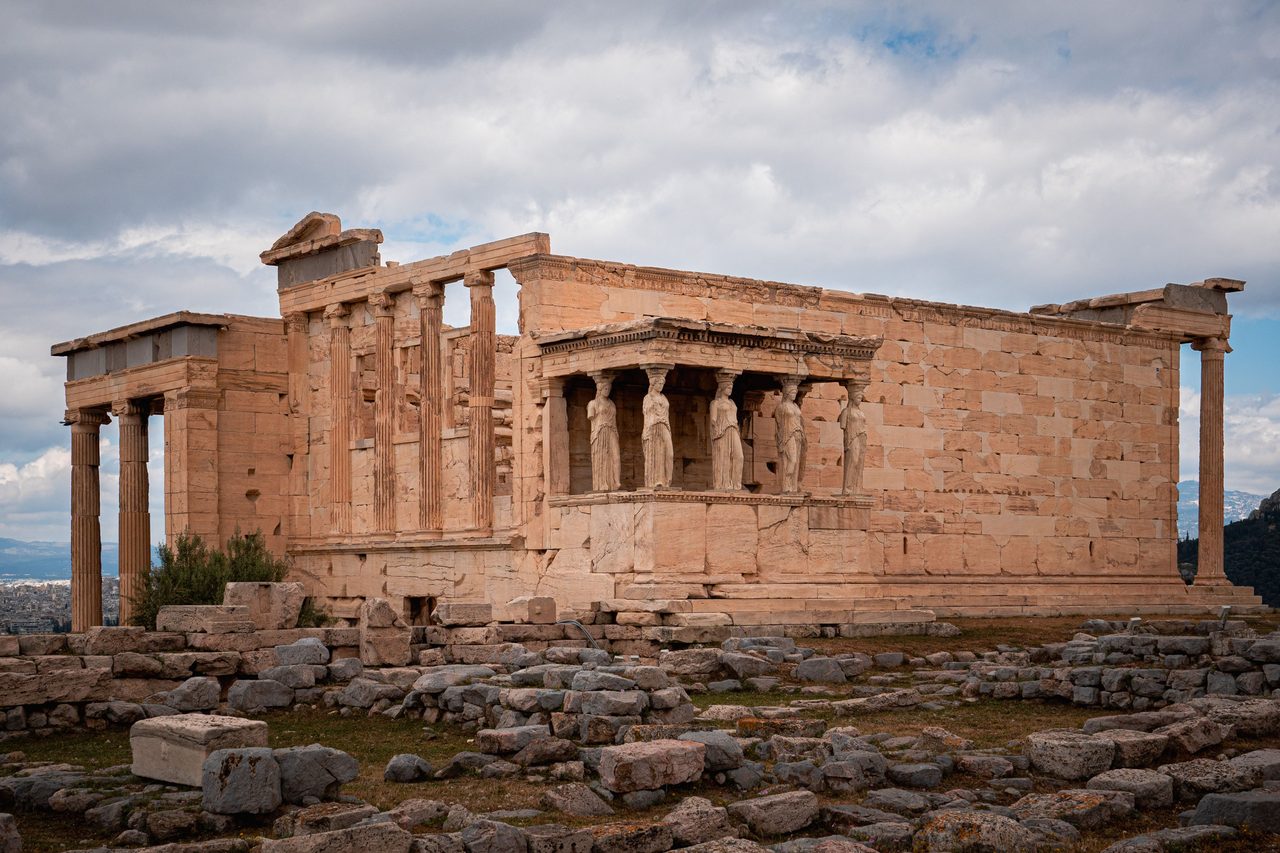
The most iconic symbol of ancient Greece and Western civilization, this UNESCO World Heritage site crowns the Athens skyline. The Parthenon temple, built in 438 BC, dominates the hilltop complex alongside the Erechtheion, Temple of Athena Nike, and Propylaea.
The Acropolis of Athens is the rock-top citadel above the Greek capital and the country's most visited archaeological site. A UNESCO World Heritage Site, it rises about 150 metres above the city, and its monuments, built largely in the fifth century BC under Pericles, are visible from much of Athens. The hilltop is entered from the western side, where visitors climb the ancient processional route to the monumental gateway of the Propylaea. Beside the Propylaea sits the small Temple of Athena Nike, perched on a bastion. Beyond it the Parthenon dominates the plateau: a Doric temple of Athena with its colonnade still largely standing, although the interior has been under restoration for decades, so scaffolding and cranes are a regular part of the view. Across from it stands the Erechtheion, recognised by the Caryatids, the six sculpted female figures that support its southern porch. The figures on site are copies; the originals are displayed in the Acropolis Museum at the foot of the hill. Walking the plateau takes most visitors between one and a half and three hours, depending on how long they linger at the edges. The marble underfoot is polished and slippery, especially after rain, and there is almost no shade, so summer visits are best timed for the opening hour or the last hour before closing. The southern and eastern edges give wide views over the Temple of Olympian Zeus, Lycabettus Hill, and the Saronic Gulf, while the western terrace near the Propylaea is a favoured spot for photographs of the Parthenon with the city below. Crowds peak between roughly 10 AM and 2 PM, when tour groups from cruise ships and coaches arrive together. The queue at the main gate can be long in high season, so many visitors buy tickets online in advance. A combined ticket valid for several days covers other archaeological sites in Athens, including the Ancient Agora, and it is worth considering for anyone planning to visit more than one. Opening hours change with the season and some holidays, and the Ministry of Culture publishes the current schedule. The slopes below the rock also hold the Theatre of Dionysus and the Odeon of Herodes Atticus, which are visible from the path and form part of the same archaeological landscape in Athens, Greece. Visitors who first spend time in the Acropolis Museum often find the ancient sculptures easier to place once they are standing among the monuments themselves.
| Admission | Adult $22 · Child $11 |
|---|---|
| Hours | 8:00 AM - 8:00 PM (summer), 8:00 AM - 5:00 PM (winter) |
| Typical visit | 2-3 hours |
| Address | Athens 105 58, Greece |
Good to know
- Best for
- history buffs, photographers, families, solo travelers
Location
Athens 105 58, Greece
37.9715, 23.7257 View on map
Highlights
- Parthenon, the fifth-century BC Doric temple of Athena, with ongoing restoration work
- Erechtheion and the Caryatid porch
- Propylaea gateway and the small Temple of Athena Nike
- Wide views over Athens from the rock's edges
Tips for visiting
- Visit early morning or late afternoon to avoid crowds and heat
- Wear comfortable shoes - surfaces are uneven marble
- Combination ticket includes 6 other archaeological sites
- Wheelchair accessible via elevator on north slope
When to visit
Arrive at opening time or in the last hour before closing for cooler temperatures and thinner crowds. Spring and autumn are the most comfortable seasons; midday in July and August is the hottest and busiest.
Accessibility
The site has uneven ancient marble paths, but an elevator and a route for wheelchair users have been installed on the north slope. Assistance is available at the entrance, and visitors with limited mobility should check current arrangements before arriving.
Visit, book or contact
Frequently asked questions
How long does a visit to the Acropolis take?
Most visitors spend two to three hours, including the climb and time at the viewpoints. A quick visit can be done in about ninety minutes.
Is the Acropolis worth it for kids?
Many families find it rewarding for older children interested in myths and history, though the heat, steep paths and lack of shade can tire younger ones. Early morning visits work best.
Is photography allowed on the Acropolis?
Personal photography is generally permitted, but tripods, drones and professional equipment normally require special permission from the Ministry of Culture.
Can the Parthenon be entered?
No. Visitors walk around the monuments on marked paths, but the interiors are not open to the public.