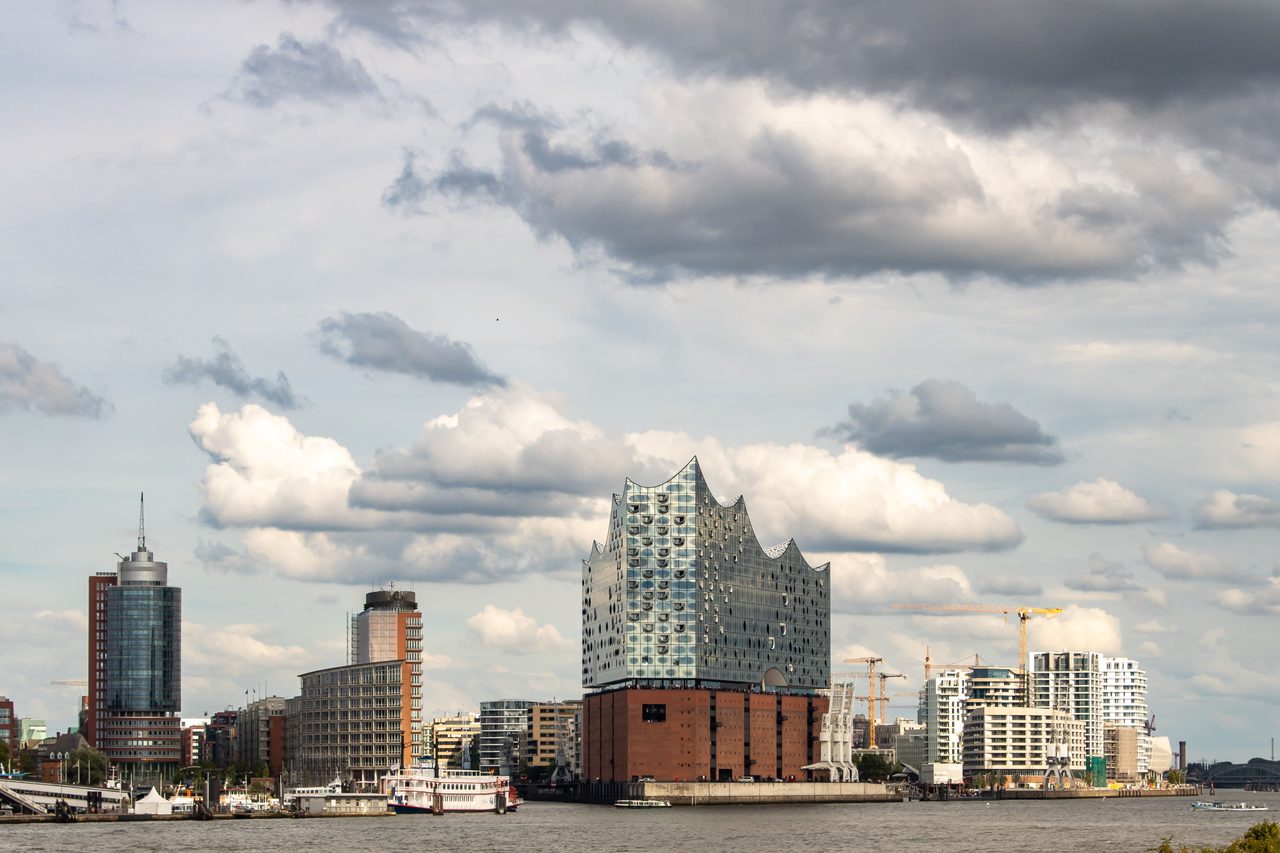
Hamburg is Germany's second-largest city and its great maritime gateway, a proud Hanseatic port that has traded across the North and Baltic Seas for centuries. Known as the 'Venice of the North' for its extensive network of canals and bridges, the city pairs a historic warehouse district with the striking modern Elbphilharmonie concert hall. From the red-light glamour of the Reeperbahn to the quiet green banks of the Alster lakes, Hamburg blends maritime heritage with contemporary culture.
Hamburg is the Free and Hanseatic City of Hamburg, a city-state built around one of Europe's largest ports and a canal network more extensive than Venice's or Amsterdam's. The historic Speicherstadt warehouse district and neighboring Kontorhaus quarter, home to the striking Chilehaus, form a UNESCO World Heritage Site, while the Elbphilharmonie concert hall in HafenCity has become the city's modern architectural icon since opening in 2017. Beyond the harbor, Hamburg offers the leafy Alster lakes, the nightlife of the Reeperbahn in St. Pauli, and a wealth of museums, theaters, and green parks that reflect the wealth and independence of a city that has governed itself as a trading republic for centuries.
The 24 destinations our editors recommend — from iconic landmarks to under-the-radar finds.
Elbphilharmonie
A glass concert hall rising over the harbor on top of a converted brick warehouse, the Elbphilharmonie has become Hamburg's defining modern landmark since opening in 2017. The free public Plaza wraps around the building at the point where the old warehouse meets the new glass structure, offering 360-degree views over the Elbe River, the harbor, and the city rooftops.
Speicherstadt
The world's largest warehouse district, built between 1883 and 1927 on oak pilings driven into the harbor mud, Speicherstadt is a UNESCO World Heritage Site of red-brick neo-Gothic warehouses laced together by canals and iron footbridges. The district still stores coffee, tea, spices, and carpets, and its narrow lanes are best explored on foot or by a short canal boat ride.
Miniatur Wunderland
The world's largest model railway exhibition occupies several warehouse floors in Speicherstadt, with miniature landscapes recreating Germany, the USA, Scandinavia, and more, complete with a day-night lighting cycle and a miniature airport with moving planes. Its scale and detail make it one of the most visited attractions in Germany.
Reeperbahn
Hamburg's famous entertainment strip in St. Pauli, the Reeperbahn is lined with music clubs, theaters, bars, and the red-light district around Herbertstraße. The Beatles played formative early gigs here in the early 1960s, and the street remains the center of the city's nightlife and live music scene.
St. Michaelis Church (Michel)
Hamburg's best-known baroque church, locally called the Michel, has a copper-clad tower that has served as a landmark for ships entering the harbor since the 18th century. Visitors can climb or take a lift up the 132-meter tower for a panoramic view over the city, port, and river.
Hamburg Rathaus (City Hall)
Hamburg's ornate neo-Renaissance city hall, completed in 1897, still houses the city-state's government and features a facade with 20 statues of Holy Roman Emperors. Guided tours reveal lavishly decorated reception rooms including the Emperor's Hall and the Great Hall.
Recommended itineraries
Pick a length, follow the route. Each itinerary balances headline sights with breathing room.
5-Day Hamburg Explorer
Day 1Arrive in Hamburg, explore city center
Day 2Visit top attractions and museums
Day 3Day trip to nearby highlights
Day 4Local markets and hidden gems
Day 5Final sightseeing, departure
7-Day Classic Hamburg
Days 1-2Hamburg city highlights
Days 3-4Regional exploration
Days 5-6Cultural immersion and local experiences
Day 7Return and departure
14-Day Ultimate Hamburg
Days 1-3Hamburg comprehensive city tour
Days 4-6Northern region exploration
Days 7-9Eastern highlights
Days 10-12Southern attractions
Days 13-14Return to Hamburg, departure
Where to stay in Hamburg
Three tiers, every traveller covered — from cost-conscious to flagship hotels.
Budget €55
Hostels, budget hotels, and guesthouses offer affordable stays without sacrificing experience.
Mid-range €135
Boutique hotels and well-located accommodations provide comfort and convenience at reasonable prices.
Luxury €380
World-class resorts and premium hotels deliver unforgettable experiences.
Fairmont Hotel Vier Jahreszeiten
Neustadt, Hamburg · $$$$
A grand hotel on the Binnenalster lake, operating since 1897 and long considered Hamburg's flagship address. Rooms mix traditional European elegance with Alster views, and the Haerlin restaurant holds a Michelin star.
Occupying the upper floors of the Elbphilharmonie concert hall in HafenCity, this hotel offers dramatic harbor and Elbe views from a landmark building. Rooms are contemporary and floor-to-ceiling glazed, with direct access to the Plaza viewing platform.
A landmark white palace hotel on the Aussenalster, opened in 1909 and favored by musicians, diplomats, and cruise-industry travellers. Rooms are furnished in a classic nautical-inspired style, and many overlook the lake.
A large privately owned luxury hotel in the leafy Rotherbaum district near the university, with extensive art collections, multiple restaurants, and a full wellness floor. Popular with business travellers and long-stay guests.
Cafés, neighbourhood gems, and tasting menus worth the table reservation.
The Table Kevin Fehling
Modern European · $$$$
A three-Michelin-star counter restaurant in HafenCity where chef Kevin Fehling and his brigade prepare a fixed multi-course tasting menu directly in front of diners seated along a long open kitchen counter. The menu draws on European technique with Asian and Mediterranean accents, changing seasonally.
100/200 Kitchen
Contemporary European · $$$$
One-Michelin-star restaurant inside the Fontenay hotel overlooking the Alster lake, offering two tasting menu lengths (a shorter and a longer format, reflected in the name) built around clean, ingredient-driven contemporary cooking.
Piment
Modern European with Sri Lankan influence · $$$$
One-Michelin-star restaurant in Eppendorf run by chef Wahabi Nouri, blending French technique with North African and Sri Lankan spice influences in a compact, intimate dining room.
Haerlin
French · $$$$
Two-Michelin-star restaurant inside the Fairmont Hotel Vier Jahreszeiten overlooking the Binnenalster, serving classic French haute cuisine in a formal, wood-paneled dining room.
Landhaus Scherrer
North German / French · $$$$
Long-established Michelin-starred restaurant near the Elbe in Altona, split between a formal gourmet dining room and a more casual bistro, known for refined North German cooking with French technique.
Deichgraf
North German seafood · $$$
Traditional seafood restaurant near the Speicherstadt warehouse district, serving North German classics including fish soup, herring preparations, and Labskaus in a historic, wood-beamed dining room.
Hamburg is served by HVV (Hamburger Verkehrsverbund), an integrated network of U-Bahn, S-Bahn, buses, and harbor ferries that makes a car unnecessary for most visitors. The compact city center, Speicherstadt, and HafenCity are also highly walkable.
U-Bahn (Metro)
Four underground lines (U1-U4) connecting the city center, Reeperbahn, and outer districts
Cost: €3.40 single / €8.40 day pass (HVV Ganztageskarte)
S-Bahn
Suburban rail lines (S1, S2, S3, S11, S21, S31) linking the airport, Hauptbahnhof, Altona, and Stade
Cost: €3.40 single within the city zone
Bus
Dense bus network covering areas beyond rail lines, including night bus service
Cost: €3.40 single
Harbor Ferry
HADAG public ferries across the Elbe and harbor, fully integrated into HVV fares; line 62 passes the Landungsbrücken and Elbphilharmonie
Cost: €3.40 single, same as bus/train fare
Taxi
Metered taxis available at ranks citywide or by phone/app booking
Cost: €3.90 base + €2.55/km
Bicycle
StadtRAD Hamburg bike-share docks throughout the city plus dedicated cycle lanes
Cost: First 30 min free with subscription; otherwise from €0.08/min
Budget breakdown
Daily spend by tier in EUR, broken out by category.
Category
Budget
Mid-range
Luxury
Accommodation
€25
€90
€270
Food (per day)
€16
€28
€65
Transportation
€9
€12
€25
Activities
€5
€18
€35
Daily total
€55
€135
€380
Best time to visit Hamburg
Weather through the year in Hamburg
Best timeShoulderWorth avoiding
Average daytime temperature in °C. Figures are for Hamburg.
Essential travel tips
Buy the Hamburg CARD for unlimited HVV transport and museum discounts
Book Elbphilharmonie Plaza tickets online in advance - the viewing platform is free but timed entry is required
Visit the Sunday Fischmarkt early in the morning for the full local experience
Hidden gems
Off-the-beaten-path corners most travellers miss.
Övelgönne
Riverside promenade along the Elbe with historic captains' houses and beach cafés, well away from the tourist crowds
Ottensen/Elbe waterfront
Stadtpark
Sprawling early-20th-century park with a lake, water tower, and open-air theater popular with locals
Winterhude
Uebel & Gefährlich
Club and concert venue set inside a former WWII flak tower in the Sternschanze district
Sternschanze
Safety information
INFO
Hamburg is one of Germany's safest large cities but stay alert for pickpockets in crowded areas like Hauptbahnhof and the Sunday Fischmarkt
INFO
Keep bags zipped and valuables out of sight around the Reeperbahn and St. Pauli nightlife district, especially late at night
INFO
Use only licensed taxis or established ride-share apps; avoid unofficial drivers approaching at the airport or Hauptbahnhof
INFO
Be cautious at ATMs at night; use machines inside banks, supermarkets, or well-lit stations
INFO
The Reeperbahn and side streets like Herbertstraße can get rowdy on weekend nights; standard urban caution applies, and Herbertstraße is closed to those under 18 and to unaccompanied women
INFO
Late-night S-Bahn and U-Bahn trains can attract intoxicated passengers on weekends; stay in occupied carriages near the conductor's area
INFO
Hamburg Hauptbahnhof can feel chaotic and has occasional drug activity in surrounding side streets; keep an eye on belongings
INFO
Register with your home country's embassy or consulate if staying for an extended period
INFO
Emergency services respond quickly across Hamburg; dial 112 for medical or fire emergencies and 110 for police
INFO
Keep drinks in sight in St. Pauli bars and clubs and know personal alcohol limits
INFO
Cycling is very popular in Hamburg; watch for dedicated bike lanes and give way to cyclists when walking
INFO
Carry accommodation address written down in case of a lost phone or language barrier
INFO
Hamburg's harbor and canal edges (Fleete) often lack barriers; take care walking near the water at night
INFO
CCTV coverage is common across Hamburg's public transport network and main squares
Frequently asked questions
Is Hamburg safe to visit in 2026?
Hamburg is generally a very safe city for tourists, with low violent crime rates. The main concerns are petty theft in tourist areas, at the Hauptbahnhof, and around the Reeperbahn nightlife district late at night. Emergency services: police at 110, medical at 112.
What is the best time to visit Hamburg?
The best time to visit Hamburg is May, June, September. Hamburg has a temperate maritime climate with mild summers, cool winters, and frequent rain year-round. Summers bring long days ideal for exploring the harbor and Alster lakes, while the peak season of July-August draws the largest crowds.
Do I need a visa to visit Hamburg?
Entry requirements follow Germany/Schengen rules. EU/EEA citizens can enter with ID card. Most other nationals can stay up to 90 days without a visa. US, UK, Canadian, Australian passport holders do not require a visa for tourist stays. Requirements vary by nationality, so check with the nearest embassy or the official immigration website before traveling.
What currency is used in Hamburg?
The currency in Hamburg is the Euro (EUR). ATMs are widely available in the city and tourist areas. Credit cards are accepted at most hotels and restaurants, but carry cash for markets and smaller establishments.
What language is spoken in Hamburg?
The main language spoken in Hamburg is German. In tourist areas, English is generally understood, especially given the city's long history as an international trading port. Learning a few basic German phrases is appreciated by locals.
Explore Hamburg by city
The cities below have their own guides — hotels, attractions and where to eat, in depth.