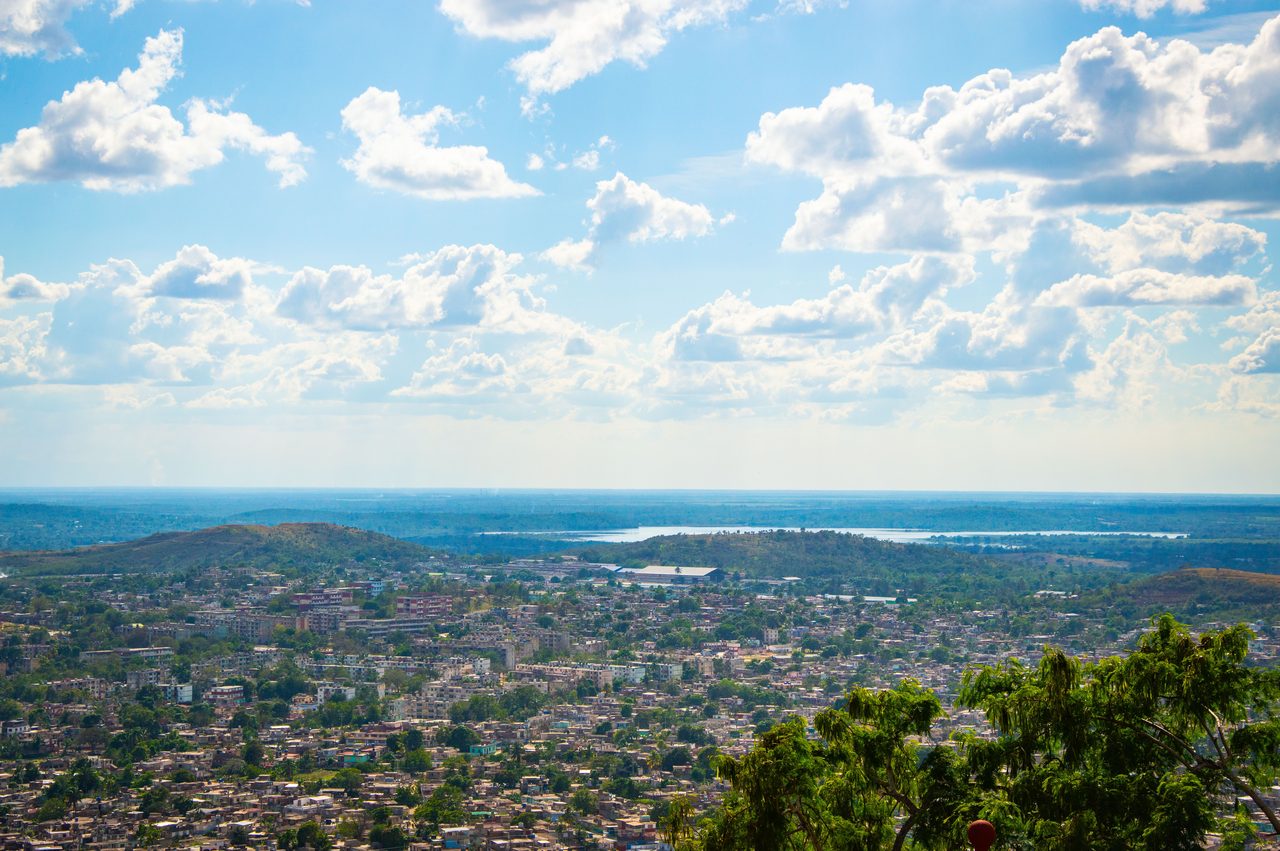
Kinshasa is the capital of the Democratic Republic of the Congo and one of the largest urban areas in Africa, sprawling along the southern bank of the Congo River directly across from Brazzaville, capital of the neighboring Republic of the Congo. It is the world's largest French-speaking city by population, though Lingala is the everyday language of the street, markets, and music. Kinshasa is the beating heart of Congolese rumba and sape fashion culture, home to the National Museum of the DRC, the Palais de la Nation, and Lola ya Bonobo, the world's only bonobo sanctuary. Travel here requires careful planning: the U.S. State Department currently rates the whole of the DRC at Travel Advisory Level 4 (Do Not Travel) due to crime, civil unrest, kidnapping risk, and active disease outbreaks, so this guide is written for the experienced, well-prepared traveler rather than a first-time visitor to Africa.
Kinshasa is a sprawling, chaotic, and culturally rich megacity on the Congo River, serving as the political, economic, and cultural capital of the Democratic Republic of the Congo. The city runs along the river for over 30 km, from the diplomatic and business district of Gombe in the north to the dense residential communes of Limete, Lemba, and Ngaliema. Traffic congestion is severe, infrastructure is uneven, and the U.S. and UK governments currently advise against all but essential travel to the country due to crime, armed conflict in parts of the east, periodic civil unrest, and disease outbreaks including recent Ebola and mpox activity. That said, Kinshasa rewards travelers who come prepared: it has a globally influential music scene (Congolese rumba, soukous), the sapeur fashion movement, a genuinely excellent National Museum, riverside restaurants looking across to Brazzaville, and Lola ya Bonobo, the only sanctuary in the world dedicated to orphaned bonobos. Nearly all visits are best arranged with a vetted local fixer or driver, hotel-arranged transport, and a flexible itinerary that can absorb delays.
Capital
Kinshasa
Largest city
Kinshasa
Population
approximately 17 million (city proper), around 21.8 million metro area (2026 estimate)
Languages
French (official), Lingala, Kikongo, Tshiluba, Swahili
The 19 destinations our editors recommend — from iconic landmarks to under-the-radar finds.
National Museum of the DRC (Musee National)
Opened in 2019 with support from South Korea, this is the DRC's largest and most modern museum, holding thousands of ethnographic and royal objects, including pieces repatriated from Belgium, across galleries covering the country's precolonial kingdoms, colonial period, and independence era.
Lola ya Bonobo Sanctuary
Founded in 1994, Lola ya Bonobo ('paradise for bonobos' in Lingala) rehabilitates orphaned bonobos, great apes found only in the DRC, within a forested sanctuary along the Lukaya River. Visitors join a fixed-time guided walk to observation points overlooking forested enclosures.
Congo River Waterfront (Gombe)
Gombe's riverfront looks out over Pool Malebo, the wide stretch of the Congo River separating Kinshasa from Brazzaville, capital of the neighboring Republic of the Congo - the only place in the world where two national capitals face each other across a river. Riverside terraces and restaurants line parts of the frontage.
Palais de la Nation (view only)
The Palais de la Nation is the official residence and workplace of the President of the Democratic Republic of the Congo, set in landscaped grounds near the river. It is a working seat of government and is not open to public tours.
Marche Central (Central Market)
A dense, crowded market in the heart of downtown Kinshasa selling fresh produce, fabric (including vibrant local wax-print textiles), household goods, and street food. It offers an unfiltered look at daily commerce in the city.
Academie des Beaux-Arts
Founded in 1943, this is Kinshasa's national academy for painting and sculpture. Its grounds display around forty outdoor sculptures made by students and teachers, alongside an exhibition hall of paintings, in leafy grounds with ponds and benches.
Recommended itineraries
Pick a length, follow the route. Each itinerary balances headline sights with breathing room.
5-Day Kinshasa Explorer
Day 1Arrive in Kinshasa, explore city center
Day 2Visit top attractions and museums
Day 3Day trip to nearby highlights
Day 4Local markets and hidden gems
Day 5Final sightseeing, departure
7-Day Classic Kinshasa
Days 1-2Kinshasa city highlights
Days 3-4Regional exploration
Days 5-6Cultural immersion and local experiences
Day 7Return and departure
14-Day Ultimate Kinshasa
Days 1-3Kinshasa comprehensive city tour
Days 4-6Northern region exploration
Days 7-9Eastern highlights
Days 10-12Southern attractions
Days 13-14Return to Kinshasa, departure
Where to stay in Kinshasa
Three tiers, every traveller covered — from cost-conscious to flagship hotels.
Budget $45
Hostels, budget hotels, and guesthouses offer affordable stays without sacrificing experience.
Mid-range $150
Boutique hotels and well-located accommodations provide comfort and convenience at reasonable prices.
Luxury $400
World-class resorts and premium hotels deliver unforgettable experiences.
A 161-room five-star tower on the banks of the Congo River, long the anchor address for business and diplomatic visitors to Kinshasa, with three restaurants, an outdoor pool, and river views toward Brazzaville.
Operated for years as the Kempinski Hotel Fleuve Congo and rebranded as Fleuve Congo Hotel by Blazon Hotels, this riverside property retains its historic profile overlooking the Congo River and Pool Malebo, about 45 minutes from N'Djili airport by road.
Gombe, riverside, five-minute walk to the Brazzaville ferry crossing · USD 230-480/night (about 521,000-1,087,000 CDF)
Hilton's Kinshasa property sits in La Gombe's business and shopping district overlooking the Congo River, within easy reach of the Beach Ngobila ferry terminal used for the river crossing to Brazzaville.
Gombe, business district · USD 130-260/night (about 294,000-589,000 CDF)
A long-established 180-room hotel close to Boulevard du 30 Juin, with an outdoor pool, beauty centre, and airport shuttle; a familiar base for business travelers and diplomats in Gombe.
Cafés, neighbourhood gems, and tasting menus worth the table reservation.
Le Z Restaurant et Lounge
Afro-fusion · USD 25-60 per person (about 56,000-136,000 CDF)
An eighth-floor restaurant and lounge on Boulevard du 30 Juin, refashioning Congolese ingredients into a contemporary fine-dining and cocktail menu.
Limoncello Italian Restaurant
Italian · USD 20-50 per person (about 45,000-113,000 CDF)
A dependable Italian address in Gombe's commercial core, known for pizza, pasta, and an Italian wine list, often cited as Kinshasa's best pizza.
A Casa Mia
Italian · USD 15-40 per person (about 34,000-91,000 CDF)
A relaxed Gombe terrace restaurant combining an Italian menu with a sports-bar feel, popular for casual dinners and watching live sport.
Rocas Restaurant & Grill
Spanish · USD 20-55 per person (about 45,000-125,000 CDF)
A Spanish-run grill restaurant near the Institut Francais and Maison de France, known for its Tomahawk steak, attentive service, and a lively happy hour.
Yewon Korean Restaurant
Korean · USD 15-35 per person (about 34,000-79,000 CDF)
A Gombe restaurant serving genuine Korean dishes, from fried chicken to bibimbap, popular with the city's Korean expatriate community and increasingly with local diners.
Caprice (Kin Plaza Arjaan by Rotana)
International · USD 25-45 per person for the buffet (about 57,000-102,000 CDF)
The all-day dining restaurant of the Kin Plaza Arjaan by Rotana, a dependable international buffet used by both hotel guests and Gombe office workers.
Getting around Kinshasa
Kinshasa has no metro or commuter rail and only a limited, cargo-oriented SNCC rail line, so getting around means road transport: hotel cars and vetted private drivers for visitors, the Yango ride-hailing app for point-to-point trips, and a vast informal network of shared taxi-buses and moto-taxis for local commuters. The city sprawls along the south bank of the Congo River and Pool Malebo, opposite Brazzaville, and traffic on the main arteries (Boulevard du 30 Juin, Route de Matadi, Route de N'Djili) is heavy for much of the day. Given the security and safety environment in DRC, most visitors rely on arranged transport rather than self-driving or hailing unmarked cars on the street.
Budget breakdown
Daily spend by tier in CDF, broken out by category.
Category
Budget
Mid-range
Luxury
Accommodation
$20
$85
$220
Food (per day)
$10
$30
$80
Transportation
$8
$20
$60
Activities
$7
$15
$40
Daily total
$45
$150
$400
Best time to visit Kinshasa
Weather through the year in Democratic Republic Of The Congo
Best timeShoulderWorth avoiding
Average daytime temperature in °C. Figures are for Democratic Republic Of The Congo.
Kinshasa sits almost on the equator, just south of it, so temperatures stay warm year-round (roughly 24-32°C) and the main seasonal variable is rainfall and humidity rather than heat. The long dry season from June to September brings the least rain, lower humidity, and often misty or overcast mornings, making it the most comfortable window for walking tours, river excursions, and day trips to Zongo Falls or Bombo-Lumene Reserve, where unpaved roads are far more passable when dry.
A short, less pronounced drier spell sometimes occurs around January-February within the long rainy season, but it is not as reliable or as dry as the June-September season and should not be treated as an equivalent travel window.
Essential travel tips
Bring US dollars in small, clean, post-2006 bills; USD is accepted everywhere in Kinshasa alongside the Congolese franc
A yellow fever vaccination certificate is required for entry and is checked on arrival
Book a vetted local driver or fixer before arrival — independent exploration on foot is not advisable for most visitors
Internet and mobile data are workable in central Gombe hotels but can be unreliable elsewhere in the city
French is essential for signage and paperwork; Lingala is useful for markets and daily interactions
Hidden gems
Off-the-beaten-path corners most travellers miss.
Mont Ngaliema public viewpoints over the Congo River
Gombe riverside promenade at sunset facing Brazzaville
Zongo Falls overlook on the Inkisi River
Academie des Beaux-Arts outdoor sculpture yard
Marche Central produce and craft sections
away from the main entrance
Skip the Palais de la Nation grounds
view and photograph it only from outside a moving vehicle, never on foot
Lola ya Bonobo
a short arranged drive from the city center, home to bonobos found wild nowhere else on Earth
Safety information
INFO
The U.S. State Department rates the entire Democratic Republic of the Congo, including Kinshasa, at Travel Advisory Level 4: Do Not Travel, citing crime, civil unrest, kidnapping, and disease outbreaks; this is the highest and most serious advisory level the department issues
INFO
The UK Foreign, Commonwealth & Development Office (FCDO) advises against all but essential travel to Kinshasa, and against all travel to the conflict-affected eastern provinces (North Kivu, South Kivu, Ituri) which, while geographically distant from Kinshasa, fall under the same national-level advisory
INFO
The World Health Organization declared an Ebola outbreak affecting DRC and Uganda a Public Health Emergency of International Concern (PHEIC) in 2026; mpox transmission is also ongoing in the country. Anyone who has been in the DRC in the prior 21 days is subject to entry restrictions into the United States imposed by the Department of Homeland Security because of the Ebola situation
INFO
Kinshasa experienced civil unrest and riots in 2025; demonstrations, election-related activity, and protests can turn violent with little warning and should be avoided entirely
INFO
Arrange all ground transport in advance through a trusted hotel, employer, or organization rather than hailing transport informally; road travel outside pre-planned routes carries elevated crime and accident risk
INFO
Photographing government buildings, military and police personnel, checkpoints, the presidential residence, airports, and port/bridge infrastructure is a genuine legal risk in Kinshasa and can lead to detention or confiscation of equipment; avoid photographing these subjects entirely
INFO
Carry printed and digital copies of your passport, visa, and yellow fever certificate; do not carry the originals unnecessarily, and store copies separately from the originals
INFO
Avoid displaying cash, jewelry, or electronics in public, and avoid walking outside secured compounds after dark
INFO
Kidnapping-for-ransom and armed robbery are cited risk factors in the U.S. advisory; foreigners, aid workers, and business travelers have been targeted, particularly outside secured urban districts
INFO
Confirm current entry requirements before travel: an e-visa obtained in advance (via evisa.gouv.cd or the nearest DRC embassy) is required, point-of-entry visas are not issued, and a yellow fever vaccination certificate is mandatory for entry
Frequently asked questions
Is Kinshasa safe to visit in 2026?
The U.S. State Department currently rates the Democratic Republic of the Congo at Travel Advisory Level 4: Do Not Travel, and the UK FCDO advises against all but essential travel to Kinshasa. Visitors who do travel should arrange vetted ground transport in advance, avoid demonstrations, stay in secure neighborhoods like Gombe, and monitor official advisories up to the date of departure. Emergency numbers: police and general emergencies 112, fire 118.
What is the best time to visit Kinshasa?
The best time to visit Kinshasa is during the long dry season from June to September, when rainfall is lowest and humidity is more manageable. Temperatures stay warm year-round (24-32°C) since Kinshasa sits almost on the equator, so rainfall rather than heat is the main seasonal factor to plan around.
Do I need a visa to visit Kinshasa?
Most nationalities need an e-visa obtained online before travel; point-of-entry visas are not issued at N'Djili Airport. A passport valid at least six months and a yellow fever vaccination certificate are required. A handful of African nationalities (including Republic of Congo, Rwanda, Burundi, Kenya, Tanzania and Uganda) can enter without a visa.
What currency is used in Kinshasa?
The official currency is the Congolese Franc (CDF), but US dollars are accepted almost everywhere in Kinshasa, from hotels to markets. It is worth carrying both: clean, small-denomination USD bills for larger purchases and CDF for small everyday transactions.
What language is spoken in Kinshasa?
French is the official language and is used for signage, government and business. Lingala is the everyday spoken language of the streets, markets and music. Kikongo, Tshiluba and Swahili are also spoken by communities from other regions of the country.
What are the top attractions in Kinshasa?
The top attractions in Kinshasa include the National Museum of the DRC, Lola ya Bonobo bonobo sanctuary, the Congo River waterfront in Gombe, the Palais de la Nation, and Marche Central. Each offers a different window into Congolese history, wildlife and daily life.
Explore Kinshasa by city
The cities below have their own guides — hotels, attractions and where to eat, in depth.