Bogotá D.C. · 22 Places · Best January and February
Bogotá
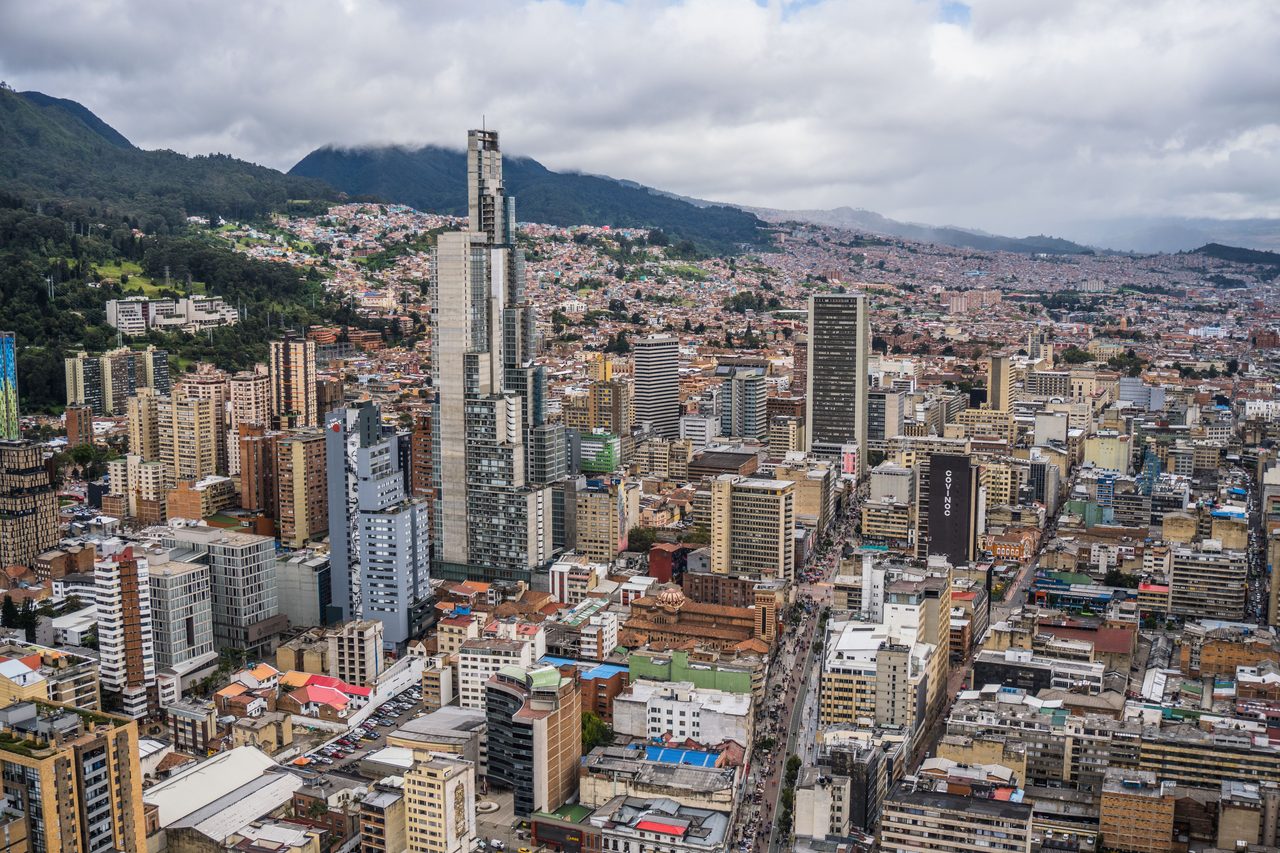
Bogotá is Colombia's capital district, a high-altitude Andean metropolis of roughly eight million people spread across a plateau at 2,640 metres (8,660 ft). The city pairs a dense colonial core in La Candelaria — home to the Gold Museum and the Botero collection — with the glass towers of the northern business districts, a 200-kilometre cycle network, and the green wall of the eastern mountains rising directly behind the historic centre.
Bogotá sits on the Sabana de Bogotá, a broad Andean plateau ringed by páramo highlands, and its altitude gives the city a cool, spring-like climate that changes little between January and December. The Spanish founded the settlement in 1538, and the tight grid of La Candelaria still holds the Plaza de Bolívar, the Casa del Florero where the 1810 independence uprising began, and a cluster of world-class museums: the Museo del Oro with more than 34,000 pieces of pre-Hispanic goldwork, the free Museo Botero, and the Museo Nacional housed in a 19th-century panopticon prison. Above the centre, the pilgrimage church on Cerro de Monserrate is reached by funicular or cable car at 3,152 metres. Further north, Chapinero, Zona G, Zona T, Parque de la 93 and Usaquén hold the restaurants that have pushed Bogotá to the front of Latin American gastronomy, while Sunday's Ciclovía closes more than 120 kilometres of avenue to cars. Getting around means TransMilenio bus rapid transit, the app-hailed cars that most residents use, and, from the late 2020s, the first line of the Bogotá Metro now under construction.
Capital
Bogotá
Largest city
Bogotá
Population
~7.9 million (district); ~11.5 million metropolitan area
The 22 destinations our editors recommend — from iconic landmarks to under-the-radar finds.
Museo del Oro
The Banco de la República's gold museum holds more than 34,000 pieces of pre-Hispanic goldwork and tumbaga alloy alongside ceramics, textiles and stone, drawn from the Muisca, Quimbaya, Calima, Tairona, Zenú, Tolima and Tumaco cultures. Its signature object is the Muisca raft from Pasca, the votive figure that gave rise to the El Dorado legend, displayed in the darkened Offering room on the third floor.
Cerro de Monserrate
The 3,152-metre peak that rises directly behind La Candelaria, topped by a 17th-century sanctuary housing the Señor Caído statue that has drawn pilgrims since the 1650s. A funicular railway and an aerial cable car both climb from the same base station, and a stone pilgrim stairway of roughly 1,500 steps offers the free route up. The summit terrace gives the definitive view across the whole Sabana de Bogotá.
Museo Botero
In 2000 Fernando Botero gave the Banco de la República 123 of his own paintings and sculptures plus 85 works from his private collection, including pieces by Picasso, Monet, Renoir, Degas, Chagall, Dalí and Bacon. The collection occupies a restored colonial house around a courtyard in La Candelaria and has never charged admission.
Plaza de Bolívar
The ceremonial centre of Colombia, laid out as the settlement's main square in 1539 and named for the bronze Simón Bolívar that Pietro Tenerani placed at its middle in 1846. Four institutions face the paving: the neoclassical Capitolio Nacional, the modern Palacio de Justicia rebuilt after the 1985 siege, the Catedral Primada and the French-inspired Palacio Liévano that houses the mayor's office.
La Candelaria Historic Quarter
The original colonial grid of Bogotá, a compact hillside of single-storey houses in ochre, indigo and terracotta with carved wooden balconies, wedged between the Plaza de Bolívar and the eastern mountains. The quarter holds most of the city's museums, the Teatro Colón, three universities, and the densest concentration of commissioned street murals in Colombia.
Museo Nacional de Colombia
The oldest museum in Colombia, founded in 1823, occupying a cruciform brick building designed by Thomas Reed as the Panóptico penitentiary and used as a prison until 1946. Its four floors trace archaeology, colonial history, the independence wars and 20th-century Colombian art, with rooms devoted to Botero, Obregón, Grau and Débora Arango.
Recommended itineraries
Pick a length, follow the route. Each itinerary balances headline sights with breathing room.
5-Day Bogotá Explorer
Day 1Arrive in Bogotá, explore city center
Day 2Visit top attractions and museums
Day 3Day trip to nearby highlights
Day 4Local markets and hidden gems
Day 5Final sightseeing, departure
7-Day Classic Bogotá
Days 1-2Bogotá city highlights
Days 3-4Regional exploration
Days 5-6Cultural immersion and local experiences
Day 7Return and departure
14-Day Ultimate Bogotá
Days 1-3Bogotá comprehensive city tour
Days 4-6Northern region exploration
Days 7-9Eastern highlights
Days 10-12Southern attractions
Days 13-14Return to Bogotá, departure
Where to stay in Bogotá
Three tiers, every traveller covered — from cost-conscious to flagship hotels.
Budget COP 165,000 (~$52)
Hostels, budget hotels, and guesthouses offer affordable stays without sacrificing experience.
Mid-range COP 470,000 (~$148)
Boutique hotels and well-located accommodations provide comfort and convenience at reasonable prices.
Luxury COP 1,300,000+ (~$409+)
World-class resorts and premium hotels deliver unforgettable experiences.
Four Seasons Hotel Bogota
Zona Rosa / El Retiro, Chapinero · COP 1,250,000-2,600,000/night (USD 393-818)
A 64-room tower on Carrera 13 a block from the Zona T, opened by Four Seasons in 2015 in a converted 1970s building. Rooms are among the largest in the city, and the property is known for its spa, indoor pool and the Kuru restaurant serving contemporary Colombian cooking.
Zona G, Chapinero Alto · COP 1,200,000-2,400,000/night (USD 377-755)
A national monument built in 1945 by Santiago Medina Mejia from salvaged colonial stonework and hand-carved beams, now a 62-room Four Seasons in Zona G. Every room differs, and the glass-roofed Castanyoles restaurant occupies the original central courtyard.
A 168-room design hotel in Usaquen whose interiors riff on the legend of El Dorado, with gold-toned public spaces and a rooftop Away Spa. The Market Kitchen restaurant and the W Lounge draw a local crowd as much as hotel guests.
Zona Rosa / El Retiro, Chapinero · COP 700,000-1,400,000/night (USD 220-440)
A French-Colombian five-star on Carrera 13, roughly 500 metres from the Zona T, with 94 rooms and a long-standing reputation for its bar and wine list. The scale is intimate compared with the nearby towers and service leans traditional.
Cafés, neighbourhood gems, and tasting menus worth the table reservation.
El Chato
Contemporary Colombian · $$$$ · COP 300,000-450,000 per person (~$94-142)
Álvaro Clavijo's Chapinero Alto dining room was named the best restaurant in Latin America in 2025 and cooks Colombian produce with European technique across an open kitchen. Tasting menus change with the seasons and lean on fermentation, Pacific seafood and Andean tubers. Reservations open well in advance and are essential.
Leo
Colombian biocultural tasting menu · $$$$ · tasting menus approx COP 400,000-600,000 per person (~$126-189)
Leonor Espinosa's restaurant works through a research philosophy called Ciclo-Bioma, building menus from ingredients sourced in Colombian indigenous and Afro-Colombian communities. Two rooms serve multi-course menus paired with native ferments and spirits by Laura Hernández-Espinosa. It ranks among Latin America's 50 Best Restaurants.
Prudencia
Wood-fired Colombian · $$$ · set lunch approx COP 90,000-150,000 per person (~$28-47)
A reservation-only lunch restaurant set in a colonial courtyard house in La Candelaria, run by Mario Rosero and Meghan Flanigan. The short daily menu is cooked over a wood-fired oven and changes constantly with market produce. It is the most refined table in the historic centre and seats only a few dozen diners.
La Puerta Falsa
Traditional santafereña · $ · COP 12,000-35,000 per person (~$4-11)
Bogotá's oldest surviving restaurant, trading since 1816 in a narrow two-storey shop a block from Plaza de Bolívar. The counter turns out tamal santafereño, ajiaco and frothed chocolate served with cheese and almojábana, alongside jars of sweets. Seating is tight, queues are normal and no reservations are taken.
Harry Sasson
International with Colombian produce · $$$$ · COP 90,000-220,000 per person (~$28-69)
Chef Harry Sasson's flagship occupies a glass-walled house in Zona G with several dining rooms, a wood grill and a serious bar. The kitchen runs from charcoal-grilled meats and fish to Asian-leaning starters and a long wine list. It received the Icon Award at Latin America's 50 Best Restaurants in 2024.
Mesa Franca
Contemporary Colombian small plates · $$$ · COP 50,000-100,000 per person (~$16-31)
A restaurant and bar in a restored Chapinero house, built around sharing plates that combine criollo flavours with native techniques. The red-lit bar mixes cocktails with Colombian spirits and fruit, and the kitchen changes its menu often. Tables are few, so booking ahead is sensible.
Bogota is a long, narrow city of roughly eight million people pressed between the eastern Andean ridge and the Sabana plain, and its transport spine is TransMilenio, a bus rapid transit network running articulated buses in segregated median lanes along the Caracas, NQS, Suba, Americas, Calle 80 and Autopista Norte corridors. TransMilenio is fed by green and blue SITP zonal buses and by two TransMiCable gondola lines serving the steep southern hills; one tuLlave card and one COP 3,550 fare (about USD 1.13) cover the whole system, with free transfers for 125 minutes. Metro Line 1, an elevated 23.9 km line from Portal Americas to Calle 72, passed 82.33 percent construction at the end of August 2026 and is scheduled to carry passengers from March 2028, so it is not an option for visitors in 2026. Above ground, traffic congestion is chronic and the Pico y Placa plate-rationing scheme limits private car use, which pushes most visitors towards taxis, ride-hailing apps and short walks inside individual districts. El Dorado International, the busiest airport in Latin America by cargo and among the busiest by passengers, sits only 13 km west of the historic centre. Intercity travel radiates from three bus terminals - Salitre, Norte and Sur - plus the Portal del Norte kerbside stands used by Sabana and Boyaca services.
Budget breakdown
Daily spend by tier in COP, broken out by category.
Category
Budget
Mid-range
Luxury
Accommodation
COP 75,000 (~$24)
COP 250,000 (~$79)
COP 750,000 (~$236)
Food (per day)
COP 50,000 (~$16)
COP 120,000 (~$38)
COP 300,000 (~$94)
Transportation
COP 15,000 (~$5)
COP 50,000 (~$16)
COP 150,000 (~$47)
Activities
COP 25,000 (~$8)
COP 50,000 (~$16)
COP 100,000 (~$31)
Daily total
COP 165,000 (~$52)
COP 470,000 (~$148)
COP 1,300,000+ (~$409+)
Best time to visit Bogotá
Weather through the year in Bogotá
Best timeShoulderWorth avoiding
Average daytime temperature in °C.
The two dry seasons are the best times to visit. December through February brings the clearest skies of the year, the cleanest views of the Andes from Monserrate and the city's Christmas and New Year atmosphere. June through August - the veranito or little summer - is dry, breezy and slightly cooler at night, and coincides with the free Festivales al Parque season and the Festival de Verano.
Bogota's altitude means the weather question is rain, not temperature - there is no warm season to wait for. Anyone whose trip is fixed to a wet month should simply plan museums and indoor food markets for the afternoons and keep the outdoor plans for the mornings, which are usually dry even in October. Note that Colombia's Feria de las Flores is a Medellin event, not a Bogota one; the capital's equivalent summer celebration is the Festival de Verano de Bogota in August.
Essential travel tips
Buy a TuLlave card on arrival for about COP 7,000 (~$2.20); TransMilenio and SITP buses accept no cash at all
Museo Botero, Casa de Moneda and the Banco de la República collections are free every day, and the Museo del Oro is free on Sundays and public holidays
Bogotá runs on a 'pico y placa' licence-plate rotation that restricts private cars on weekdays, which is one reason app cars surge in price at rush hour
Carry small notes: many market stalls, bakeries and taxi drivers cannot change a COP 50,000 note
Ajiaco santafereño, the chicken, three-potato and guasca soup, is the dish of the city, and La Puerta Falsa near the Plaza de Bolívar has served it since 1816
Afternoon rain is likely in most months, so plan indoor museums for the hours after 2PM and viewpoints for the morning
Tipping is usually a voluntary 10 percent line already printed on the bill; staff will ask whether to include it
Hidden gems
Off-the-beaten-path corners most travellers miss.
The 125-minute transfer window
A personalised TuLlave Plus card allows free changes between TransMilenio and SITP buses within 125 minutes, turning a two-fare crossing into one.
Free Sundays at the Banco de la República museums
The Museo del Oro is free on Sundays and holidays, and the Botero and Casa de Moneda are free every day they open.
Ley Seca
Alcohol sales stop citywide on election days. Dates are published ahead and are worth checking before planning a night out.
Safety information
INFO
Learn the phrase no dar papaya - do not display a phone, camera, laptop, jewellery or a fat wallet on the street. Nearly every theft reported by visitors in Bogota follows a visible valuable.
INFO
Never hail a taxi from the street. Use Cabify, DiDi, inDrive or Uber, or ask a restaurant or hotel to call a licensed taxi so the plate and driver are recorded.
INFO
Keep the phone in a front pocket or an inside jacket pocket and do not use it while standing at a corner or waiting for a light - motorcycle snatching at traffic lights is the classic Bogota robbery.
INFO
Never accept a drink, sweet, cigarette, chewing gum or a stranger's offer of a powder-dusted business card from someone met that evening. Scopolamine (burundanga) leaves the victim conscious, compliant and with no memory of handing over cards and PINs.
INFO
Take a jacket everywhere. Bogota sits at 2,640 m: days reach 19C and nights drop to 7-9C, and rain arrives abruptly in April, May, October and November.
INFO
Spend the first 24 hours at a slow pace, drink water, eat lightly and go easy on alcohol until the altitude stops causing headaches and breathlessness.
INFO
La Candelaria is the tourist heart in daylight and a poorly lit residential quarter after around 7PM. Move out to Chapinero, Zona G or the north for evenings, and take an app taxi door to door.
INFO
Avoid the streets west of the Carrera 13 in Santa Fe and Los Martires, the area around the former Bronx and El Cartucho, parts of Ciudad Bolivar and the western end of Kennedy, particularly at night.
INFO
Withdraw cash inside bank branches, malls or hotel lobbies during daylight, and never let anyone 'help' at the machine.
INFO
Carry a photocopy or phone photograph of the passport and entry stamp rather than the passport itself for day-to-day use; the original is only needed at hotel check-in and for the IVA exemption.
INFO
TransMilenio articulated buses at rush hour are the city's most reliable pickpocketing environment - wear a backpack on the chest and keep the phone out of sight.
INFO
Protests and marches are frequent on the Carrera Septima, around the Plaza de Bolivar and at the Universidad Nacional. They are usually peaceful but can escalate quickly; visitors should leave rather than observe.
INFO
Do not buy, carry or use drugs. Beyond the legal risk, cocaine sold to foreigners in the Zona Rosa is a routine entrapment and robbery setup.
INFO
Register a trip with the home country's embassy if travelling beyond Bogota into rural departments, where the security picture is entirely different from the capital.
INFO
Colombia is seismically active and Bogota sits in a moderate earthquake zone. In a tremor, drop, cover and hold on inside the building, move away from glass and facades, and follow hotel staff instructions; the FCDO updated its Colombia advice on 3 September 2026 with earthquake-response guidance.
Frequently asked questions
Do travellers need a visa to visit Bogotá?
Citizens of the United States, Canada, the United Kingdom, the European Union, Australia and roughly 100 other countries may enter Colombia visa-free for up to 90 days, extendable to a maximum of 180 days in a calendar year. Every arriving and departing passenger must also complete the free online Check-Mig form within 72 hours of travel. Requirements vary by nationality, so travellers should check with the nearest Colombian consulate or the official Migración Colombia website before booking.
Is the altitude in Bogotá a problem?
Bogotá sits at 2,640 metres (8,660 ft), high enough that many arrivals feel mild headache, breathlessness or disturbed sleep during the first day or two. The usual remedies are to drink plenty of water, limit alcohol on the first evening, eat lightly and postpone the climb to Monserrate at 3,152 metres until the second day. Anyone with a heart or lung condition should raise the altitude with a doctor before travelling.
How much does a day in Bogotá cost?
A backpacker staying in a Candelaria hostel dorm, eating set-menu almuerzos and riding TransMilenio spends around COP 165,000 a day (~$52). A mid-range traveller in a Chapinero hotel with restaurant meals and app cars spends around COP 470,000 (~$148), while a luxury day with a five-star room and a tasting menu starts near COP 1,300,000 (~$409). Figures use a rate of 1 USD to 3,180 COP.
What are the top attractions in Bogotá?
The essentials are the Museo del Oro, Cerro de Monserrate, the colonial streets and murals of La Candelaria, the free Museo Botero, and the Plaza de Bolívar with the surrounding government buildings. Adding the Museo Nacional, the José Celestino Mutis Botanical Garden and Sunday's Ciclovía fills a comfortable three- or four-day stay.
Is Bogotá safe for solo travellers?
Colombia carries a Level 3 'Reconsider Travel' advisory from the U.S. State Department as of its 31 March 2026 update, though Bogotá itself is not on the 'Do Not Travel' list. Solo visitors move around the tourist districts without difficulty by day; the practical precautions are keeping phones hidden on the street and on buses, using app-hailed cars instead of street taxis, leaving La Candelaria by car after dark, and never accepting drinks from strangers in bars. The emergency number is 123.