Antioquia is Colombia's most dynamic and entrepreneurial department, anchored by Medellín — a city that reinvented itself from one of the world's most dangerous to a global model of urban innovation. The region's dramatic Andean landscape encompasses colonial towns, cloud-forest national parks, the legendary Guatapé reservoir, and a coffee-growing heartland steeped in Paisa culture. With its year-round spring-like climate and warmly welcoming people, Antioquia offers an unmatched blend of city energy, natural adventure, and cultural depth.
Antioquia is Colombia's second-largest department by population and one of its most visited. Medellín, its capital, earned global recognition for its dramatic urban transformation and innovative public infrastructure — the world's first metro in a Colombian city, cable cars connecting hillside comunas, and escalators serving poor neighborhoods. Beyond the city, Antioquia rewards exploration: the vivid painted facades of Guatapé, the colonial splendour of Santa Fe de Antioquia, the orchid-draped hillsides around Jardín, and the untamed limestone canyon of Río Claro. The Paisa people — proud, hospitable, and hardworking — define the region's character.
The 27 destinations our editors recommend — from iconic landmarks to under-the-radar finds.
El Peñol / La Piedra de Guatapé
La Piedra is a colossal granite monolith rising 220 metres above the surrounding Guatapé reservoir landscape. Visitors climb 740 steps carved into a crack in the rock to reach the summit, where sweeping 360-degree views of the emerald-green reservoir and its many islands reward the effort.
Pueblito Paisa
Perched atop Cerro Nutibara in the heart of Medellín, Pueblito Paisa is a faithful replica of a traditional Antioquian village from the late 19th century. The hilltop complex includes a church, town hall, general store, and craft stalls, offering sweeping panoramic views of the city skyline.
Jardín Botánico de Medellín
Medellín's botanical garden is a 14-hectare urban oasis sheltering over 4,500 plant species, including one of Latin America's finest orchid collections — fitting for Colombia's national flower. The centrepiece is the spectacular steel-and-wood Orquideórama, a latticed canopy structure hosting weekly cultural events.
Parque Arví
Parque Arví is a vast 1,800-hectare nature reserve and eco-park on the mountains above Medellín, accessible by a spectacular Metrocable ride from the Santo Domingo station. The park offers hiking trails through cloud forest, artisan markets, lakes, and birdwatching opportunities within easy reach of the city.
Santa Fe de Antioquia Historic Center
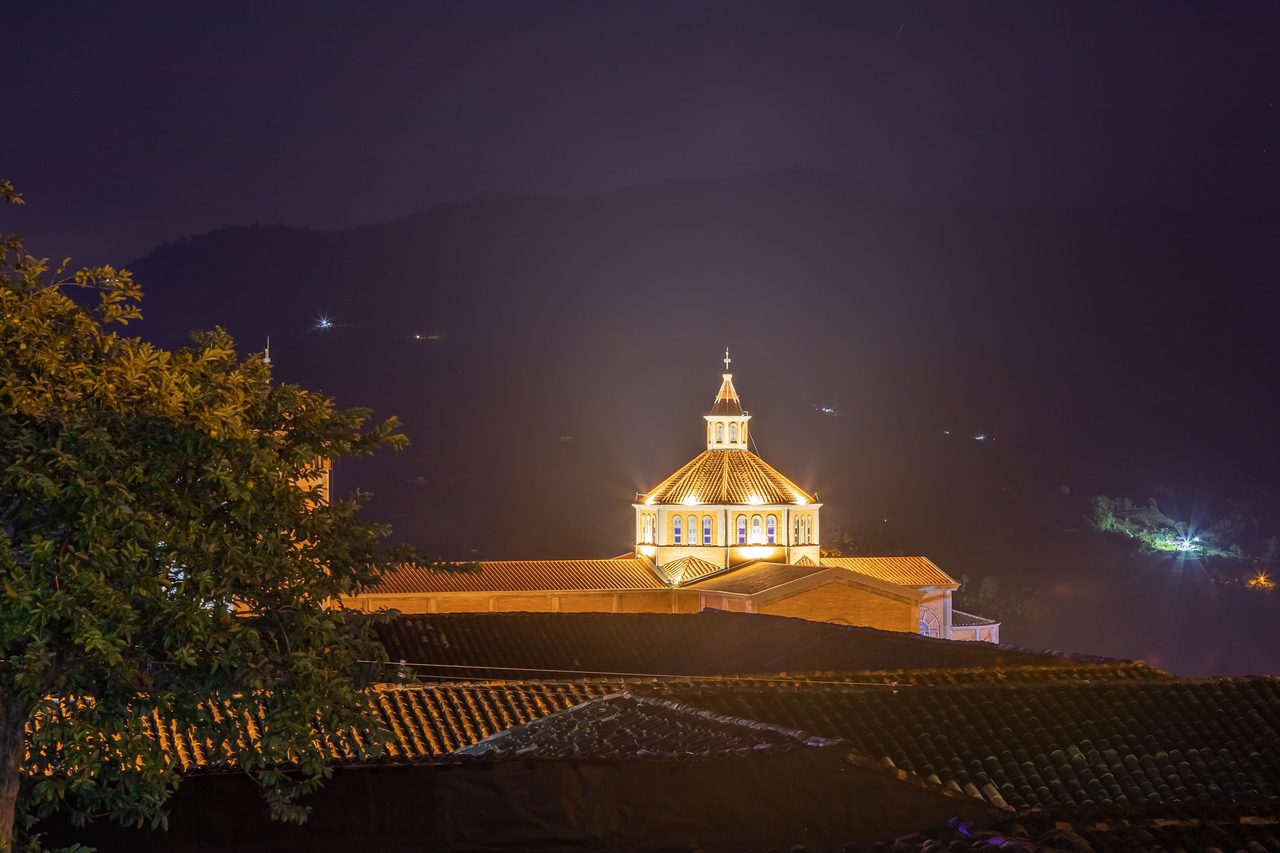
Founded in 1541, Santa Fe de Antioquia is Antioquia's original capital and one of Colombia's best-preserved colonial towns. Its whitewashed streets, cobblestone plazas, and baroque churches cluster around Parque Mayor, while the nearby Puente de Occidente — a 19th-century suspension bridge — spans the Cauca River.
El Poblado Neighborhood
El Poblado is Medellín's most cosmopolitan and visitor-friendly neighborhood, a hillside barrio of tree-lined streets, boutique hotels, craft-coffee shops, rooftop bars, and excellent restaurants. Parque Lleras at its heart forms the epicentre of Medellín's nightlife and social scene.
Recommended itineraries
Pick a length, follow the route. Each itinerary balances headline sights with breathing room.
5-Day Antioquia Explorer
Day 1Arrive in Antioquia, explore city center
Day 2Visit top attractions and museums
Day 3Day trip to nearby highlights
Day 4Local markets and hidden gems
Day 5Final sightseeing, departure
7-Day Classic Antioquia
Days 1-2Antioquia city highlights
Days 3-4Regional exploration
Days 5-6Cultural immersion and local experiences
Day 7Return and departure
14-Day Ultimate Antioquia
Days 1-3Antioquia comprehensive city tour
Days 4-6Northern region exploration
Days 7-9Eastern highlights
Days 10-12Southern attractions
Days 13-14Return to Antioquia, departure
Where to stay in Antioquia
Three tiers, every traveller covered — from cost-conscious to flagship hotels.
Budget $35
Hostels, budget hotels, and guesthouses offer affordable stays without sacrificing experience.
Mid-range $100
Boutique hotels and well-located accommodations provide comfort and convenience at reasonable prices.
Luxury $300
World-class resorts and premium hotels deliver unforgettable experiences.
Hotel Charlee Medellín
El Poblado, Medellín · $$$$
Medellín's most iconic boutique lifestyle hotel sits at the heart of El Poblado, featuring a rooftop infinity pool with city views, a rooftop bar, spa, and sleek contemporary rooms. The Charlee helped define El Poblado's modern character and remains the neighbourhood's social epicentre.
The InterContinental Medellín is a landmark high-rise hotel in El Poblado offering sweeping valley views, an outdoor pool terrace, multiple dining outlets, and the city's largest hotel conference facilities. Rooms are spacious and elegantly furnished with Colombian design accents.
A refined five-star hotel in El Poblado, the Dann Carlton combines classic Antioquian hospitality with modern amenities including a pool, spa, and acclaimed restaurant. Its leafy garden setting and warm service make it a favourite for business and leisure travellers alike.
The Charlee Lifestyle Hotel is a design-forward boutique property in El Poblado featuring art-adorned rooms, a rooftop pool with panoramic views, a craft cocktail bar, and curated local experiences. It attracts a creative and international clientele.
Cafés, neighbourhood gems, and tasting menus worth the table reservation.
El Cielo
Molecular Colombian · $$$$
El Cielo is Medellín's — and arguably Colombia's — most celebrated fine-dining restaurant, created by chef Juan Manuel Barrientos. The 12-course tasting menu takes diners on a multi-sensory journey through Colombian biodiversity, transforming ingredients like cacao, guanábana, and tropical flowers into edible art.
Carmen Restaurant
Contemporary Colombian · $$$$
Carmen is one of El Poblado's most acclaimed fine-dining destinations, serving innovative Colombian cuisine in a restored colonial house with garden terrace. Chef Rob Pevitts fuses Antioquian ingredients with classical technique to create dishes of remarkable elegance.
Mondongos
Traditional Paisa · $
Mondongos is a Medellín institution with multiple locations, beloved for serving the most authentic bandeja paisa in the city alongside its namesake mondongo soup — a tripe stew that is the ultimate Antioquian comfort food. Portions are enormous and prices are very reasonable.
Pergamino Café
Specialty Coffee and Light Food · $
Pergamino is Medellín's most celebrated specialty coffee roaster and café, sourcing single-origin Colombian beans directly from Antioquian farmers and roasting them in-house. The El Poblado café is a beautiful, airy space perfect for morning work sessions or afternoon breaks.
Versailles Bakery and Café
Colombian Bakery and Patisserie · $
Versailles is a Medellín classic since 1953, a grand downtown café and bakery serving Colombian pastries, empanadas, pandebono, and hearty almuerzo lunches. The cathedral-like interior with high ceilings and marble counters is a city landmark in its own right.
Hacienda Restaurant
Traditional Antioquian · $$
Hacienda brings the experience of an Antioquian countryside fonda to the city, with rustic wood decor, open kitchen, and a menu of traditional dishes like fríjoles con pezuña, chicharrón, and arroz con pollo. An excellent choice for experiencing authentic Paisa home cooking.
Medellín has Latin America's finest urban metro system, supplemented by Metrocable cars, electric trams, and extensive bus networks. Regional buses connect to all major Antioquia towns.
Metro
Two metro lines serving Medellín with Metrocable extensions to hillside barrios and Parque Arví
Cost: COP 3,300 (~$0.80)
Bus (SITP)
Integrated urban bus system covering all Medellín neighborhoods
Cost: COP 2,800–3,300
Taxi/Rideshare
InDriver and Uber available throughout Medellín
Cost: $3–12
Regional Bus
Buses from Terminal del Norte and Terminal del Sur to Guatapé, Santa Fe, Jardín, Jericó, Río Claro
Cost: $2–10
Budget breakdown
Daily spend by tier in COP, broken out by category.
Category
Budget
Mid-range
Luxury
Accommodation
$12
$60
$180
Food (per day)
$8
$25
$80
Transportation
$3
$8
$25
Activities
$12
$20
$40
Daily total
$35
$100
$300
Best time to visit Antioquia
Weather through the year in Colombia
Best timeShoulderWorth avoiding
Average daytime temperature in °C. Figures are for Colombia.
Essential travel tips
Download InDriver and the Metro Medellín app before arriving
Carry small denomination COP bills — vendors rarely have change for 100,000 COP notes
Try a sancocho antiqueño or bandeja paisa at a local fonda for an authentic experience
The cable car to Parque Arví operates daily; combine with hiking for a full-day outing
Hidden gems
Off-the-beaten-path corners most travellers miss.
Páramo de Belmira
A high-altitude wetland ecosystem north of Medellín with hiking, birdwatching, and trout fishing.
Belmira, Northern Antioquia
Puente de la Madre Laura, Urabá
Remote coastal region with untouched beaches near Capurganá.
Capurganá, Urabá
Amalfi
A quiet colonial town in northeastern Antioquia surrounded by cloud-forest mountains.
Northeastern Antioquia
Safety information
INFO
Stay in established tourist neighbourhoods — El Poblado, Laureles, Provenza, and Envigado are the safest areas in Medellín for tourists. These areas have high police visibility, well-lit streets, and large traveller communities.
INFO
Use InDriver, Uber, or Cabify instead of street taxis — Avoid hailing taxis off the street. 'Millionaire rides' (express kidnappings using fake taxis) do occur. Always book via app, arrange through your hotel, or use official taxi stands. Confirm the vehicle plate matches the app before entering.
INFO
Do not display expensive electronics or jewellery — Avoid walking with expensive DSLR cameras, laptops, or iPhones visible in crowded areas, markets, and public transport. Use a discreet daypack and keep your phone in a front pocket.
INFO
Be aware of scopolamine (burundanga) drugging — Scopolamine — a powerful incapacitating drug — has been used by criminals in Colombian cities. Never accept drinks, food, or cigarettes from strangers. Be especially vigilant when meeting new people in bars and nightclubs.
INFO
Avoid the Bronx area and certain peripheral comunas at night — The historic 'Bronx' district near El Centro (around Calle Barbacoas) and some northern hillside comunas remain risky after dark. Stick to tourist zones in the evening unless accompanied by a trusted local guide.
INFO
Use ATMs inside shopping centres or banks during the day — ATM skimming and robbery at street ATMs occur. Use machines inside Centro Comercial El Tesoro, Oviedo, or inside bank branches. Avoid ATMs at night or in unfamiliar areas.
INFO
Carry photocopies of your passport — Carry a colour photocopy of your passport for daily use and leave the original in your hotel safe. Police checks are common and you may be asked for ID.
INFO
Exercise extra caution in crowded markets and on public transport — Pickpocketing is the most common crime affecting tourists. Keep valuables in a front money belt or zipped inner pocket. Be especially careful in Plaza Minorista market, Terminal del Norte, and on crowded metro platforms.
INFO
Take care when visiting the comunas (hillside neighbourhoods) — The hillside comunas — including infamous Comuna 13 — have improved significantly and offer excellent graffiti tours. Visit only on organised daytime tours with reputable agencies and follow your guide's instructions.
INFO
Be alert to natural hazards: landslides in rainy season — Antioquia's steep terrain is prone to landslides (deslizamientos) during heavy rain in April-May and October-November. Check road conditions before driving mountain routes and follow official advisories.
INFO
Night safety in El Poblado — Even in the safe El Poblado, take precautions at night: travel in groups, book rideshares rather than walking long distances, and don't leave clubs or bars alone with strangers.
INFO
Water safety and health precautions — Medellín tap water is generally safe. In rural areas and smaller towns use bottled water. Apply sunscreen — the equatorial UV index is very high even on cloudy days. Carry basic medicines for stomach upsets.
INFO
Altitude adjustment — Medellín sits at 1,495 metres elevation. Most people adapt quickly but take it easy on your first day if arriving from sea level. Higher areas like Páramo de Belmira exceed 3,000 metres — acclimatise accordingly.
Frequently asked questions
Do I need a visa to visit Antioquia?
Most Western nationals including US, UK, EU, Australian, and Canadian citizens can visit Colombia visa-free for up to 90 days (extendable to 180 days). No prior visa application is required for eligible nationalities. Requirements vary by nationality, so check with your nearest embassy or the official immigration website before traveling.
What currency is used in Antioquia?
The currency in Antioquia is the Colombian Peso (COP). ATMs are widely available in cities and tourist areas. Credit cards are accepted at most hotels and restaurants, but carry cash for markets and smaller establishments.
What language is spoken in Antioquia?
The main language(s) spoken in Antioquia: Spanish. In tourist areas, English is generally understood. Learning a few basic phrases in the local language is appreciated by locals.
What are the top attractions in Antioquia?
The top attractions in Antioquia include El Peñol / La Piedra de Guatapé, Pueblito Paisa, Jardín Botánico de Medellín, Parque Arví, and Santa Fe de Antioquia Historic Center. Each offers a unique experience, from historic landmarks to natural wonders.
How do I get around Antioquia?
Antioquia has some of the best urban transport infrastructure in South America, anchored by Medellín's metro system — the only one in Colombia. The city's integrated SITVA network combines the metro, Metrocable gondolas, electric trams, and buses into one ticketed system. For regional travel, a network of comfortable buses connects Medellín to all major Antioquian towns.