Siem Reap is Cambodia's cultural heart and gateway to the magnificent Angkor temple complex, one of the world's greatest archaeological wonders. The city blends ancient Khmer heritage with a vibrant modern tourism scene, offering travelers world-class temples, lush countryside, and warm Cambodian hospitality.
Siem Reap Province in northwestern Cambodia is world-famous as the gateway to the Angkor Archaeological Park, home to the iconic Angkor Wat temple and hundreds of other ancient Khmer temples. Beyond the temples, Siem Reap city offers a lively atmosphere with excellent restaurants, night markets, floating villages on Tonle Sap Lake, and authentic Khmer cultural experiences. The province combines rural countryside, traditional villages, and a rapidly developing tourism infrastructure that makes it one of Southeast Asia's premier destinations.
The 28 destinations our editors recommend — from iconic landmarks to under-the-radar finds.
Angkor Wat
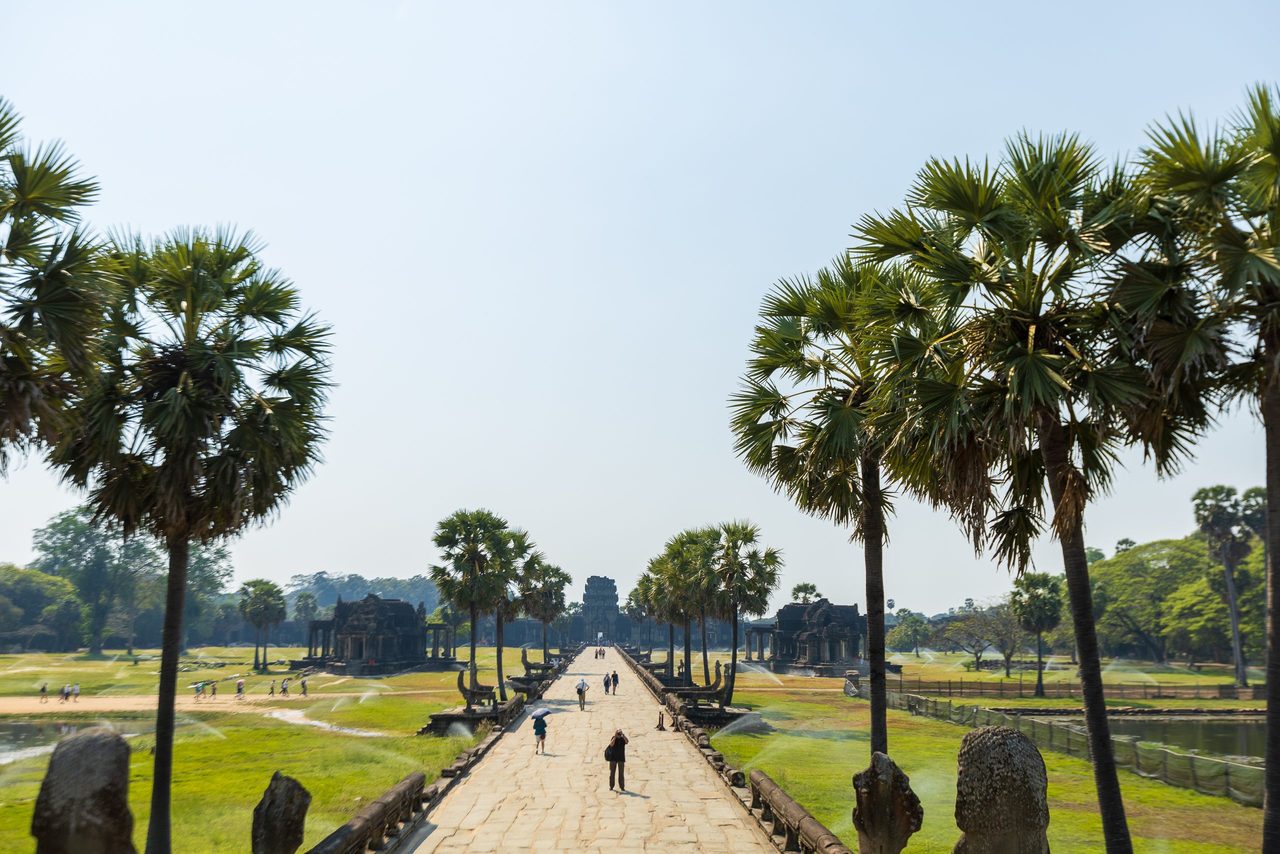
The world's largest religious monument, Angkor Wat was built in the early 12th century by King Suryavarman II. Originally dedicated to the Hindu god Vishnu, it was later converted to a Buddhist temple. The five towering prasats and intricate bas-reliefs depicting Hindu mythology are unmissable. Sunrise at Angkor Wat, reflected in the long moat pool, is one of the most iconic travel experiences in Southeast Asia.
Bayon Temple
Located at the heart of Angkor Thom, Bayon is one of the most visually striking temples in Cambodia. Built by King Jayavarman VII in the late 12th century, the temple is adorned with 216 smiling stone faces of the Bodhisattva Avalokitesvara. The labyrinthine corridors and towering face-towers create a surreal and deeply atmospheric experience.
Ta Prohm
Known as the 'Tomb Raider Temple' from its appearance in the 2001 Angelina Jolie film, Ta Prohm has been deliberately left in a semi-ruined state, with massive silk-cotton and strangler fig trees weaving their roots through the stone galleries and towers. Built in 1186 by Jayavarman VII as a Buddhist monastery and university, this atmospheric jungle temple is one of the most photographed in Cambodia.
Angkor Thom
The last capital of the Khmer Empire, Angkor Thom is a walled city covering 9 square kilometers. Built by Jayavarman VII in the late 12th century, it contains the Bayon, Baphuon, the Terrace of the Elephants, the Terrace of the Leper King, and Phimeanakas. The five monumental gates, each topped with giant stone faces, are themselves major attractions. Entering through the South Gate with its 54 gods and demons is an unforgettable experience.
Banteay Srei
The 'Citadel of Women', Banteay Srei is considered the jewel of Khmer art. Built in 967 AD, it is dedicated to the Hindu god Shiva and is renowned for its exceptional pink sandstone carvings of extraordinary intricacy and detail. Despite being the smallest of the major Angkor temples, many consider it the most beautiful. The detailed mythological scenes, female guardian figures (devata), and floral ornamentation are unparalleled in the Angkor complex.
Preah Khan
Preah Khan, meaning 'Sacred Sword', was built by Jayavarman VII in 1191 as a Buddhist monastery, university, and temple. It covers 56 hectares and once housed over 100,000 monks, teachers, and dancers. Less visited than Angkor Wat, it offers a more atmospheric and uncrowded experience with long colonnaded corridors, atmospheric dark chambers, and a unique two-storey circular building that stands apart from the flat Khmer architectural style.
Recommended itineraries
Pick a length, follow the route. Each itinerary balances headline sights with breathing room.
5-Day Siem Reap Explorer
Day 1Arrive in Siem Reap, explore city center
Day 2Visit top attractions and museums
Day 3Day trip to nearby highlights
Day 4Local markets and hidden gems
Day 5Final sightseeing, departure
7-Day Classic Siem Reap
Days 1-2Siem Reap city highlights
Days 3-4Regional exploration
Days 5-6Cultural immersion and local experiences
Day 7Return and departure
14-Day Ultimate Siem Reap
Days 1-3Siem Reap comprehensive city tour
Days 4-6Northern region exploration
Days 7-9Eastern highlights
Days 10-12Southern attractions
Days 13-14Return to Siem Reap, departure
Where to stay in Siem Reap
Three tiers, every traveller covered — from cost-conscious to flagship hotels.
Budget $30-50
Hostels, budget hotels, and guesthouses offer affordable stays without sacrificing experience.
Mid-range $80-120
Boutique hotels and well-located accommodations provide comfort and convenience at reasonable prices.
Luxury $300+
World-class resorts and premium hotels deliver unforgettable experiences.
Raffles Grand Hotel d'Angkor
Siem Reap · $$$$
A legendary heritage property opened in 1932, the Raffles Grand Hotel d'Angkor is Siem Reap's most iconic hotel. Facing the Royal Gardens, this white colonial masterpiece has hosted royalty, celebrities, and heads of state. The hotel features 119 rooms and suites decorated in colonial Khmer style, a large outdoor pool, the acclaimed 1932 restaurant, the Elephant Bar, a world-class spa, and immaculate tropical gardens. The history and architecture alone make it worth a visit.
Opened in 2012, the Park Hyatt Siem Reap is a contemporary luxury hotel that perfectly blends Khmer architectural tradition with modern design. Located in the heart of Siem Reap near the Old Market, the hotel features 104 spacious rooms and suites, three restaurants including the excellent The Dining Room and The Living Room, a stunning pool, a Park Hyatt spa, and private access to an art gallery. Known for its impeccable service and sophisticated ambiance.
Amansara is arguably the most exclusive retreat in Siem Reap - an ultra-luxury property of just 24 suites housed in a modernist villa built in the 1960s for Cambodian King Sihanouk. The property has been transformed by Aman Resorts into an intimate sanctuary with a serene pool, outstanding cuisine, and bespoke temple tours in private air-conditioned tuk-tuks. The price includes all meals, minibar, laundry, and guided Angkor tours. The definition of slow, immersive luxury.
Phum Baitang, meaning 'Green Village' in Khmer, is a breathtaking luxury resort set among organic gardens, rice paddies, and traditional Khmer villages on the outskirts of Siem Reap. The 45 beautifully designed wooden villas are raised on stilts above the landscape, each with a private plunge pool. The resort features two exceptional restaurants, a spa, cooking school, and a network of cycling paths through the countryside. It feels like a private Cambodian village.
Cafés, neighbourhood gems, and tasting menus worth the table reservation.
Cuisine Wat Damnak
Contemporary Khmer · $$$$
Widely considered the finest restaurant in Cambodia, Cuisine Wat Damnak is the passion project of French chef Joannès Rivière and his Cambodian wife. The restaurant offers a 5-course set menu that changes weekly, based entirely on local seasonal ingredients sourced from Cambodian farmers and foragers. The inventive dishes reinterpret traditional Khmer flavors with refined French technique. Reservations essential weeks in advance.
Malis Restaurant
Khmer · $$$
Malis (meaning 'jasmine flower') is one of Cambodia's most celebrated restaurants, dedicated to preserving and elevating traditional Khmer cuisine. Chef Luu Meng, one of Cambodia's most respected chefs, oversees a menu that showcases classic Cambodian dishes prepared with the finest ingredients. Set in an elegant open-air pavilion with a beautiful tropical garden, Malis offers both a la carte and tasting menus. A must for experiencing the depth of authentic Khmer gastronomy.
Mahob Khmer Cuisine
Khmer · $$
Mahob (the Khmer word for 'food') is a highly regarded restaurant serving authentic traditional Khmer cuisine in an elegant setting. The menu focuses on dishes that have been part of Cambodian culture for generations, presented beautifully. Signature dishes include fish amok (Cambodia's national dish), loc lac beef, and Khmer red curry. The warmly decorated interior and attentive service create an excellent dining experience.
Haven Restaurant
International / Khmer · $$
Haven is a beloved social enterprise restaurant that trains vulnerable youth in hospitality skills. The food is excellent - a creative menu of Khmer dishes alongside Western comfort food - but the real draw is the warm hospitality of the graduates who work as servers and chefs. The restaurant consistently wins awards both for its food and its social impact. Dining here is both delicious and meaningful.
The Sugar Palm
Khmer · $$
The Sugar Palm is a Siem Reap institution run by Chef Kethana Dunnet, who trained as a chef after fleeing the Khmer Rouge as a refugee. The menu celebrates traditional Khmer home cooking with dishes like lemongrass beef skewers, banana blossom salad, and fish amok. Housed in a beautiful traditional wooden building on two floors, it offers one of the most authentic and memorable dining experiences in town.
Viroth's Restaurant
Khmer / International · $$
Viroth's Restaurant, attached to the award-winning Viroth's Hotel, is one of Siem Reap's most acclaimed dining establishments. The menu balances contemporary Khmer cuisine with international influences, and the presentations are beautiful. The outdoor poolside setting in a gorgeous garden makes it one of the most romantic dining spots in the city. The Khmer tasting menu is highly recommended.
Getting around Siem Reap is easy and affordable. The iconic tuk-tuk is the most popular and atmospheric mode of transport for both city travel and temple touring. The Grab app (Southeast Asia's equivalent of Uber) is now available in Siem Reap and provides transparent metered fares. Most visitors hire a tuk-tuk driver for the day to visit the Angkor temples.
Budget breakdown
Daily spend by tier in USD, broken out by category.
Category
Budget
Mid-range
Luxury
Accommodation
$8-15
$40-70
$200+
Food (per day)
$10-15
$25-35
$60-100
Transportation
$5-8
$15-20
$50-80
Activities
$37 (3-day temple pass)
$37-60
$100+
Daily total
$30-50
$80-120
$300+
Best time to visit Siem Reap
Weather through the year in Cambodia
Best timeShoulderWorth avoiding
Average daytime temperature in °C. Figures are for Cambodia.
Essential travel tips
Buy 3-day temple pass for best value
Hire a tuk-tuk driver for the day rather than individual rides
Visit temples early morning to beat heat and crowds
Hidden gems
Off-the-beaten-path corners most travellers miss.
Beng Mealea Temple
Largely unrestored jungle temple with fewer crowds than Angkor
68km east of Siem Reap
Kompong Khleang
Authentic floating village less visited than Chong Kneas
53km east of Siem Reap
Safety information
INFO
Never walk on unmarked paths in remote areas due to landmine risk
INFO
Use licensed tuk-tuks or Grab app to avoid overcharging
INFO
Keep valuables secure in crowded markets
INFO
Dress modestly at temple sites
INFO
Stay hydrated in the tropical heat
INFO
Bargain respectfully at markets
INFO
Carry small denominations of USD
INFO
Purchase travel insurance before your trip
Frequently asked questions
Do I need a visa to visit Siem Reap?
Most nationalities require a visa for Cambodia. E-visa available online for $36 USD. Visa on arrival available at airports and land borders for $30 USD. Many nationalities receive 30-day tourist visa. Requirements vary by nationality, so check with your nearest embassy or the official immigration website before traveling.
What currency is used in Siem Reap?
The currency in Siem Reap is the Cambodian Riel (KHR). ATMs are widely available in cities and tourist areas. Credit cards are accepted at most hotels and restaurants, but carry cash for markets and smaller establishments.
What language is spoken in Siem Reap?
The main language(s) spoken in Siem Reap: Khmer, English. In tourist areas, English is generally understood. Learning a few basic phrases in the local language is appreciated by locals.