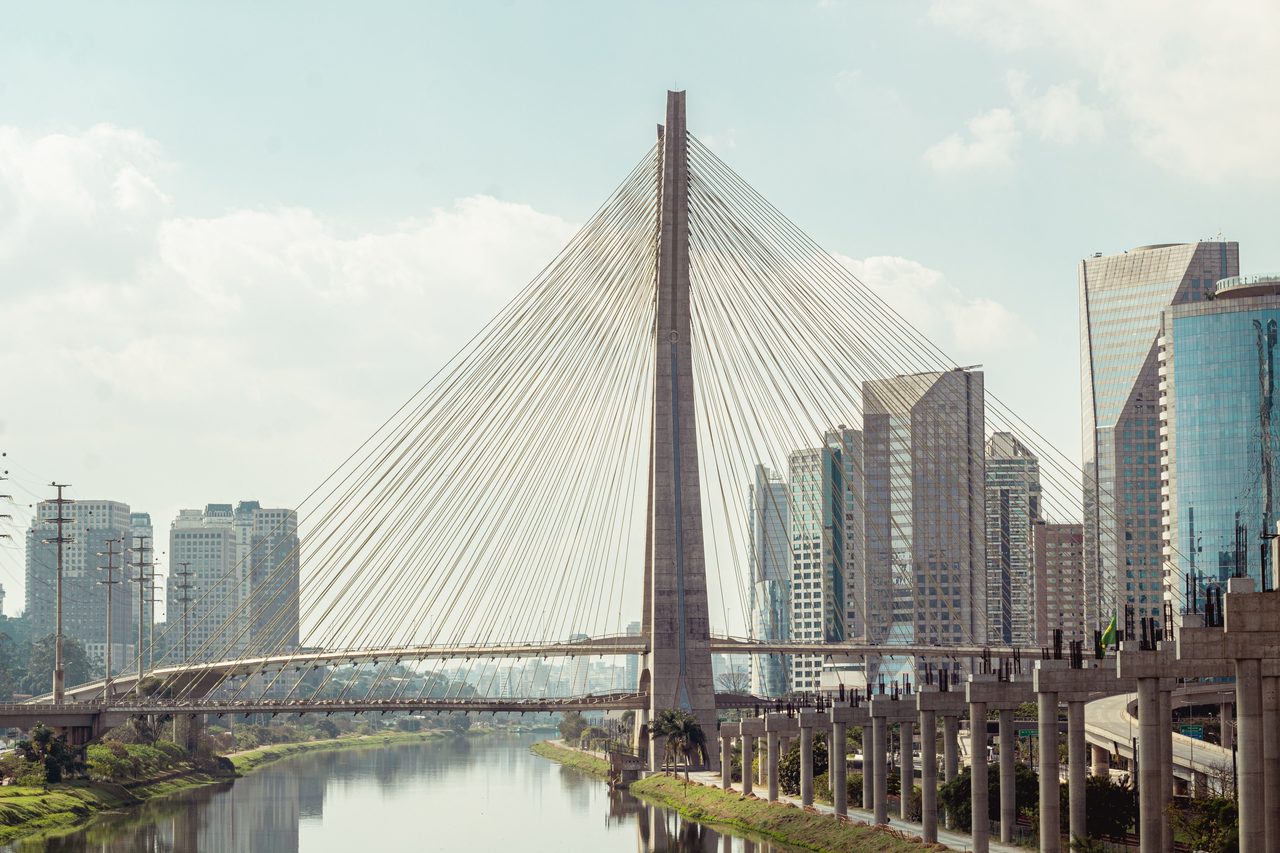
São Paulo is Brazil's largest city and South America's biggest metropolis, a sprawling economic and cultural powerhouse known for its skyscraper-lined avenues, world-class museums, and one of the planet's most diverse restaurant scenes. Far from Brazil's beach image, São Paulo is a city of concrete, art, nightlife, and relentless energy, anchored by Avenida Paulista and a patchwork of distinct neighborhoods, from bohemian Vila Madalena to upscale Jardins.
São Paulo is a vast, vertical city of over 11 million people spread across a grid of highways, high-rises, and hundreds of distinct neighborhoods, with almost no colonial old town left to speak of. Its identity is built on scale and diversity: it has more Italian descendants than any city outside Italy, the largest Japanese community outside Japan (Liberdade), and immigrant communities from across the world that shape its food, art, and street culture. Avenida Paulista is the city's civic spine, home to MASP and Sunday street closures that turn the avenue into a public park. Beyond it, Ibirapuera Park offers green space and major museums, Vila Madalena and Pinheiros anchor the creative and nightlife scenes, and the historic Centro holds faded Belle Époque grandeur alongside striking modernist landmarks like the Copan Building. São Paulo is not a postcard city; it rewards visitors who come for its restaurants, art, music, and sheer urban intensity rather than beaches or ruins.
The 23 destinations our editors recommend — from iconic landmarks to under-the-radar finds.
MASP (Museu de Arte de São Paulo Assis Chateaubriand)
MASP is Brazil's leading fine-arts museum, famous for its glass-and-red-concrete building raised on four giant pillars over Avenida Paulista and for its glass-easel display method, which suspends European paintings on transparent panels rather than hanging them flush on walls.
Parque Ibirapuera
São Paulo's most celebrated urban park, laid out for the city's 1954 quadricentennial with pavilions and landscaping by Oscar Niemeyer and Roberto Burle Marx. It combines lakes, jogging paths, museums and the iconic Oca and Bienal pavilions in over 1.5 million square meters of green space.
Mercado Municipal de São Paulo (Mercadão)
Opened in 1933, the Mercadão is a grand stained-glass covered market in the historic center known for its mortadella sandwiches, pastel de bacalhau, and stalls piled with tropical fruit, spices and cured meats beneath vaulted arches.
Beco do Batman (Batman Alley)
A cluster of alleyways in Vila Madalena covered floor to roofline in constantly changing graffiti and street art, named after a 1980s Batman mural. It remains one of the city's most photographed open-air urban art galleries.
Pinacoteca do Estado de São Paulo
Housed in a restored 1900 brick building overlooking Parque da Luz, the Pinacoteca is São Paulo's oldest art museum, holding a major collection of 19th- and 20th-century Brazilian painting and sculpture across galleries organized around a glass-roofed atrium.
Catedral Metropolitana de São Paulo (Catedral da Sé)
A Neo-Gothic cathedral with Renaissance-style domes, built between 1913 and 1954 on the site of earlier churches marking the founding point of the city. Its crypt holds tombs of former bishops and one of the region's founding Indigenous chiefs.
Recommended itineraries
Pick a length, follow the route. Each itinerary balances headline sights with breathing room.
5-Day São Paulo Explorer
Day 1Arrive in São Paulo, explore city center
Day 2Visit top attractions and museums
Day 3Day trip to nearby highlights
Day 4Local markets and hidden gems
Day 5Final sightseeing, departure
7-Day Classic São Paulo
Days 1-2São Paulo city highlights
Days 3-4Regional exploration
Days 5-6Cultural immersion and local experiences
Day 7Return and departure
14-Day Ultimate São Paulo
Days 1-3São Paulo comprehensive city tour
Days 4-6Northern region exploration
Days 7-9Eastern highlights
Days 10-12Southern attractions
Days 13-14Return to São Paulo, departure
Where to stay in São Paulo
Three tiers, every traveller covered — from cost-conscious to flagship hotels.
Budget R$220 (~$43)
Hostels, budget hotels, and guesthouses offer affordable stays without sacrificing experience.
Mid-range R$550 (~$107)
Boutique hotels and well-located accommodations provide comfort and convenience at reasonable prices.
Luxury R$1,600+ (~$312+)
World-class resorts and premium hotels deliver unforgettable experiences.
Rosewood São Paulo
Bela Vista · $$$$
Rosewood São Paulo occupies the restored Cidade Matarazzo complex in Bela Vista, combining a 1920s hospital building with a new tower designed by Jean Nouvel. The property holds an extensive art collection, several restaurants, and gardens within a former industrial estate near Avenida Paulista.
Designed by architect Ruy Ohtake with a distinctive curved slice-of-watermelon silhouette, Hotel Unique rises above Avenida Brigadeiro Luís Antônio in Jardim Paulista. Its rooftop pool and Skye Restaurant & Bar look out over Ibirapuera Park and the São Paulo skyline.
Fasano São Paulo sits on a quiet Jardins street between Avenida Paulista and Faria Lima, blending 1940s-inspired Art Deco interiors with the Fasano family's hospitality heritage. Its ground-floor restaurant is among the city's most established fine-dining addresses.
Emiliano São Paulo stands on Rua Oscar Freire, the city's premier shopping street in Jardins, and is affiliated with Small Luxury Hotels of the World. The hotel is known for a personal, design-forward service style and its rooftop pool overlooking the neighborhood.
Alex Atala's two-Michelin-star flagship in Jardins, long ranked among the world's best restaurants for its tasting menus built on Amazonian ingredients such as jambu, tucupi and pirarucu. It remains Brazil's most internationally recognized gastronomic address.
A Casa do Porco
Nose-to-tail Brazilian - pork focused · $$$
A whole-hog tasting-menu restaurant in the República district that has become one of São Paulo's hardest tables to book, regularly ranked among the World's 50 Best. Every part of the pig appears across a multi-course menu that runs from crackling to house-made charcuterie.
Fasano
Italian · $$$$
The signature restaurant of the Fasano hotel group in Jardins, a Michelin-starred Italian dining room serving refined, classic Italian cooking with a modern edge. It is one of the most established fine-dining addresses in the city, favored for special-occasion dinners.
Mocotó
Northeastern Brazilian (sertanejo) · $$
Chef Rodrigo Oliveira's flagship in the working-class Vila Medeiros neighborhood, credited with elevating Northeastern Brazilian sertanejo cooking to national acclaim. Expect slow-cooked meats, house-made cachaça cocktails and a warm, unpretentious dining room far from the tourist center.
Bar da Dona Onça
Brazilian - modern comfort food · $$
A design-forward Brazilian restaurant on the ground floor of Oscar Niemeyer's iconic Copan building in Centro, serving elevated versions of home-style Brazilian dishes in a room decorated with vintage tile and neon. It pairs the city's most photographed building with genuinely good, unfussy food.
Bar do Mané
Brazilian - sandwiches · $
The famous sandwich stall inside the Mercado Municipal, serving the mortadella-and-provolone sandwich that has become a symbol of São Paulo's food culture since the 1930s. It is a fast, standing-room counter rather than a sit-down restaurant.
São Paulo is Brazil's largest city and one of the largest in the world, so getting around efficiently means using its Metro and CPTM rail network wherever possible rather than the often-gridlocked roads. Six Metro lines and a wider CPTM commuter rail network cover a good share of the metropolitan area, both using the same Bilhete Union fare card that also works on SPTrans city buses. Ride-hailing apps (Uber, 99) are cheap, plentiful, and the practical choice for trips beyond rail coverage or late at night. Renting a car is rarely worthwhile given traffic congestion, the rodizio plate-restriction scheme, and scarce parking.
Budget breakdown
Daily spend by tier in BRL, broken out by category.
Category
Budget
Mid-range
Luxury
Accommodation
R$90 (~$18)
R$280 (~$55)
R$950 (~$185)
Food (per day)
R$70 (~$14)
R$160 (~$31)
R$400 (~$78)
Transportation
R$30 (~$6)
R$50 (~$10)
R$120 (~$23)
Activities
R$30 (~$6)
R$60 (~$12)
R$130 (~$25)
Daily total
R$220 (~$43)
R$550 (~$107)
R$1,600+ (~$312+)
Best time to visit São Paulo
Weather through the year in São Paulo
Best timeShoulderWorth avoiding
Average daytime temperature in °C.
Essential travel tips
Get a Bilhete Único transit card for discounted, integrated metro and bus fares
Book restaurant reservations ahead for popular spots, especially on weekends
Traffic is heavy at rush hour (7-10AM, 5-8PM); plan metro trips around it
Sample a mortadella sandwich at Mercado Municipal and pastel at a local feira (street market)
Hidden gems
Off-the-beaten-path corners most travellers miss.
Beco do Batman
A graffiti-covered alley in Vila Madalena showcasing rotating street art from Brazilian and international artists
Vila Madalena
Instituto Moreira Salles (IMS)
A striking modernist cultural center with photography exhibitions and a landscaped garden, quieter than the major Paulista museums
Avenida Faria Lima, Jardins area
Vila Madalena's Feira Benedito Calixto
A lively Saturday antiques, art, and street-food market on a shaded praça, popular with locals rather than tour groups
Pinheiros
Edifício Copan
Oscar Niemeyer's wave-shaped residential skyscraper in the center, one of the city's boldest modernist landmarks, with a rooftop view accessible via a ground-floor café
Centro
Safety information
INFO
Sao Paulo is generally safe for cautious tourists in the main visitor areas (Jardins, Pinheiros, Vila Madalena, Itaim Bibi, Avenida Paulista), but petty theft, phone snatching, and occasional armed robbery (assalto) occur, especially in Centro, around Se and Republica, on crowded buses/metro, and after dark in quieter side streets
INFO
Avoid displaying phones, cameras, and jewelry openly on the street, especially at traffic lights, bus stops, and outdoor cafes; keep bags zipped and worn in front in crowded areas
INFO
Centro (downtown), including areas near Cracolandia (around Luz and Santa Ifigenia), sees open drug use and higher crime; visit historic Centro sights in daylight, in groups, and avoid Cracolandia itself entirely, especially at night
INFO
Use Uber or 99 rather than hailing street taxis, particularly at night; both apps are widely used, affordable, and add a layer of traceability and safety
INFO
Walking alone late at night is discouraged in most neighborhoods, including otherwise upscale areas like Jardins and Itaim Bibi, where street robbery still occurs; take a rideshare after dark
INFO
ATM and card-skimming scams occur; use ATMs inside banks or malls during the day rather than standalone street machines
INFO
Traffic is heavy and Sao Paulo drivers can be aggressive; use marked crosswalks with care and be alert as vehicles do not always stop for pedestrians
INFO
Dengue and other mosquito-borne illnesses circulate seasonally, especially in the warmer, wetter months (roughly October to May); use repellent and eliminate standing water if staying in a private residence
Frequently asked questions
Do I need a visa to visit São Paulo?
Many visitors, including citizens of the US, Canada, Australia, and most EU/Schengen states, can enter Brazil visa-free for tourism for stays up to 90 days under current reciprocity rules. Requirements change periodically and vary by nationality, so travelers should confirm with the nearest Brazilian consulate or official immigration website before traveling.
What is the best way to get around São Paulo?
The Metrô and CPTM commuter rail are the fastest ways to cross the city and avoid its heavy traffic. Ride-hailing apps like Uber and 99 are widely used, affordable, and convenient for door-to-door trips, especially at night or between neighborhoods without direct metro access.
Which neighborhood is best to stay in São Paulo?
Jardins is a top pick for its upscale shopping, dining, and proximity to Avenida Paulista and Ibirapuera Park. Vila Madalena and Pinheiros suit visitors seeking nightlife, street art, and a bohemian atmosphere, while Itaim Bibi offers a business-district feel with good restaurants and easy metro access.
What food is São Paulo famous for?
São Paulo is known for its enormous diversity of cuisine, reflecting its Italian, Japanese, Lebanese, and Northeastern Brazilian immigrant communities. Signature experiences include the mortadella sandwich at Mercado Municipal, feijoada on Saturdays, pastel from street markets, and one of the largest concentrations of Japanese restaurants outside Japan in Liberdade.
What are the top attractions in São Paulo?
The top attractions in São Paulo include Avenida Paulista, Ibirapuera Park, MASP, Mercado Municipal, Beco do Batman, and the Liberdade neighborhood. Each showcases a different side of the city, from modern art and green space to street art and immigrant culture.