World · 22 Places · Best April–May and September–October
Vienna
Vienna is Austria's imperial capital and one of Europe's most cultured cities, blending grand Habsburg palaces with world-class museums, legendary coffeehouses, and a vibrant contemporary arts scene. Situated on the Danube River, the city of roughly 1.9 million inhabitants consistently ranks among the world's most livable cities.
Vienna served as the seat of the Habsburg dynasty for over six centuries and remains a showcase of Baroque, Gothic, and Jugendstil (Art Nouveau) architecture. From the soaring spire of Stephansdom to the gilded halls of Schönbrunn Palace, the city wears its imperial heritage proudly. Yet Vienna is far from a museum piece: the MuseumsQuartier is one of Europe's largest cultural complexes, the Naschmarkt buzzes with international flavors, and the nightlife stretches from wine-cellar Heurigen on the city's hillside vineyards to cutting-edge clubs in the second district. The Vienna Philharmonic, the Spanish Riding School, and the Vienna State Opera maintain standards of classical excellence that define the city's cultural identity worldwide.
Capital
Vienna
Largest city
Vienna
Population
1,911,000
Languages
German (official); English widely spoken in tourist areas
The 22 destinations our editors recommend — from iconic landmarks to under-the-radar finds.
Schönbrunn Palace
This is the former summer residence of the Habsburg emperors, built for Maria Theresa in the 18th century, and it remains the largest palace complex in Austria. The Grand Tour covers the state rooms used by Maria Theresa and Franz Joseph, including the Hall of Mirrors where a young Mozart reportedly performed for the imperial family. The formal gardens behind the palace, laid out on a slope leading up to the Gloriette, are open to walk through without a ticket.
St. Stephen's Cathedral (Stephansdom)
The Gothic cathedral at the center of Vienna's old town is the seat of the Archbishop of Vienna and one of the city's most recognizable landmarks, largely due to its patterned tile roof. Rebuilding after severe damage in the final days of World War II makes much of the visible fabric a mid-20th-century restoration layered onto medieval stonework. The catacombs beneath hold the remains of past Habsburg rulers' organs, a burial custom particular to the dynasty.
Hofburg Palace
The Hofburg was the winter residence of the Habsburgs and grew over centuries into a sprawling complex that now houses the Austrian president's offices alongside several museums. The combined ticket covers the Imperial Apartments where Franz Joseph and Empress Elisabeth (Sisi) lived, the Sisi Museum focused on her life and death, and the Silver Collection of imperial tableware. Unlike Schönbrunn, this was the working seat of government, so the rooms reflect administrative as well as domestic use.
Belvedere Palace
Built as a summer residence for Prince Eugene of Savoy, the Belvedere is really two palaces, Upper and Lower, connected by a garden that steps down a hillside. The Upper Belvedere holds Austria's major collection of Gustav Klimt paintings, including The Kiss, alongside works by Schiele; the Lower Belvedere is used mainly for temporary exhibitions. Visiting both requires walking or a short ride between the two buildings, as they aren't in a single structure.
Kunsthistorisches Museum (KHM)
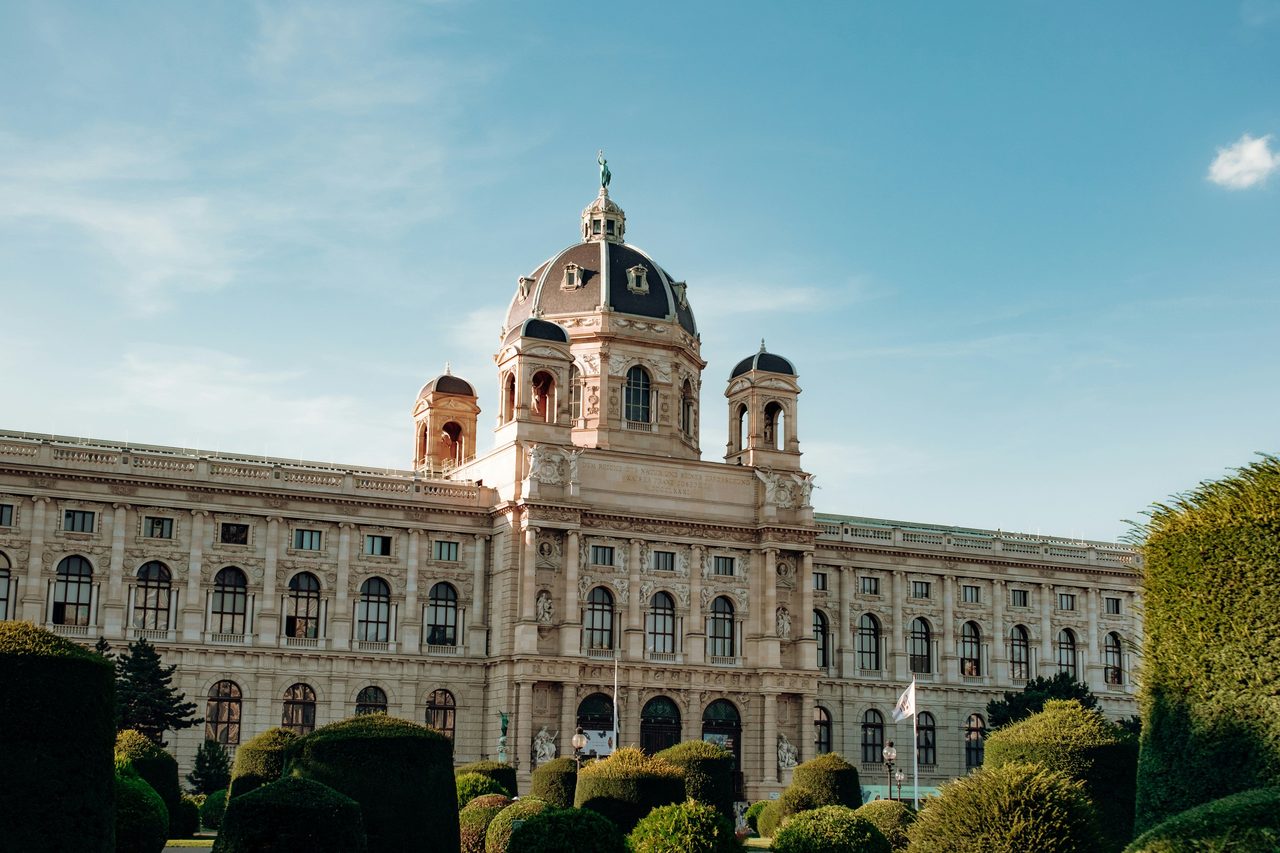
Vienna's main art history museum holds the Habsburg dynasty's painting collection, with a Bruegel holding that is the largest anywhere and strong rooms of Titian, Velázquez, and Vermeer. The building itself, opened in 1891 as a twin to the Naturhistorisches Museum across the square, has a lavishly decorated interior including a domed central hall with a staircase mural by Gustav Klimt. The collection reflects centuries of Habsburg acquisition rather than a curated modern survey, so galleries run deep in a few painters instead of broad coverage.
Vienna State Opera (Wiener Staatsoper)
The Staatsoper is Vienna's principal opera house, opened in 1869 on the Ringstrasse and rebuilt after World War II bombing damaged much of the original interior. It runs a repertory system with a different opera or ballet most nights of the season rather than long runs of a single production. Standing tickets are sold only at the box office shortly before curtain, a long-standing practice that makes same-day attendance possible even for popular performances.
Recommended itineraries
Pick a length, follow the route. Each itinerary balances headline sights with breathing room.
5-Day Vienna Explorer
Day 1Arrive in Vienna, explore city center
Day 2Visit top attractions and museums
Day 3Day trip to nearby highlights
Day 4Local markets and hidden gems
Day 5Final sightseeing, departure
7-Day Classic Vienna
Days 1-2Vienna city highlights
Days 3-4Regional exploration
Days 5-6Cultural immersion and local experiences
Day 7Return and departure
14-Day Ultimate Vienna
Days 1-3Vienna comprehensive city tour
Days 4-6Northern region exploration
Days 7-9Eastern highlights
Days 10-12Southern attractions
Days 13-14Return to Vienna, departure
Where to stay in Vienna
Three tiers, every traveller covered — from cost-conscious to flagship hotels.
Budget EUR 55–113 / USD 60–123
Hostels, budget hotels, and guesthouses offer affordable stays without sacrificing experience.
Mid-range EUR 178–345 / USD 194–376
Boutique hotels and well-located accommodations provide comfort and convenience at reasonable prices.
Luxury EUR 480–1330 / USD 523–1449
World-class resorts and premium hotels deliver unforgettable experiences.
Hotel Sacher Wien
Innere Stadt (1st district), behind the State Opera · EUR 400–1200 / USD 436–1308 per night
Cafés, neighbourhood gems, and tasting menus worth the table reservation.
Figlmüller Wollzeile
Austrian / Wiener Schnitzel · EUR 20–45 / USD 22–49
A Viennese schnitzel institution occupying a narrow, wood-paneled dining room off Wollzeile, with the kind of dense, tightly packed tables typical of the old Innere Stadt trade in schnitzel. The kitchen pounds its schnitzel out well beyond the plate's edge, then fries it plain in butter-fat rather than drowning it in sauce.
Steirereck im Stadtpark
Modern Austrian · EUR 80–200 / USD 87–218 per person
A destination fine-dining room set inside a pavilion in the Stadtpark, built around Austrian producers and foraged or lesser-used ingredients rather than French technique for its own sake. Plating leans toward the architectural, and the dining room's park-facing glass gives it a lighter, more open feel than most tasting-menu rooms in the city.
Plachutta Wollzeile
Austrian / Boiled Beef · EUR 30–55 / USD 33–60
The flagship of a small Viennese group built entirely around Tafelspitz, served in a formal, white-tablecloth room with brass fittings that nods to old Vienna dining rooms without being a museum piece. The beef is boiled and presented tableside in its own pot, with the broth served first as a course.
Café Central
Austrian / Coffeehouse · EUR 10–25 / USD 11–27
A grand 19th-century coffeehouse under vaulted, arcaded ceilings near the Hofburg, historically a haunt of Vienna's literary and intellectual crowd. Service is formal and unhurried in the old Kaffeehaus style, with a pianist often playing in the afternoons.
A vegetarian and vegan fine-dining room in the Innere Stadt that treats vegetables as the main event rather than a meat substitute, with courses built around fermentation and precise seasonal sourcing. The dining room is calm and minimal, set up for slow, multi-course tasting menus rather than quick meals.
Konstantin Filippou
Contemporary European · EUR 90–180 / USD 98–196
A Michelin-starred dining room near the Stadtpark end of the Innere Stadt, pairing contemporary European technique with Austrian fish and produce alongside occasional Mediterranean and Greek touches from the chef's own background. The room is understated and modern rather than ornate, keeping the focus on the plate.
Vienna has one of Europe's best public transport networks. U-Bahn (metro), trams, and buses cover virtually every corner of the city and run until roughly 00:30 on weekdays and 24 hours on weekends.
Budget breakdown
Daily spend by tier in EUR, broken out by category.
Category
Budget
Mid-range
Luxury
Accommodation
EUR 25–60 / USD 27–65 (hostel dorm or budget hotel)
Average daytime temperature in °C. Figures are for Austria.
April–May and September–October for mild weather and smaller crowds
Spring brings lilac gardens and opera season; autumn offers harvest Heurigen and the Vienna Philharmonic season opener. Christmas markets (late November–December 24) are magical but very crowded.
Essential travel tips
Buy the Vienna City Card (EUR 17 / USD 19 for 24 hours) for unlimited public transport and museum discounts
Pre-book tickets for Schönbrunn Palace, Spanish Riding School, and Vienna State Opera at least 2 weeks ahead
Opera standing tickets (Stehplatz) cost EUR 3–10 / USD 3–11 and go on sale 80 minutes before curtain
Tipping is customary: round up the bill or add 5–10% at restaurants
Most supermarkets (Billa, Spar, Hofer) close at 20:00; plan grocery shopping accordingly
Hidden gems
Off-the-beaten-path corners most travellers miss.
Safety information
INFO
Keep wallets and phones secure at the Naschmarkt and on U-Bahn line U6
INFO
Tap water is safe and excellent to drink from any tap or public fountain
INFO
Emergency: Police 133, Ambulance 144, Fire 122, European emergency number 112
Frequently asked questions
Is Vienna safe to visit in 2026?
Vienna is one of the safest capital cities in Europe. The main risks are petty theft (pickpocketing around tourist hotspots and on public transport) and occasional tourist scams. Solo travelers, women, and LGBTQ+ visitors generally face no specific safety concerns.
What is the best time to visit Vienna?
The best time to visit Vienna is April–May and September–October. Vienna has a temperate continental climate with four distinct seasons. Summers (June–August) are warm to hot (22–33°C / 72–91°F) with occasional thunderstorms. Winters (December–February) are cold wit
Do I need a visa to visit Vienna?
No visa required for stays up to 90 days within any 180-day period. Valid passport required. ETIAS authorization will be required from late 2026. Requirements vary by nationality, so check with your nearest embassy or the official immigration website before traveling.
What currency is used in Vienna?
The currency in Vienna is the Euro (EUR) (EUR). ATMs are widely available in cities and tourist areas. Credit cards are accepted at most hotels and restaurants, but carry cash for markets and smaller establishments.
What language is spoken in Vienna?
The main language(s) spoken in Vienna: German (official); English widely spoken in tourist areas. In tourist areas, English is generally understood. Learning a few basic phrases in the local language is appreciated by locals.
What are the top attractions in Vienna?
The top attractions in Vienna include Schönbrunn Palace, St. Stephen's Cathedral (Stephansdom), Hofburg Palace, Belvedere Palace, and Kunsthistorisches Museum (KHM). Each offers a unique experience, from historic landmarks to natural wonders.